In the rapidly evolving landscape of real-time graphics, Nvidia has long stood as the architect of the possible. From the introduction of hardware-accelerated ray tracing in the RTX 20-series to the frame-generation magic of DLSS 3, the company has consistently redefined what consumer hardware can achieve. However, as the industry stands on the precipice of "DLSS 5"—an iteration currently shrouded in the ambiguity of leaks and unverified development builds—the conversation has shifted from performance gains to philosophical anxiety.
At the heart of the debate is a simple, yet profoundly polarizing question: does AI-driven image reconstruction enhance the creator’s vision, or does it homogenize art into a sanitized, "yassified" slurry of machine-learned approximations?
The Anatomy of the Controversy: A Chronology of Concern
The discourse surrounding DLSS 5 did not emerge from an official press release or a polished keynote address. Instead, it was born from the chaotic, subterranean world of tech leaks.
The Genesis of the Leak:
Months before any formal acknowledgment from Nvidia, whispers of a new, highly aggressive neural rendering model began circulating on enthusiast forums. These rumors gained significant traction when a raw, unfinished iteration of the technology was leaked, allowing users to apply the "AI filter" to existing game engines.
The Immediate Backlash:
The reaction was visceral. Early side-by-side comparisons revealed that while the technology was undeniably effective at smoothing out jagged edges and upscaling lower-resolution textures, it came at a cost. Critics noted that the AI seemed to "clean up" skin textures, remove deliberate environmental grit, and alter the facial geometry of characters, effectively stripping away the artistic intent of the original game developers.
The Doom 3 Catalyst:
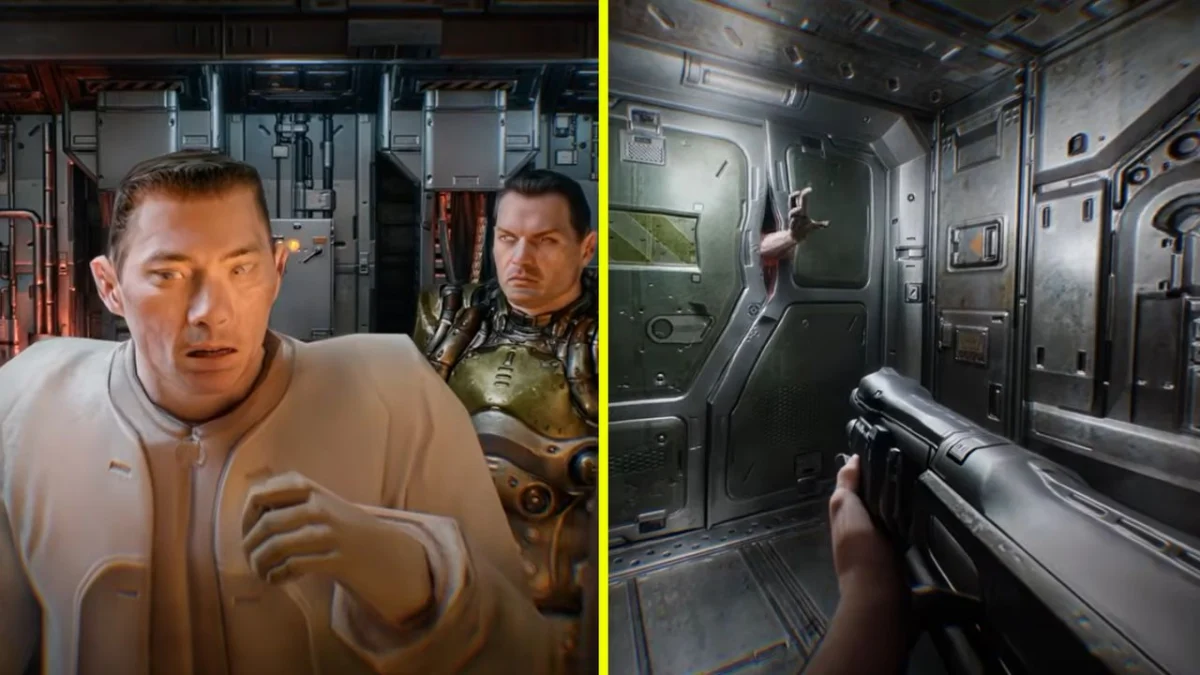
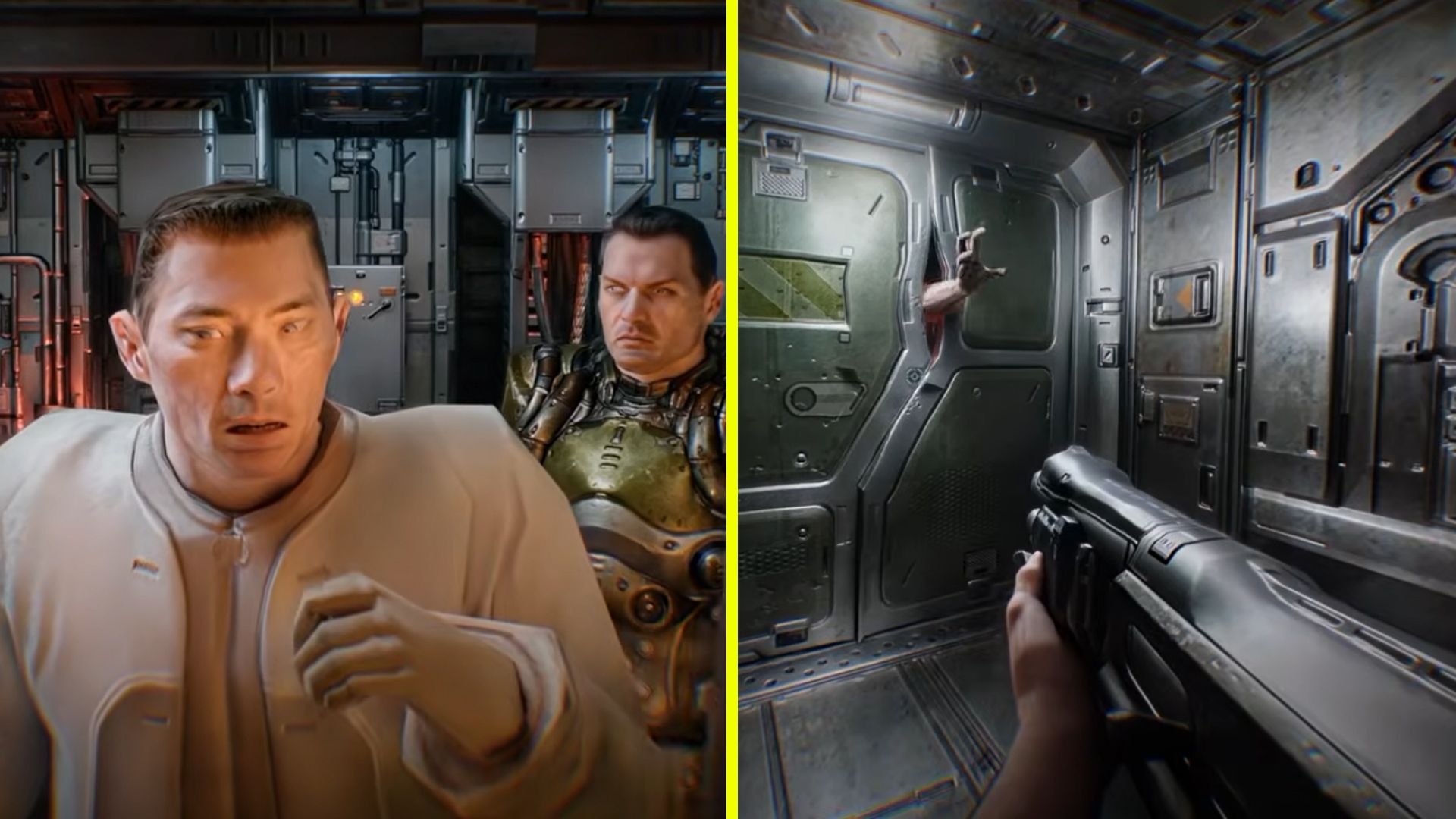
The controversy reached a fever pitch recently with the emergence of a YouTube demonstration by modder ruisu_enjeru. The project, an ambitious path-traced overhaul of the Doom 3 BFG Edition, utilizes a custom-built rendering engine with native support for DLSS Ray Reconstruction and the experimental DLSS 5. The resulting visuals, while technically breathtaking in terms of lighting and shadow, have become the primary battleground for this debate. The video serves as a perfect microcosm for the current state of the industry: a clash between pure technical achievement and the preservation of aesthetic integrity.
Technical Implications: Why AI Rendering is a Double-Edged Sword
To understand why DLSS 5 is so contentious, one must understand how neural rendering functions. Unlike traditional upscaling, which uses static algorithms, DLSS (Deep Learning Super Sampling) relies on convolutional neural networks trained on vast datasets of high-fidelity images.
The Power of Ray Reconstruction
Ray Reconstruction, a feature that Nvidia has been aggressively pushing, aims to replace hand-tuned denoisers—which often struggle with complex, flickering light sources—with an AI-driven model. When it works, the result is a near-perfect simulation of light bounce, refraction, and shadow. It is, by all accounts, a massive leap forward for technical fidelity.
The "Slop" Phenomenon
However, the "slop" argument stems from the AI’s inability to differentiate between "noise" and "artistic choice." In a game like Doom 3, which is defined by its claustrophobic, dirty, and industrial aesthetic, the AI’s tendency to smooth out textures can effectively erase the grit that makes the world feel grounded. When the AI interprets a character’s weathered, scarred skin as "noise" to be polished away, the result is an uncanny, hyper-smooth appearance that feels entirely disconnected from the game’s tone. This process has been colloquially dubbed "yassification" by the gaming community—a term that highlights how the technology forces a uniform, commercially "pretty" aesthetic onto diverse visual styles.
The Modder’s Perspective: A Work in Progress
The demonstration by ruisu_enjeru highlights the immense complexity involved in integrating these nascent technologies into legacy titles. In the Doom 3 project, the modder has had to essentially reconstruct the game’s lighting pipeline from scratch.
"There is still a huge amount of work ahead," ruisu_enjeru notes in the project documentation. "With plenty of systems, materials, lighting, characters, effects, and other content that either need to be ported, reworked, or fixed."
This statement serves as a vital reminder: we are currently looking at the "alpha" stage of a paradigm shift. The issues identified by critics may not be inherent flaws in the concept of DLSS 5, but rather teething problems of a model that has not yet been fine-tuned for specific artistic environments. The question remains: can an AI be trained to respect the "dirt" and "imperfection" of a developer’s vision, or is the inherent goal of upscaling always to produce a "cleaner" image?
Implications for the Future of Game Development
The tension between Nvidia’s technological trajectory and the concerns of the gaming community points to a deeper shift in how games will be made in the coming decade.
1. The Death of the "Artistic Finality"
Traditionally, a game’s visuals were fixed at the point of release. With AI-driven rendering, the display device and the GPU now play a role in interpreting the final image. This shifts the power balance from the developer to the hardware manufacturer. If a GPU can "enhance" a game’s art style, does the original creator still hold full authority over how their game is perceived?
2. The Standardization of Visuals
If every game relies on the same proprietary AI models to reconstruct its visuals, there is a risk of visual homogenization. We may enter an era where every major release, regardless of its original art style, begins to share a specific "Nvidia-branded" aesthetic—a look characterized by perfect denoising and soft-focus skin tones.
3. Efficiency vs. Intent
For indie developers and modders, these tools are a godsend. They allow small teams to achieve graphical fidelity that would otherwise require hundreds of artists and massive budgets. However, the trade-off is a loss of control. The industry must now determine if the efficiency gained is worth the potential compromise in artistic fidelity.
Official Responses and Industry Outlook
As of this writing, Nvidia has remained relatively quiet regarding the specifics of DLSS 5 and the community’s concerns over "AI-filtered" visual quality. Industry analysts suggest that the company is likely prioritizing performance benchmarks and raw technical capability, viewing the "artistic integrity" debate as a secondary concern that can be addressed through future software updates and "artist-friendly" tuning knobs.
Many in the developer community are cautiously optimistic. They argue that once AI models are trained on a wider variety of art styles—beyond the photorealistic datasets that currently dominate—the technology will be able to preserve the stylistic intent of any game, whether it be cel-shaded, pixel art, or hyper-realistic.
Conclusion: Bridging the Gap
The controversy surrounding DLSS 5 is not merely about a piece of software; it is about the intersection of human creativity and machine learning. As we move closer to a future where real-time path tracing is the industry standard, the software that reconstructs these images will become as important as the graphics engine itself.
If Nvidia wishes to avoid the "slop" label, they must provide developers with the tools to guide these AI models, allowing them to define what is "noise" and what is "art." The future of gaming should not be a battle between the GPU and the artist. Instead, it must be a collaboration. Until then, projects like ruisu_enjeru’s Doom 3 overhaul will continue to serve as a fascinating, if unsettling, look at the transition into a new, AI-driven era of digital entertainment. Whether this technology ultimately serves the artist or replaces them remains the defining question of our time.