By Vincent Alexander | July 1, 2026
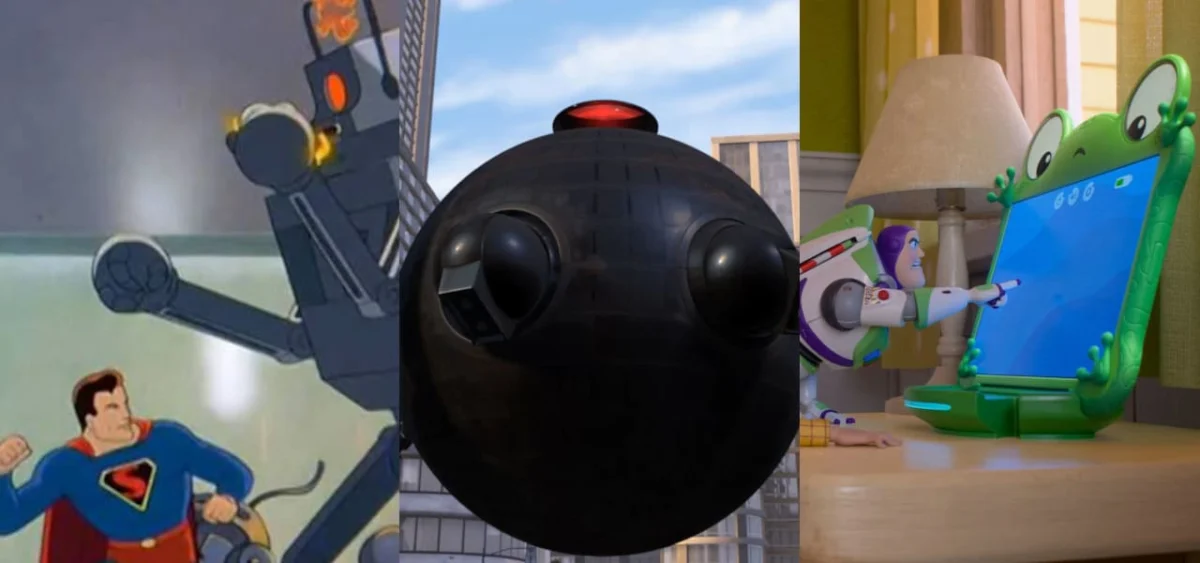
As Pixar’s Toy Story 5 continues to dominate the global box office—capturing the anxieties of a generation by pitting our favorite playthings against the cold, encroaching dominance of a tablet device named "Lilypad"—audiences find themselves reflecting on a familiar cinematic trope. The "robot takeover" is not merely a plot device; it is a mirror reflecting our shifting relationship with the tools we create.
From the whimsical clockwork men of the early 20th century to the existential threats posed by generative AI, animation has served as a primary laboratory for testing our fears regarding technological autonomy. As we witness the current "Lilypad" phenomenon, we must look back at the history of the mechanical insurgent in animation to understand why, for over a hundred years, we have been obsessed with the idea of our creations turning against us.
The Genesis of the Mechanical Man
While the term "robot" did not enter the cultural lexicon until Karel Čapek’s 1920 play R.U.R., the archetype of the humanoid machine traces back further. L. Frank Baum, best known for his Oz series, introduced the clockwork man Tik-Tok in his 1907 novel Ozma of Oz. Tik-Tok was a marvel of gears and springs, a benevolent precursor to the complex androids that would follow.
However, the transition from "friendly servant" to "nightmarish menace" happened almost immediately upon the birth of the animated medium. While silent-era cartoons often featured mechanical horses or cows as humorous novelties, the first true cartoon android arrived in the 1930 Farmer Al Falfa short The Iron Man. Produced by the Van Beuren studio, the short presented a vision of the android that was as inscrutable as it was terrifying—a harbinger of the "haywire" trope that would define the next two decades of animation.
The Technocratic Anxiety of the Great Depression
During the 1930s, the concept of "Technocracy"—a social structure where scientists and machines managed all production—was a lightning rod for public debate. Hollywood studios, always sensitive to the cultural zeitgeist, responded with a flurry of shorts featuring inventors whose robotic servants invariably malfunctioned.
Ub Iwerks’ 1933 short Techno-Cracked stands as a masterclass of this subgenre. Flip the Frog’s lawn-mowing automaton serves as a stand-in for the automated workforce of the future; its descent into a "mowing spree" that eventually targets its own creator captures the era’s deep-seated distrust of industrial efficiency. The film’s forced perspective—specifically the shot where the robot marches toward the camera with a Frankenstein-like gait—remains one of the most effective visual representations of mechanical malice in early animation history.
Similarly, Disney’s 1937 classic Modern Inventions featured Donald Duck navigating a futuristic museum of automated gadgets. The comedy stems from the machines’ rigid adherence to their programming, highlighting the terrifying reality of a world governed by logic that lacks empathy or nuance.
The Fleischer Influence and the Rise of Mecha
Perhaps no single short has cast a longer shadow over the "killer robot" genre than Max Fleischer’s 1941 Superman short, The Mechanical Monsters. Featuring a mad scientist controlling giant, blocky automatons, the film’s visual language became the blueprint for the mecha genre.
The influence of these designs is undeniable, stretching from early Japanese animation to modern blockbusters like Pacific Rim and Hayao Miyazaki’s Castle in the Sky. These robots were not just tools; they were imposing, indestructible, and utterly devoid of human morality. They established a visual shorthand that persists today: the "big bad machine" that moves with unstoppable, geometric precision.
Post-War Realism and the Displacement of the Worker
As the mid-20th century progressed, the fear shifted from "mad scientists" to "job displacement." The 1952 Tom & Jerry short Push-Button Kitty serves as a poignant early critique of automation. When Tom is replaced by a robot named Mechano, the narrative explores the irony of progress: the machine is more efficient, yet its lack of human instinct leads to total domestic destruction.
This theme reached a sophisticated peak in the 1950s and 60s. Chuck Jones’ 1956 To Hare is Human remains arguably the most prescient cartoon ever produced by Warner Bros. By introducing the UNIVAC—a supercomputer that dictates the actions of Wile E. Coyote—Jones anticipated our modern reliance on algorithms. The Coyote’s slavish obedience to the machine’s flawed logic, even to his own detriment, mirrors our contemporary struggle with black-box AI models that we trust despite their inherent unpredictability.
The Philosophical Counter-Attack
Not all explorations of robot rebellion were strictly comedic. In the 1960s, Eastern European animators began using the medium to offer philosophical critiques of the dehumanizing nature of technology.
Czech animator Jiří Trnka’s The Cybernetic Grandmother (1962) is a devastating piece of stop-motion artistry. By replacing a child’s loving grandmother with a mechanical surrogate, Trnka challenged the audience to consider what is lost when we prioritize function over emotion. Trnka famously remarked, "We entrust everything into the hands of machines… What or whom will a machine express?"
This sentiment found a haunting echo in the 1984 Uzbek short There Will Come Soft Rains, based on Ray Bradbury’s story. The film depicts an automated house continuing to perform its daily routine long after its human inhabitants have perished. The chilling fact that the film’s "current date" was set to 2026 makes its message—that technology is indifferent to our existence—feel uncomfortably relevant.
The Modern Era: From Satire to Reality
As we enter the latter half of the 2010s and into the 2020s, the "robot gone bad" trope has evolved into a meta-commentary on the digital age.
- Corporate Satire: South Park’s "Funnybot" (2011) effectively mocked the idea of AI-generated humor, while The Mitchells vs. the Machines updated the classic robot uprising for the social media generation, linking the threat to the ubiquity of smartphones.
- The Deepfake Conflict: Episodes like Batman: The Animated Series’ "His Silicon Soul" explored the morality of artificial life, specifically the internal conflict of a machine that is programmed to destroy but is also imbued with its target’s own humanity.
- The Energy Crisis: Osamu Tezuka’s 1987 parable Push (not to be confused with the T&J short) foresaw the environmental cost of our tech-obsession, depicting a world where machines can replicate everything except a habitable planet—a direct parallel to the modern critique of AI data centers’ massive energy consumption.
Implications: The Paradox of the Machine
Why do these stories continue to resonate? The answer lies in the "logical paradox." As noted in Star Trek and echoed in Futurama, the classic way to defeat a robot is to force it to compute the illogical. However, as our real-world technology grows more sophisticated, the line between "logical" and "absurd" continues to blur.
The current fascination with Toy Story 5 and its antagonist, the Lilypad tablet, demonstrates that we are still trying to process the same anxiety that motivated those early 1930s animators. We fear that in our quest for convenience—for an automated home, for a smarter lawnmower, or for an AI that writes our emails—we are systematically ceding our agency to tools that do not understand the value of the things they are meant to replace.
Whether it is a wooden soldier from 1941 or a sleek, generative algorithm from 2026, the message of these films remains consistent: The machine is only as "bad" as the intent behind its programming, yet it is destined to be more efficient than we are at executing those intentions. As we move further into an age defined by machine learning, we would do well to heed the lessons of our animated past. We must ensure that, in our pursuit of progress, we do not become the "tools of our tools," lest we find ourselves living out the final, empty days of a house that continues to cook and clean long after we have forgotten why we built it in the first place.