

The video game industry is often characterized by the tension between artistic vision and commercial viability. However, few projects have highlighted this friction as starkly as Rocksteady Studios’ Suicide Squad: Kill the Justice League. While the public post-mortem of the game has focused largely on its catastrophic financial losses and critical reception, a more human story has recently emerged from the wreckage: the profound psychological toll on the developers who spent seven years trying to bring it to life.
For associate design lead Johnny Armstrong and game director Axel Rydby, the project was not merely a professional setback; it was an existential crisis that nearly drove them to abandon the industry entirely. Their testimonies, recently shared with Bloomberg, offer a harrowing glimpse into the "spreadsheet-driven" culture that has come to dominate modern AAA game development.
The Anatomy of a $200 Million Failure
Suicide Squad: Kill the Justice League arrived in 2024 carrying the heavy mantle of the Batman: Arkham legacy. Rocksteady, a studio revered for setting the gold standard in action-adventure gaming, was expected to deliver another masterpiece. Instead, the game became a cautionary tale of corporate overreach.
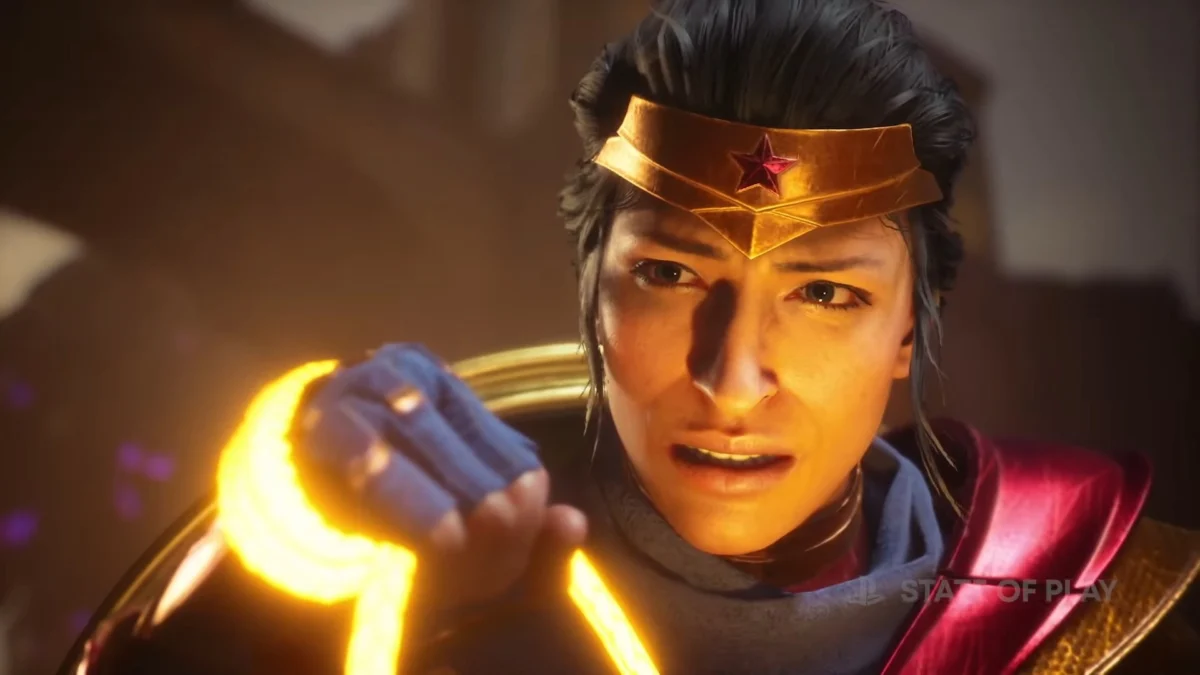
The project’s failure was total. Warner Bros. Games reported a staggering $200 million write-off, a financial black hole that sent shockwaves through the parent company. The fallout was immediate and severe: multiple rounds of layoffs decimated the ranks at Rocksteady, and the project’s poor performance was reportedly a contributing factor in the cancellation of Monolith Productions’ highly anticipated Wonder Woman game.
But beyond the balance sheets and the headlines, the project represented a seven-year commitment from developers who had once been motivated by the joy of creation. As the development cycle dragged on, the internal culture at Rocksteady underwent a tectonic shift, moving away from the "passion-first" philosophy that defined the Arkham trilogy toward a rigid, metric-obsessed live-service model.
Chronology: From Vision to Exhaustion
The shift in Rocksteady’s focus did not happen overnight. According to those close to the project, the development cycle of Suicide Squad began with high aspirations. However, as production costs swelled due to repeated delays and shifting industry trends, Warner Bros. executives increasingly intervened to ensure the product was "monetizable."
The Early Days (2017–2019)
In the project’s infancy, the team aimed to innovate within the superhero genre. The goal was to provide a unique, high-octane experience that leveraged the chaotic personalities of Task Force X. The creative freedom was, at that time, still palpable.
The Pivot (2020–2022)
As the live-service trend took over the industry, the directive from above changed. Conversations in design meetings shifted from "What makes this fun?" to "How many players can we retain with this feature?" and "How can we increase replayability to maximize microtransaction potential?" This transition turned developers into laborers following a "marketing-analysis spreadsheet" that no one seemed to understand, yet everyone was forced to follow.
The Breaking Point (2023–2024)
By the time the game neared launch, the team was suffering from systemic burnout. The pressure to conform to the live-service model had stripped the game of its identity, and the developers could feel the disconnect between their work and the final product. The launch itself—met with harsh criticism and low player counts—served as the final blow to the morale of the lead staff.
The "Spreadsheet" Culture: A Crisis of Identity
The most poignant aspect of the reports from Armstrong and Rydby is the loss of agency. Axel Rydby, the game director, described a profound sense of alienation during the latter half of the project’s development.
"That’s when I started feeling like I wasn’t making games anymore," Rydby admitted. "I was following a spreadsheet… I kind of felt like this isn’t the gaming industry I wanted to work in."
This sentiment is echoed by Johnny Armstrong, who spoke of a physical and emotional depletion. "I felt everything drained from me," Armstrong told Bloomberg. "I said, ‘I can’t do this again. I don’t know if I’m done with the industry, but I’m done.’ I could feel myself coming apart at the seams."
This "spreadsheet-ification" of game design is a systemic issue across the industry. When publishers prioritize "engagement metrics" over artistic cohesion, the result is often a diluted, homogenized product that appeals to no one. The developers, who are often the most passionate advocates for the medium, are left to execute designs they no longer believe in, leading to the high turnover and disillusionment that has become a hallmark of modern AAA studios.
Supporting Data: The Cost of Disillusionment
The impact of the Suicide Squad failure extends far beyond Rocksteady. The $200 million write-off represents more than just lost revenue; it represents a loss of faith in the "Games-as-a-Service" (GaaS) model that many major publishers have chased for the better part of a decade.
- Financial Impact: A $200 million loss is significant enough to alter the long-term roadmap of an entire publishing house.
- Human Capital: The loss of veteran talent—like Armstrong and Rydby—is an intangible cost that is far harder to calculate. When studios lose the "institutional knowledge" of directors and designers who understand what makes a game "click," the quality of future projects suffers.
- Development Cycles: The seven-year development window for Suicide Squad is a prime example of the "bloat" in modern game dev, where prolonged development periods increase the pressure to deliver a "hit" at launch, often resulting in compromised designs.
Implications: A New Path for Indie Development?
Despite the trauma of their experience, both Armstrong and Rydby have not completely abandoned the medium. They have chosen to pivot, joining forces on an indie project titled Secret of Circadia, a retro deckbuilder RPG currently seeking funding via Kickstarter.
While the scale of Secret of Circadia—with a modest funding goal of roughly $11,000—is a far cry from the hundreds of millions poured into Suicide Squad, the shift is significant. It represents a return to the roots of game development: small, manageable, and driven by creative passion rather than corporate mandates.
For Rydby, the transition has been therapeutic. "Going independent is helping me rediscover my love for game development," he notes. However, his warning to the industry remains sharp: "I think as an industry we are severely losing our way. It used to be passion projects that you loved and hoped other people loved too. When they did, it was such an amazing feeling. It became less and less of that. It became: ‘Let’s hope it sells. Let’s hope we get money from it.’"
Conclusion: Lessons for the Future
The story of Suicide Squad: Kill the Justice League is a cautionary tale that the industry seems ill-equipped to heed. As long as publishers continue to favor short-term financial targets over the long-term health of their creative teams, we will continue to see high-profile failures that leave behind a trail of burnt-out, disillusioned talent.
The industry is at a crossroads. The success of smaller, independent titles suggests that players are hungry for authentic, passion-driven experiences—the very things that have been systematically purged from many AAA titles. If companies like Warner Bros. hope to avoid the next $200 million disaster, they must stop asking "how many players can we reach" and start asking "why would a player want to spend their time here."
Until then, the exodus of veteran talent from the AAA space toward indie ventures will likely continue, further depleting the ranks of the studios that once defined the golden age of gaming. The future of the industry, it seems, may lie not in the boardrooms of massive corporations, but in the small, focused teams willing to risk everything for the sake of a good game.










