

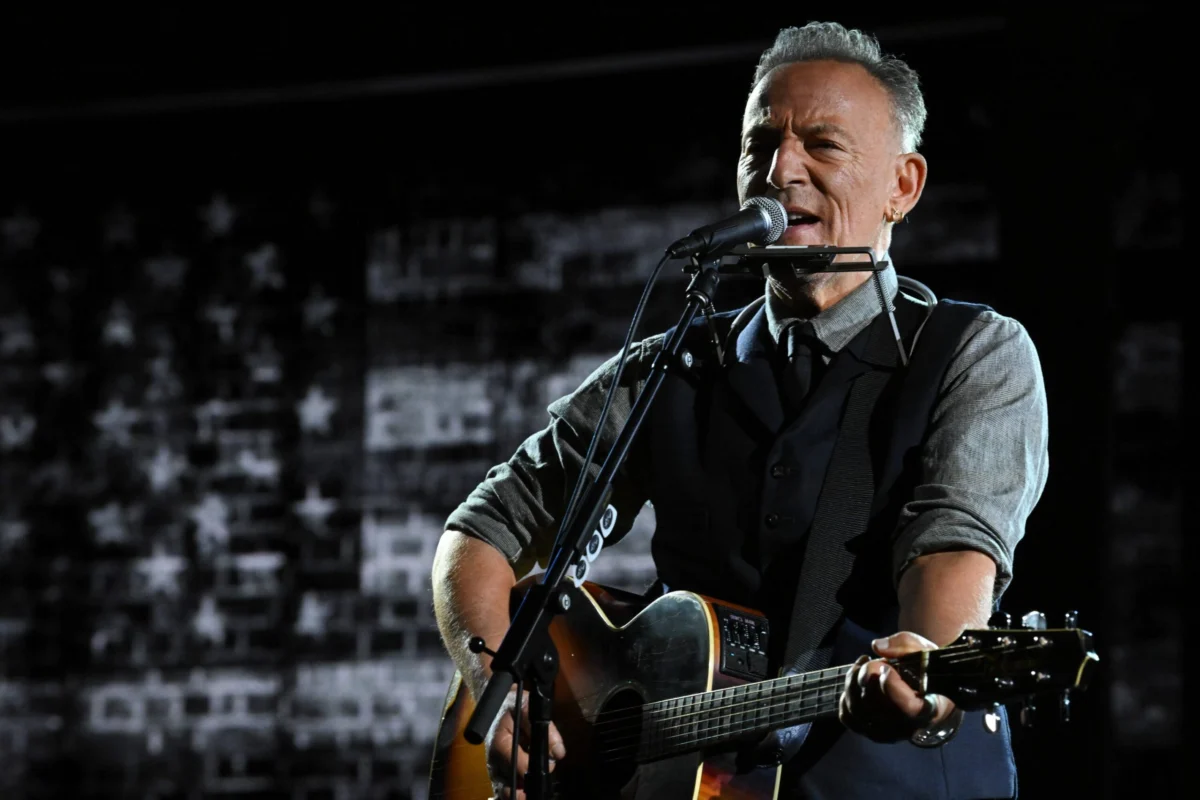
In an era defined by profound political polarization, few cultural figures occupy as contentious a space as Bruce Springsteen. The legendary singer-songwriter, often referred to as "The Boss," has long used his platform not merely to entertain, but to interrogate the American condition. In his recent PBS special, Bruce Springsteen: Finding America in Song, the artist articulated a philosophy he calls “critical patriotism,” a concept that has placed him at the center of a vitriolic feud with former President Donald Trump.
As the nation grapples with shifting political tides, Springsteen’s insistence that true love of country requires confronting its darkest flaws has become a lightning rod for debate. This article explores the evolution of Springsteen’s activism, the escalating rhetoric between him and the former President, and what this high-profile clash reveals about the state of American discourse.
The Philosophy of Critical Patriotism
The cornerstone of Springsteen’s recent commentary lies in his redefinition of what it means to be a patriot. In Finding America in Song, Springsteen moved beyond traditional, flag-waving definitions of loyalty to offer a more nuanced perspective.
“I believe in critical patriotism,” Springsteen explained during the special. “I believe that’s the definition of a patriot, you know, that you love your country so much that you are willing to look at it clearly, recognize its faults, encourage it to be a better place, and believe that you carry in your heart the country that is waiting.”
This perspective is not new for Springsteen, whose discography—from the stark, desolate landscapes of Nebraska to the anthemic hope of The Rising—has consistently explored the gap between the “American Dream” and the reality faced by the working class. However, in the current political climate, this brand of patriotism has been interpreted by some as a direct indictment of the status quo. For Springsteen, the act of pointing out systemic failures is not an act of hate, but a necessary step toward the “country that is waiting”—an idealized version of the United States that remains, in his view, a work in progress.
A Chronology of Conflict: From the Stage to Social Media
The friction between Springsteen and Donald Trump is a multi-year saga that has intensified significantly throughout 2026. While Springsteen has been a vocal critic of Trump since the 2016 campaign, the rhetoric has reached a fever pitch during his recent Land of the Hope and Dreams tour.
The Tour Opener: A Targeted Critique
The tour, which launched in late March 2026, served as more than just a concert series; it was an exercise in political theater. During the Minneapolis opening night, Springsteen wasted little time addressing the political landscape. He turned his sights on both the former President and his allies, specifically calling out Pam Bondi.
Springsteen’s critique of Bondi—whom he accused of “prosecuting the president’s perceived enemies” and “protecting his powerful friends”—highlighted a growing concern among critics of the Trump administration regarding the weaponization of the Department of Justice. Following this, he pivoted to the President himself, famously declaring, “You want to talk about snowflakes? We have a president who can’t handle the truth.”
The Digital Counter-Offensive
Donald Trump, rarely one to let a public jab go unanswered, utilized his platform on Truth Social to retaliate. His response was characteristically blunt and personal. Eschewing policy debate, Trump focused on Springsteen’s appearance and his perceived mental state.
“Bad, and very boring singer, Bruce Springsteen, who looks like a dried up prune who has suffered greatly from the work of a really bad plastic surgeon, has long had a horrible and incurable case of Trump Derangement Syndrome,” Trump wrote. He further dismissed the artist as a “total loser” who spews hatred against a leader he claimed won a “landslide election,” encompassing the popular vote, seven swing states, and 86% of American counties.
The exchange marks a significant escalation. Where previous political disagreements might have remained in the realm of ideological debate, this interaction has descended into personal animosity, mirroring the broader breakdown of civil discourse in the digital age.
Supporting Data: The Political Divide in American Music
The tension between Springsteen and Trump is symptomatic of a wider trend in American entertainment. According to recent sociological studies on the relationship between celebrity activism and voter behavior, the "Springsteen-Trump" divide serves as a microcosm for the “Red vs. Blue” cultural split.
- Audience Demographics: Historically, Springsteen’s blue-collar appeal bridged rural and urban divides. However, polling data from late 2025 suggests that his overtly political turn has alienated a segment of his traditional fan base in the Rust Belt—the very demographic he often sings about.
- The Impact of Celebrity Endorsements: While researchers are divided on whether celebrities can sway voters, there is a clear consensus that they reinforce existing echo chambers. Trump’s call for a “MAGA boycott” against Springsteen’s concerts is a strategic move to capitalize on this polarization, effectively turning Springsteen’s artistic credibility into a liability within Trump’s base.
- Media Coverage: The frequency of coverage surrounding this feud highlights the news cycle’s reliance on celebrity conflict to drive engagement. By focusing on the personal insults traded between the two, media outlets often sideline the substantive debate over “critical patriotism” that Springsteen initially raised.
Official Responses and Public Reaction
The public reaction to this clash has been as divided as the political climate itself. Supporters of Springsteen applaud his willingness to risk his popularity for the sake of his principles. They argue that his music has always been a reflection of the American spirit, and that by criticizing the current administration, he is fulfilling his role as a public intellectual and artist.
Conversely, supporters of Donald Trump view Springsteen as an out-of-touch coastal elite who represents the "establishment" they feel the former President is fighting against. The “MAGA boycott” has gained traction on social media platforms, with supporters posting videos of themselves destroying or discarding Springsteen merchandise.
Industry analysts suggest that while the boycott is unlikely to cause a significant dent in ticket sales for a stadium-level artist like Springsteen, it serves a secondary purpose: it signals to the Trump base that they have the collective power to police cultural spaces.
Implications for the Future of Artistic Expression
What does this mean for the role of the artist in the coming years? The implications are twofold.
1. The Death of the Neutral Artist
We appear to be moving away from the era where an artist can remain neutral. In an attention-based economy, silence is often viewed as complicity. Springsteen’s career trajectory—moving from the voice of the working man to a polarizing political figure—suggests that for major artists, the “middle ground” is disappearing.
2. The Weaponization of Culture
The feud highlights how culture has become a primary battlefield for politics. When a former President explicitly calls for the boycott of a musician based on political ideology, the barrier between the entertainment industry and the legislative agenda becomes increasingly porous. This sets a precedent where artists are not just commentators on the political process, but active participants who must be prepared to face direct, personal, and potentially career-damaging retaliation.
3. The Definition of Patriotism
Ultimately, the debate boils down to a fundamental disagreement on the nature of American identity. Is patriotism the act of celebrating the country as it is—its history, its leaders, and its achievements? Or is it the act of holding the country accountable to its founding ideals, even when that process is painful and divisive?
Springsteen’s “critical patriotism” suggests that the latter is the only way to ensure the nation’s longevity. Trump’s rhetoric suggests that such criticism is a form of betrayal. As the country moves forward, this tension will likely continue to define the cultural conversation, with Springsteen serving as the voice of a segment of the population that believes the truest form of love for one’s country is the refusal to ignore its faults.
In the final assessment, the clash between "The Boss" and the former President is more than a celebrity spat. It is a dialogue about the soul of the nation, played out on the largest possible stage. Whether one agrees with Springsteen’s politics or Trump’s populism, the intensity of this exchange underscores the fragility of the national consensus and the enduring, if complicated, power of the American artist to stir the public consciousness.










