

The landscape of modern television has undergone a seismic shift. For decades, the high-concept, expansive mythologies of science fiction literature were relegated to the realm of the "unadaptable." Producers shied away from narratives that spanned millennia, crossed galactic borders, or required world-building that pushed the boundaries of practical effects. However, the success of Apple TV+’s Foundation, based on the works of Isaac Asimov, has shattered these industry constraints. With showrunners like David S. Goyer and Josh Friedman successfully translating Asimov’s dense, 18,000-year timeline into a visually stunning, three-season hit, the industry has signaled that no scope is too broad for the small screen.
This shift mirrors the broader trend of "prestige television" embracing deep-lore sci-fi. From the successful six-season run of The Expanse to the recent expansion of the Dune universe through Dune: Prophecy, it is clear that streaming services are hungry for established, intellectually rigorous intellectual property. As audiences demand more complex storytelling, the gaze of producers has turned toward the "Mount Rushmore" of science fiction literature. The question is no longer "Can this be adapted?" but rather "Which visionary will take on these giants next?"
The Shift in Adaptation: From Limitations to Immersion
The historical hesitation to adapt dense sci-fi epics was largely financial and logistical. Isaac Asimov’s Foundation, initially published in 1951, was long considered a literary monolith—too arch and too sprawling to be captured on film. Yet, in the era of streaming, the serialized format offers a luxury that feature films never could: time. By breaking down expansive novels into multi-season arcs, creators can honor the philosophical underpinnings of the source material while utilizing big-budget production values to render alien landscapes with cinematic fidelity.
The current appetite for these stories is driven by a desire for world-building that feels authentic and lived-in. When James S.A. Corey’s The Expanse hit the airwaves, it proved that hard science fiction—complete with Newtonian physics and complex geopolitical maneuvering—could find a massive, dedicated audience. This success has emboldened executives to look toward even more ambitious, high-concept properties that were previously sidelined as "too risky."
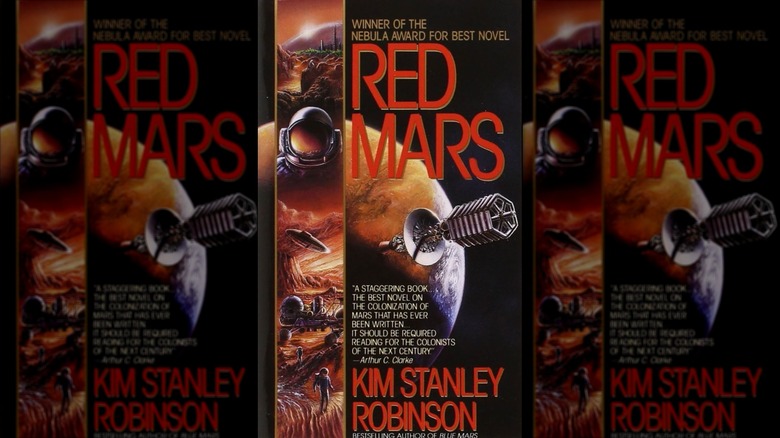
1. Red Mars: The Terraforming of a Genre
Kim Stanley Robinson’s 1992 masterpiece Red Mars is arguably the most essential piece of hard sci-fi waiting for a definitive adaptation. Set in 2026, the novel chronicles the first human attempt to colonize the Red Planet.
The Philosophical Core
The narrative is driven by the ideological schism between two factions: the "Reds," who believe Mars must remain pristine and untouched, and the "Greens," who advocate for aggressive terraforming to ensure the survival of the human species. This is not merely an action-adventure; it is a profound exploration of ethics, environmentalism, and corporate overreach. As the colony grows, the story branches into complex questions regarding Martian independence and the evolving nature of human society away from Earth’s gravity.
Why It Demands a Series
The scope of Robinson’s work—which includes Green Mars (1993), Blue Mars (1996), and the collection The Martians (1999)—spans centuries. A feature film would inevitably collapse under the weight of the scientific detail required to make the terraforming process credible. A television series, however, could treat the planet itself as a primary character, showcasing the incremental, decades-long transformation of Mars while grounding the drama in the human cost of colonization.
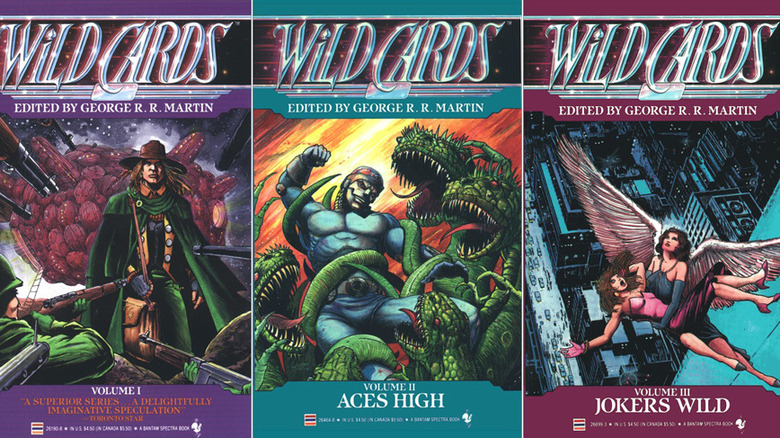
2. Wild Cards: The Human Face of Superpowers
Created and edited by George R.R. Martin and Melinda M. Snodgrass, the Wild Cards anthology series is a radical departure from traditional superhero tropes. Since 1987, the series has invited dozens of authors to contribute to an alternate history where an alien virus was released over New York City in 1946.
The Premise
The virus is unforgiving: 90% of those exposed die, 9% are mutated into "Jokers," and only 1% gain "Aces"—extraordinary, X-Men-like powers. Unlike standard comic book fare, Wild Cards treats these developments with a grounded, sociological lens. Martin, who has even co-authored scientific papers on the series’ internal logic, ensures that the world feels gritty, political, and intimate.
Current Status and Potential
Despite having 34 anthologies published, the franchise has been stuck in development purgatory for years, including a failed attempt at a Hulu adaptation. Given the current market fatigue regarding traditional, glossy superhero content, the raw, anthology-style, and character-driven nature of Wild Cards offers a refreshing, dark alternative that could redefine the genre.
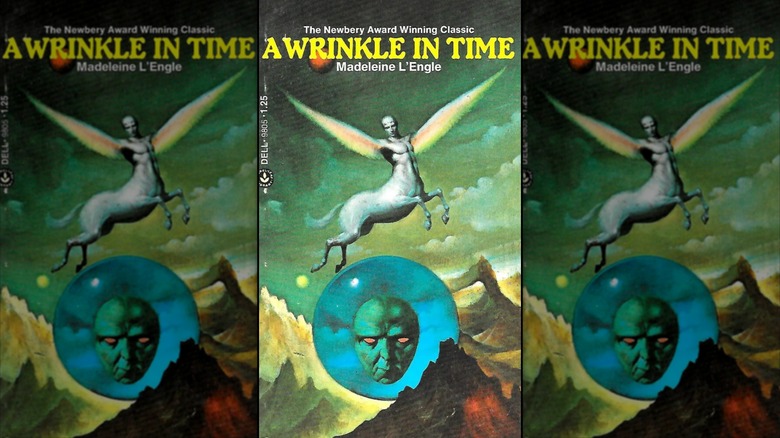
3. A Wrinkle in Time: Reclaiming a Classic
Madeleine L’Engle’s 1962 classic is a cornerstone of young adult science fiction, yet it remains cursed by lackluster adaptations. The 2018 theatrical film, despite a star-studded cast including Oprah Winfrey and Reese Witherspoon, failed to resonate with critics or audiences, largely due to a rushed narrative pace.
The Case for a Slow-Burn Adaptation
A Wrinkle in Time is fundamentally a story about the power of gentleness, faith, and intellect over the cold, conformist nature of the "IT." It is not an action-heavy blockbuster; it is a spooky, meditative, and cosmic journey. A big-budget TV series would allow for a slower, more deliberate pacing that respects L’Engle’s thematic depth, particularly regarding the intersection of science and spirituality. Furthermore, with four sequels—including A Wind in the Door and A Swiftly Tilting Planet—the potential for a long-form, multi-generational saga is immense.
4. The Xenogenesis Trilogy: Evolution Redefined
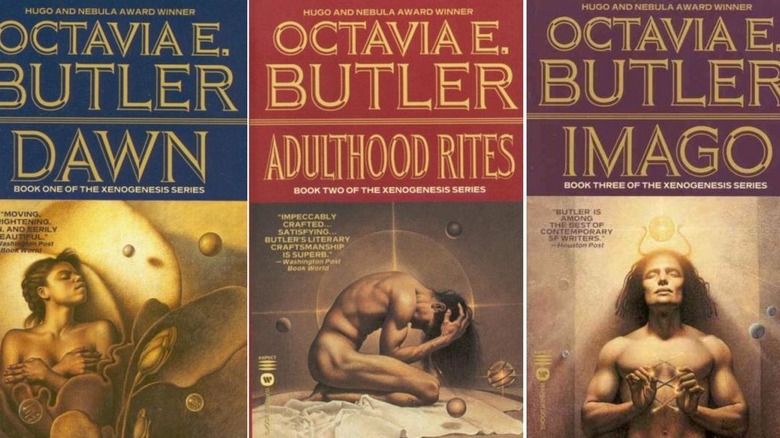
Octavia E. Butler’s Xenogenesis trilogy (also known as Lilith’s Brood)—comprising Dawn, Adulthood Rites, and Imago—is perhaps the most visionary work of science fiction from the late 20th century.
The Oankali Imperative
Set 250 years after a nuclear apocalypse, the story follows Lilith Iyapo, who is rescued by the Oankali, an alien race with three sexes: male, female, and "ooloi." The Oankali possess the ability to manipulate genes and intend to hybridize with humanity to "save" them.
Themes of Sexuality and Identity
The trilogy is notoriously bold, exploring fluid gender, sexuality, and the very definition of what it means to be human. Unlike the often-misogynistic tropes of space-age sci-fi, Butler’s work is deeply sex-positive and intellectually sophisticated. Adapting this would require a production team willing to lean into the uncanny, biological nature of the Oankali. With the successful adaptation of Butler’s Kindred at FX, the door is open for her most ambitious work to receive the visual treatment it deserves.
5. The Hainish Cycle: The Anthology of the Ekumen
Ursula K. Le Guin’s Hainish Cycle is less a traditional narrative and more a sprawling, interconnected universe. Spanning from 1966 to 2017, the cycle contains 11 novels and dozens of short stories, all linked by the shared history of the Ekumen—a confederation of human worlds seeded by the ancient Hainish people.
Structural Flexibility
Because the cycle does not rely on a single, linear protagonist, it is perfectly suited for an anthology-style series. Each season could tackle a different planet or philosophical dilemma—such as the gender-fluidity of the Gethenians in The Left Hand of Darkness.
Implications for Modern Sci-Fi
By adopting an anthology format, a Hainish Cycle series could explore the diversity of human experience across the stars without being tied down by a single, potentially exhausting plotline. It is a dream project for a showrunner interested in the "Star Trek" model of diplomatic sci-fi, but with the added depth and literary prestige that only Le Guin could provide.
Conclusion: The Path Forward
The shift toward large-scale literary adaptations marks a maturation of the television medium. Streaming services have realized that audiences do not just want "content"—they want immersive, challenging, and intellectually stimulating universes. Whether it is the hard-science terraforming of Red Mars, the sociological depth of Wild Cards, or the profound evolutionary questions posed by Octavia E. Butler, these five epics represent the next frontier of television.
As we look toward the future, the success of these potential series will depend on whether studios are willing to trust the source material. The technology to visualize these worlds exists; the only missing component is the commitment to honor the complexity that made these books legendary in the first place. The era of the "unadaptable" is over; the era of the "epic" has only just begun.










