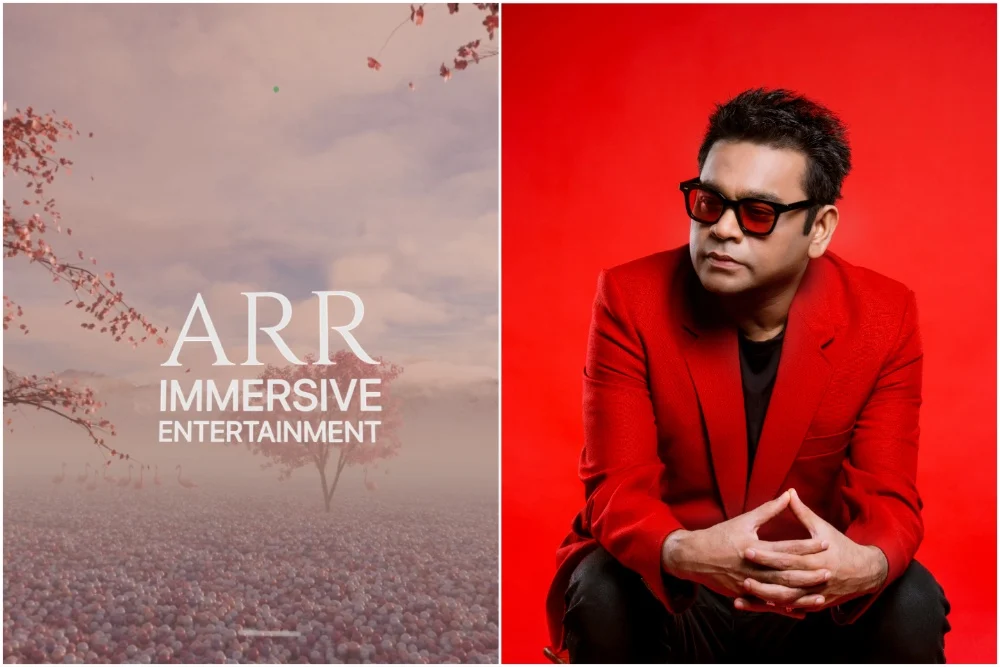
In a landmark development for both the music industry and the burgeoning field of spatial computing, two-time Academy Award-winning composer A.R. Rahman has announced the launch of ARR Immersive. This proprietary application, designed to redefine the listener’s relationship with sound and visual storytelling, is set to debut on the Apple Vision Pro on July 22.
The launch represents more than just a digital storefront for content; it is the culmination of a decade-long experimental journey by one of India’s most prolific musical minds. By leveraging the advanced sensor arrays and spatial audio capabilities of Apple’s premium headset, Rahman aims to transport audiences from the role of passive listeners to active participants within his sonic landscapes.
The Genesis of Innovation: A Chronology of Visionary Work
To understand the magnitude of ARR Immersive, one must look at the trajectory of Rahman’s career over the last ten years. While global audiences recognize him for his seminal scores in Slumdog Millionaire and 127 Hours, his interest in the intersection of technology and art began to crystallize long before the mainstream adoption of VR.
2014–2017: The Quest for Sensory Cinema
Rahman’s shift toward immersive storytelling found its first major milestone with Le Musk. A 360-degree virtual reality film, Le Musk was a daring experiment that challenged the traditional boundaries of cinema. Debuting at the Cannes XR Festival, the project was designed to be a "sensory" film, incorporating haptics and olfaction to create an experience that bypassed the eyes and ears to touch the viewer’s entire nervous system.
2018–2022: Scaling Spatial Audio
Following the success of his early prototypes, Rahman invested heavily in the infrastructure required for high-fidelity spatial recording. This period saw the composer experimenting with binaural recording techniques and Ambisonics, working with sound engineers to map how the human brain processes depth in music.
2023–2024: The Hardware Convergence
With the arrival of Apple Vision Pro, the technological constraints that once limited the distribution of these high-fidelity experiences began to dissolve. Rahman’s team spent the last 18 months optimizing the Le Musk footage, re-engineering the spatial audio tracks to align with the headset’s high-density pixel mapping and eye-tracking capabilities.
Supporting Data: Inside the ARR Immersive Library
The launch of the app is not merely a showcase for legacy content; it represents a curated digital library of exclusive, ground-up productions tailored for the "spatial canvas."
1. Le Musk (Spatialized Edition)
For the first time, the footage from Le Musk has been reworked to fully utilize the spatial format of the Apple Vision Pro. The depth-mapping allows viewers to observe the performance as if they were physically present in the scene, with audio cues that shift dynamically based on the viewer’s head position.
2. The Kathak Fusion Series
Perhaps the most ambitious component of the launch library is a series of original Kathak dance performances. These pieces feature:
- Artistic Talent: Performances by Pranith AP, Palak Chauhan, and Mudra IV.
- Choreographic Vision: Choreography by Shrita Baskar, designed specifically for a 360-degree environment.
- Sonic Engineering: A marriage of Western orchestral scores—a hallmark of Rahman’s Hollywood work—with traditional Indian classical percussion and melody. The audio mixing here is designed to isolate instruments in 3D space, allowing the user to "walk through" the orchestra.
3. ARR Live
A dedicated portal for Rahman’s concert performances, ARR Live serves as a "front-row-forever" experience. By utilizing high-bitrate spatial video, the app captures the energy and acoustics of a live concert hall, allowing fans to feel the resonance of the auditorium as if they were seated center-stage.
The Philosophy of Presence: Official Statements
In a series of recent interviews, A.R. Rahman emphasized that the app was born from a philosophical shift in his creative process.
"For me, music has always been more than something we hear; it is something we feel emotionally," Rahman stated during the product announcement. "Technology now allows us to experience stories and music in ways that were unimaginable just a few years ago. With the ARR Immersive App, we wanted to create a space where audiences don’t simply watch a performance or listen to a composition—they feel present within it."
Rahman views the app as a "new canvas" for artists. He believes that the current generation of creators is currently hampered by the flat, two-dimensional nature of digital streaming. "This is about bringing together music, storytelling, and innovation to create experiences that are deeply personal, emotionally engaging, and truly immersive. I believe this is an exciting new canvas for creators, and this is only the beginning."
Implications: A New Frontier for the Music Industry
The launch of ARR Immersive carries significant implications for both the entertainment technology sector and the music industry at large.
Disruption of Traditional Streaming
Current music streaming platforms like Spotify or Apple Music prioritize accessibility and compression. Rahman’s move suggests a bifurcated future for music: one where "utility listening" remains on traditional platforms, but "event listening" migrates to spatial environments. By controlling his own platform, Rahman is effectively bypassing the limitations of current algorithmic streaming, moving toward a premium, direct-to-consumer model that prioritizes artistic intent over data throughput.
The Role of the Composer as Technologist
Rahman’s transition into an app developer signals a shift in the role of the modern composer. As hardware becomes more advanced, the composer is no longer just the author of a score; they are the architect of the environment in which that score lives. This requires a synthesis of skills—musical theory, 3D spatial mapping, and user experience design—that will likely become the standard for the next generation of musical pioneers.
Cross-Platform Expansion
While the app launches exclusively on Apple Vision Pro, the roadmap is clear. The developer team has already confirmed that a Meta Quest release is in the pipeline. This multi-platform strategy suggests that Rahman is not looking to build a walled garden, but rather a standard for spatial music consumption across all VR/AR ecosystems.
Implications for Independent Creators
By creating a high-profile, professional-grade environment for immersive performances, Rahman is providing a roadmap for other independent artists. The success of the ARR Immersive app will likely determine how quickly other major labels and composers follow suit. If audiences respond positively to the premium, immersive experience of the Kathak performances or the concert series, we may see a surge in investment into "spatial music" production facilities globally.
Conclusion: The Horizon of Sound
As we stand on the precipice of a new era of digital interaction, A.R. Rahman’s ARR Immersive stands as a testament to the idea that technology, when guided by artistic soul, can bridge the gap between the performer and the listener.
Whether this app will fundamentally change how the masses consume music remains to be seen. However, by treating the listener not as a passive recipient of sound but as a traveler within a musical narrative, Rahman has once again proven why he remains at the vanguard of the industry. The launch on July 22 is not just a release date; it is an invitation to inhabit the music, to walk among the melodies, and to experience the "sound of the future" in its purest, most spatial form.
As Rahman himself noted, "this is only the beginning." As spatial computing hardware continues to shrink in size and grow in power, the boundary between the real and the composed will only continue to blur, with ARR Immersive leading the charge into the unknown.