

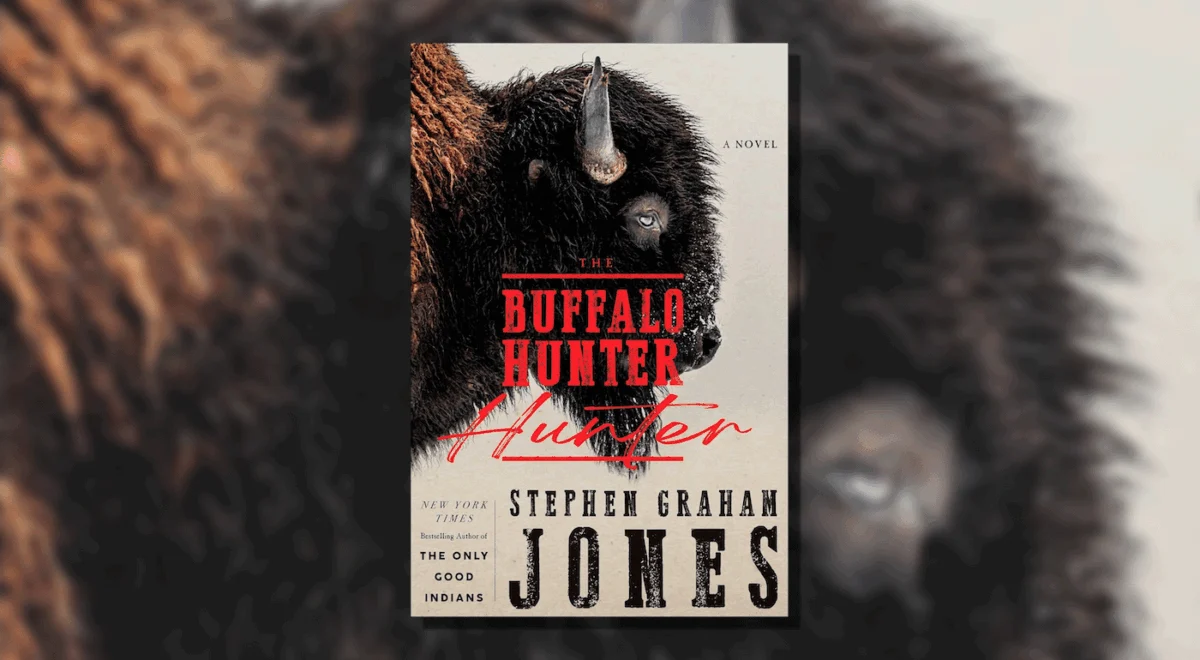
In the landscape of contemporary weird fiction, few voices resonate with the haunting, visceral intensity of Stephen Graham Jones. With the conclusion of his Nebula- and Stoker-winning novel, The Buffalo Hunter (2025), readers have been thrust into a harrowing synthesis of historical trauma, cosmic dread, and the crushing weight of ancestral legacy. As we wrap up our analysis of Chapters 23 and 24, we find the narrative—and its protagonist, Etsy Beaucarne—at a violent, blood-soaked crossroads.
Main Facts: A Convergence of Sin and Skin
The narrative arc of the final chapters centers on the "absolution" of Arthur Beaucarne, a 1912 Lutheran minister whose life is inexorably tethered to the Marias Massacre. As Arthur’s journal—wrapped in the skin of a human—comes to light in 2013, it triggers a chain reaction for his descendant, Etsy Beaucarne. Etsy, an academic struggling to secure tenure at the University of Wyoming, finds her personal reality collapsing under the weight of a supernatural inheritance.
The discovery that Arthur was not merely a bystander, but a primary instigator of the Marias Massacre, shatters Etsy’s understanding of her family tree. The revelation that the mysterious figure known as "Good Stab" is a spectral force—part guardian, part tormentor—transforms the story from a historical investigation into a desperate, climactic battle for spiritual and physical survival.
Chronology of Terror: From the Pulpit to the Precipice
To understand the trajectory of these final chapters, one must trace the timeline of the Beaucarne curse:
- June 2, 1912: Arthur Beaucarne pens his final journal entry. As his congregation is replaced by the specters of those slaughtered at the Marias, Arthur flees his parsonage, accepting that he has become a moral and physical leper.
- January 12, 2013: Etsy Beaucarne presents her transcription of the journal to her tenure committee. She is met with condescension and academic dismissal. Following this, she burns the copy of the journal, only to encounter a figure—her ancestor, Arthur—watching her through the blizzard.
- January 20, 2013: A week of profound loss. Etsy’s cat disappears, her father dies, and the true nature of her ancestry is laid bare. She receives the original, skin-bound journal and an unopened letter from the Blackfoot nation.
- The Climax: Etsy discovers that Arthur has been transformed into a nachzehrer—a parasitic, undead entity. In a final, desperate act of agency, she transports the creature to the site of the Marias Massacre, executes it with a nail gun and chemical fire, and confronts the cycle of guilt that has spanned over a century.
Supporting Data: The Anatomy of a Curse
The depth of The Buffalo Hunter lies in its meticulous attention to the "weird"—the small, unsettling details that ground the horror in reality.
The Genealogical Catachresis
Etsy’s struggle with her own history is mirrored in the linguistic confusion of her lineage. The academic critique regarding the term "tresayle" serves as a meta-commentary on the disconnect between institutional knowledge and lived experience. While the tenure committee obsesses over French genealogical precision, they remain blind to the literal blood-memory being presented to them. The surname "Flowers"—a corruption of "Beaucarne" via a nurse’s mishearing—highlights the fragility of identity and the way history is softened, mispronounced, and ultimately erased by those in power.
The Rodentification of the Soul
The transformation of Arthur into a giant prairie dog is a masterstroke of body horror. The prairie dog, a keystone species defined by its social complexity and vocal warning systems, becomes a cruel mirror for Arthur. Isolated and forced into a state of perpetual hunger, his existence as a nachzehrer is a Purgatorial sentence. He is trapped in a form that demands the very social connectivity he destroyed during his life.
Official Responses and Academic Dissonance
The reception of Etsy’s work by her university peers provides a scathing critique of the ivory tower. Her tenure committee’s dismissal of the journal as "derivative of Dracula" represents the ultimate failure of academia to engage with trauma that does not fit into established, comfortable paradigms.
The "Francophile" professor, in particular, represents the sterile, colonial mindset that prioritizes etymological "efficiency" over the harrowing truth of colonial violence. For these scholars, the journal is a commodity to be categorized; for Etsy, it is a living, burning evidence of a debt that must be paid. The institutional refusal to acknowledge the context of the Marias Massacre mirrors the broader American refusal to confront its genocidal past.
Implications: The Weight of Collective Guilt
The ending of The Buffalo Hunter offers no tidy resolution. When Etsy pours her father’s alkaline cremains over the acidic pages of the original journal, she is performing a ritual of neutralization. She is attempting to destroy the record of the sin, but the sin itself remains.
The Persistence of the Past
The figure of Good Stab—the workman who recovered the journal, the observer, the architect of vengeance—serves as the ultimate implication of the story. His salute to Etsy is not a gesture of forgiveness, but an acknowledgment of a shared burden. As he rides into the snowstorm, the reader is left with the unsettling realization that the nachzehrer may be gone, but the historical trauma of the Marias Massacre remains an open wound in the landscape.
Absolution vs. Confession
One of the most profound implications of the novel is the distinction between Arthur’s "absolution" and Good Stab’s "confession." Arthur, in his final letter, admits to inciting the slaughter to satisfy his own gluttony and discomfort. He is not a victim of circumstance; he is a man who used his position of authority to orchestrate murder. Etsy’s act of killing him is not an act of mercy, but a forced confrontation with this truth.
By the time the final pages turn, the reader is left with several haunting questions:
- Does the cycle end? Etsy destroys the journal and the monster, but she carries the knowledge of her family’s role in the genocide.
- Is Good Stab satisfied? The disappearance of the Blackfeet into the storm suggests that the supernatural entities are reclaiming the land in a way that excludes the modern, guilty observer.
- What is the role of the "Rodent"? By feeding Arthur into a creature of hunger, Good Stab ensures that Arthur experiences the exact, visceral desperation he inflicted upon others. It is a perfect, poetic retribution.
Conclusion: A Masterclass in Folk Horror
Stephen Graham Jones has crafted more than a horror novel; he has written a requiem for the forgotten victims of colonial expansion. The Buffalo Hunter challenges the reader to look at the "ghosts" in the pews—the ones we choose to ignore because their presence is an indictment of our own comfort.
Etsy Beaucarne’s journey from a failing academic to an executioner of ghosts is a powerful metaphor for the process of decolonization. It is painful, messy, and requires the destruction of one’s own comfort zone. As we move forward to explore the works of Nadia Bulkin and H.G. Wells, the echoes of the Marias Massacre—and the sight of a yellow hard hat hanging from a saddle—will surely linger. The snowstorm in Wyoming has swallowed the past, but in the world of the weird, nothing stays buried forever.
The story ends, but the haunting continues. For Etsy, and for the reader, the task is now to live in the silence that follows the scream.










