
 Raul Delapena Setiawan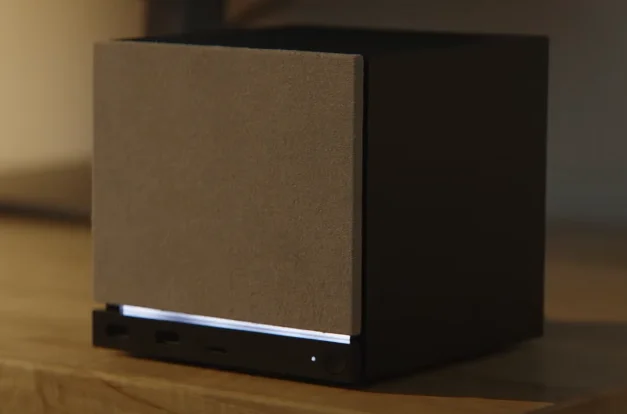
Valve Corporation has long occupied a unique position in the gaming industry. By balancing the roles of a dominant digital storefront operator, a software developer, and a hardware manufacturer, the company has reshaped how consumers interact with PC gaming. Recently, the spotlight has turned toward the company’s hardware philosophy, specifically the distinction between the Steam Deck—its wildly successful handheld—and the resurrected Steam Machine concept.
In a recent industry insight, Valve engineers have clarified that while the Steam Deck adheres to a rigid, generational hardware cycle, the Steam Machine is being positioned as a more fluid, evolving product line. This strategic divergence signals a shift in how Valve intends to support its living-room hardware in the years to come.
The Core Distinction: Fixed Targets vs. PC Evolution
To understand Valve’s current hardware trajectory, one must first recognize the fundamental design differences between the Steam Deck and the Steam Machine. The Steam Deck is, by definition, a closed-ecosystem handheld. It relies on a specific APU, a set thermal envelope, and a singular display resolution. Because of this, Valve has been notoriously cautious about releasing a "Steam Deck 2," insisting that any successor must offer a "meaningful performance jump" to justify a new purchase and avoid fragmenting the user experience.
However, the Steam Machine operates under a different set of architectural expectations. Speaking with PC Gamer, Valve engineers Pierre-Loup Griffais and Yazan Aldehayyat highlighted that the Steam Machine is, at its heart, a standard gaming PC.
"The Steam Deck, by its nature, needs a little bit more of a fixed performance target, whereas the Steam Machine is very much in line with gaming PCs," Griffais explained. "I don’t think we’re thinking about [the Steam Machine] with quite as long of a timeframe as something like the Steam Deck."
This admission confirms that Valve is treating the Steam Machine less like a console and more like an open-ended workstation. While the Deck requires optimization for a static chip, the Steam Machine allows Valve to iterate more rapidly, mirroring the modular and varied nature of the broader desktop PC market.
A Brief Chronology of Valve’s Hardware Ambitions
Valve’s journey into living-room hardware has been a decade-long saga of trial, error, and eventual redemption.
- 2013–2015: The First Wave: Valve initially launched the "Steam Machine" initiative in partnership with various third-party manufacturers like Alienware and Zotac. The project struggled due to a lack of mature Linux drivers, a limited library of native titles, and a clunky interface.
- 2018–2021: The Pivot to Handhelds: Recognizing the need for a proprietary hardware-software synergy, Valve shifted focus to the Steam Deck. By perfecting the "SteamOS" experience, Valve created a portable powerhouse that proved Linux-based gaming was not only viable but superior for handheld form factors.
- 2022–2024: The Steam Deck Dominance: With the success of the Deck, Valve established a template for success: consistent software updates, Proton compatibility layers, and a dedicated, user-friendly UI.
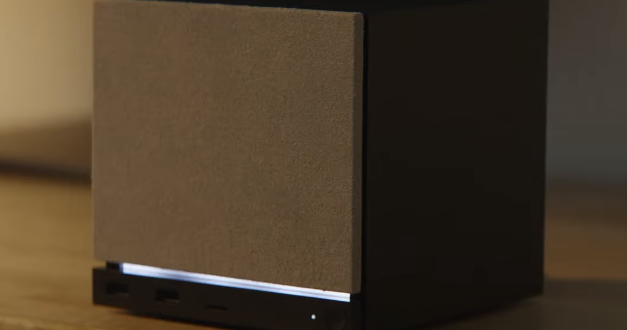
- 2025–Present: The Steam Machine Renaissance: Having proven that the software ecosystem is now robust, Valve is re-introducing the concept of a dedicated desktop/console unit. This current iteration benefits from years of backend development, making the hardware transition far smoother than the initial 2013 attempt.
Supporting Data: Market Realities and Consumer Behavior
The decision to adopt a faster refresh cadence for the Steam Machine is not merely a technical choice; it is driven by market data and changing consumer habits.
According to industry observations shared by Valve’s team, the traditional PC gaming demographic has shifted its upgrade behavior. In the past, gamers were expected to upgrade their GPUs every two to three years. However, rising hardware costs and diminishing returns on visual fidelity have led to a "slower upgrade cycle."
Yazan Aldehayyat noted that because gamers are holding onto their hardware for longer, there is less pressure to release a "revolutionary" new product every 18 months. Instead, the focus is on stability and market readiness. Valve is currently monitoring the volatility of the global component market—specifically the fluctuating prices of high-speed RAM and NVMe SSD storage—before committing to a firm "Steam Machine 2" launch date.
Furthermore, the "waiting list" reality for the current Steam Machine generation suggests that demand remains high. Valve is still in the process of fulfilling initial orders, meaning that any talk of a successor remains, for the moment, purely theoretical.
Official Responses: The Philosophy of "When It Makes Sense"
Valve’s engineers are adamant that "faster iteration" does not mean "annual releases." The company remains wary of the "planned obsolescence" stigma that plagues the mobile phone industry.
Griffais clarified that while the Steam Machine could be updated more frequently than the Steam Deck, there is no immediate roadmap for a successor. The company is waiting for a "convergence of utility"—a moment where the cost of entry for next-generation components aligns with a significant leap in performance that would be felt by the end user.
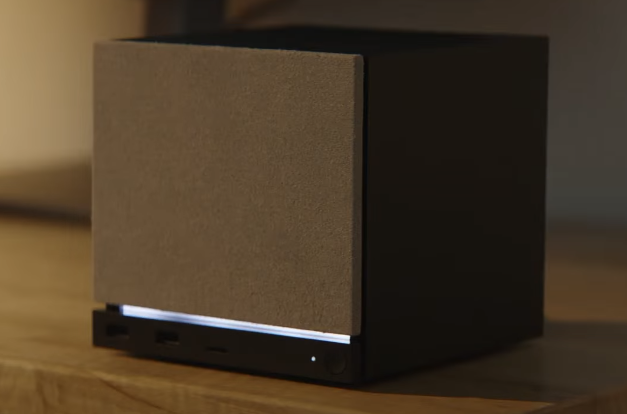
Essentially, Valve’s official stance is one of pragmatic opportunism. If the PC market experiences a surge in GPU efficiency or a breakthrough in power consumption, the Steam Machine line is designed to pivot quickly to integrate those technologies. Unlike the Steam Deck, which requires an entire redesign of its thermal management and battery systems to accommodate a new APU, the Steam Machine has more "breathing room" to incorporate off-the-shelf upgrades.
Implications: What This Means for the Future of PC Gaming
The implications of Valve’s new stance are significant for several sectors of the industry:
1. Fragmentation vs. Flexibility
For developers, the Steam Deck’s fixed hardware is a blessing, as it allows for "Deck Verified" optimization. The move toward a more fluid Steam Machine cadence presents a challenge: how do you market a game as "Steam Machine Optimized" if the hardware inside those units varies? Valve’s solution will likely involve a tiered certification system, similar to how console developers handle different performance modes (e.g., "Performance" vs. "Quality" modes).
2. The Living Room Battleground
By keeping the Steam Machine updated, Valve is effectively hedging its bets against the console giants—Sony and Microsoft. While the PlayStation 5 and Xbox Series X remain locked in a static seven-year cycle, a frequently updated Steam Machine provides a "PC-plus" experience that can theoretically run the latest titles with higher frame rates and fidelity as the hardware matures.
3. The Linux Ecosystem
Every Steam Machine iteration helps solidify the Linux-based SteamOS as a viable alternative to Windows. By forcing developers to keep their games optimized for Valve’s hardware, the company ensures that the library of compatible titles continues to grow, effectively insulating the PC gaming community from potential future Windows-exclusive limitations.
Conclusion: A Measured Evolution
Valve is not looking to turn the Steam Machine into a quarterly disposable product. Instead, they are finally acknowledging the reality that the "living room PC" is a dynamic concept. By distancing the Steam Machine from the rigid constraints of the Steam Deck, Valve has granted itself the flexibility to respond to market trends in real-time.
For the end user, this is a net positive. It ensures that when you do decide to invest in a Steam Machine, you aren’t tethered to a fixed, multi-year performance window that could quickly become obsolete. Instead, you are buying into a platform that evolves alongside the technology that powers it. As we look toward the next few years, the focus will not be on when the next Steam Machine arrives, but rather how Valve manages to bridge the gap between the accessibility of a console and the raw, iterative power of a modern gaming PC.
While we likely won’t see a "Steam Machine 2" in the immediate future, the groundwork for a more agile hardware pipeline is firmly in place. Valve is playing the long game, and in the world of gaming hardware, patience—and the ability to pivot—is the ultimate winning strategy.


 Pevita Pearce
 Reynand Wu




