In the fast-paced world of digital marketing, blogging has long been considered the bedrock of a brand’s online presence. It is the primary engine for SEO, a cornerstone of thought leadership, and an essential tool for educating audiences. Yet, as the digital landscape evolves—marked by the rise of generative AI and shifting search algorithms—marketers are finding that the "old ways" of creating content are yielding diminishing returns.
To navigate this volatility, many look to the Orbit Media Annual Blogger Survey, now in its 11th year. This authoritative research provides a mirror for the industry, helping marketing leaders benchmark their efforts against global trends. This year’s findings, however, present a paradox: despite the explosion of AI tools promising to automate and accelerate production, the time and effort required to produce a high-performing blog post remain stubbornly high.
The Evolution of the Craft: A Snapshot of Time and Effort
One of the most pressing questions for content teams in 2024 was whether the integration of generative AI would drastically shorten production cycles. The data suggests a resounding "no."

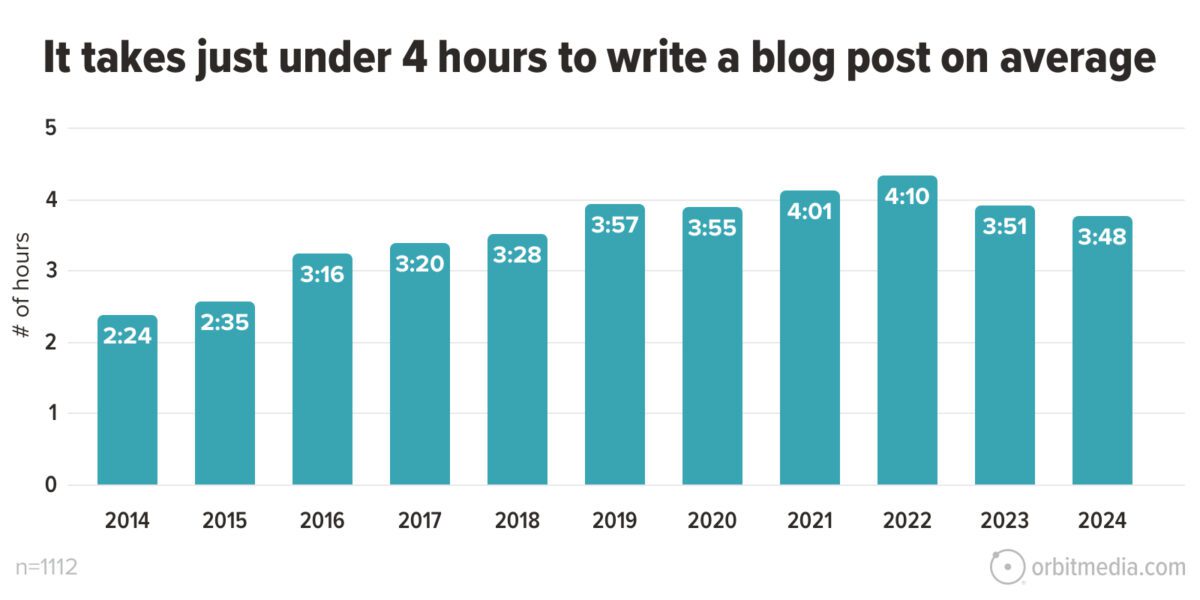
The survey reveals that the average blog post takes three hours and forty-eight minutes to write. Remarkably, this is a mere three-minute reduction from the previous year. If AI is being used by 80% of bloggers today—up from nearly 0% in 2022—why hasn’t the "time-to-publish" plummeted?
The answer lies in the nature of quality. While AI can assist with brainstorming, drafting, and visualization, it cannot replace the strategic direction, factual verification, and unique brand voice that elevate content above the noise. The research confirms that the "human touch" remains the most critical variable in determining whether a piece of content resonates with an audience.
Supporting Data: Why "More" Still Means "Better"
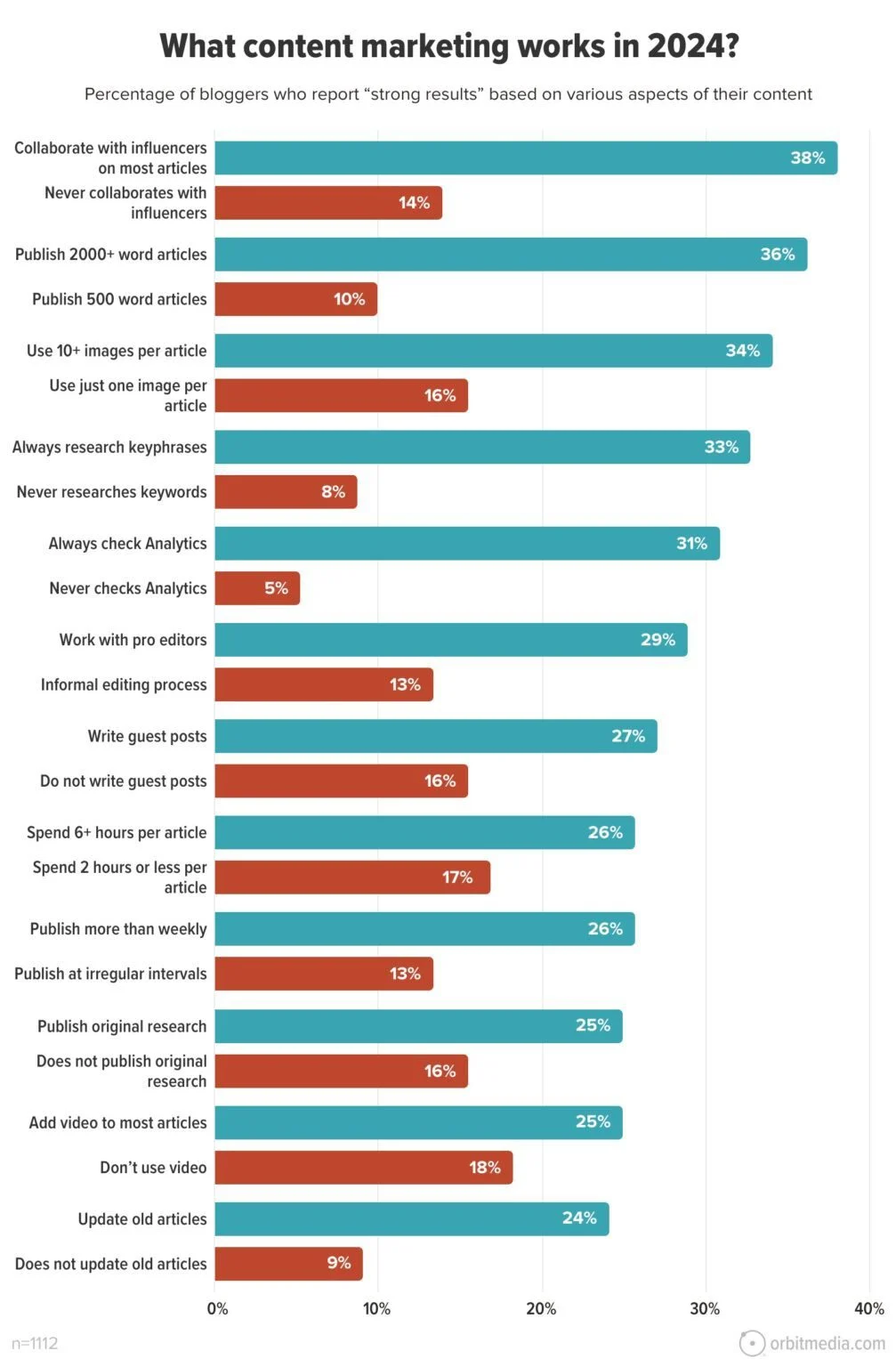
The survey highlights a clear correlation between effort and impact. Bloggers who consistently invest four or more hours per post and prioritize long-form content (2,000+ words) are significantly more likely to report "strong results."
However, volume should not be sacrificed for depth. The data suggests that a bi-weekly publishing cadence is the minimum threshold for maintaining audience engagement. Users today are sophisticated; they demand high-quality, insightful content, and they expect it consistently. They are unwilling to settle for generic, "filler" posts that offer little value.
Furthermore, the research draws a compelling comparison between successful blogs and social media feeds. The most effective blogs mirror the engagement strategies of social platforms—utilizing visual storytelling, interactive elements, and clear, user-focused value propositions.
AI: A Tool, Not a Strategy
While AI adoption has reached near-ubiquity, there is currently no direct correlation between high-frequency AI usage and superior performance metrics. This suggests that many organizations are using AI as a crutch rather than a catalyst.

The most successful content marketers are those who treat AI as a junior assistant. They leverage these tools for ideation or structural outlines, but maintain a rigorous human-led process for:
- Strategic Alignment: Ensuring content serves specific business goals.
- Fact-Checking: Mitigating the risk of AI-generated hallucinations.
- Creative Differentiation: Infusing the brand’s unique perspective, which is the only way to stand out in an AI-saturated internet.
Q&A with Andy Crestodina: Insights from the Frontlines
To gain deeper context, we spoke with Andy Crestodina, CMO and co-founder of Orbit Media, to discuss the implications of this year’s findings.
Q: What research findings were the most surprising to you personally?
A: "The data tells us, year after year, that big efforts drive big outcomes. It’s not just a theory; when you compare low-effort versus high-effort programs, the difference is stark. What surprises me is that so many marketers continue to stick to low-effort, low-frequency programs—no research, no collaboration, no video—and then wonder why their results are flat. If you put in low effort, you should expect low results."

Q: Why do you think podcasters are twice as likely to report strong results?
A: "It’s not just the audio format. It’s the behavior of the creator. Podcasters are forced to collaborate, they are forced to be authentic, and they are usually producing ‘primary’ content rather than just summarizing other people’s ideas. They aren’t just sitting behind a keyboard. That human-to-human connection is a massive competitive advantage."
Q: The report notes that the most visible metrics—like traffic—are often the least important. How should we measure success?
A: "Traffic is easy to track, but it’s a vanity metric if it doesn’t convert. We’ve seen a decline in organic search traffic across the web, partly due to ‘zero-click’ searches and changes in how Google delivers information. Instead of chasing traffic, we need to focus on what happens after the click. Are we building authority? Are we capturing leads? Are we influencing the bottom of the funnel? The most important marketing outcomes—word-of-mouth and top-of-mind awareness—are notoriously hard to measure, but they are the ones that actually build a business."
Strategic Implications for Content Leaders
For those leading content marketing teams, the path forward is clear: move away from the "quantity-first" mentality and pivot toward high-value, high-effort content.

1. Re-evaluate Your Metrics
Stop prioritizing page views. Start tracking "engagement depth," such as time on page, newsletter sign-ups, and direct inquiries. If a piece of content doesn’t contribute to your brand authority or your sales pipeline, it is effectively noise.
2. Embrace the "Rented Land" Strategy
As organic search becomes more competitive and volatile, explore platforms where your audience already spends their time. Crestodina points to LinkedIn Newsletters as a prime example: "We stopped worrying about ‘not building on rented land.’ By publishing directly to LinkedIn, we aligned with their algorithm, which rewarded us with massive reach. For B2B brands, this is currently the #1 opportunity for growth."
3. Prioritize Collaboration and Original Research
The survey proves that original research—the kind that generates unique data and charts—is a major driver of "strong results." When you become a source of original data, you become an industry authority. Other sites cite you, backlinks increase, and your brand equity grows.

4. Build a "Content Ecosystem"
Every piece of content should be part of a larger, interconnected ecosystem. An article should lead to a video; a video should be cut into social snippets; a social post should drive traffic to a deep-dive research paper. This "repurposing" mindset ensures that your four hours of writing time is leveraged across multiple touchpoints.
Conclusion: The Future is Human-Centric
The 11th Annual Orbit Media Blogger Survey is a sobering reminder that there are no shortcuts to excellence. While AI and automation can improve efficiency in minor ways, the "strong results" reported by top-tier marketers are the direct consequence of intentionality, high-level strategy, and the courage to produce content that truly matters to the reader.
As we look toward 2025, the brands that win will not be those that publish the most content, but those that publish the best content. It is time to stop measuring success by the volume of traffic and start measuring it by the strength of the relationships built with the audience.

For those ready to refine their approach, the data is clear: double down on the effort, prioritize unique insights, and meet your audience where they live. The era of the "average" blog post is over. The era of the strategic, high-value asset has begun.