Ammar Sabilarrohman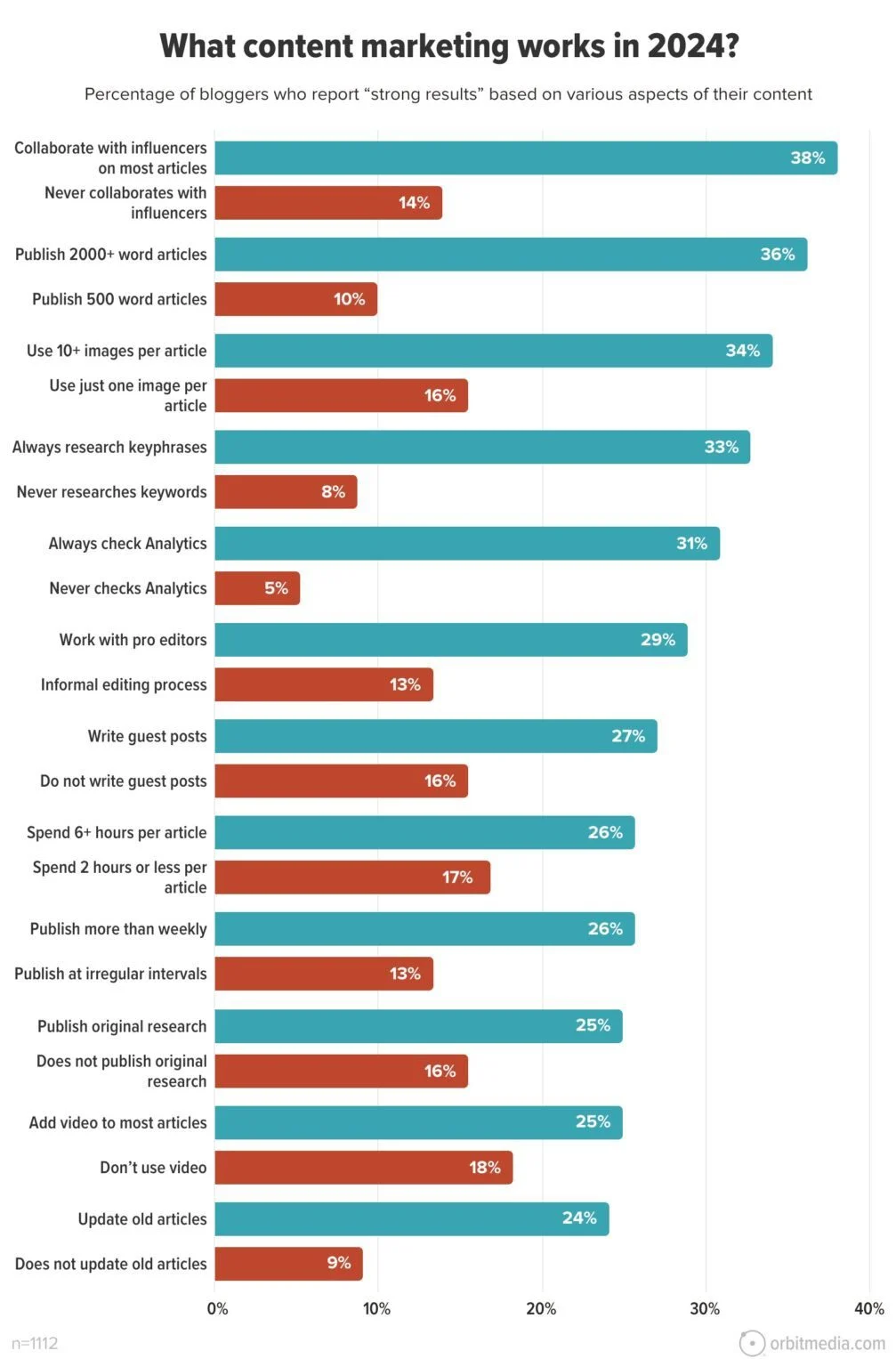
Blogging has long been the bedrock of digital marketing. For years, the formula was simple: conduct keyword research, draft a post, hit publish, and watch the organic traffic roll in from search engines. However, the digital landscape is currently undergoing a tectonic shift. With the rise of generative AI, the volatility of search engine algorithms, and changing user consumption habits, the "tried and true" methods of the past decade are yielding diminishing returns.
To navigate this new era, marketers must look beyond intuition and rely on hard data. The 11th Annual Blogger Survey, conducted by the industry-renowned Orbit Media, serves as a vital compass for content leaders. By analyzing the habits of over 1,000 bloggers, the report provides a sobering but necessary look at what it actually takes to win in 2025.
The Myth of AI Efficiency and the Time Investment Paradox
One of the most persistent narratives in marketing today is that generative AI will revolutionize the speed of content production. If AI can draft an article in seconds, surely the time spent on blogging should be plummeting?

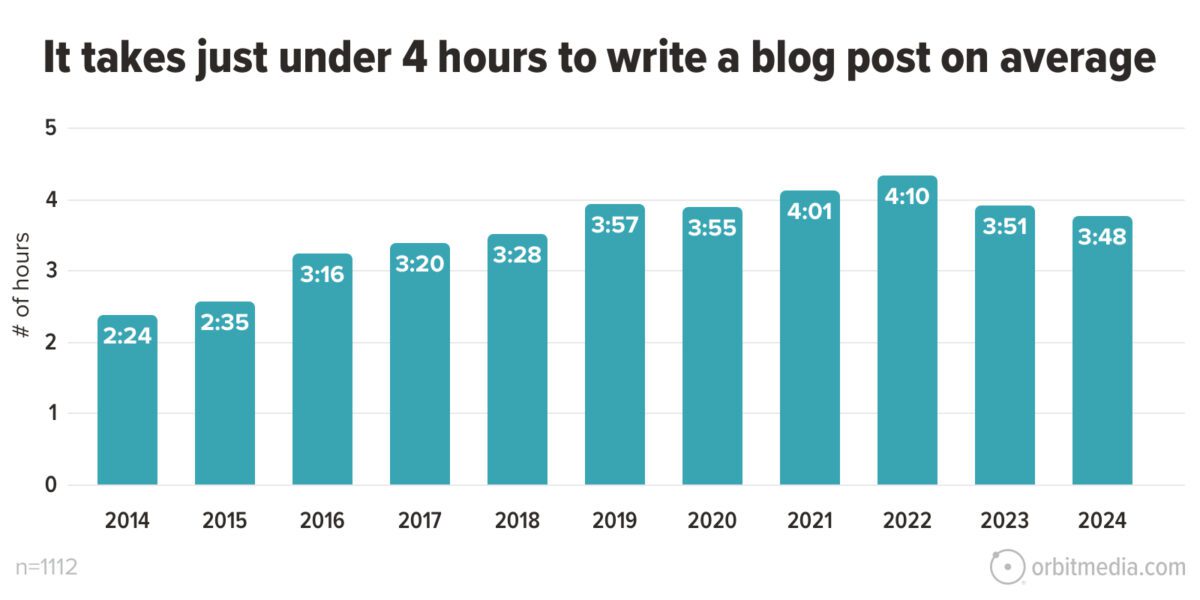
According to the latest data, that simply isn’t happening. The average time spent crafting a blog post now stands at three hours and forty-eight minutes—a mere three-minute reduction from the previous year. Despite 80% of bloggers now incorporating AI into their workflows, the time investment remains high.
This data suggests a critical realization: AI is an assistant, not a replacement for strategy. While tools may help with brainstorming or outlining, the heavy lifting—strategic direction, factual verification, brand voice integration, and the "human touch" required for resonance—still demands significant time. The "fast content" trap is precisely that—a trap. The survey indicates that high-effort content (posts exceeding 2,000 words) remains the most likely to generate "strong results," proving that readers still prioritize depth over mass-produced, automated filler.
Chronology of Content Evolution: From SEO Hubs to Community Engines
To understand the current state of blogging, one must observe how the definition of a "successful" blog has evolved.
- 2014–2018: The SEO Gold Rush. During this era, blogging was primarily a volume game. Brands focused on ranking for high-intent keywords to capture search traffic.
- 2019–2022: The Rise of Thought Leadership. As content saturation increased, brands shifted toward unique perspectives, original research, and data-driven storytelling to differentiate themselves.
- 2023–Present: The "Social-First" Integration. Today, the most successful blogs operate less like static libraries and more like dynamic social feeds. The data suggests that treating a blog with the same rigor as a social media channel—focusing on community engagement, frequent distribution, and platform-native content—is the new mandate for growth.
The Data: What Actually Drives Performance?
The Orbit Media research provides a stark look at the correlation between effort and outcome. For marketing teams, the findings are clear: there is no shortcut to excellence.
1. The Frequency Mandate
The data suggests that a bi-weekly publishing cadence is the absolute minimum threshold for maintaining relevance. In a world of infinite scroll and short-form video, audiences have little patience for brands that go dark for weeks at a time. Consistency is not just about staying top-of-mind; it is about building a habit in your reader’s life.
2. The Audio Advantage
Perhaps the most intriguing finding is the outsized success of bloggers who also produce audio content (podcasting). While only a small fraction of respondents currently integrate audio, those who do are twice as likely to report "strong results." This suggests that multi-format creators are better at building intimacy with their audience, a factor that written text alone often fails to achieve in the modern attention economy.

3. The "Low-Effort" Trap
The survey exposes a painful truth: a vast majority of content programs are stuck in a loop of low-effort, low-reward activity. Many brands continue to produce short-form, generic posts on a monthly basis, skipping the heavy lifting of original research, collaborations, and multimedia integration. The data confirms that these brands should expect low returns, as they are failing to provide the unique value that search engines and human readers demand.
Insights from the Frontlines: A Q&A with Andy Crestodina
To contextualize these findings, we sat down with Andy Crestodina, CMO and Co-Founder of Orbit Media, to discuss what this data means for the future of marketing.
Q: The data suggests that blogging results have been in a slow decline for five years. Why is this happening?
Crestodina: "It’s a mix of factors. Search traffic is down across the web, and ‘zero-click’ searches are rising. Many marketers are still measuring success by vanity metrics like raw traffic, which are becoming harder to achieve. When you measure success by a metric that is declining, you feel like you are failing. We need to redefine success to focus on bottom-of-funnel impact and brand equity."

Q: You mentioned that the most visible metrics are the least important. What should we be looking at instead?
Crestodina: "Stop obsessing over traffic volume. Start tracking engagement metrics that correlate with actual business goals: email newsletter signups, time spent on page, internal link click-throughs, and, most importantly, the conversion rate of readers into leads. The most powerful outcomes—like word-of-mouth and top-of-mind awareness—don’t show up in a standard Google Analytics dashboard."
Q: What is the single biggest change you’ve made to your strategy based on these findings?
Crestodina: "We stopped fighting the platforms. We launched a LinkedIn newsletter. Even though the ‘old school’ rule is ‘don’t build on rented land,’ we recognized that LinkedIn is where our audience lives. By giving in and publishing directly to the platform, we’ve gained massive visibility. My #1 tip for B2B brands right now is to meet your audience where they are, even if that means moving your primary content distribution off your own website."
Implications for Marketing Leaders
The findings from the 11th Annual Blogger Survey are not a signal to abandon blogging, but a mandate to evolve it. For content marketing leaders, the path forward requires three specific adjustments:

1. Realigning Metrics
Shift focus away from organic search traffic as the primary KPI. Instead, prioritize "high-value" actions. Is your blog content driving newsletter subscribers? Is it being used by your sales team to close deals? Are you measuring the "dwell time" of your most loyal readers? These are the indicators of a sustainable program.
2. Doubling Down on "High-Effort" Content
The era of the 500-word SEO-optimized blog post is effectively over. If you want to rank and resonate, you must produce "lighthouse" content—original research, detailed case studies, and comprehensive guides that provide value no one else can replicate. This takes time, but the ROI for this type of content is significantly higher than the aggregate of ten smaller, generic posts.
3. Embracing Platform-Native Distribution
The "destination" blog—a place where you expect users to bookmark and visit daily—is becoming a relic. Content must be distributed where the audience already spends their time. Whether that is a LinkedIn newsletter, a dedicated YouTube channel, or a podcast feed, your strategy must be multi-channel.

4. Cultivating Human-AI Synergy
Finally, leaders must stop looking for AI to cut costs and start looking for it to increase capacity. Use AI to handle the mundane aspects of content production—data cleanup, formatting, and drafting ideas—so that your human talent can spend their time on the things that actually build a brand: strategy, creativity, and deep, empathetic storytelling.
In conclusion, the state of blogging is not in crisis; it is in a period of necessary professionalization. The brands that will succeed in 2025 and beyond are those that stop chasing algorithm hacks and start focusing on the fundamental pillars of marketing: high-quality insights, consistent distribution, and a genuine, human connection with their audience. As the data shows, the effort you put in will directly dictate the results you get out. It’s time to stop doing what’s easy and start doing what works.


 Nana
Nana
 Jia Lissa