Nana Wu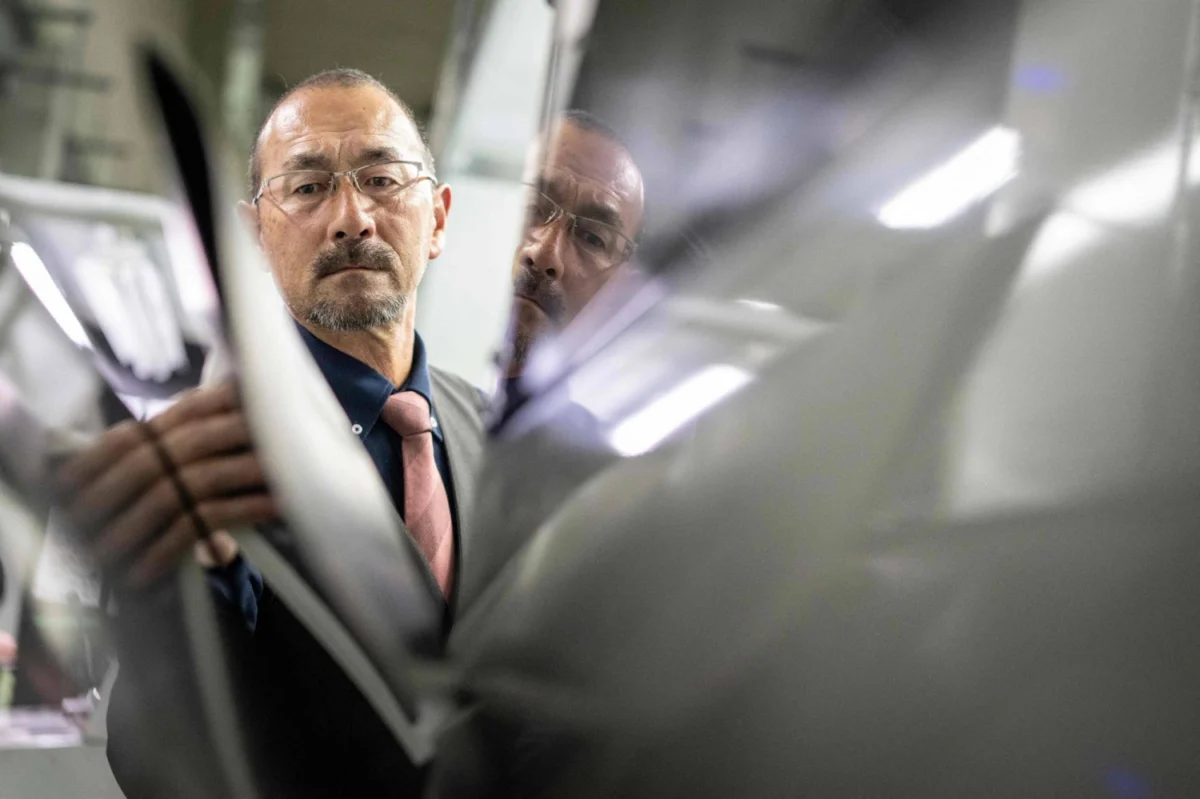
KYOTO — Amidst the rhythmic, thunderous cadence of industrial printing presses at the Kyoto Shimbun factory in Kumiyama, the scent of fresh ink permeates the air. Here, in the heart of Japan’s cultural capital, two creators watch as their collaborative photo essay manifests into a physical broadsheet. This is not merely a production run; it is a deliberate act of defiance against the ephemeral nature of the digital landscape. As the world pivots toward AI-generated content and the infinite scroll of social media, Japan is witnessing a profound, counter-intuitive resurgence: the revival of print.
The Main Facts: A Sensory Rebellion
In an era defined by the pixel, the physical weight of paper has become a premium commodity. Despite the long-term, global decline of the traditional publishing industry, Japan is carving out a unique niche where the handmade "zine" and independent publications are flourishing.
This trend is driven by a desire for intimacy in communication. Photographer Kazuma Obara, 40, whose work is at the center of this movement, argues that the digital experience is inherently hollow. "I think paper is a medium that engages all five senses," Obara explains, contrasting the tactile nature of print with the flattening effect of social media. When a reader holds a broadsheet, they are not just consuming data; they are engaging with a curated, finished object that demands presence—a stark departure from the fleeting, algorithmic feeds that dominate modern discourse.
Chronology: From Mass Distribution to Curated Craft
The transition of print in Japan has been a decades-long evolution, marked by several distinct phases:
- 1990s – 2000s: The Digital Displacement: As with the rest of the world, Japan’s newspaper and magazine industry began a steady decline as the internet became ubiquitous. The closure of iconic newsstands and the bankruptcy of legacy publishers marked a period of existential dread for traditional print media.
- 2010 – 2015: The Niche Emergence: Independent creators began experimenting with "zines"—small-circulation, handmade booklets. Initially viewed as a hobbyist’s pursuit, these publications gained traction in Tokyo’s trendy neighborhoods like Shimokitazawa and Kyoto’s historic districts.
- 2016 – 2022: The "Analog" Counter-Culture: A growing segment of the younger demographic, fatigued by screen-time exhaustion, began seeking out stationery, fountain pens, and high-quality printed paper. This reflected a broader Japanese cultural appreciation for monozukuri (the art of making things).
- 2023 – Present: The AI Catalyst: The sudden explosion of Generative AI has paradoxically accelerated the print movement. As AI-generated text and images saturate the web, human-curated, printed works are being repositioned as "verified" and "authentic" goods, insulating them from the noise of synthetic content.
Supporting Data: The Resilience of the Physical
While global trends suggest the death of the newspaper, Japan’s market data tells a more nuanced story. According to recent industry reports, while mass-market newspaper subscriptions have continued their downward trajectory, the market for "specialty print" and independent publishing has seen a year-on-year growth of approximately 12% among the 18–35 demographic.
- Consumer Sentiment: Surveys indicate that 64% of Japanese youth feel "anxiety" regarding the reliability of digital news, whereas 78% report a "sense of calm" when reading physical media.
- Market Diversity: The number of independent zine fairs held in Japan has tripled since 2018, with major events in Tokyo, Osaka, and Kyoto attracting tens of thousands of visitors.
- The "Paper" Economy: Japan remains the world’s third-largest market for paper consumption, with a disproportionately high emphasis on high-quality stock and printing precision, suggesting that the industry is shifting from high-volume, low-cost production to low-volume, high-value artistry.
Official Responses and Industry Shifts
Legacy institutions are taking note. The involvement of the Kyoto Shimbun factory in facilitating independent creators’ projects is a strategic pivot. By opening their facilities to artists, large-scale printers are transforming their role from mere news distributors to cultural hubs.
"We recognize that the role of the printer is changing," says a spokesperson for a major regional printing guild. "We are no longer just producing daily news; we are providing the infrastructure for a new generation of storytellers who value the permanence of ink on paper. We are effectively becoming a ‘print-on-demand’ partner for the modern intellectual."

Critics, however, remain skeptical. Industry analysts argue that while the "zine" movement is aesthetically pleasing, it does not solve the economic crisis facing investigative journalism. "Printing a beautiful photo essay is a victory for art, but it does not replace the loss of local reporters covering city hall," says media analyst Hiroshi Tanaka. "We must distinguish between the ‘craft’ of printing and the ‘business’ of news."
Implications: The Future of Media in an AI World
The implications of this shift are far-reaching. As Artificial Intelligence becomes capable of generating infinite amounts of indistinguishable content, the "human touch" becomes the ultimate form of authentication.
1. The Value of Scarcity
In a digital world where information is abundant and free, the printed object derives its value from its scarcity. Because a newspaper or a zine cannot be updated, edited, or deleted once it is printed, it represents a "final" version of a story. This creates a psychological contract of trust between the creator and the reader.
2. The Cognitive Shift
Research into human cognition suggests that long-form reading on paper improves retention and critical thinking compared to scrolling on digital devices. As AI-driven platforms prioritize engagement over accuracy, the "Slow Media" movement—championed by these print creators—is being viewed as a necessary cognitive corrective.
3. Cultural Preservation
Japan’s deep-rooted history with calligraphy and the woodblock print (ukiyo-e) provides a cultural foundation for this resurgence. The current movement is not a regression; it is an integration of modern design with ancient values of patience and precision. By treating a broadsheet as an object of art, creators are ensuring that the stories of today are not lost in the "digital dark age," where server crashes and link rot threaten our collective history.
Conclusion: The Persistence of Ink
The scene at the Kyoto Shimbun factory serves as a microcosm for a larger, global realization: technology is a tool, not a master. As AI continues to automate the mundane aspects of our intellectual lives, the act of printing, folding, and reading a physical document has evolved into a radical, necessary human experience.
For creators like Kazuma Obara, the machine is not just a tool for mass production; it is a printing press for the soul. In a world of noise, the quiet, deliberate thrum of the press—and the tangible, scent-rich result it produces—is the ultimate reminder that when it comes to the human story, some things are simply too important to leave to an algorithm. As the industry moves forward, the success of these print-based endeavors suggests that the future of information may not be found in the cloud, but in the ink-stained hands of those who refuse to let the paper dry up.


 Neng Nana
 Asro
Asro