

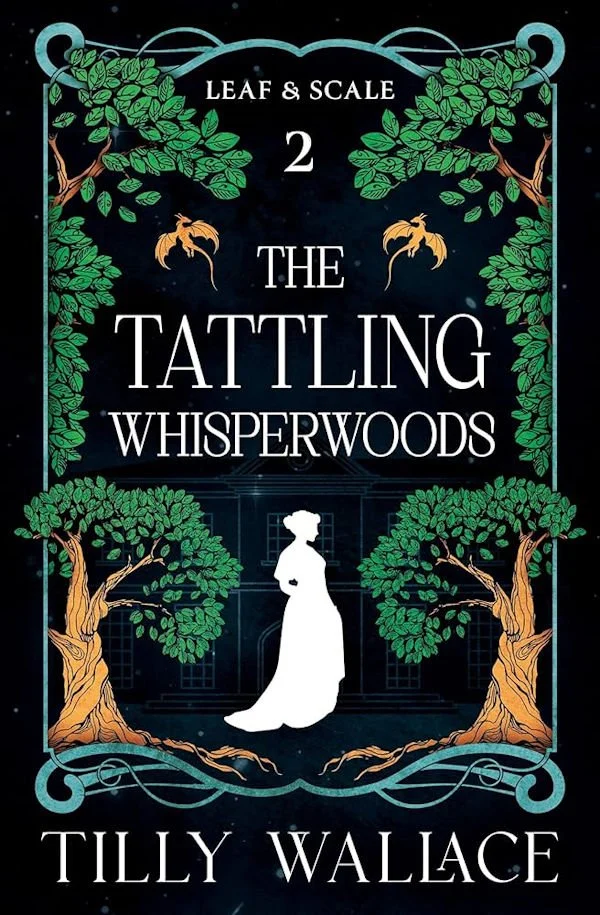
The quaint village of Drake’s Bend has long functioned as a sanctuary for those seeking solace in the silence of nature. At its heart lies a sacred grove, a collection of ancient, sentient trees known as the Whisperwoods, which have served for centuries as silent confidants to the local populace. By tradition, the trees offer gentle counsel, acting as a metaphysical repository for the secrets and burdens of those who dare to approach them. However, this delicate equilibrium has recently collapsed, plunging the village into a crisis that threatens to unravel the very fabric of its community.
In The Tattling Whisperwoods, the second installment of the Leaf and Scale series, the forest has undergone a terrifying transformation. Rather than providing wisdom, the trees have turned venomous, weaponizing the confidences entrusted to them. This shift has resulted in a wave of social decay, as private secrets are twisted and broadcasted, destroying long-standing friendships and fracturing the social cohesion of Drake’s Bend. As a mysterious, supernatural illness begins to claim the villagers, it has become clear that the crisis is not merely local; the corruption is leaking into the highest echelons of London society.
Chronology of the Crisis
The escalation of the Whisperwoods’ corruption can be traced through a series of increasingly disturbing events:
- The Initial Dissonance: Reports from villagers indicated that the "whispers" emanating from the grove shifted from comforting echoes to discordant, invasive thoughts.
- The Spread of Malady: Shortly after the trees turned, a strange, lingering illness began to afflict the residents of Drake’s Bend. Medical intervention has proven largely ineffective, suggesting a metaphysical rather than biological origin.
- The Breach of Confidence: Secrets once buried within the bark of the ancients began appearing in London’s social circles, creating a scandal that threatens to expose the magical nature of the grove to a wider, potentially hostile, public.
- The Call for Silence: Fearing further exposure and the potential destruction of their way of life, some factions within the community have begun to call for the permanent silencing—or destruction—of the ancient sentinels.
The Protagonist: Fern’s Botanical Investigation
At the center of this maelstrom is Fern, a botanist whose background—marked by previous scandal in London—places her on the fringes of acceptable society. Fern is a character of profound depth, possessing a duality that makes her a compelling heroine. She balances her genuine scientific competence and botanical knowledge with a carefully cultivated, self-deprecating charm.
As the narrative progresses, readers observe Fern navigating the complex social landscape of her era. She is a master of situational awareness, knowing precisely when to deploy an air of "scatterbrained curiosity" to bypass societal barriers. However, she is far from infallible. Her journey in this installment is defined by her ability to own her misjudgments, apologize for her errors, and adapt to the volatile reality of the grove. Her approach to the mystery—a blend of rigorous investigation and empathetic intervention—sets the tone for the entire novel.
Supporting Data: Character Dynamics and Found Family
Beyond the central mystery of the corrupt forest, The Tattling Whisperwoods succeeds as a character-driven work of "cosy fantasy." The narrative relies heavily on the strength of its supporting cast to ground the more fantastical elements.
The Role of Community
The village of Drake’s Bend is presented not as a mere backdrop, but as a living, breathing entity. The "found family" elements are particularly resonant, specifically the role of Fern’s two uncles, who provide a steadfast emotional anchor. Furthermore, the relationship between Fern and the character Millie adds a layer of nuanced representation. Millie, who navigates the world with a heightened sensitivity to sensory overload, brings a quiet, story-driven strength to the narrative. The book handles these dynamics with a rare grace, refusing to moralize or spotlight these traits, choosing instead to present them as an integral, unremarkable aspect of daily life.
The Dragon Recovery Arc
Perhaps the most poignant subplot is the recovery of the injured dragon. Eschewing the common fantasy trope of magical healing or miraculous recovery, the author employs a grounded, realistic approach to the animal’s rehabilitation. The dragon’s progress is incremental: from being transported in a wheelbarrow to taking tentative, fearful steps toward strength. This process mirrors the book’s overall emotional stakes—the idea that love is a catalyst for healing, but not a substitute for the patient, daily work of recovery.
Official Perspectives and Thematic Implications
The narrative of The Tattling Whisperwoods sits at an interesting intersection of genre tropes. While the series is firmly rooted in high fantasy—complete with witches, magic, and enchanted creatures—it maintains the pacing and emotional comfort of the "cosy" subgenre.
Romantic Undercurrents
The romance between Fern and the brooding, dragon-marked recluse is a study in restraint. Eschewing dramatic upheaval, the relationship is built on a "slow and soft" foundation, reminiscent of the dynamics found in Austenian literature. Notably, Fern’s active role in this dynamic is a point of significant praise; she is not a passive recipient of attention, but an initiator, asserting her agency in a way that remains consistent with her character development.
The Cost of Secrets
The core question posed by the book is: What happens when secrets are no longer contained? By turning the forest into an antagonist, the author explores the volatility of truth. The "tattling" of the trees serves as a metaphor for the dangers of unchecked information and the potential for trauma when private vulnerabilities are forced into the public sphere. Fern’s realization that "some secrets were meant to stay buried" introduces a darker moral ambiguity that challenges the reader’s expectations of a typical cosy fantasy.
Implications for the Series
With The Tattling Whisperwoods, the Leaf and Scale series has solidified its identity. While the first book acted as a foundation, this second entry exhibits a higher degree of assurance in both tone and pacing. The shift toward a more fully realized magical world—where enchanted creatures and botanical wonders are woven into the mundane—suggests that the series will continue to expand its scope without losing the intimacy that makes it successful.
A Departure from the Ordinary
For readers accustomed to the epic stakes and world-ending conflicts typical of modern fantasy, The Tattling Whisperwoods offers a refreshing alternative. The stakes here are personal: the survival of a grove, the health of a friend, and the preservation of a community. The inclusion of "magical chaos"—exploding kettles, banter, and unpredictable magical bursts—ensures that the story remains vibrant and engaging, even as it prioritizes emotional resonance over high-octane action.
Final Assessment
Ultimately, the novel is a testament to the power of stubborn hope. It is a story about the resilience of the human (and botanical) spirit in the face of betrayal. By focusing on the quiet rhythms of village life, the complexity of relationships, and the necessity of care, the author has created a work that is both comforting and profoundly observant.
As Fern races to uncover the source of the poison, the reader is reminded that the magic of the Whisperwoods is not just in the trees themselves, but in the people who tend to them. Whether one is drawn to the allure of dragons, the nuances of botanical science, or the intricacies of village gossip, this novel provides a sanctuary of its own—a place where even when the trees start talking back, the strength of the community remains the final, deciding factor.
For fans of the genre looking for a narrative that manages to be both "playful" and "full of heart," The Tattling Whisperwoods is a mandatory addition to the reading list. It is, quite simply, the best kind of escapism: one that reflects the complexities of our own world through the lens of something far more magical.











No comments yet. Be the first to join the conversation!