

By João Silva | May 15, 2026
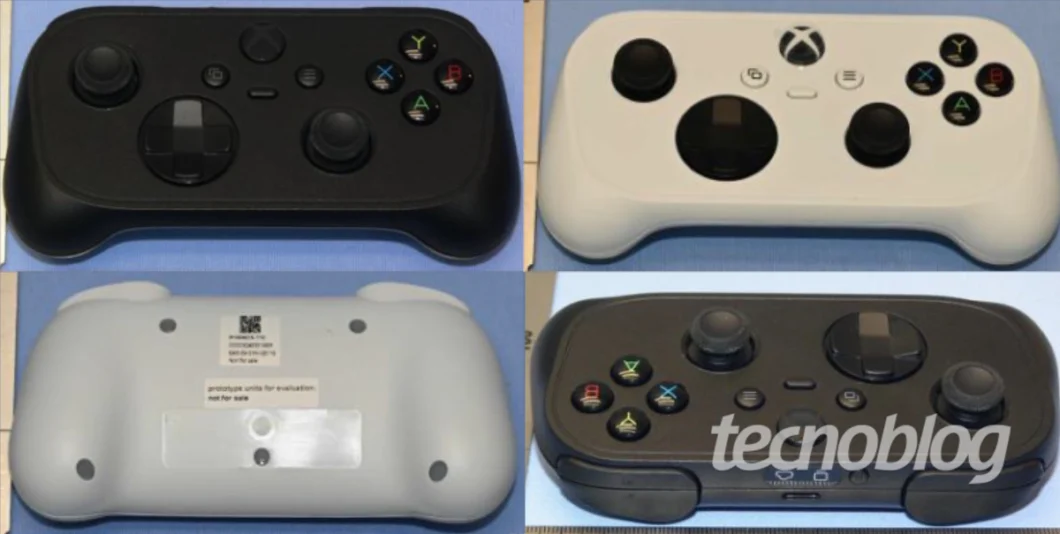
In an unexpected turn of events for the gaming industry, technical documentation and schematic imagery for two unannounced Microsoft gaming peripherals have surfaced via Brazil’s telecommunications regulatory agency, Anatel. These filings provide the most comprehensive look yet at the next evolution of Xbox hardware, signaling a significant shift toward both premium customization and low-latency cloud gaming integration.
The documents, which appear to detail an "Xbox Elite Series 3" flagship controller and a new, compact peripheral optimized for the Xbox Cloud Gaming ecosystem, suggest that Microsoft is preparing to bridge the gap between high-end local hardware and the burgeoning world of streaming.
Main Facts: The Next Generation of Input
The Anatel filings reveal two distinct paths for the future of Xbox input. The first is a clear iteration of the company’s most successful premium product, the Elite Series 2. The Elite Series 3 appears to refine the modular design that made its predecessor a staple for competitive gamers, while introducing radical new hardware inputs.
The most striking feature found in the blueprints is the inclusion of two physical, clickable scroll wheels located on the bottom edge of the chassis, flanking the standard 3.5mm headphone jack. While early industry speculation suggested these might be for volume control, their placement and distinct tactile design suggest they are intended for granular in-game control—potentially for fine-tuning throttle sensitivity in Microsoft Flight Simulator, adjusting FOV in FPS titles, or mapping complex macro functions.
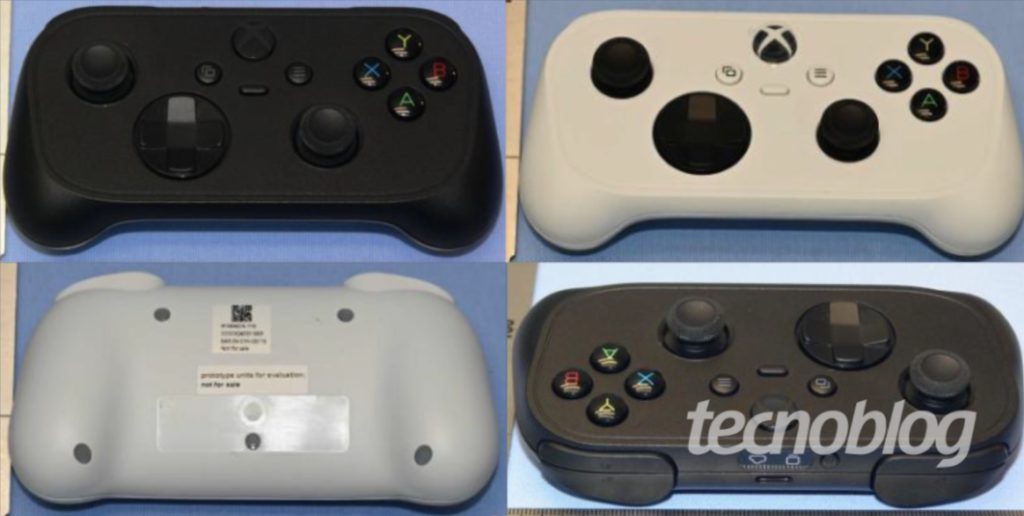
The second device is a departure from the traditional Xbox form factor. It is a compact, rectangular controller that mirrors the design philosophy of retro-inspired peripherals like the 8BitDo SN30 Pro. Designed specifically for the cloud gaming market, this controller is built to be portable, lightweight, and highly responsive.
Chronological Context: The Evolution of Xbox Peripherals
To understand the significance of these leaks, one must look at the timeline of Microsoft’s hardware evolution over the last decade.
- 2015: Microsoft launches the inaugural Xbox Elite Wireless Controller, setting a new standard for pro-grade console peripherals with swappable components and rear paddles.
- 2019: The Xbox Elite Series 2 is released, introducing adjustable-tension thumbsticks, a rechargeable internal battery, and improved rubberized grips, solidifying its place as the market leader for premium controllers.
- 2020-2023: Microsoft doubles down on Xbox Cloud Gaming (formerly Project xCloud), shifting its strategy from console-exclusive hardware to platform-agnostic accessibility.
- 2026 (May): Anatel documentation leaks, revealing that Microsoft is shifting toward a dual-strategy: maintaining premium console hardware while creating a specific "Cloud-First" controller that leverages internal Wi-Fi to eliminate input lag.
This leak arrives at a critical juncture. With the console market reaching a point of hardware saturation, Microsoft has been aggressively pursuing its "any screen, anywhere" mantra. The inclusion of Wi-Fi in both of these upcoming controllers is the most telling detail, as it suggests a move toward direct-to-server communication, bypassing the latency inherent in Bluetooth-connected mobile devices.
Supporting Data: Technical Specifications
The Anatel filings provide a granular look at the internal architecture of these devices, shedding light on the engineering choices Microsoft has made.
The Elite Series 3
- Battery: A shift to a removable 1,528mAh rechargeable pack. While this is a reduction from the 2,050mAh unit in the Series 2, the move to a swappable system likely aims to address the common "lithium-ion degradation" complaints that plague long-term owners of the current Elite controller.
- Inputs: Retention of the dish-style D-pad and swappable thumbstick mechanisms.
- New Connectivity: Integrated dual-band Wi-Fi, allowing the controller to sync directly to cloud servers.
- Interface: A new dedicated pairing/mode toggle located beneath the main Xbox button, which serves as the bridge between "Console Mode" and "Cloud Mode."
The Cloud-Native Compact Controller
- Chipset: Powered by a dual-core ARM Cortex-A7 Realtek processor, providing enough onboard intelligence to manage direct-to-cloud Wi-Fi streaming.
- Battery: A 500mAh internal battery, optimized for the lower power draw of a device that isn’t driving haptic motors or local console sync in the same way as a full-sized pad.
- Form Factor: A minimalist, rectangular chassis designed for portability, likely targeting commuters and mobile gaming enthusiasts.
The "Cloud" Implications: Eliminating Latency
Perhaps the most transformative aspect of these leaks is the integration of Wi-Fi connectivity into standard gamepads. Historically, controllers connect to a host device (a phone or a PC) via Bluetooth, which then routes the signal to the game server. This creates a multi-hop latency chain.
By integrating Wi-Fi directly into the controller, Microsoft is effectively recreating the functionality of the discontinued Google Stadia controller. When a player engages "Cloud Mode," the controller will theoretically connect directly to the Xbox cloud servers over the user’s home network. This drastically reduces the "round-trip" time for input commands, a vital improvement for competitive cloud gaming where milliseconds can dictate the outcome of a match.
This move underscores Microsoft’s commitment to the "Xbox Everywhere" vision. By providing a hardware solution that makes cloud gaming feel as responsive as local hardware, Microsoft is removing the single biggest barrier to entry for its subscription-based services.
Official Responses and Industry Outlook
As of this writing, Microsoft has remained tight-lipped regarding the Anatel filings. Such silence is standard for the Redmond-based giant, which traditionally reserves major hardware announcements for its high-profile showcases.
Industry analysts suggest that the timing of these leaks—just weeks before the June 7th Xbox Games Showcase—is highly calculated. If the products are indeed entering the final stages of regulatory approval in international markets, a reveal at the June event is not just possible, but probable.
Regarding pricing, the outlook remains speculative but cautionary. The Elite Series 3 is expected to maintain its position as a "pro-sumer" item, likely retailing in the $179–$199 range. Conversely, the compact cloud controller represents an opportunity for Microsoft to capture the "on-the-go" demographic. If priced competitively—perhaps between $59 and $79—it could serve as an entry point for millions of mobile gamers who do not own an Xbox console.
Implications: A New Era for Input
The leak of these two controllers paints a picture of a company confident in its hybrid future. Microsoft is no longer just a console manufacturer; it is a service provider.
- Hardware as a Service (HaaS): By modularizing the battery in the Elite Series 3, Microsoft is acknowledging the longevity of their hardware, suggesting they intend for these devices to last a decade, not a generation.
- The Death of Lag: The adoption of direct-to-cloud Wi-Fi is a direct challenge to the perception that cloud gaming is "too laggy" for serious titles.
- Market Diversification: By offering a compact, cloud-specific device, Microsoft is aggressively expanding its total addressable market to include smartphone and tablet users who have previously been alienated by the bulk and complexity of standard Xbox controllers.
As the June 7th showcase approaches, all eyes will be on whether these schematics translate into a concrete product launch. If they do, the Elite Series 3 will likely become the benchmark for pro controllers, while the cloud-focused handheld could redefine how we perceive mobile gaming altogether.
For now, gamers are left to analyze the fine lines of the Anatel schematics, waiting to see if Microsoft’s next generation of input is indeed as revolutionary as the blueprints suggest.










No comments yet. Be the first to join the conversation!