

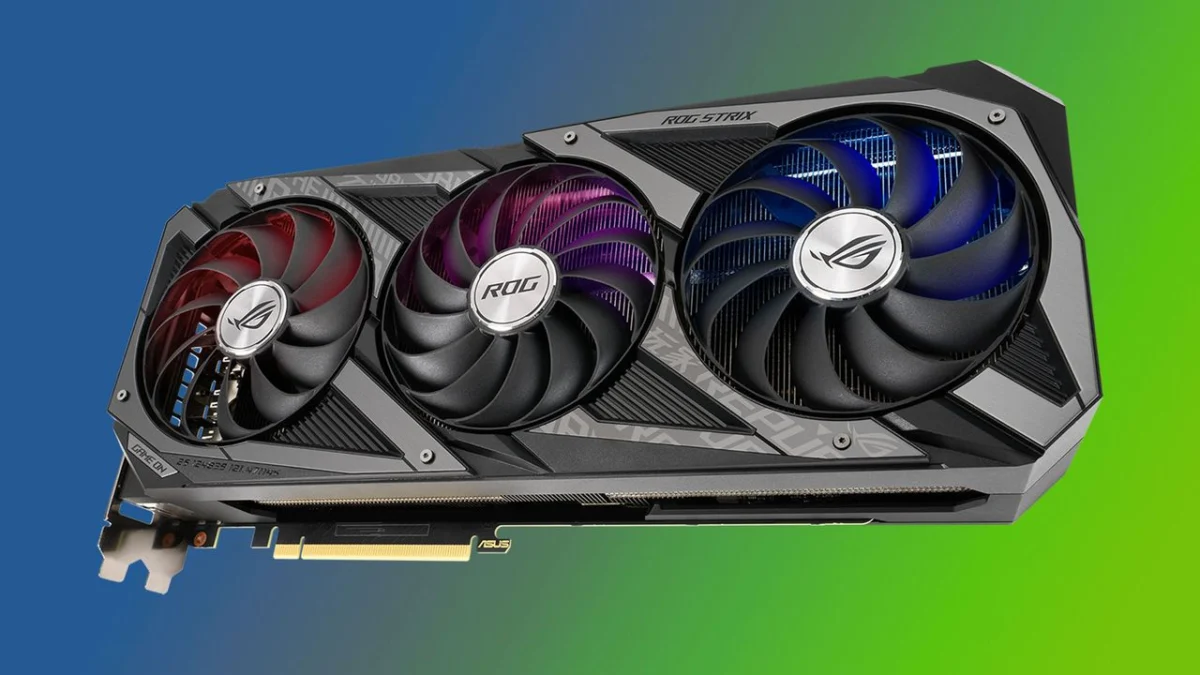
In the high-stakes world of PC enthusiasts and hardware modders, the pursuit of the "ultimate" thermal profile is a holy grail. We often obsess over ambient temperatures, airflow paths, and the efficiency of various thermal interface materials (TIM). However, every so often, a project emerges that pushes the boundaries of logic—not because it is practical, but because the sheer audacity of the engineering is a spectacle in its own right. Enter TrashBench, the self-proclaimed "punk-rock GPU death lab," which recently attempted to answer a question most engineers would consider settled: if you add more fans to a high-end graphics card, can you unlock hidden performance potential?
The experiment involved taking a premium Asus ROG GeForce RTX 3080 and subjecting it to an increasingly absurd barrage of cooling solutions, ranging from basic case fans to industrial-grade, 15,000 RPM server blowers. The result was a fascinating case study in diminishing returns, thermal saturation, and the undeniable reality that modern GPU cooling technology is already remarkably efficient.
The Objective: Chasing the Thermal Ceiling
The core hypothesis behind the TrashBench experiment was relatively straightforward: modern GPUs are often thermal-limited. By dramatically increasing the airflow surrounding the silicon, the GPU should theoretically run cooler, allowing the boost algorithm (such as Nvidia’s GPU Boost 4.0) to maintain higher clock speeds for longer durations. If successful, this would manifest as higher frame rates in graphically demanding titles.
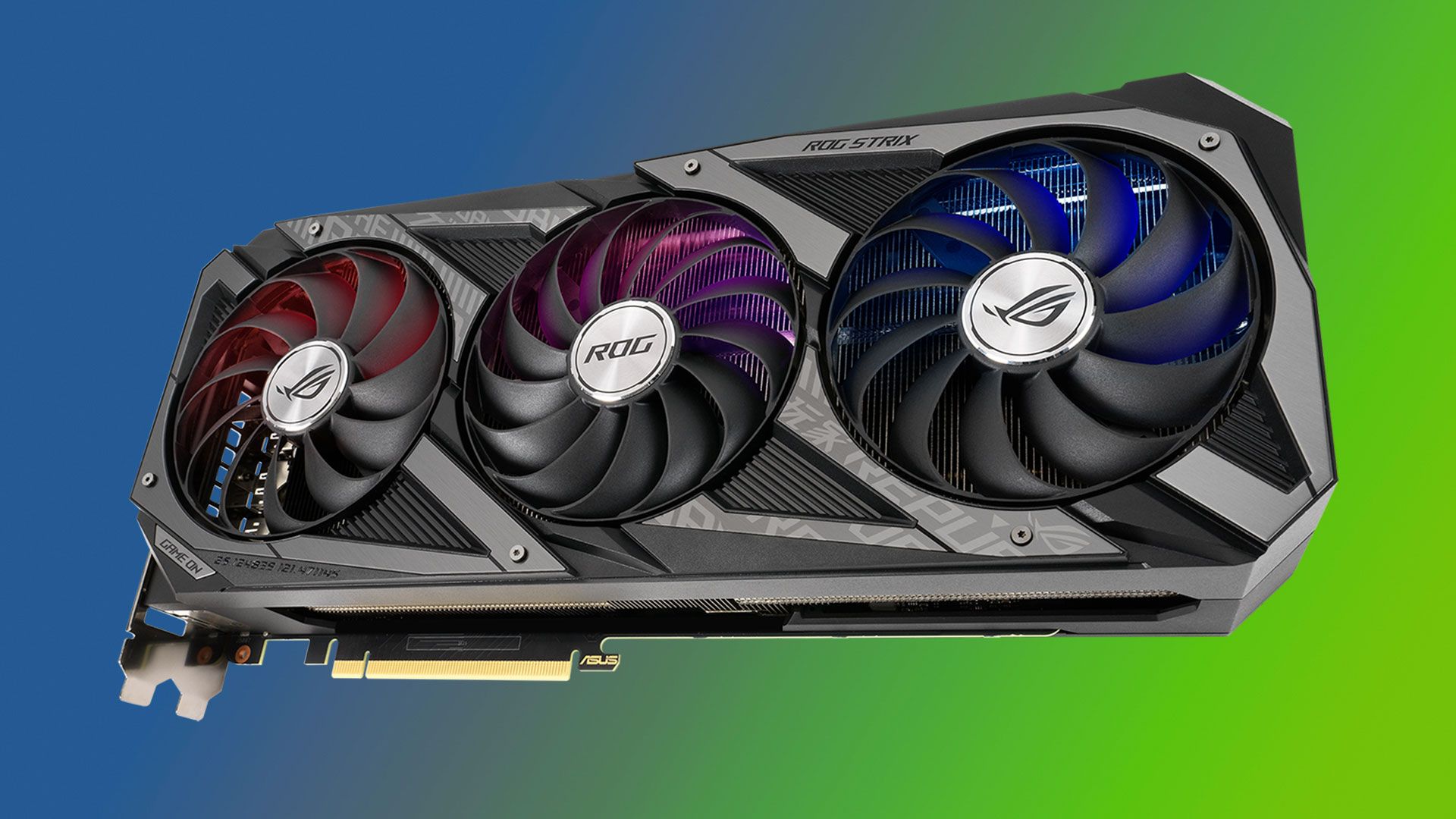
TrashBench selected the Asus ROG GeForce RTX 3080 for this "death lab" trial. This specific card is widely regarded as one of the best iterations of the 3080 architecture, featuring a robust factory triple-fan cooling shroud and a sophisticated heatsink design. By choosing a high-quality baseline, the team essentially set the bar as high as possible, making any incremental improvement an Herculean task.
A Chronology of Cooling Chaos
The experiment followed a rigorous, albeit chaotic, progression. To establish a baseline, the team performed a deep clean of the card, applied fresh thermal paste, and ran a stress test using the Unigine Heaven benchmark. With the stock cooling configuration running at 100% fan speed, the RTX 3080 maintained a steady 63°C, a significant improvement over the 70°C observed at lower, stock-regulated fan curves.
Phase 1: The Case Fan Upgrade
The first modification involved removing the original Asus cooling shroud and replacing it with a trio of standard Arctic case fans. This configuration was surprisingly effective, dropping the GPU temperature to 52°C. Encouraged by this, the team swapped these for thicker, high-static-pressure server fans. Interestingly, this resulted in a further drop to 50°C. However, when the team attempted to optimize airflow by adding duct tape to prevent side-venting, the temperature paradoxically rose to 54°C, illustrating that airflow management is as much about pressure as it is about volume.
Phase 2: The Jet Engine Era
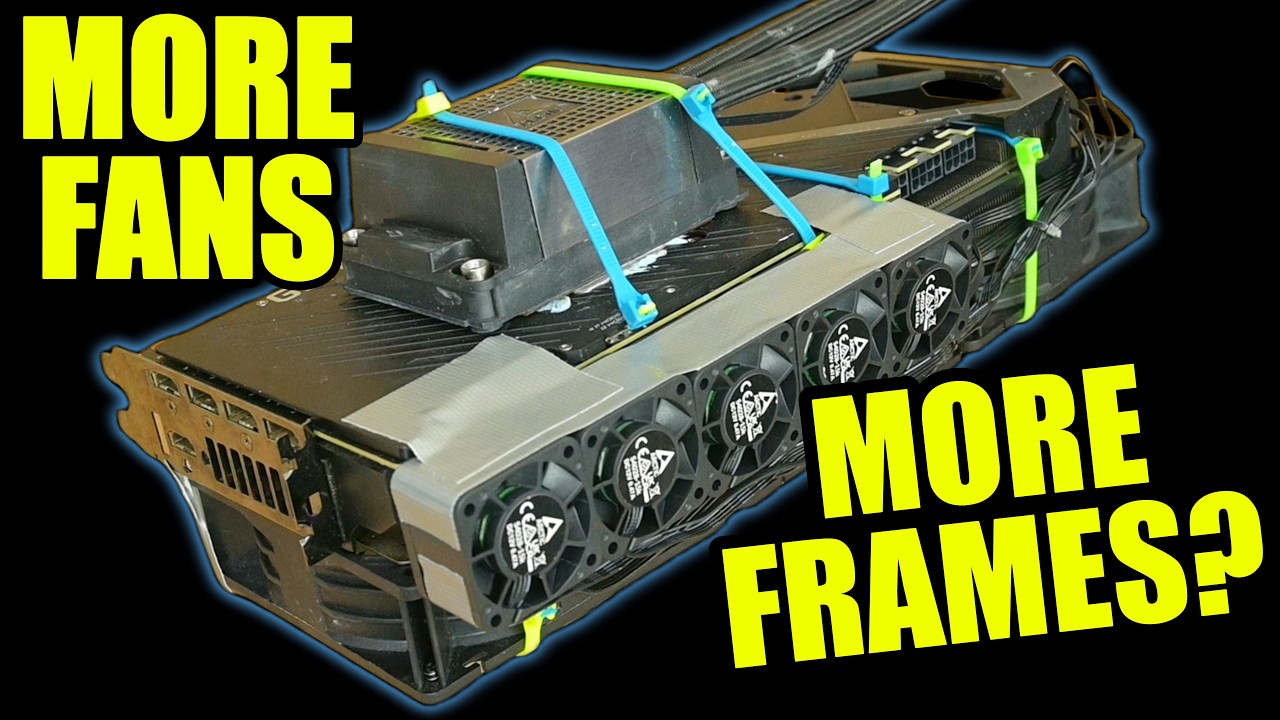
Not content with standard cooling, TrashBench introduced a "quintet" of tiny, industrial-grade Arctic server fans along the top of the card. These fans, capable of reaching 15,000 RPM, created a cacophony comparable to a small jet engine. Despite the earsplitting noise and the sheer force of air being pushed across the heatsink, the RTX 3080 stubbornly refused to drop below the 50°C mark. This suggested that the bottleneck was no longer the airflow across the heatsink, but rather the thermal conductivity of the heat pipes and the heat transfer rate between the GPU die and the cold plate.
Phase 3: The AiO Intervention
In a final, desperate attempt to shatter the 50°C barrier, the team abandoned air cooling entirely and retrofitted the GPU with a 360mm All-in-One (AiO) liquid cooler. This proved to be the most effective strategy, yielding a record-low stable temperature of 41°C. While this represented a massive, nearly 20-degree reduction from the initial, unoptimized stock performance, it was the final nail in the coffin for the "more fans" theory.
Supporting Data: The Cost of Performance
The data collected by TrashBench during their Shadow of the Tomb Raider (1440p) testing serves as a sobering reminder of the difference between "cool" and "fast."
| Cooling Configuration | Average FPS |
|---|---|
| Stock Cooler | 178 FPS |
| 11-Fan Setup | 180 FPS |
| Stock Cooler (OC) | 183 FPS |
| 11-Fan Setup (OC) | 187 FPS |
The numbers tell a clear story. The massive 11-fan apparatus, including the industrial-grade server blowers, yielded a mere 2 FPS increase over the stock configuration at default settings. Even when factoring in the increased thermal headroom for overclocking, the performance gains were statistically marginal. For the average gamer, the difference between 183 and 187 FPS is largely imperceptible, while the acoustic and physical footprint of the modded card is vastly inferior to the sleek, quiet, and reliable stock design.
Technical Implications: Why Modern GPUs Are "Done"
The primary takeaway from this experiment is that modern GPU manufacturers have already reached a point of extreme optimization. The Asus ROG RTX 3080’s stock cooler is not a random collection of parts; it is an engineered ecosystem. The heat pipes, fin density, and fan blade geometry are calculated to move heat away from the silicon as efficiently as possible given the card’s power draw.
The Thermal Bottleneck
The experiment highlights a concept known as "thermal resistance." Once the surface temperature of the heatsink is brought into equilibrium with the ambient air, increasing airflow provides virtually zero benefit. The heat is already being moved away from the fins as fast as the internal heat pipes can transport it from the die. To see significant gains, one would need to replace the entire cooling architecture with something like liquid nitrogen or custom-loop water cooling, which addresses the conduction bottleneck rather than just the convection one.
Acoustic Efficiency
Perhaps the most significant implication is the trade-off between decibels and performance. The 15,000 RPM server fans provide a cooling solution that is objectively inferior to the quiet, PWM-controlled stock fans in terms of user experience. The "punk-rock" aesthetic of the 11-fan setup is visually and aurally stimulating, but it fails to account for the reality of day-to-day computing, where noise pollution and desk space are premium commodities.
The Verdict: A Love Letter to Tinkering
Ultimately, TrashBench’s experiment concludes with a refreshingly honest admission: "It looks awesome. It sounds awesome. And it got me 2 FPS. So, not worth it."
While the project did not revolutionize GPU cooling, it served a vital purpose in the hobbyist community. It provided an empirical demonstration of the limits of cooling, proving that hardware enthusiasts can stop worrying about every single degree. It serves as a reminder that unless one is chasing world-record benchmarks in a competitive environment, the cooling solution provided by the manufacturer is usually more than sufficient for the silicon’s intended operating parameters.
For those who enjoy the "death lab" approach to hardware, the value is not in the frame rate, but in the process. TrashBench succeeded in creating something unique, loud, and undeniably cool—both figuratively and literally. They pushed a high-end card to its limits, learned about the interplay of static pressure and airflow, and came away with a piece of content that reminds us why we tinker in the first place: not because it makes sense, but because we can.
As we look toward the next generation of power-hungry GPUs, the lessons learned by TrashBench remain relevant. Airflow is vital, but it is not a magic bullet. True performance is found in architecture, power delivery, and silicon efficiency—factors that no amount of duct tape and cable ties can fundamentally alter. The 11-fan RTX 3080 will go down in history as a monument to the spirit of inquiry, and perhaps a warning to those who think that more is always better.











