

In the heart of Munich—the historic epicenter of European automotive engineering—a giant wooden Trojan horse stands as a stark, provocative monument at the entrance of XPeng’s latest showcase. It is a bold, perhaps even cheeky, statement from a Chinese manufacturer announcing its most ambitious global expansion to date. With the launch of the L03, XPeng is not merely entering the backyard of giants like Volkswagen and BMW; it is attempting to redefine the price-to-performance ratio of the electric vehicle (EV) market.
The Rapid Ascent of a Disruptor
Though XPeng was founded less than 12 years ago, its trajectory has been nothing short of meteoric. While traditional Western automakers were still grappling with the transition to electrification, XPeng was already establishing its footprint. By 2020, the company had begun exporting vehicles to Norway, signaling an early intent to challenge the established order.
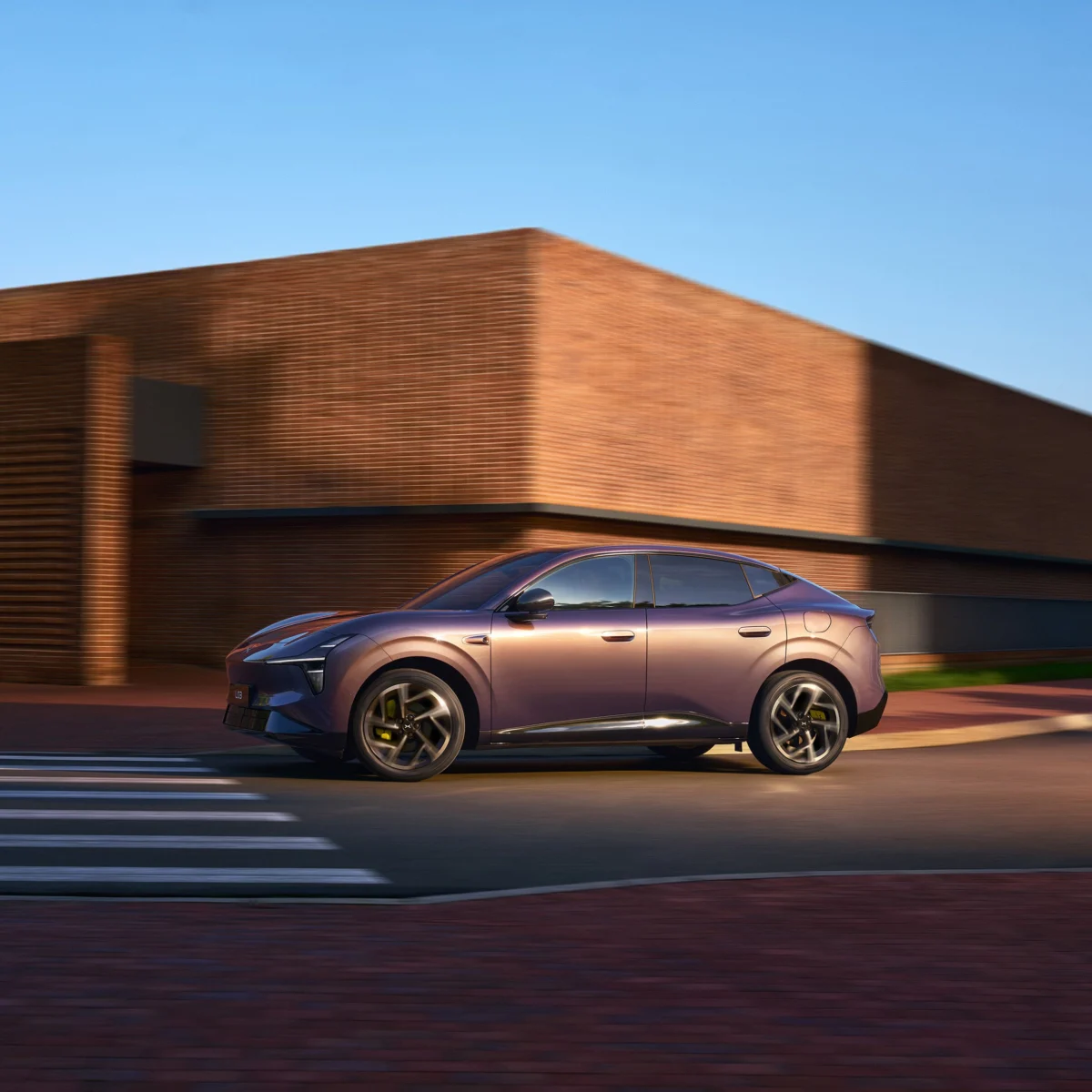
Despite not yet ranking within the top 10 EV manufacturers by sheer volume in China, XPeng has cultivated a reputation for technological sophistication that often exceeds its market share. The L03 represents a critical pivot for the company: a mass-market, "budget-friendly" model designed to spearhead a 60-country rollout spanning Europe, Latin America, the Middle East, and the Asia-Pacific region. Starting at approximately €35,600 ($40,000), the L03 is positioned to undercut the Tesla Model Y while offering a feature set that, on paper, threatens to make premium rivals look obsolete.
A Chronology of Global Expansion
- 2014: XPeng Motors is founded in Guangzhou, China, focusing on internet-connected, AI-driven EVs.
- 2020: The first export shipment of the G3 SUV reaches Norway, marking the brand’s first official foray into the European market.
- 2023–2024: XPeng deepens its commitment to international markets, refining its software architecture to meet global data privacy and user experience standards.
- 2025: Official global unveiling of the L03, the brand’s first dedicated "global-first" model.
- 2027: Anticipated launch of L2++ autonomous, point-to-point navigation features in Europe, enabled by over-the-air (OTA) updates.
Technical Specifications: The "Beyond Class" Philosophy
The L03 is not merely a budget car; it is a tactical strike on the mid-market segment. XPeng refers to the vehicle’s feature density as "beyond class," a moniker meant to suggest that the car competes in a category above its price point.

Key Performance Metrics
- Efficiency: An impressive drag coefficient of 0.228, optimizing range and power consumption.
- Charging: High-speed architecture capable of a 10 to 80 percent charge in just 20 minutes.
- Range: A claimed WLTP range of 320 miles.
- Dynamics: The flagship model accelerates from 0 to 60 mph in a blistering 4.5 seconds, while the standard model maintains a respectable 7.5-second sprint.
Interior and Connectivity
Inside, the L03 challenges the notion that economy must be synonymous with austerity. Standard features include a 15.6-inch 2.5K central display, a 27-inch Head-Up Display (HUD), 256-color ambient lighting, and heated/cooled massage seats. Furthermore, the integration of Google Maps and AI-powered voice control ensures the user experience remains familiar to Western consumers. The vehicle even incorporates thoughtful lifestyle touches, such as anchor points for action cameras and magnetic clips for camping accessories, signaling a focus on the modern, nomadic driver.
The Autonomy Conundrum: Lidar vs. Vision
A defining debate in the EV industry is whether autonomous systems require Lidar or can rely solely on camera-based "vision" systems. XPeng has firmly planted its flag in the "no Lidar" camp, mirroring Tesla’s approach.
Xianming Liu, XPeng’s senior director of engineering, remains steadfast in his conviction that the company’s Turing 7-nanometer AI chips, coupled with refined vision models, provide a safer and more scalable path to autonomy. However, the lack of hardware redundancy—specifically the absence of Lidar—means the L03 will be capped at Level 2++ autonomous capabilities. Even if the software reaches a higher level of maturity, the hardware architecture precludes it from achieving true Level 4 autonomy. While this creates a point of contention among industry purists, XPeng argues that the current setup is more than sufficient for modern driving environments.
Design Convergence: The Ferrari Connection
One of the most striking aspects of the L03 is its aesthetic. With its sleek, aerodynamic profile, the car bears a striking resemblance to the Ferrari Luce. This is no coincidence. XPeng’s head of design, JuanMa López, spent nearly a decade at Ferrari, shaping the exterior identity of icons like the LaFerrari and the SF90 Stradale.

When questioned about the convergence of design, where entry-level vehicles increasingly share the visual language of six-figure supercars, Rafik Ferrag, head of creative design at XPeng, offered a pragmatic perspective. "In the past, it was impossible for an entry-level car to afford the technology or even the decorative elements that a luxury car has," Ferrag explains. "Today, that’s no longer true. Our goal is to reach that top level of preciseness—in material fit, finish, and color. If we can make an entry-level car look and feel like a Bentley, we will."
Market Implications and Future Challenges
The L03’s entry into the global market arrives at a precarious time for the automotive industry. As established luxury marques struggle with declining sales and the high costs of electrification, the arrival of a "budget" car that mimics the aesthetic and technological prowess of a premium vehicle creates a significant competitive threat.
The "Mona" Stigma
One hurdle for XPeng is the L03’s heritage. In China, the vehicle is marketed as part of the "Mona" sub-brand, a name associated with budget-conscious, ride-hailing-focused vehicles. To ensure the global version is perceived as a standalone premium product, XPeng has meticulously scrubbed the "Mona" branding and adjusted the specification tiers. Whether this rebranding succeeds in the eyes of discerning European and global consumers remains to be seen.
The Competitive Landscape
The shift in design language poses a challenge to traditional brands that have relied on "exclusivity" as a primary selling point. If a €35,000 vehicle offers the same interior quality and technological suite as a €90,000 car, the value proposition of traditional luxury becomes increasingly difficult to justify.

Conclusion
The Trojan horse in Munich is more than a metaphor; it is a declaration of intent. XPeng is betting that by prioritizing high-tier technology and design-led aesthetics at an aggressive price point, it can dismantle the barriers to entry that have protected legacy automakers for decades.
Whether the L03 can deliver on its promise of "beyond class" performance while navigating the complex regulatory and cultural landscapes of 60 different countries is the ultimate question. However, one thing is certain: the era of clearly defined price brackets in automotive design is effectively over. As XPeng prepares to flood the market, the incumbents in Munich, Stuttgart, and beyond may find that they are no longer just competing for market share—they are competing for the very definition of what a modern car should be.











