Azzam Bilal Chamdy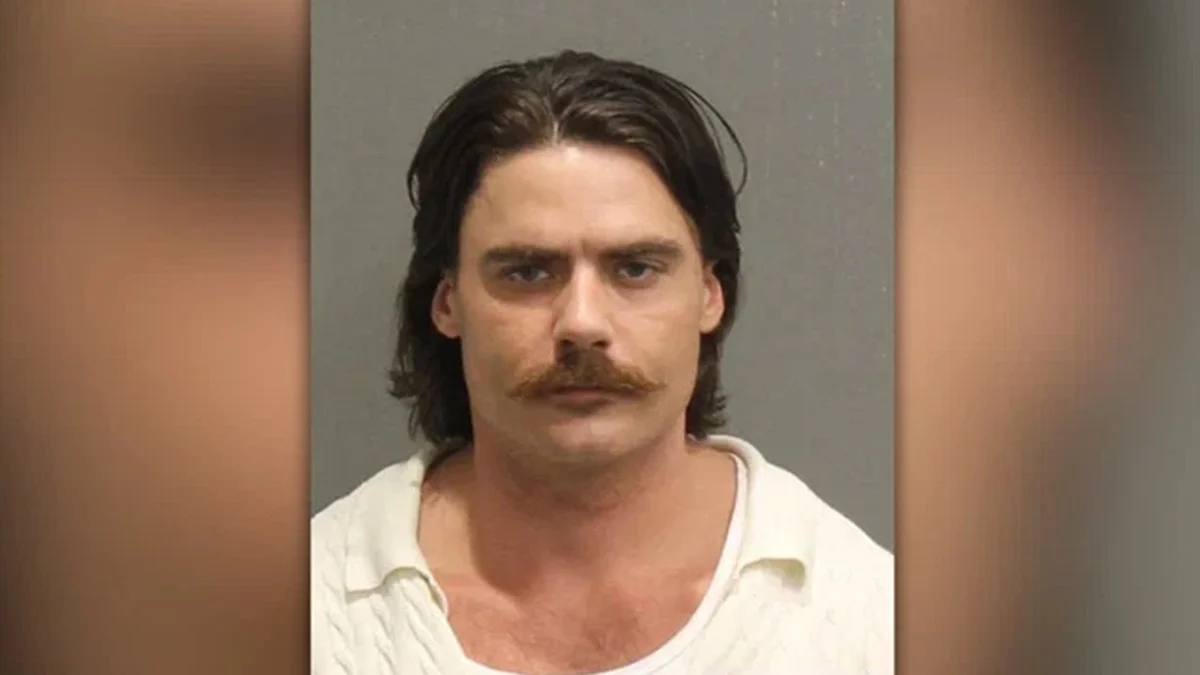
The digital landscape has long served as a double-edged sword for content creators, offering fame and fortune to those willing to push boundaries. However, for 28-year-old streamer Dalton Eatherly, known online as "ChudTheBuilder," the pursuit of notoriety has culminated in a catastrophic collision with the American legal system. Currently incarcerated and awaiting a series of high-stakes hearings, Eatherly’s journey from a controversial internet provocateur to a defendant facing potential decades in prison serves as a stark case study in the consequences of unchecked online behavior.
As Eatherly remains behind bars in Davidson County, Tennessee, his representatives and family are increasingly vocal about the conditions of his confinement. Meanwhile, the legal charges against him—ranging from attempted murder to felony firearm violations—paint a portrait of a man whose real-world actions have finally outpaced his digital persona.
The Anatomy of an Arrest: From Courthouse to Cell
The current legal quagmire surrounding Eatherly began in May, when a violent altercation outside the Montgomery County Courthouse in Clarksville, Tennessee, ended in gunfire. According to court records and police reports, Eatherly was involved in a physical confrontation that escalated into a shooting. The victim, who reportedly attacked the streamer, sustained injuries during the incident. Eatherly was subsequently arrested and slapped with a suite of serious charges, including attempted murder, employing a firearm during a dangerous felony, aggravated assault, and reckless endangerment with a deadly weapon.
This incident was not an isolated event but rather the most severe in a string of legal run-ins. Eatherly’s online career, which frequently involved documenting himself using racial slurs against Black individuals and inciting confrontations, had already drawn the scrutiny of law enforcement in multiple jurisdictions. In Nashville, he faced additional legal pressure after allegedly refusing to vacate a restaurant while livestreaming and subsequently refusing to pay a bill totaling nearly $400.
By mid-June, the situation for Eatherly had deteriorated significantly. Following the presentation of new, damning details regarding the courthouse shooting, a judge revoked his bond, effectively locking him into the state’s correctional system as the judicial process crawled forward.
A Chronology of Controversy
To understand the gravity of Eatherly’s current situation, one must look at the timeline of his erratic behavior and the resulting legal consequences:
- Pre-May 2026: Eatherly gains a reputation as a "rage-bait" streamer, utilizing racist rhetoric and physical harassment of strangers to drive engagement and viral content.
- May 2026: The Montgomery County Courthouse incident occurs. Eatherly shoots a man following a physical altercation. He is taken into custody and charged with multiple felonies.
- Early June 2026: Further charges are linked to a separate incident in Nashville, where Eatherly was arrested for disorderly conduct and theft of services related to a restaurant bill dispute.
- Mid-June 2026: During a bond hearing, prosecutors present evidence that alters the judge’s perception of the shooter’s intent. Eatherly’s bond is revoked.
- July 24, 2026: Eatherly’s fiancée, Alexis, uses the streamer’s social media accounts to allege inhumane treatment within the Davidson County jail, citing a lack of bedding and unsanitary conditions.
- August 2026: A rescheduled hearing is set for August 6, following a procedural delay where the District Attorney reportedly claimed a failure to receive necessary motions.
Allegations of Inhumane Detention
The narrative surrounding Eatherly’s time in custody has shifted, with his supporters and family focusing on the conditions of his confinement. According to posts on his X account (formerly Twitter), Eatherly claims he was held in a booking room holding cell for 25 hours without a bed or blanket.
His fiancée, Alexis, described a harrowing environment, claiming there was a "puddle of someone else’s urine on the floor" and that the facility was plagued by "nonstop screaming." These allegations have been used by his camp to frame his continued incarceration as a punitive measure by the state rather than a standard judicial holding procedure.
"He’s still being held without bond on misdemeanor charges over a restaurant bill where he was only served appetizers and was told he must leave," Alexis stated in a public post. "These were non-arrestable offenses that weren’t even committed in an officer’s presence."
While these claims have sparked outrage among his followers, legal experts note that holding facilities in urban counties often struggle with overcrowding, particularly during periods of high intake. However, the intensity of these claims has served to keep Eatherly’s name in the headlines, even as he remains physically isolated from his audience.
The Weight of the Law: Potential Consequences
The legal stakes for Eatherly are severe. Legal analysts estimate that if he is convicted on the most serious charges and receives the maximum sentencing range, he could face up to 56 years in state prison. Beyond the loss of liberty, he faces substantial financial penalties, with potential fines reaching $78,000, excluding mounting court costs and potential restitution to his victims.
The decision to revoke his bond was a pivotal moment in his legal journey. In Tennessee, bond revocation typically occurs when the court determines that the defendant poses a significant threat to the community or is a flight risk. The "new details" mentioned by the prosecution during the June hearing were clearly enough to convince the court that letting Eatherly walk free—even under house arrest—was an unacceptable risk.
The "Streamer-to-Prison" Phenomenon
Eatherly’s case is part of a larger, troubling trend of streamers finding themselves in international or domestic legal hot water due to the performative nature of their content. He is not alone in this regard; fellow streamer Johnny Somali is currently embroiled in his own legal ordeal, having been held in South Korean detention facilities.
In both cases, the "content at all costs" mentality has created a feedback loop where the streamer feels pressured to commit more extreme acts to satisfy a parasocial audience, eventually leading to a complete breakdown of boundaries between digital entertainment and criminal law. Critics argue that these platforms provide a financial incentive for antisocial, violent, and racist behavior, creating a "race to the bottom" that inevitably ends in either a ban or a jail cell.
Implications for Content Creators and Platforms
The implications of Eatherly’s case extend beyond his personal future. It raises critical questions about the responsibility of streaming platforms in policing content that encourages or depicts illegal activity. When a creator’s entire brand is built upon harassment and the violation of public order, at what point does the platform become complicit?
For the legal system, Eatherly represents a new class of defendant: the digital provocateur who expects their online persona to protect them from the realities of the courtroom. As the judicial system continues to grapple with how to treat crimes that are livestreamed or fueled by online clout, cases like Eatherly’s will likely set precedents for how prosecutors handle evidence gleaned from social media.
As the August 6 hearing approaches, the public eye remains fixed on Davidson County. Whether Eatherly’s defense team can secure his release or if the state will successfully keep him behind bars until his trial remains to be seen. What is clear, however, is that for ChudTheBuilder, the livestream has ended, and the cold reality of the judicial system has taken center stage. His story remains a cautionary tale of how quickly a life built on digital provocation can be dismantled by the firm hand of the law.

 Evan Lee Salim
 Lina Hope