Pevita Pearce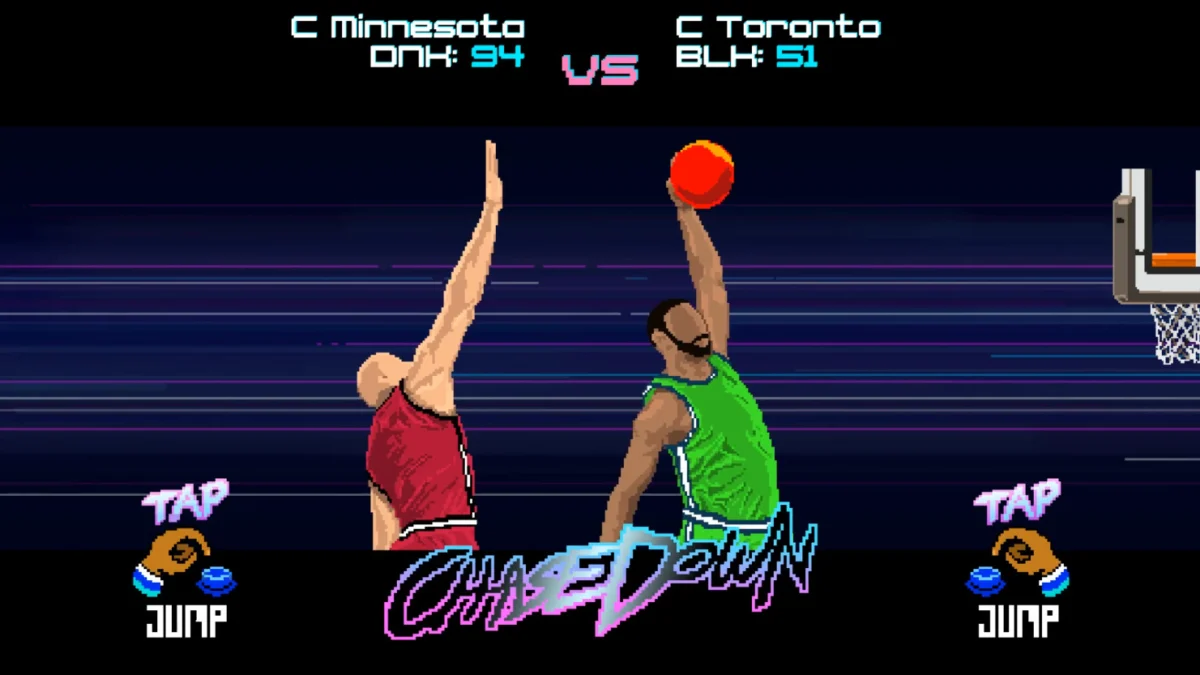
In an era dominated by hyper-realistic sports simulations that demand hours of granular stat management and complex control schemes, Basketball Classics arrives as a refreshing, high-octane throwback. Eschewing the trend of "simulation-first" design, this title serves as a digital love letter to the golden age of arcade sports. By prioritizing immediate accessibility and visceral excitement over the painstaking recreation of league physics, Basketball Classics finds its lane—and it sprints down it with infectious energy.
The Core Concept: Redefining the Arcade Experience
At its heart, Basketball Classics is a game that knows exactly what it wants to be. It does not aim to compete with the likes of NBA 2K or other heavy-hitting simulations; instead, it looks back to the era of NBA Jam and Arch Rivals. The gameplay is centered around a tight, three-button control scheme that ensures anyone can pick up a controller and feel like a star within seconds.
However, beneath this veneer of simplicity lies a surprising amount of tactical depth. While the casual player can enjoy the frantic pace, the seasoned veteran will find that success hinges on mastering timing, court positioning, and situational awareness. It is this duality—simple enough to play, difficult to master—that gives the game its staying power.
Chronology of a Retro Renaissance
The development of Basketball Classics reflects a growing trend in the indie gaming landscape: the "nostalgia-first" approach. As players grow fatigued by the microtransaction-heavy, yearly release cycles of major sports franchises, developers have stepped in to fill the void with titles that emphasize the "pick-up-and-play" ethos of the 1990s.
- The Conceptual Phase: The developers focused on stripping away the bloat of modern sports games. By removing excessive menu navigation and complex defensive schemes, they aimed to isolate the "loop" of basketball—dribbling, passing, and the satisfying thud of a slam dunk.
- The Development Cycle: The team opted for a pixel-art aesthetic that serves both a stylistic and functional purpose. It provides a clean, readable visual language that allows the player to track fast-moving action without the visual clutter often found in 3D sports engines.
- The Launch and Reception: Upon release, the game garnered immediate attention for its local multiplayer functionality. In an industry increasingly focused on online connectivity, Basketball Classics leaned into the "couch competitive" experience, reviving the communal excitement of sitting side-by-side with friends.
Supporting Data and Technical Breakdown
The game’s appeal is quantified by the balance between its accessibility and its mechanical "hooks."

Tactical Depth vs. Button-Mashing
While it is easy to assume that a three-button game is purely reactive, Basketball Classics incorporates several systems that prevent it from devolving into mindless button-mashing:
- Shot Timing: Unlike modern games that use complex stick maneuvers, here, the timing of the release button is paramount.
- Play-Calling: This adds a layer of strategy, allowing players to manipulate the defense or create space for an open jumper.
- Player Archetypes: Although the names are not officially licensed, the roster is a love letter to basketball history. Players are inspired by real-world legends, with stats that accurately reflect their historical counterparts’ strengths and weaknesses.
Visual and Auditory Presentation
The pixel art style is a standout feature. It avoids looking "cheap" by utilizing fluid, expressive animations. A dunk doesn’t just result in points; it carries a visual weight, complete with screen shake and character-specific flair. However, the experience is not without its technical limitations. The soundtrack, while initially nostalgic, lacks a deep library of tracks, which can lead to fatigue during extended play sessions.
The "Implications" of the Arcade Niche
The success of Basketball Classics carries significant implications for the sports gaming market. It suggests that there is a substantial, underserved audience that prioritizes fun over realism.
The Missing Pieces: Where the Game Stumbles
Despite its successes, the game faces several hurdles that prevent it from reaching the pantheon of all-time classics:
- Inconsistency in Mechanics: While the core loop is strong, defensive interactions—specifically the physics of blocks and rebounds—can feel unpredictable. This inconsistency can lead to frustration in high-stakes matches.
- The Online Void: Perhaps the most significant criticism is the absence of a robust online multiplayer mode. In 2026, a competitive sports game without a way to play against the global community feels like a missed opportunity.
- Depth Perception: While the roster is expansive, the lack of a deep, multi-year franchise or "Story" mode means that once the initial excitement wears off, the game struggles to offer long-term engagement.
The Verdict: A 7.0/10 Experience
With a rating of 7.0, Basketball Classics is a "Like It" title. It is a resounding success in terms of its intended scope, but it falls short of being an essential "must-play" for those who demand deep, long-term progression systems. It functions best as a palette cleanser—a game to be pulled out at a party or during a short gaming session, rather than a title to sink 100 hours into.

Official Perspective and Design Philosophy
From the perspective of the development team, the philosophy was never to create a "Sim." By leaning into the "arcade-era energy," they effectively bypassed the need for expensive licensing agreements with the NBA or the players’ union. Instead, they focused on the feeling of the sport.
This decision has a twofold effect. First, it frees the game from the pressure of "realism" updates or roster accuracy based on current injuries and trades. Second, it allows the developers to create a timeless product. Whether you play it today or five years from now, the game’s core mechanics will remain as relevant as they are currently.
Looking Toward the Future
The implications of Basketball Classics are clear: there is room for "lite" sports games. If the developers were to introduce a sequel, the roadmap for improvement is well-defined:
- Expanded Soundtrack: Adding a wider variety of tunes to combat repetition.
- Franchise Integration: A basic, yet functional, league management mode would go a long way in adding longevity.
- Online Stability: The addition of peer-to-peer online play would immediately elevate the game’s competitive profile.
Final Thoughts
Basketball Classics does not aim to replace the major simulation titles, and that is its greatest strength. It is a game that respects the player’s time, offering an immediate hit of dopamine through satisfying dunks and fast-paced gameplay. It is an ode to the days when you didn’t need to read a manual or master a complex controller layout to feel the thrill of a buzzer-beater.
While it lacks the depth of modern sims and suffers from a lack of online infrastructure, its charm is undeniable. For those looking to recapture the magic of the arcade, or for those who simply want a low-stakes, high-fun basketball experience, Basketball Classics is a more than worthy addition to any library. It reminds us that at the end of the day, sports games are supposed to be about one thing above all else: having a good time.


 Sagoh
Sagoh
 Ammar Sabilarrohman