

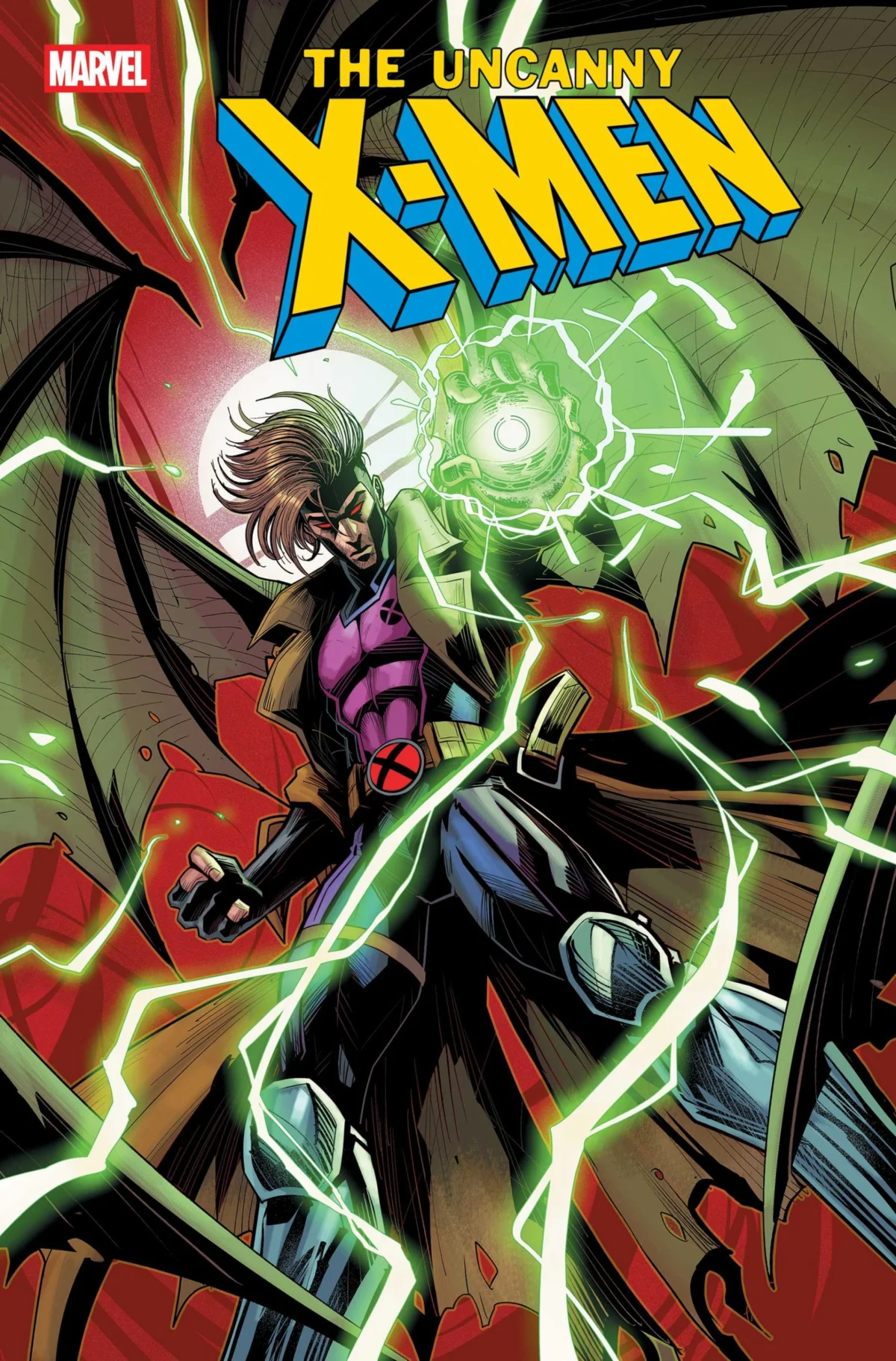
The X-Men mythos has always thrived on the tension between societal evolution and the inherent trauma of being "othered." In the current "Shadows of Tomorrow" era, no title has navigated this delicate balance with as much fervor, wit, and narrative ambition as Uncanny X-Men. Following a brief hiatus from the interview circuit, writer Gail Simone returned to the latest edition of X-Men Monday to peel back the curtain on her sprawling, character-driven run. With the series consistently pushing the boundaries of what a mutant-centric book can be, this deep-dive session addressed everything from the philosophical weight of Graymalkin Prison to the upcoming, high-stakes "Wild Ride" arc.

The Core Philosophy: Representation as a Foundational Pillar
At the heart of Simone’s Uncanny X-Men is a commitment to a diverse, multi-faceted cast. When prompted by X-Fan Julia regarding the inclusion of characters like Ransom, Jitter, and Deathdream—alongside the series’ nuanced exploration of queer and neurodivergent identities—Simone traced her inspiration back to the bedrock of X-Men history.

"I feel this is kind of two cars coming from different directions that had the same destination in mind all along," Simone explained. She cites the original Giant-Size X-Men as the catalyst for her creative philosophy. For a young Simone, the core appeal of the X-Men wasn’t just the powers; it was the fact that a group of individuals from vastly different global backgrounds—Japan, Germany, Cairo, Russia—were unified solely by their mutant status. By integrating these values into her current roster, she is not merely checking boxes; she is honoring the DNA of a franchise that has historically championed the marginalized.

Chronology and Narrative Obstacles: Beyond the Grim-Dark
One of the most poignant aspects of the interview centered on the physical and psychological toll placed upon the team. Patrick Maloney, a longtime reader, noted that Simone’s heroes seem to face uniquely daunting challenges, from the claustrophobic depths of Atlantis in Unbreakable X-Men to the community-centric struggles in New Orleans.

Simone’s response was a sharp critique of the "grim-dark" era of comics, where shock value and dismemberment often replaced character growth. "I’ve always said, there are worse fates than death," she noted. Her narrative strategy involves "breaking" her heroes—as seen when the series’ antagonist, Sarah Gaunt, systematically dismantled the most powerful members of the team. However, Simone clarified that the point isn’t the suffering itself, but the resilience shown afterward. "I like seeing a hero get knocked down. But I LOVE seeing them get up again, anyway."

The Artistic Architecture: Marquez and Vecchio
The visual identity of Uncanny X-Men is defined by the rotating brilliance of David Marquez and Luciano Vecchio. Simone credited both artists with an uncanny ability to balance opposing emotional spectrums.

"A common thread in my scripts is that I like there to be dread in the humor and laughs in the horror," Simone said. She praised Marquez for his ability to depict "sexy without being cheesy"—a rare talent in modern superhero art—and lauded Vecchio for his deep, active collaboration. Because both artists are writers in their own right, their contributions to the script, panel layout, and narrative nuance are, according to Simone, "a blessing in a book with a big cast."

Unpacking the Mysteries: Calico, Ember, and Shogo
Readers have been clamoring for clarity regarding Calico’s mysterious nature and her companion, Ember. Simone teased that the payoff is imminent, describing it as a "ka-POW moment" that will redefine the status quo for the New Mutants.

Similarly, the long-awaited resolution to Jubilee’s relationship with her son, Shogo, remains a priority. The plot, which has been delayed due to editorial scheduling, is deeply personal for Simone, who is herself a child of adoption. She promised a resolution that will be "emotionally brutal," confirming that the team is not shying away from the weight of parental separation.

The Dark Artery and the Weight of History
Perhaps the most ambitious world-building element introduced in this run is the "Dark Artery," a secret mutant graveyard that forces the X-Men to confront the history of racial injustice in America. Simone explained that while the X-Men franchise has successfully integrated the history of the Holocaust into its lore, it has historically been more hesitant to tackle the specificities of Jim Crow-era racial violence. By creating the Dark Artery, she hopes to add a layer of historical realism to the mutant struggle, an effort she is thrilled to see supported by historians and authors like Mikki Kendall.

The Controversy of Graymalkin Prison
The existence of Graymalkin Prison remains a point of intense friction among the fanbase. Jared, an X-Fan, pointed out the inherent hypocrisy of the X-Men appearing complicit in the existence of such an institution.

Simone’s response was unflinching: "I agree with Jared. But, I mean, let’s look around us and read the news." Referencing Aleksandr Solzhenitsyn’s The Gulag Archipelago, she articulated that Graymalkin is intended to represent the real-world horrors of the prison-industrial complex. She noted that the warden’s decision to destroy the X-Men’s personal belongings was a deliberate choice to highlight the dehumanizing nature of the institution. She teased that the X-Men have not been ignoring the prison, hinting that a confrontation is imminent.

Teasing "Wild Ride": August 2026 and Beyond
As the conversation turned to the future, Simone unveiled the solicits for Uncanny X-Men #33 and #34, titled "Wild Ride." The arc will focus heavily on Gambit, whose physical condition is rapidly deteriorating, and the introduction of a new, terrifying entity known as "REPENT."

The arc promises to push the marriage of Rogue and Gambit to its breaking point. Simone hinted that Gambit’s condition may be magical in nature, leading to a "new Gambit" with "dangerous hungers." When asked how Rogue would cope with her husband’s transformation, Simone dryly replied: "You get him an exorcist. But you didn’t hear that from me."

Implications for the Future
The interview concluded with a sneak peek at Uncanny X-Men #29, featuring a mysterious appearance by someone who looks remarkably like Sherlock Holmes. Whether this is a manifestation of Mystique’s trickery or a more literal interpretation of the literary icon remains to be seen, but the inclusion signals that the series is leaning further into the surreal and the investigative.

As Uncanny X-Men continues to navigate the "Shadows of Tomorrow," it is clear that under Gail Simone, the series is committed to a blend of high-stakes action and profound social commentary. By challenging her characters not just physically, but morally and historically, Simone is ensuring that the X-Men remain as relevant and "uncanny" as they were in their inception. With the "Wild Ride" arc looming, the coming months promise to be a turning point for the franchise, challenging readers to re-examine the cost of heroism in a world that is rarely black and white.










No comments yet. Be the first to join the conversation!