Laily UPN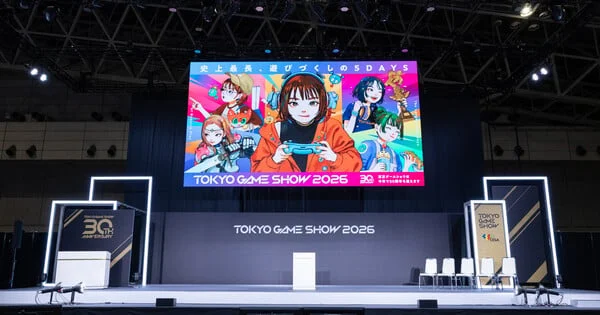
TOKYO, JAPAN – September 19, 2026 – Organizers of the prestigious Tokyo Game Show (TGS) 2026 have announced the cancellation of the event’s final day, Monday, September 21, due to the imminent threat of Typhoon No. 25, codenamed Typhoon Dujuan. The decision prioritizes the safety of attendees, exhibitors, staff, and all involved parties as severe weather, including strong winds and heavy rainfall, is projected to impact the Kanto region.
While the first three days of the TGS 2026, which marked a significant expansion to a five-day format for the first time in its history, proceeded as planned, the abrupt closure of the final public day casts a shadow over an otherwise groundbreaking event. This year’s TGS had aimed to offer an unprecedented five-day immersion into the world of gaming, with September 17th and 18th dedicated to industry professionals and the subsequent three days, September 19th through the 21st, open to the public. The cancellation of the last day means that this ambitious expansion will be cut short, leaving many to wonder about the long-term implications for future TGS formats.
Safety First: The Unforeseen Impact of Typhoon Dujuan
The decision to cancel Monday’s proceedings was not made lightly. In a statement released on Saturday, the TGS organizing committee detailed the rationale behind their difficult choice. "Due to the approaching typhoon, strong winds and heavy rain are expected from the afternoon of September 21," the statement read. "There is also a possibility that public transportation services may be affected, making it difficult for visitors and other attendees to return home safely."
This concern for the well-being of everyone present was underscored by the organizers’ commitment: "Taking the safety of all attendees, exhibitors, staff, and other parties involved as our highest priority, we have decided to cancel the event for the entire day on September 21."
The typhoon, currently designated as Typhoon No. 25 and identified by the name Dujuan, is on a trajectory that poses a significant risk to the Tokyo metropolitan area and the wider Kanto region. Weather forecasts indicate a high probability of its landfall or close passage on Monday, bringing with it the potential for treacherous conditions that could jeopardize travel and public safety. The organizers’ proactive stance aims to prevent any potential accidents or disruptions that could arise from attempting to navigate the city under severe weather warnings.
Refunds and Digital Alternatives
For those who had purchased tickets specifically for Monday, September 21, the organizers have pledged full refunds. Details regarding the refund process are expected to be communicated through the official Tokyo Game Show website and other official channels.
In an effort to salvage some of the planned content and engage with the gaming community despite the physical closure, organizers are exploring the possibility of streaming some of the stage events that were originally scheduled for Monday. This digital pivot demonstrates a commitment to providing a valuable experience to fans, even in the face of unexpected circumstances. Further announcements regarding which events will be streamed and how to access them are anticipated in the coming days.
A Landmark Year Cut Short: The Five-Day Experiment
The Tokyo Game Show 2026 was poised to make history by extending its duration to five days for the very first time. This ambitious expansion was a direct response to the growing scale and influence of the global gaming industry, as well as a desire to offer a more comprehensive and immersive experience for attendees. The initial plan was to dedicate the first two days, September 17th and 18th, to business meetings, networking, and industry-specific showcases. The following three days, from September 19th to September 21st, were designated for public access, culminating in Japan’s national holiday on the final day.
The success of the initial days of the expanded event was evident in the strong attendance figures. On Thursday, September 17th, the event welcomed 53,630 attendees. Friday, September 18th, saw a slightly lower but still robust figure of 52,545 people. These numbers suggest a positive reception to the extended format, indicating a keen interest from both industry professionals and the general public in engaging with the latest in gaming technology and software.
The cancellation of the final day, however, means that the full potential of the five-day model remains largely untested. This abrupt halt to the experiment raises questions about whether the TGS will revert to its previous four-day format or continue to explore longer durations in the future, potentially with more robust contingency plans for inclement weather.

A Rich History of Evolution
The Tokyo Game Show boasts a long and dynamic history of adaptation and growth since its inception in 1996. Initially launched as a three-day event, it quickly recognized the need to cater to a broader audience and a rapidly evolving industry. In 1997, it expanded to host two annual events, a spring and a fall edition, reflecting the industry’s burgeoning presence. However, by 2002, the TGS consolidated back into a single, three-day annual event.
A significant shift occurred in 2007 when the show expanded to a four-day format, a structure that remained in place for many years. The four-day model proved successful, attracting hundreds of thousands of visitors. Last year’s Tokyo Game Show, held across four days, saw a total attendance of 263,101 people, underscoring its status as a premier global gaming exhibition. The move to a five-day event this year was a bold step forward, signifying a commitment to further growth and a deeper engagement with the gaming community.
Official Statements and Community Reactions
The official statement from the TGS organizers emphasized the paramount importance of safety. This sentiment has been echoed by many within the gaming industry and among attendees, who, while disappointed, understand the necessity of the decision. Social media platforms have been abuzz with mixed reactions, ranging from expressions of understanding and support for the safety measures to disappointment from those who had traveled long distances or made specific plans for the final day.
"It’s a shame, of course, but the safety of everyone is the absolute priority," commented one attendee on a popular gaming forum. "Typhoons in Japan can be incredibly dangerous, and it’s better to be safe than sorry."
Another user expressed their frustration, stating, "I had my entire Monday planned around TGS. Really disappointed, but I understand. Hopefully, the streamed events will be good."
The Yomiuri Shimbun, a prominent Japanese newspaper, reported on Typhoon No. 25’s expected approach to Japan’s Kanto region on Monday, corroborating the organizers’ concerns and highlighting the severity of the potential weather impact. This external confirmation lends further weight to the decision to cancel the final day of the TGS.
Implications for Future Events
The cancellation of the final day of Tokyo Game Show 2026 due to a typhoon raises important questions for the future of large-scale outdoor and semi-outdoor events in Japan and globally. While the TGS has historically been held at the Makuhari Messe convention center, which offers indoor facilities, the extended travel to and from the venue, as well as the overall impact on public transportation and city life, becomes a critical factor during severe weather.
Organizers may need to consider more robust contingency plans for future iterations, including potentially dedicated emergency communication channels, alternative dates that are less susceptible to seasonal weather patterns, or even further integration of virtual and augmented reality components to ensure that the core experience can be delivered regardless of external conditions. The success of the streamed events planned for Monday will also likely be closely watched as a benchmark for future digital engagement strategies.
The Tokyo Game Show remains a vital platform for the global gaming industry, and its ability to adapt and overcome challenges, whether economic, technological, or meteorological, will be crucial to its continued success. While this year’s five-day experiment was cut short, the lessons learned from this unexpected disruption will undoubtedly shape how TGS and similar events are planned and executed in the years to come. The gaming world will be looking forward to the organizers’ announcements regarding refunds and streamed content, hoping for a positive resolution to an otherwise disappointing conclusion to an otherwise promising event.


 Nana Muazin
 Nana
Nana