

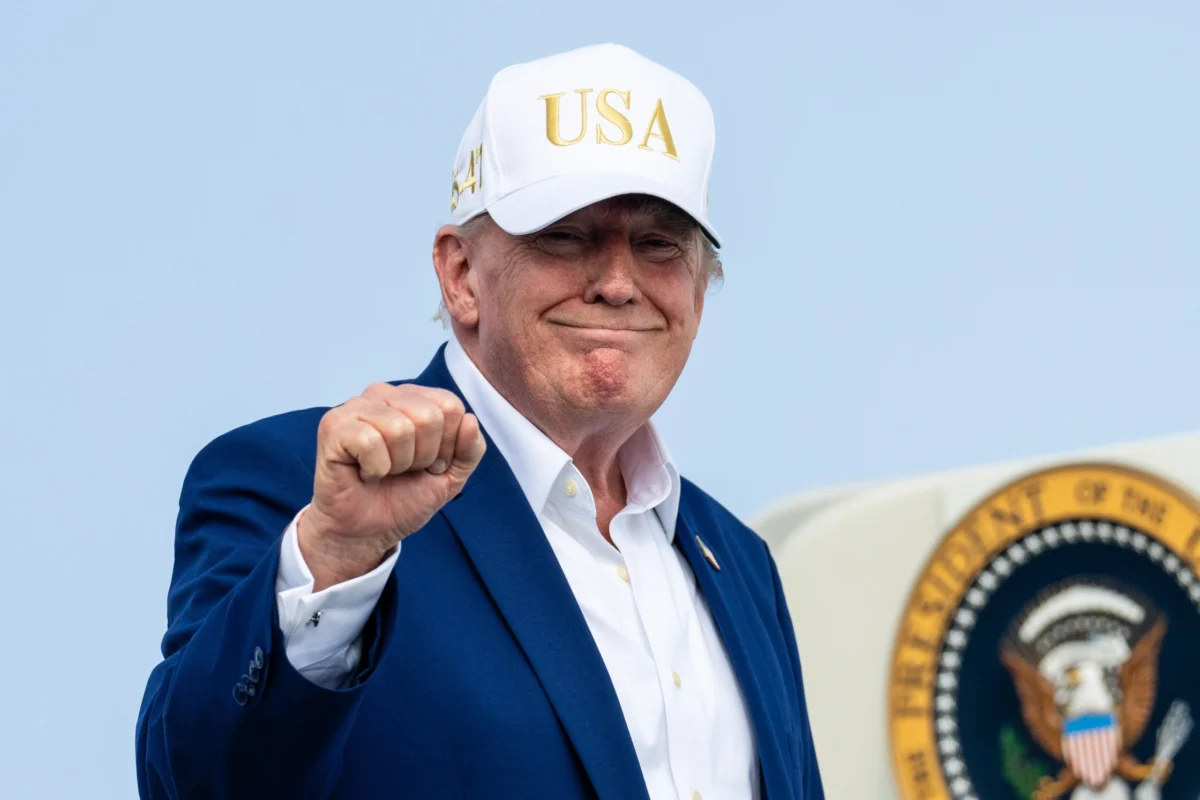
In a surprising pivot toward industrial policy for the arts, former President Donald Trump issued a call to action on Monday, urging Congress to enact a federal tax incentive program designed to revitalize the American film, television, and entertainment sectors. The proposal, unveiled via a statement on his Truth Social platform, represents a significant alignment with a long-standing objective shared by major Hollywood studios, labor unions, and production guilds that have spent years lobbying for such federal support to combat the global "runaway production" crisis.
The Proposal: A Bipartisan Path Forward
President Trump’s announcement marks a notable departure from traditional partisan gridlock, explicitly calling for a bipartisan coalition to draft and pass legislation aimed at shielding the entertainment industry from international competition.
“I am going to suggest that Republicans and Democrats get together, and immediately craft legislation to save the Movie, Television, and Entertainment Business in America,” Trump wrote. “Congress should approve, immediately, a Federal Production Incentive to create entertainment jobs in America. It can be done quickly, accurately, efficiently and, importantly, will benefit all of America.”
The former president framed the initiative as a matter of national prestige and economic sovereignty. By advocating for the repatriation of productions that have migrated to locations like Canada, the United Kingdom, and Eastern Europe, Trump emphasized the cultural and economic importance of maintaining the United States as the global “Motion Picture Capital of the World.”
Chronology: The Long Road to Federal Advocacy
To understand the weight of this development, one must look at the decades-long evolution of the "runaway production" issue.
The Rise of State-Level Competition (1990s–2010s)
For decades, Hollywood was the undisputed heart of global production. However, as production costs skyrocketed in the late 1990s and early 2000s, states and foreign nations began dangling tax credits and rebates to lure studios away from Southern California. Canada was an early pioneer, offering aggressive incentives that effectively hollowed out much of the mid-budget studio film sector in the U.S.
The Proliferation of Tax Credits
In response, individual U.S. states began their own "race to the bottom," establishing their own incentive programs. Georgia, New Mexico, and Louisiana became major hubs, effectively decentralizing the industry. However, these programs are subject to the volatile political and budgetary whims of state legislatures, leading to a fragmented landscape that makes long-term investment difficult for studios.
The Federal Stagnation
While the film industry has repeatedly lobbied for a federal equivalent—modeled after the "Film Production Capital Investment Credit" bills introduced intermittently by various members of Congress over the last 15 years—the efforts have consistently stalled. Critics of such measures have historically argued that a federal subsidy for entertainment is an improper use of taxpayer funds, particularly when compared to manufacturing or infrastructure investment. Trump’s endorsement represents the first time a major presidential figure has actively campaigned for a federal-level incentive, potentially shifting the legislative calculus on Capitol Hill.
Supporting Data: The Economics of Production Incentives
Proponents of federal tax incentives for entertainment point to the "multiplier effect" that film production brings to local economies. According to data from the Motion Picture Association (MPA), the film and television industry supports over 2.4 million jobs nationwide and generates significant tax revenue at both the state and federal levels.
The "Runaway" Gap
Industry analysis suggests that the United States has lost billions of dollars in economic activity to foreign territories that offer rebates covering 30% to 40% of a production’s local spend. When a production moves abroad, it isn’t just the actors and directors who lose out; it is the entire supply chain: local catering, construction crews, equipment rental houses, transportation logistics, and hospitality sectors.
Economic Impact Metrics
- Job Creation: A single mid-budget feature film can employ hundreds of local crew members for several months.
- Infrastructure Investment: Studios often invest in permanent soundstages and post-production facilities, which serve as long-term anchors for local business ecosystems.
- Tax Neutrality: Supporters argue that these incentives are "self-funding." They claim that the influx of high-wage workers and the surge in local spending generate enough new tax revenue to offset the cost of the credit, effectively making the incentive a net-neutral or net-positive fiscal policy.
Official Responses and Stakeholder Sentiment
The industry reaction to Trump’s proposal has been cautious but generally favorable. For years, groups like the International Alliance of Theatrical Stage Employees (IATSE) and the Directors Guild of America (DGA) have maintained that federal support is essential to maintain a "level playing field" in a globalized market.
Labor Union Perspectives
Labor leaders have long argued that without federal intervention, the industry will continue to struggle with job stability. As production technologies become more portable and digital infrastructure allows for remote post-production, the incentive for studios to chase the lowest bidder has never been higher. A federal standard could stabilize the market, preventing states from engaging in predatory bidding wars against one another.
Studio and Executive Sentiment
Major studio executives, who typically keep their political affiliations private, have expressed a desire for a "more competitive environment" in the United States. While they have enjoyed the perks of state-level programs, the administrative burden of managing credits across 50 different jurisdictions is significant. A unified, federal-level incentive would streamline operations and provide the long-term certainty required for billion-dollar production slates.
Implications: A New Era for Hollywood Policy?
The potential enactment of a federal production incentive would have profound implications for the future of American media.
Impact on Domestic Geography
If a federal incentive is introduced, it could mitigate the current reliance on state-level tax credits. This might lead to a more stable production environment, though it remains unclear if such a policy would favor traditional hubs like Los Angeles and New York or if it would be structured to encourage production in economically distressed regions, as many rural-focused economic bills do.
The Political Economy of Entertainment
By championing this issue, Trump is signaling an attempt to bridge the divide between his base and the cultural establishment of Hollywood. For decades, the relationship between the Republican Party and the entertainment industry has been strained by ideological disagreements. However, by framing the issue through the lens of "saving American jobs," Trump is attempting to reclassify the film industry as an essential component of the American industrial base, rather than a cultural adversary.
Potential Legislative Hurdles
Despite the enthusiasm from industry stakeholders, the road to passage will be difficult. Fiscal hawks within the Republican Party may balk at the idea of "subsidizing Hollywood," while some Democrats may question whether a federal tax credit should be tied to social or labor conditions, such as unionization requirements or diversity hiring mandates. The process of drafting a bill that satisfies both chambers of Congress will require significant compromise on the structure of the credit, the cap on annual awards, and the eligibility requirements for production companies.
Conclusion: A Turning Point?
As the entertainment industry faces an existential shift driven by the rise of artificial intelligence, the decline of the theatrical box office, and the maturation of global streaming markets, the stability provided by a federal tax incentive could be a lifeline. Whether this initiative gains traction in the coming legislative session remains to be seen. However, by elevating this long-standing industry wish to the level of presidential priority, Donald Trump has injected new energy into the debate, ensuring that the future of American production will remain a central topic of discussion in the halls of Congress.
The industry now awaits the next move from legislative leaders, watching to see if the rhetoric of "saving the movie business" will translate into tangible policy, or if it will remain a high-profile, yet unfulfilled, ambition for the creative economy.
More to come.










