Azzam Bilal Chamdy
The landscape of the video game industry is undergoing a seismic shift, and few entities are feeling the tremors as acutely as Ubisoft. In a move that signals the intensification of a long-term corporate restructuring plan, the French gaming giant has confirmed the closure of two of its prominent satellite studios: Ubisoft Winnipeg and Ubisoft Belgrade. This decision, which has resulted in the displacement of approximately 380 staff members across the organization, serves as a grim indicator of the publisher’s current pivot toward lean operations and a highly centralized development model.
As Ubisoft attempts to navigate a volatile market defined by rising development costs and shifting consumer engagement, the shuttering of these facilities marks a significant departure from the company’s previous strategy of aggressive global expansion.
The Core Facts: A Strategic Retreat
The closure of Ubisoft Winnipeg and Ubisoft Belgrade was not an isolated incident but rather the latest phase in a sweeping organizational audit. Ubisoft Winnipeg, which first opened its doors in 2018 with a mission to serve as a high-tech support hub, was primarily responsible for iterating on the company’s proprietary Anvil and Snowdrop engines. With a staff count that had grown to approximately 100, the studio played a pivotal role in the technical foundation of major titles, including Ghost Recon Wildlands, The Crew 2, and the long-delayed Skull and Bones.
Simultaneously, Ubisoft Belgrade—a studio with a decade of history under its belt—has been shuttered. Known for providing essential co-development support on projects ranging from the mountain-sport simulator Steep to the maritime action of Skull and Bones, Belgrade represented a key component of Ubisoft’s Eastern European development footprint.
According to internal reports and industry correspondence, employees at these locations were informed of the closures during mandatory meetings, leaving hundreds of developers and technical staff to seek new opportunities in an increasingly competitive job market.

Chronology of Contraction: The Road to Downsizing
To understand the current state of Ubisoft, one must look at the aggressive growth trajectory the company pursued in the late 2010s, followed by the rapid, painful correction that began in 2023.
The Peak of Expansion
Only a few years ago, Ubisoft maintained a workforce exceeding 20,000 employees. The company’s strategy relied on a massive, distributed network of studios that could work around the clock in different time zones. This model allowed for the massive output of open-world titles, but it also created a bloated corporate structure that became difficult to sustain when consumer habits shifted and several key titles underperformed.
The Turning Point (2023–2024)
- Early 2023: Ubisoft began signaling its intent to trim the fat. The company announced the cancellation of several unannounced projects to prioritize its biggest brands, such as Assassin’s Creed and Rainbow Six.
- March 2024: The company requested 200 voluntary departures at its Paris headquarters, triggering a fierce backlash from labor unions who cited the "enough is enough" sentiment regarding the ongoing instability.
- Ongoing Closures: Throughout the year, the company systematically shuttered its Halifax and Stockholm studios. Furthermore, the company initiated significant staff reductions at its Abu Dhabi, Redlynx, and Massive Entertainment branches.
- June 2026: The confirmation of the Winnipeg and Belgrade closures marks the most recent chapter, bringing the total headcount reduction from over 20,000 to approximately 15,000 in just three years.
Supporting Data: By the Numbers
The scale of Ubisoft’s restructuring is best illustrated by the hard data regarding personnel and output.
- Workforce Reduction: The company has shed roughly 25% of its total global workforce in less than 36 months.
- Studio Closures: In addition to Winnipeg and Belgrade, the loss of the Halifax and Stockholm studios removes critical regional hubs that previously specialized in mobile and mid-sized console projects.
- Project Cancellations: Beyond the closure of studios, the cancellation of at least six major projects—including the highly anticipated Prince of Persia: Sands of Time remake—highlights the company’s desperation to reduce "burn rate" (the speed at which a company spends its cash reserves).
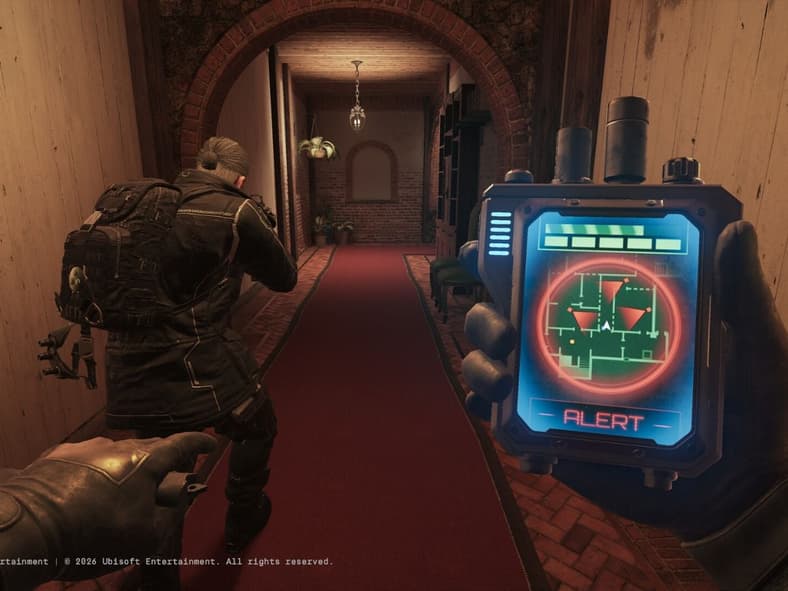
- The "Core" Focus: Data suggests that Ubisoft is moving resources toward its Barcelona studio, which is being tasked with acting as a primary engine for the Rainbow Six franchise. This indicates a "fortress" strategy: cutting support studios to double down on established, high-revenue-generating IPs.
Official Responses and Internal Climate
While Ubisoft’s corporate communications department often frames these moves as "strategic realignment" or "optimizing internal resources," the reality on the ground—as reported by employees—is far more somber.
The sentiment among the staff is characterized by uncertainty. Following the closure announcement in Winnipeg, social media and industry forums were flooded with messages from former developers highlighting the suddenness of the transition. The fact that these closures are occurring alongside labor disputes in Paris suggests that the friction between management and the rank-and-file is at an all-time high.

Management maintains that these measures are necessary to ensure the long-term viability of the company. In investor calls, leadership has consistently pointed toward a need for "agility." However, for the developers who contributed to the technical backbone of Ubisoft’s most successful games, the "agility" being pursued feels more like a abandonment of the creative human capital that made the company a global leader in the first place.
Broader Implications: What Does This Mean for the Future?
The closure of these studios carries profound implications for the gaming industry at large.
1. The Death of the "Support Studio" Model
Ubisoft’s pivot suggests that the era of having dozens of small, satellite studios acting as "helper" entities may be ending. Large publishers are realizing that maintaining physical infrastructure, HR departments, and management hierarchies for smaller, specialized teams is becoming cost-prohibitive. We are likely to see a shift toward a more centralized "super-studio" model, where all work is consolidated into a few massive, main hubs.
2. Concentration of Risk
By focusing solely on its largest, most established franchises (like Assassin’s Creed and Rainbow Six), Ubisoft is engaging in a high-stakes game of survival. While these games are proven revenue generators, the lack of smaller projects means there is less room for creative experimentation. If the "big bets" fail, the company has no secondary pipeline of smaller, lower-risk titles to fall back on.
3. The Impact on Creative Diversity
When a studio like Winnipeg, which focused on engine development and technical support, is closed, the industry loses a layer of institutional knowledge. The "Anvil" and "Snowdrop" engines are complex tools; moving the expertise required to manage them into a smaller, centralized group may lead to longer development times and increased technical debt in future titles.
4. Market Volatility and Investor Pressure
Ubisoft is currently battling a perception of stagnation. The market is demanding efficiency, but the gaming community is demanding innovation. The company is currently caught in the middle: cutting costs to appease shareholders while simultaneously trying to produce the next "must-play" experience. The next 18 to 24 months will be a litmus test for whether this "leaner" Ubisoft can still deliver the quality that once defined its brand.
Conclusion: The Path Ahead
The closure of Ubisoft Winnipeg and Ubisoft Belgrade is a cautionary tale for the modern gaming era. It underscores the fragility of the "live service" and "AAA" development models, where even the most storied companies can find themselves in a cycle of perpetual downsizing.
As the industry moves forward, observers will be watching to see if Ubisoft’s strategy of radical consolidation pays off. Will the company emerge as a more efficient, focused power-player, or will the loss of these specialized studios leave it hollowed out and unable to maintain its technical edge? For now, the only certainty is that the restructuring is far from over. The gaming community remains on high alert, waiting to see which studio, project, or brand will be the next to face the chopping block in this ongoing corporate transformation.

 Sagoh
Sagoh
 Ammar Sabilarrohman