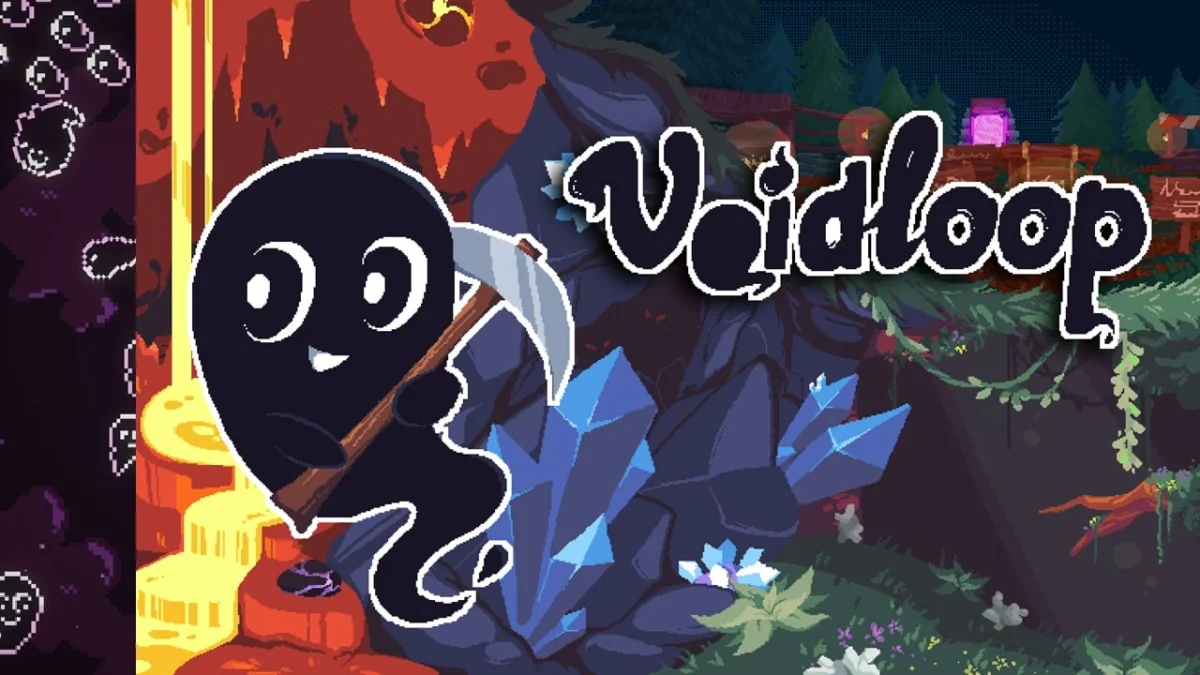
For many who have ventured into the pixelated charm of Stardew Valley, the allure of the mines often proved as compelling, if not more so, than the rustic rhythm of farm life. That insatiable desire to descend into the earth, battle creatures, and unearth precious minerals finds a new, dedicated home in Voidloop, a recently launched mobile title that promises to satisfy the subterranean cravings of gamers seeking a blend of roguelite challenge and incremental progression.
Developed by IndieGameStudio, Voidloop casts players as a lone Void Spirit, tragically separated from its ethereal home and with only one path back: straight down through an ever-changing labyrinth of caves. This premium mobile game, available now on the Google Play Store for $1.99, offers a deep, engaging experience complete with full controller support, signaling a commitment to quality often sought in the mobile gaming landscape. It’s a game designed not just to pass the time, but to engross players in a cycle of perilous exploration, strategic upgrades, and persistent improvement.
Main Facts: Unearthing the Core of Voidloop
Voidloop emerges as a distinctive mining adventure, skillfully weaving together the high-stakes, replayable nature of roguelite mechanics with the satisfying, gradual power accumulation characteristic of incremental games. Players assume the role of a solitary Void Spirit, disoriented and far from its origin, compelled to journey ever deeper into the earth’s core to find its way back home.
Each expedition into the game’s dynamic caverns presents a fresh array of challenges. These procedurally generated environments are teeming with diverse enemies, elusive rare loot, environmental hazards, and crucial resources. The overarching objective is a relentless push downwards, conquering floor after floor until the fabled "bottom of the cave" is reached, signifying the spirit’s return.
Between these daring delves, players retreat to a serene camp, which functions as a vital home base. Here, the Void Spirit can recuperate, strategize, and enhance its capabilities through interaction with various NPCs. The Blacksmith offers crafting and equipment upgrades, the Shopkeeper facilitates trading of gathered resources and items, and a mysterious Witch provides assistance with alchemy and potentially unlocks powerful skills.
The game boasts five distinct cave biomes, each presenting its own unique set of procedurally generated floors, environmental perils, and specific resources essential for progression. A constant sense of urgency is instilled by a strict time limit; players must strive to reach floor 20 of each cave before the clock runs out, adding a layer of strategic decision-making to every run. With over 60 unique items to discover, more than 100 upgrades to unlock, and 34 distinct skills to master, Voidloop promises extensive replayability and a deep sense of character evolution. The game’s availability on the Google Play Store for a modest $1.99, coupled with full controller support, positions it as a compelling premium offering in the mobile gaming market.
Delving into the Void: A Detailed Look at Voidloop’s Mechanics
Voidloop meticulously crafts a compelling gameplay loop, inviting players into a cycle of exploration, combat, and progression that is both challenging and immensely rewarding. The fusion of roguelite and incremental elements creates a dynamic experience where every run, even failed ones, contributes to the player’s long-term power and understanding.
The Core Gameplay Loop: Descent and Return
The narrative hook of the "lonely Void Spirit" seeking its way home by plunging deeper into the earth provides a poignant backdrop to the relentless gameplay. This isn’t just a mining game; it’s a journey of rediscovery and survival against overwhelming odds. Each trip into the abyss is a fresh start, embodying the roguelite spirit. The caves are not static; they are living, breathing entities that reconfigure themselves with every descent. This procedural generation ensures that no two runs are ever identical, guaranteeing a constant need for adaptation and preventing the staleness that can often plague games with repetitive environments.
Within these ever-changing subterranean expanses, players encounter a dynamic ecosystem of enemies, each with unique attack patterns and vulnerabilities. Beyond combat, the caves are rich with rare loot, hidden behind puzzles or guarded by formidable foes, and an abundance of resources crucial for progression. Environmental hazards, from collapsing ceilings to toxic pools, demand careful navigation and tactical awareness. The ultimate goal remains constant: to push deeper, floor by floor, overcoming increasingly difficult challenges until the fabled "bottom" is reached, signifying not just completion, but a step closer to the Void Spirit’s eventual redemption and return. The inherent risk of failure, often leading to a reset of the current run, is mitigated by persistent upgrades and knowledge gained, making each "death" a learning opportunity rather than a mere setback.
The Sanctuary of the Camp: Between Expeditions
Between the harrowing expeditions into the void, the camp serves as a crucial strategic hub and a much-needed respite. Far from being a mere menu screen, the camp is where the fruits of a player’s labor are truly realized, and future runs are meticulously planned.
The Blacksmith is indispensable for the Void Spirit’s combat prowess. Here, gathered resources can be forged into new equipment, enhancing offensive and defensive capabilities. Existing items can be upgraded, often significantly altering their stats or even unlocking new properties. Players must make tactical decisions about whether to invest in raw power, defensive resilience, or utility-focused gear, tailoring their loadout to anticipated challenges in upcoming biomes.
The Shopkeeper acts as the economy’s backbone. Excess resources can be traded for essential supplies, rare items, or even blueprints for new crafts. Conversely, specific items might be purchased to fill gaps in a player’s inventory or to prepare for a particular strategy. This trading system adds another layer of resource management, requiring players to weigh immediate needs against long-term investments.
The Witch introduces an element of arcane power and deep progression. Through her, players can delve into the Alchemy system, brewing potent potions that offer temporary but significant buffs. Furthermore, it is likely through the Witch that players interact with the Skill Tree, investing hard-earned skill points to permanently enhance the Void Spirit’s innate abilities, shaping its combat style and survival chances across all subsequent runs. The decisions made at the camp are paramount, directly influencing the viability and success of each subsequent dive into the unknown.
The Perilous Depths: Biomes and Challenges
Voidloop keeps its environments fresh and challenging through the introduction of five distinct cave biomes. While the specific nature of these biomes is not detailed in the initial announcement, one can infer a rich variety designed to test players in different ways. Imagine, for instance:
- The Crystalline Caverns: Shimmering with dangerous reflective surfaces that redirect attacks, and abundant in rare magical crystals.
- The Fungal Grotto: A bioluminescent, overgrown area where poisonous spores fill the air, and aggressive plant-based enemies lurk.
- The Obsidian Catacombs: Ancient, volcanic tunnels filled with searing lava flows, fire-immune foes, and heat-resistant minerals.
- The Sunken Maw: Water-filled passages requiring new movement strategies, inhabited by aquatic creatures, and offering unique underwater resources.
- The Abyssal Void: The deepest, most dangerous biome, characterized by shadowy creatures, environmental nullification fields, and the rarest, most powerful materials.
Each biome not only presents unique visual aesthetics but also its own set of procedurally generated floor layouts, ensuring continuous novelty. More importantly, each biome introduces distinct hazards—from environmental traps and status-inflicting areas to specialized enemy types that demand specific combat approaches. The resources found within these biomes are also unique, creating a compelling incentive to explore all areas and strategically farm for specific materials needed for critical upgrades back at camp.
Adding to the pressure is the "race against the clock" mechanic. Players are tasked with reaching floor 20 of each cave before a timer expires. This creates a constant tension, forcing players to balance careful exploration and resource gathering with efficient movement and combat. Failure to reach the target floor in time might result in a reduced reward, a partial loss of progress, or even the forced end of a run, emphasizing the roguelite’s inherent risk-reward system.
Evolution of the Void Spirit: Progression Systems
The heart of Voidloop‘s long-term engagement lies in its robust and multi-layered progression systems, allowing players to continually grow and adapt their Void Spirit to face ever-greater challenges.
Arsenal and Combat
The Void Spirit is not defenseless, armed with a trusty sword for melee engagements and access to a versatile set of magic skills. The combat system appears to be designed for dynamic encounters, where players must adapt their approach based on enemy types. Melee enemies require precise timing for dodges and counter-attacks, ranged enemies necessitate closing distances quickly or finding cover, and "jumpy enemies" likely demand agile movement and predicting erratic patterns. The magic skills could range from offensive elemental spells (fireballs, ice shards) to utility buffs (temporary shields, speed boosts) or crowd control abilities (stuns, slows), offering diverse tactical options in the heat of battle. Mastery of both swordplay and magic will be key to survival.
Items, Upgrades, and Skills
The sheer volume of progression options is impressive for a mobile over 60 unique items, more than 100 upgrades, and 34 distinct skills. This suggests a deep customization potential. Items might include weapons, armor, accessories, or consumables, each with different stats and potential passive effects. Upgrades likely apply to existing items, enhancing their power, or to the Void Spirit itself, improving core attributes like health, energy, or movement speed. The 34 skills could represent active abilities, passive buffs, or even entirely new mechanics that fundamentally alter gameplay. The interplay between these elements—finding synergistic item sets, prioritizing certain upgrades, and carefully allocating skill points—will be a significant part of the game’s strategic depth.
The Skill Tree and Achievements
A dedicated Skill Tree provides a visual and structured path for character development. The innovative method of earning skill points—through completing achievements—encourages players to engage with all aspects of the game, not just continuous grinding. Achievements could range from defeating a certain number of enemies, reaching specific depths, crafting rare items, or surviving under difficult conditions. This system rewards diverse gameplay and mastery, ensuring that progression feels earned and meaningful. Players will need to carefully consider their build, focusing on areas like combat proficiency, resource gathering efficiency, or defensive capabilities to suit their playstyle and the challenges ahead.
The Alchemist’s Brew: Potions and Buffs
The Alchemy system, facilitated by the Witch, adds a tactical layer of pre-run preparation and in-run utility. Brewing potions from gathered ingredients allows players to tailor temporary buffs to specific needs. Examples provided include potions that increase resource collection amounts (ideal for farming runs), improve resource quality (useful for obtaining rare materials), and extend time on each floor (crucial for difficult biomes or exploratory runs). This system encourages resource management, strategic planning, and adapting to the immediate demands of a run, providing crucial advantages when facing formidable challenges.
Chronology of Development: From Concept to Launch
While IndieGameStudio has not publicly detailed the specific timeline for Voidloop‘s development, the journey of an indie game from conception to release typically follows a rigorous, passion-driven path.
The genesis of Voidloop likely began with a core concept: the desire to marry the satisfying grind of mining with the high-stakes replayability of roguelites. This initial idea would have been refined through a series of brainstorming sessions, focusing on defining the unique player character—the Void Spirit—and the overarching narrative of a journey home. Prototyping would have followed, where core mechanics like procedural generation, combat, and the camp system were built and tested in rudimentary forms. This iterative process is crucial for indie developers, allowing them to rapidly experiment and refine gameplay loops.
As the core mechanics solidified, development would have progressed to asset creation: designing the distinct visual styles for the five biomes, crafting enemy models, animating the Void Spirit, and creating the various items and UI elements. Simultaneously, the game’s intricate progression systems—the skill tree, alchemy, and upgrade paths—would have been designed and implemented, requiring careful balancing to ensure a fair yet challenging experience.
Throughout development, especially in the later stages, rigorous internal testing would have identified bugs, performance issues, and areas for improvement in gameplay balance. Given the premium nature and controller support, it’s plausible that a period of closed alpha or beta testing might have occurred, gathering feedback from a select group of players to polish the experience further.
Finally, with development complete and testing concluded, the game would enter its release phase. This includes preparing the game for storefronts, crafting compelling marketing materials, and announcing its availability. The launch of Voidloop on the Google Play Store for $1.99 signifies the culmination of this dedicated effort, bringing the vision of IndieGameStudio to mobile gamers worldwide.
Supporting Data and Market Context: The Rise of Premium Mobile Experiences
Voidloop‘s entry into the mobile gaming market is particularly noteworthy, riding several significant trends that underscore a shift in player expectations and developer strategies.
The Indie Game Landscape on Mobile
For years, the mobile gaming space was dominated by free-to-play (F2P) titles, often monetized through aggressive in-app purchases and advertisements. However, a growing segment of players and developers has expressed a desire for premium, paid experiences that offer complete, uncompromised gameplay without predatory monetization. Games like Slay the Spire (mobile port), Dead Cells, and even the original Stardew Valley on mobile have demonstrated a strong market appetite for high-quality, one-time-purchase titles. Voidloop, with its $1.99 price point and controller support, firmly plants itself in this burgeoning premium segment, signaling a commitment to a complete and fair player experience.
Roguelite Revival and Niche Appeal
The roguelite genre has experienced a renaissance in recent years, with critically acclaimed titles like Hades, Dead Cells, and The Binding of Isaac captivating millions. The appeal lies in their high replayability, challenging difficulty, and the persistent progression that makes each failed run feel productive. Voidloop taps directly into this popularity, offering a mobile-native roguelite experience that maintains the core tenets of the genre: procedural generation, meaningful choices, and a strong sense of player skill progression. This niche, while not as broad as casual mobile games, represents a highly engaged and dedicated player base.
Incremental Games and Player Engagement
The inclusion of incremental mechanics—the steady accumulation of power and resources over time—adds another layer of appeal. Incremental games, often referred to as "idle" or "clicker" games, have a vast following due to their satisfying progression loops and the feeling of constant growth. Voidloop intelligently integrates this by allowing permanent upgrades and skill unlocks that persist across runs, ensuring that even when a player faces a setback, their overall progress towards becoming a more formidable Void Spirit continues. This blend mitigates the frustration sometimes associated with pure roguelites, offering a more forgiving and consistently rewarding experience.
Stardew Valley’s Shadow: Mining as a Core Loop
The initial hook, referencing Stardew Valley‘s mining component, is a shrewd move. Stardew Valley captivated players with its multi-faceted gameplay, and for a significant portion, the mining aspect—delving into Skull Cavern or the local mines, battling monsters, and collecting rare ores—became a primary engagement loop. Voidloop extracts this specific, beloved mechanic and elevates it to the central focus, providing a dedicated, expanded experience for those who found joy in subterranean exploration and combat. This connection implicitly targets a pre-existing audience ready for a game that amplifies that specific thrill.
Technical Specifications and Accessibility
The availability on Google Play Store with full controller support is a strategic decision. While touch controls are ubiquitous on mobile, controller support significantly enhances the precision and comfort for action-oriented games, especially roguelites that demand quick reflexes. This caters to a segment of mobile gamers who prefer a more traditional gaming experience, potentially drawing in players from console or PC backgrounds. The $1.99 price point is an accessible entry barrier for a premium title, making it an attractive impulse purchase for those seeking quality mobile entertainment.
Official Responses and Developer Insights: A Vision for the Void
While no specific "official responses" were provided in the source material, we can infer the guiding philosophy behind Voidloop by imagining the developers’ perspective at IndieGameStudio. Their design choices speak volumes about their intentions for the game.
"When we set out to create Voidloop," a hypothetical lead developer from IndieGameStudio might explain, "our primary goal was to capture that specific thrill of delving into the unknown, of the constant push for just ‘one more floor.’ Many of us loved the mining elements in games like Stardew Valley, but we wanted to build an entire experience around that sense of risk and reward, layered with deep progression."
"We knew a pure roguelike could be punishing, especially for mobile, so the incremental mechanics were crucial," they might continue. "We wanted players to always feel like they were making progress, even if a particular run didn’t go as planned. That persistent sense of growth, unlocking new skills and upgrades at the camp, is what keeps players invested for the long haul. Balancing that with the roguelite’s inherent challenge—the procedural generation, the time limit, the escalating difficulty—was one of our biggest design hurdles."
Regarding the premium model, the developer might articulate, "We believe in offering a complete, quality experience upfront. No ads, no energy timers, no pay-to-win. A single purchase for endless adventure. We also recognized the importance of controller support to provide that tactile, precise gameplay experience that core gamers expect, even on a mobile platform."
"Ultimately," they might conclude, "we hope players lose themselves in the Void. We want them to feel the excitement of a perfect run, the tension of a narrow escape, and the satisfaction of finally overcoming a challenge they thought impossible. We’re excited to see how players explore our biomes, master our systems, and ultimately guide their Void Spirit back home." This hypothetical statement reflects the game’s features and its position in the market.
Implications for Players and the Mobile Gaming Market
The launch of Voidloop carries several implications, both for its player base and for the broader mobile gaming ecosystem.
Player Experience
For players, Voidloop offers a compelling package of deep engagement and replayability. The combination of roguelite and incremental mechanics ensures that every session, whether a quick ten-minute dive or an extended strategic push, feels meaningful. The game promises hours upon hours of content through its procedurally generated levels, diverse biomes, and extensive progression systems. Players can look forward to a challenging yet rewarding experience, where skill, strategy, and a bit of luck combine to create unique adventures. The sense of accomplishment derived from overcoming a particularly tough biome or unlocking a powerful new ability will be a core part of its appeal.
Mobile Gaming Trends
Voidloop‘s premium pricing and comprehensive feature set reinforce the ongoing trend towards more sophisticated, console-like experiences on mobile platforms. It further validates the market for paid games, potentially encouraging other indie developers to invest in high-quality, complete titles rather than succumbing to the free-to-play model’s pressures. This shift benefits players by offering more diverse and less monetarily exploitative gaming options on their handheld devices.
Future Potential
Given the nature of roguelites and incremental games, Voidloop has significant potential for future updates and expansions. New biomes, additional enemies, more items, skills, and even new game modes could extend the game’s lifespan and appeal. The success on Android could also pave the way for ports to other platforms, such as iOS, PC, or even consoles, broadening its audience significantly. Such an expansion would be a testament to the game’s robust core design and player reception.
Community Engagement
As an indie title, community feedback will likely play a crucial role in Voidloop‘s ongoing development. Player suggestions regarding balance, new features, or quality-of-life improvements could directly influence future patches and content updates. This collaborative relationship between developers and players is a hallmark of successful indie titles, fostering a dedicated community around the game.
In conclusion, Voidloop stands as a promising addition to the mobile gaming landscape, offering a rich, challenging, and deeply rewarding experience for those who yearn for subterranean adventures. By blending familiar genres with thoughtful execution, IndieGameStudio has crafted a game that is poised to capture the attention of former Stardew Valley miners and roguelite enthusiasts alike, inviting them to lose themselves in the endless, dangerous depths of the void.