

San Francisco, CA – [Current Date] – 31st Union, a development studio under the 2K Games umbrella, has announced significant layoffs affecting an undisclosed number of staff members. The restructuring comes as the studio continues development on its highly anticipated free-to-play shooter, Project Ethos, which has reportedly undergone a strategic "renewed direction and vision" following a muted initial reception.
The news was communicated internally via a memo from studio head Ben Brinkman, later shared with GamesIndustry.biz. In his statement, Brinkman expressed unwavering confidence in the future of Project Ethos and the ongoing commitment from Take-Two and 2K leadership. However, he also underscored the necessity to "scale back our team to better align with where we are in development," citing a need for the studio to "work more quickly and nimbly."
This marks a pivotal moment for 31st Union and Project Ethos, a title initially revealed as a "roguelike hero shooter" that is now being re-framed as a "skill-based PVP roguelike experience." The layoffs reflect a challenging period for the video game industry at large, characterized by widespread job cuts and a re-evaluation of development strategies, particularly within the competitive free-to-play and live-service sectors. While 2K has not disclosed the exact number of roles impacted, the move signals a focused effort to streamline operations and refine the game’s core identity amidst an increasingly scrutinizing market.
Chronology: The Troubled Development Path of Project Ethos
The journey of 31st Union and Project Ethos has been marked by ambition, market shifts, and significant internal changes, culminating in the recent layoffs. Understanding this timeline is crucial to grasp the context of the studio’s current predicament.
The Founding and Initial Vision (2019-2023)
31st Union was established in 2019, a period when the "hero shooter" genre was still seen by many publishers as a fertile ground for new intellectual property, despite early signs of market saturation. The studio was founded with high expectations, spearheaded by industry veteran Michael Condrey, known for his leadership roles at Call of Duty studio Sledgehammer Games. Under Condrey’s direction, the team embarked on developing a title that aimed to blend the popular hero shooter mechanics with roguelike elements, promising a fresh take on the competitive multiplayer landscape. The initial vision likely leveraged Condrey’s experience with fast-paced, character-driven combat, hoping to carve out a niche in an increasingly crowded genre.
The Unveiling and Market Realities (Early 2024)
Project Ethos was formally announced in early 2024, revealing its initial concept as a "roguelike hero shooter." Early glimpses suggested a visual style that some observers likened to Epic Games’ Fortnite, a comparison that, while indicating a desire for broad appeal, also highlighted the immense challenge of distinguishing a new title in a space dominated by established giants.
The game’s debut came at a particularly precarious time for the hero shooter subgenre. Just prior to its announcement, Sony’s Concord, another high-profile hero shooter, had faced significant criticism and was widely perceived to have underperformed, adding to a growing list of titles that struggled to find an audience. This challenging market backdrop undoubtedly contributed to the "lukewarm response" Project Ethos received upon its initial reveal. Critics and potential players questioned the game’s ability to innovate sufficiently or offer a compelling reason to shift allegiance from existing, polished competitors. The feedback suggested a lack of clear identity and a struggle to articulate its unique selling proposition in a way that resonated with a skeptical audience.
Leadership Transition and Strategic Pivot (Mid-2024)
The muted reception of Project Ethos is widely believed to have been a significant factor in the departure of studio head Michael Condrey. His exit underscored the intense pressure on new game IPs, especially those in competitive live-service categories, to make an immediate impact.
Following Condrey’s departure, Ben Brinkman was appointed as the new studio head, joining 31st Union approximately six months prior to the recent layoffs. Brinkman’s arrival heralded a period of strategic re-evaluation for Project Ethos. His internal memo explicitly states that "changes need to be made to our team in order to realize our goals," signaling a clear mandate to refine the game’s direction. This re-evaluation has led to a notable shift in the game’s genre description, from a "roguelike hero shooter" to a "skill-based PVP roguelike experience." While subtle, this change suggests a move away from the "hero" archetype, which implies distinct characters with fixed abilities, towards a more fluid, skill-centric combat system potentially emphasizing player customization and emergent gameplay within a roguelike progression loop.
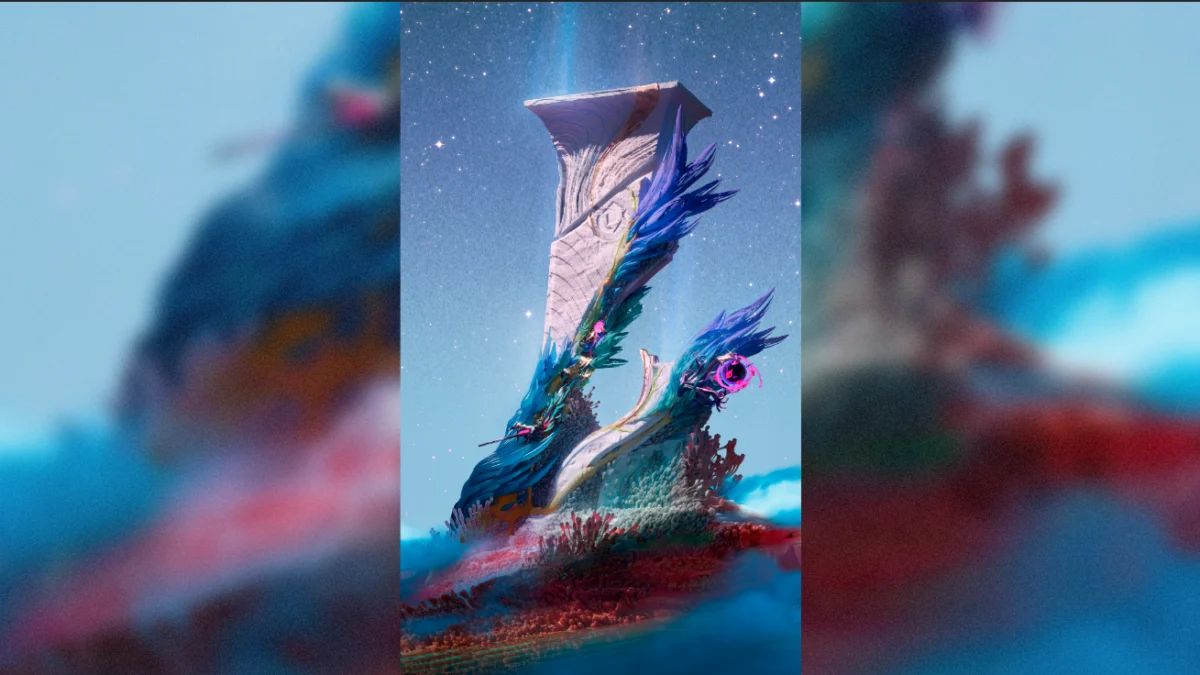
Accompanying this conceptual pivot is a proposed change in the game’s aesthetic. New concept art provided by 2K hints at a more "distinctive, fantasy-like visual identity," moving away from the "Fortnite-esque" appearance that characterized its initial reveal. This visual overhaul, if fully implemented, would be a significant effort to differentiate Project Ethos in a visually homogeneous market and align it more closely with its refined gameplay vision.
The Layoffs: A Consequence of Re-alignment (Late 2024)
The recent layoffs at 31st Union are presented by Brinkman as a direct consequence of this strategic re-evaluation and the studio’s need to adapt. The stated goal to "work more quickly and nimbly" and "scale back our team to better align with where we are in development" implies a recognition that the previous team structure or size was not conducive to the new direction or the pace required for a competitive live-service title. This decision, while difficult for those affected, is framed as a necessary step to streamline operations and ensure the project’s long-term viability under its refined vision.
Supporting Data: A Broader Industry Perspective
The situation at 31st Union is not an isolated incident but rather a microcosm of broader trends and significant challenges facing the video game industry, particularly in the free-to-play and live-service sectors.
The Volatile Free-to-Play Market
Launching a new free-to-play (F2P) title, especially a competitive shooter, is an incredibly high-stakes endeavor. The market is saturated with established giants like Fortnite, Apex Legends, Valorant, and Call of Duty: Warzone, which boast massive player bases, sophisticated live-service infrastructure, and continuous content updates. For a new F2P IP to succeed, it must not only offer compelling gameplay but also differentiate itself significantly, attract a critical mass of players quickly, and maintain consistent engagement through evolving content, community management, and effective monetization strategies. The cost of acquiring and retaining players is astronomical, and the barrier to entry for new titles has never been higher. Development costs for F2P titles are also substantial, as they require robust backend infrastructure, continuous post-launch support, and often large teams dedicated to seasonal content and balancing.
The "Hero Shooter" Graveyard
The hero shooter subgenre, which Project Ethos initially aimed to inhabit, has proven to be notoriously difficult to crack. While Overwatch achieved monumental success, numerous other titles that attempted to replicate its formula have failed or struggled immensely. Examples include Amazon Games’ Crucible, which was shut down shortly after launch; Ubisoft’s Hyper Scape, which met a similar fate; Gearbox Software’s Battleborn; and Boss Key Productions’ LawBreakers. Even major publishers have found it challenging, as seen with Sony’s Concord. The reasons for these failures are multifaceted: difficulty in balancing a diverse roster of characters, intense competition, lack of unique identity, slow content updates, or simply failing to capture player interest in a crowded market. Project Ethos‘s pivot away from the explicit "hero shooter" label might be a direct acknowledgment of this challenging landscape and an attempt to distance itself from a subgenre with a high casualty rate.
Widespread Layoffs Across the Gaming Industry (2023-2024)
The layoffs at 31st Union are part of a grim, industry-wide trend that has seen tens of thousands of professionals lose their jobs in 2023 and 2024. Major publishers and developers, including Microsoft (Activision Blizzard, Xbox), Sony, Embracer Group, Unity, Riot Games, Epic Games, and many others, have announced significant job cuts. This wave of layoffs is attributed to several factors:

- Overhiring during the pandemic boom: Many companies expanded rapidly during the COVID-19 lockdowns as gaming saw unprecedented growth, leading to unsustainable team sizes.
- Post-pandemic adjustments: As lockdowns eased and consumer spending habits shifted, the growth rate slowed, necessitating recalibrations.
- Economic pressures: Rising inflation, interest rates, and general economic uncertainty have led to tighter budgets and increased scrutiny from investors.
- Increased development costs: The cost of developing AAA games has skyrocketed, pushing publishers to be more cautious with new projects and demanding higher returns.
- Investor pressure: Publicly traded companies face constant pressure to optimize profitability, often leading to cost-cutting measures like layoffs.
Against this backdrop, 31st Union’s restructuring appears less as an isolated failure and more as a reflection of the intense financial and market pressures that even well-funded studios under major publishers are experiencing.
Take-Two’s Portfolio and Strategy
As a subsidiary of 2K, 31st Union operates under the larger umbrella of Take-Two Interactive, one of the largest video game publishers globally. Take-Two’s strategy has increasingly focused on "recurring consumer spending" (RCS) and live-service games, which generate revenue long after the initial purchase through microtransactions, battle passes, and expansions. Project Ethos, as a free-to-play title, fits squarely into this strategic imperative.
Take-Two CEO Strauss Zelnick has consistently championed Project Ethos, including it in his optimistic assessments of the company’s future lineup. He previously highlighted the game as an element of "the most robust lineup I’ve ever been able to talk about in advance." This strong public backing from the CEO indicates that despite its early struggles and internal restructuring, Project Ethos remains a strategically important title for Take-Two. The company is also heavily investing in its other major IPs, most notably the upcoming Grand Theft Auto VI, which represents a colossal financial commitment and is expected to be a monumental success. The success of Project Ethos and other live-service titles could help diversify Take-Two’s revenue streams and reduce its reliance on its tentpole franchises. The layoffs, therefore, can be viewed as an attempt to ensure the project’s success and fit within Take-Two’s broader, long-term live-service strategy.
Official Responses: Navigating Uncertainty
The communication surrounding the layoffs and the future of Project Ethos has been carefully managed, balancing difficult news with expressions of confidence.
Ben Brinkman’s Internal Memo
Studio head Ben Brinkman’s internal memo serves as the primary official statement regarding the layoffs. His language is a classic example of corporate communication during a restructuring:
- Acknowledgement of difficulty: He uses phrases like "difficult decision" and "parting ways with some valued colleagues," indicating an awareness of the human impact of the layoffs.
- Justification for change: The rationale provided — "changes need to be made," "work more quickly and nimbly," "scale back our team to better align with where we are in development" — positions the layoffs as a necessary operational adjustment rather than a sign of project failure.
- Expression of confidence: Crucially, Brinkman declares, "I’ve never been more confident in the future of our game, this team, and the commitment and investment Take-Two and 2K leadership continue to show." This strong assertion is vital for maintaining morale among the remaining staff and reassuring external stakeholders about the project’s viability. It underscores that despite the cutbacks, the publisher remains committed to Project Ethos.
The memo aims to convey a message of strategic clarity and renewed purpose, even in the face of painful personnel reductions.
2K’s Official Statement
2K’s response, shared with GamesIndustry.biz, was notably concise. The publisher did not confirm the exact number of roles affected, a common practice during layoffs to control the narrative and minimize negative publicity. However, 2K did provide a new piece of concept art, subtly reinforcing the message about the game’s "renewed direction and vision." This visual update, suggesting a more "fantasy-like visual identity," acts as a non-verbal assurance that the project is not being abandoned but is actively evolving. By showcasing new art, 2K attempts to pivot the conversation from the layoffs themselves to the exciting new creative path the game is taking, aiming to generate renewed interest and reassure the community that development is progressing, albeit with a refined focus.
Take-Two’s Public Stance (Strauss Zelnick)
Take-Two CEO Strauss Zelnick’s previous championing of Project Ethos as part of a "robust lineup" adds another layer to the official narrative. While his statements predate the layoffs, they demonstrate a high-level strategic belief in the project. The company’s continued inclusion of Project Ethos on its list of upcoming titles in financial reporting further solidifies this commitment. The layoffs, from Take-Two’s perspective, are likely viewed as an operational adjustment to ensure that a strategically important title can ultimately succeed, rather than a sign of its impending demise. This aligns with a broader corporate philosophy of optimizing resources to maximize the potential of key investments.
Implications: The Road Ahead for 31st Union and Project Ethos
The layoffs at 31st Union and the subsequent strategic re-evaluation of Project Ethos carry significant implications for the studio, the game, and the broader industry.
Impact on the Remaining Team
For the employees who remain at 31st Union, the aftermath of layoffs is often fraught with challenges. Morale can suffer, as colleagues and friends are let go, creating an atmosphere of uncertainty and anxiety about job security. There is often an increased workload placed on the remaining staff, who must now absorb the responsibilities of departed team members, potentially leading to burnout and reduced efficiency despite the goal of being "nimble." Maintaining creative momentum and a positive work environment becomes a crucial leadership challenge, requiring transparent communication and strong support systems. The pressure to deliver a successful game after such a restructuring is immense, as the project’s future, and potentially the studio’s very existence, hinges on its eventual performance.
Development Outlook
The stated goal of "working more quickly and nimbly" after scaling back the team presents a double-edged sword. While a leaner team might reduce communication overhead and accelerate decision-making, it also risks stretching resources thin. Key expertise might be lost, potentially leading to delays, compromises in quality, or a slower pace of content creation for a live-service game that demands constant updates. The successful pivot to a "skill-based PVP roguelike experience" with a "fantasy-like visual identity" will depend entirely on the remaining team’s ability to execute this new vision effectively. Such a significant shift in concept and art direction during active development is a complex undertaking, requiring careful management to avoid scope creep or a fragmented final product. The risk of a rushed product, rather than a refined one, is a genuine concern.
Player Perception and Trust
Potential players are increasingly savvy and sensitive to news of troubled development cycles and layoffs. Such reports can erode trust and generate skepticism, making it harder for a new game to attract an audience, especially in the hyper-competitive F2P shooter market. The stigma associated with troubled development can be difficult to overcome. 31st Union will need to aggressively communicate its new vision and demonstrate tangible progress to win over a cautious player base. Building excitement and trust will require more than just concept art; it will demand compelling gameplay reveals, transparent developer communication, and a clear roadmap for the game’s future.
Market Positioning
The shift from "roguelike hero shooter" to "skill-based PVP roguelike experience" suggests an attempt to carve out a more distinct niche. This new positioning could differentiate Project Ethos from the crowded hero shooter market, potentially appealing to players who value individual skill and procedural challenge over fixed character archetypes. However, even this refined genre still faces competition. The success will depend on Project Ethos‘s unique selling points: what specific mechanics will make its skill-based PVP compelling? How will the roguelike elements enhance replayability without feeling repetitive? Can it offer a novel experience that combines these genres in a fresh way?
Future of 31st Union
The layoffs could be interpreted in two ways for the long-term viability of 31st Union. On one hand, it could be a necessary, albeit painful, restructuring to save the project and, by extension, the studio itself. By aligning the team size and structure with the refined development goals, 2K and Take-Two might be providing 31st Union a clearer path to success. On the other hand, layoffs often signal deeper underlying issues, and if Project Ethos continues to struggle, the studio’s future could remain uncertain. Its long-term viability will depend entirely on the critical and commercial success of Project Ethos under its new direction.
Broader Industry Lessons
The situation at 31st Union offers several critical lessons for the broader game development industry. It highlights the immense pressure on new IPs, particularly in the F2P live-service space, to find immediate traction. It underscores the difficulty of predicting market trends and the need for studios to be agile and willing to pivot, even if it means difficult personnel decisions. Finally, it reinforces the ongoing trend of consolidation and efficiency-driven restructuring within the industry, where even established publishers like Take-Two are not immune to the need for cost-cutting and strategic re-evaluation in a volatile global market. The journey of Project Ethos will continue to be a closely watched case study in how studios adapt to changing market conditions and navigate the treacherous waters of modern game development.











No comments yet. Be the first to join the conversation!