

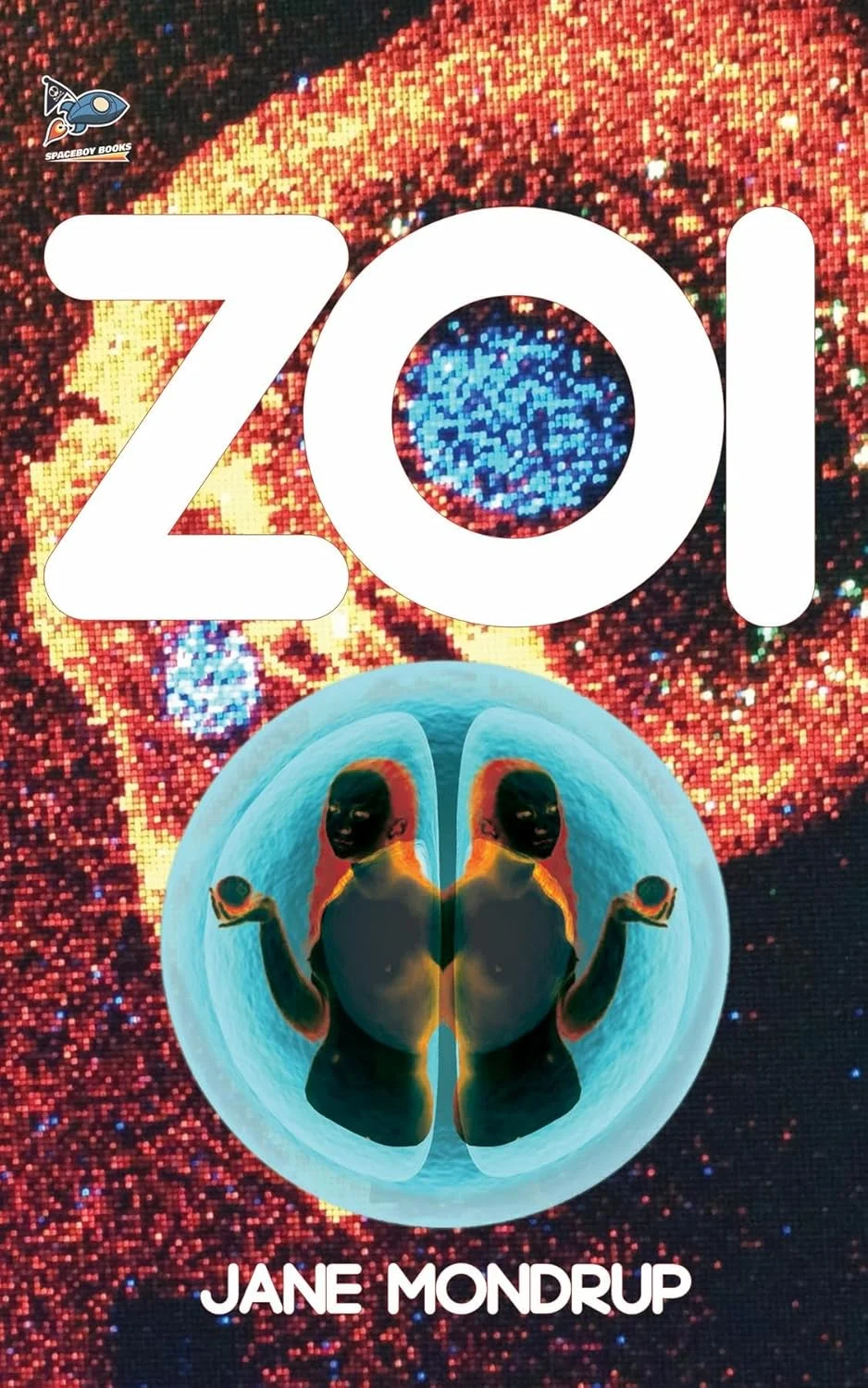
In the long, storied history of science fiction, few tropes have proven as resilient as the "Big Dumb Object"—the mysterious, alien structure that drifts into our solar system, demanding to be analyzed, cataloged, and understood. From Arthur C. Clarke’s Rendezvous with Rama to the vast reaches of contemporary space opera, humanity has consistently framed first contact as an encounter with a technological puzzle. However, with the publication of Jane Mondrup’s latest novel, Zoi, the genre is being forced to confront a much more uncomfortable possibility: What if the alien isn’t a machine to be solved, but a living organism that demands our total, biological surrender?
Zoi introduces a near-future setting where the solar system is visited by a series of enigmatic entities known as the "zoi." They appear, wait, and depart in a rhythmic, inscrutable cycle. Unlike the cold, metallic cylinders of classic fiction, the zoi are biological—vast, space-borne amoebae composed of organelles, cytosol, and transparent membranes. As Mondrup explores, the zoi do not merely exist; they engage, responding to human presence with a form of hospitality that is as terrifying as it is miraculous.
Chronology of an Interstellar Enigma
The narrative structure of Zoi is bifurcated, weaving together a present-day odyssey with the long, meticulous history of Amira, the novel’s protagonist.
- The Early Years: The story traces Amira’s obsession back to her childhood, when the first zoi appeared. As a five-year-old, she was "captivated by the sight of the shining lump between the stars." This fascination serves as the engine for her life, driving her through years of academic and professional preparation.
- The Commitment: Through flashbacks, the reader learns of the sacrifices Amira made to reach the zoi—most notably her relationship with Natan, her partner. The novel makes it clear from the outset that Amira chose the mystery of the stars over the stability of a domestic life on Earth.
- The Departure: The "present" timeline finds Amira and three crewmates—Kiah, Evardo, and Linn—aboard a zoi as it exits the solar system. This is a one-way trip, a leap into the unknown where the destination is entirely controlled by the biological entity they inhabit.
- The Adaptation: As the ship leaves the cradle of our sun, the crew undergoes a harrowing transformation. The zoi creates breathable pockets of air within itself to accommodate them, but in turn, the zoi begins to subtly alter the crew’s biology and psychology. The narrative follows this process as they shift from explorers to symbionts.
Supporting Data: The Anatomy of a Living Vessel
The contrast between the zoi and traditional sci-fi vessels is stark. While probes sent by humanity initially fail to elicit a response, the zoi demonstrate an immediate, physical reaction to human contact. When an astronaut touches the outer membrane, it recedes to form a cavity. Once inside, the zoi synthesizes "rooms" from its own biological fluid, creating air-filled chambers that appear specifically designed for its human guests.
However, this "hospitality" masks a deeper, more invasive reality. The crew’s mission, led by the biotech expert Linn and the psychologist Kiah, is initially framed as a standard scientific inquiry: "It should be possible to fabricate both components and entirely new devices out of materials synthesized from zoi substances," the crew theorizes. Yet, as the voyage progresses, the data suggests that the "tools" being created are the humans themselves.
The crew experiences:
- Hormonal Shifts: Unexplained mood swings and intense, irrational impulses.
- Biological Rejection: Linn’s immune system displays a violent, hostile reaction to the zoi, contrasting sharply with Kiah’s rapid and efficient adaptation.
- Existential Alienation: The crew struggles to distinguish between their own genuine desires and the impulses imposed upon them by their host.
The Philosophical Conflict: Objectification vs. Symbiosis
At the heart of Zoi lies a blistering critique of the "Explorer’s Mindset." Amira represents the archetypal mid-century scientist, viewing the universe as a series of problems to be solved. She is deeply uncomfortable with the notion that the zoi might possess agency. She classifies them as non-sentient, preferring to view them as reactive biological machines.
This perspective creates a profound tension within the crew. Kiah, the team’s psychologist, begins to view the interaction as a reciprocal exchange, while Amira maintains a rigid, binary distinction between the "user" and the "environment." When Kiah notes that human-breathable air might be harmful to the zoi, Amira’s discomfort reveals her inability to accept that humanity is no longer the center of the ecosystem.
Mondrup forces the reader to ask: Why do we privilege human speech and linear technology as the only valid forms of intelligence? By framing the zoi as a biological entity that communicates through hormonal and cellular interaction, the novel suggests that our search for "tool-using" aliens is a form of cognitive bias—a failure to see the larger, more fluid nature of existence.
Implications for Humanity and the Genre
Zoi is not a "hard SF" novel in the vein of technical manuals; it is a character-driven, claustrophobic drama that feels almost like a stage play. The implications of the story are significant for both the genre and our real-world approach to space exploration:
- The End of Anthropocentrism: The novel posits that if we ever encounter truly alien life, it will likely not conform to our expectations of technology or communication. We may find ourselves being "absorbed" rather than "meeting" such entities.
- The Cost of Discovery: Amira’s journey serves as a cautionary tale about the cost of professional obsession. Her dream of reaching the zoi is fulfilled, but the price is the loss of her agency, her autonomy, and eventually, her self-identity.
- Biological Interdependence: The narrative pushes the boundary of what it means to be "human" in an alien environment. By suggesting that we are always part of a biological environment that shapes us, Mondrup challenges the idea that humans can ever be truly independent of their surroundings.
Critical Reception and Reader Impact
While the novel avoids the high-octane spectacle of space battles, it excels in building a sense of "existential dread." Readers familiar with anxiety or the feeling of being trapped by one’s own choices will find Amira’s struggle deeply resonant. The prose is sparse and efficient, keeping the pace brisk as the situation on the zoi grows increasingly "weird."
Ultimately, Zoi succeeds because it refuses to give the reader easy answers. It does not label the zoi as "evil" or "hostile," nor does it frame the humans as purely "victims." Instead, it presents a complex, nuanced look at what happens when the observer becomes the observed. For fans of literary science fiction, Jane Mondrup’s Zoi is an essential exploration of the compromises required when we step outside the bounds of our own biology. It is a haunting, intimate, and profoundly original contribution to the canon of first-contact literature, reminding us that the most significant discovery we might make in the deep reaches of space is not a new technology, but a reflection of our own fragile, changing nature.











No comments yet. Be the first to join the conversation!