

In the landscape of Japanese period cinema, the image of the Edo-era doctor has long been codified. They are typically depicted as solemn, stoic figures—beacons of Western scientific enlightenment struggling against the entrenched superstitions of a feudal society. From the earnest struggle against smallpox in 2025’s Snowflowers: Seeds of Hope to countless television dramas, the genre has historically leaned into melodrama and historical gravity.
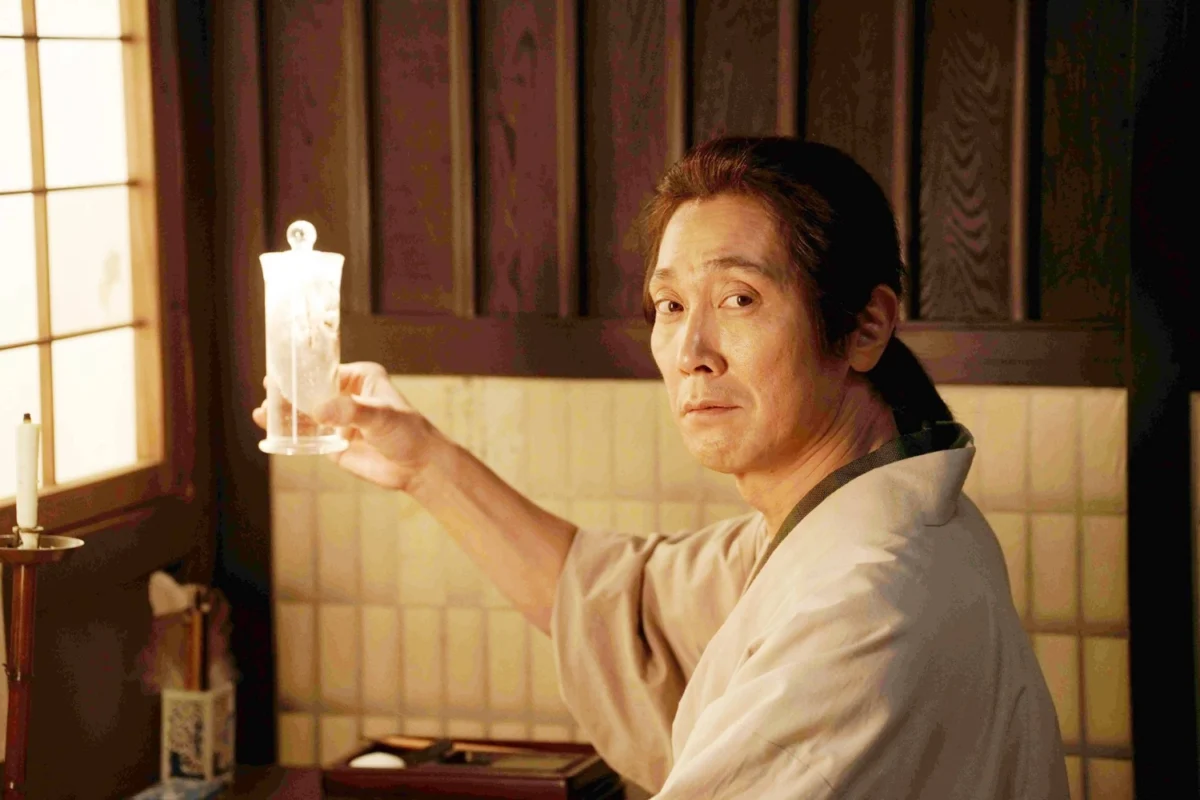
However, director Akira Ogata’s latest project, Kyoto Hippocrates, arrives as a refreshing subversion of these tropes. Taking over the reins from his late mentor, the renowned filmmaker Kazuki Omori, Ogata has crafted a film that treats the history of medicine not as a dour lecture, but as a vibrant, occasionally farcical, and deeply human character study. At its center is Kuranosuke Sasaki, whose performance as Dr. Takichi breathes chaotic life into the rigid archetypes of the 19th century.
The Historical Context: 1848 and the Arrival of Western Medicine
To understand the weight of Kyoto Hippocrates, one must look at the specific historical friction of the late Edo period. By 1848, the Tokugawa Shogunate was in its twilight. While Japan remained officially isolated under the sakoku policy, the influx of Rangaku (Dutch Learning) had begun to challenge the traditional reliance on Chinese herbal medicine, or Kanpo.
The film centers on Dr. Takichi, a physician trained in the rigorous, empirical methods of the Narutaki-juku, the medical school founded by the historical figure Philipp Franz von Siebold. Siebold, a German physician in the service of the Dutch East India Company, is widely credited with bringing modern clinical medicine to Japan.
In the film, Takichi arrives in a rural village near Kyoto, bringing with him the analytical tools of the West. His presence serves as the primary catalyst for the film’s central conflict: the clash between established, traditional medical practices and the radical, unproven claims of the "outsider" physician.
Chronology of the Production: From Omori to Ogata
The journey of Kyoto Hippocrates to the screen is a story of artistic continuity. The project was originally conceived by Kazuki Omori, a director whose career was defined by his interest in the intersections of science and human drama. Following Omori’s passing, the task of bringing the vision to fruition fell to Akira Ogata.
- Early Development (2022-2023): Initial research into the life of rural doctors in the Kansai region was conducted under Omori’s supervision, focusing on the historical medical records of 19th-century Kyoto villages.
- Transition of Power (2024): Following the death of Omori, Akira Ogata was appointed to complete the screenplay and helm the production, ensuring that the project maintained its original thematic focus on the intellectual curiosity of the late Edo era.
- Principal Photography (2025): Filming took place across historic sites in and around Kyoto, utilizing period-accurate sets to reconstruct the rural medical landscape of the 1840s.
- Release (2026): The film debuted to critical acclaim, noted specifically for its departure from the "solemn doctor" archetype.
The Performance: Kuranosuke Sasaki’s Comedic Pivot
What separates Kyoto Hippocrates from its predecessors is the casting of Kuranosuke Sasaki. Known for his versatility and sharp comedic timing, Sasaki plays Dr. Takichi with a "tongue-in-cheek" sensibility that challenges the audience’s expectations.
In the film, Takichi is not merely a hero; he is a man constantly out of his element. His interactions with the village’s established physician, Dr. Gensai (played by the veteran Takeshi Naito), are the film’s comedic engine. Gensai, a practitioner of traditional herbal remedies that—as the film suggests—do little more than enrich the local coffin maker, serves as the perfect foil to Takichi’s modern methodology.
Sasaki’s portrayal brings a necessary levity to the proceedings. By refusing to play the "earnest martyr," he allows the film to explore the absurdities of the era’s medical rivalries. The performance is bolstered by Yoko Maki, who plays Takichi’s wife—a character whose grounding presence provides the necessary emotional anchor for the film’s more chaotic moments.
Supporting Data: The Medical Divide in the Edo Period
The medical rivalry depicted in the film is rooted in verifiable historical trends. During the late Edo period, the mortality rate in rural villages was heavily influenced by the quality of local healthcare.

Historical data suggests that:
- The Rise of Inoculation: The mid-19th century saw a massive push for smallpox vaccination, often led by doctors trained in the Rangaku tradition.
- Professional Rivalries: The transition from traditional Kanpo medicine to clinical Western practice was rarely smooth. It was characterized by "medical wars" in local districts, where traditionalists accused Western-trained doctors of poisoning the population with "foreign blood."
- The Economics of Death: As referenced in the film, the symbiotic relationship between stagnant medical practices and the local mortuary industry was a frequent subject of satire in 19th-century Japanese literature.
Official Responses and Critical Reception
The film has garnered significant attention from both historical societies and the film industry. Critics have praised the production for its refusal to romanticize the "enlightenment" of the period.
"Ogata has avoided the trap of making his protagonist a superhero," wrote one prominent critic. "By allowing Takichi to be flawed, argumentative, and at times hilariously ill-equipped for the social dynamics of the village, the film feels more historically honest than a hundred serious dramas."
The Kyoto Hippocrates Production Committee has emphasized that the film’s goal was to highlight the difficulty of knowledge transfer in a pre-digital age. "We wanted to show that progress isn’t just about the discovery itself," a spokesperson noted. "It is about the arduous, often funny, and frustrating process of convincing your neighbors that there is a better way to live."
Implications: Why This Story Matters Today
While set in 1848, Kyoto Hippocrates resonates with modern audiences grappling with their own "age of information." The film functions as an allegory for the friction between established dogma and emerging scientific consensus.
In a time where misinformation can spread globally in seconds, the film’s depiction of a village struggling to distinguish between a charlatan (Gensai) and a genuine practitioner (Takichi) feels strikingly contemporary. It raises pertinent questions: How do we recognize the truth when it arrives in a form we don’t understand? How much patience must a "modern" person have when dealing with those who fear progress?
The film does not offer easy answers. It suggests that, much like in the 1840s, the battle for scientific literacy is not won through authority alone, but through the slow, patient, and sometimes humorous process of winning hearts and minds.
Conclusion
Kyoto Hippocrates is more than a period piece; it is a nuanced study of the human condition under the pressure of change. By grounding its narrative in the specific historical reality of 1848 Kyoto and elevating it with the comedic prowess of Kuranosuke Sasaki, Akira Ogata has created a film that honors the legacy of Kazuki Omori while carving out its own distinct identity.
As viewers watch Dr. Takichi navigate the treacherous waters of 19th-century rural politics, they are reminded that the quest for knowledge is rarely a straight line. It is a messy, circular, and often ridiculous journey—but one that, in the end, is the only thing that separates the coffin maker from the cure.
For those interested in the intersections of history, medicine, and human comedy, Kyoto Hippocrates offers an essential look at the past, viewed through a lens that is both sharp and remarkably human.












No comments yet. Be the first to join the conversation!