

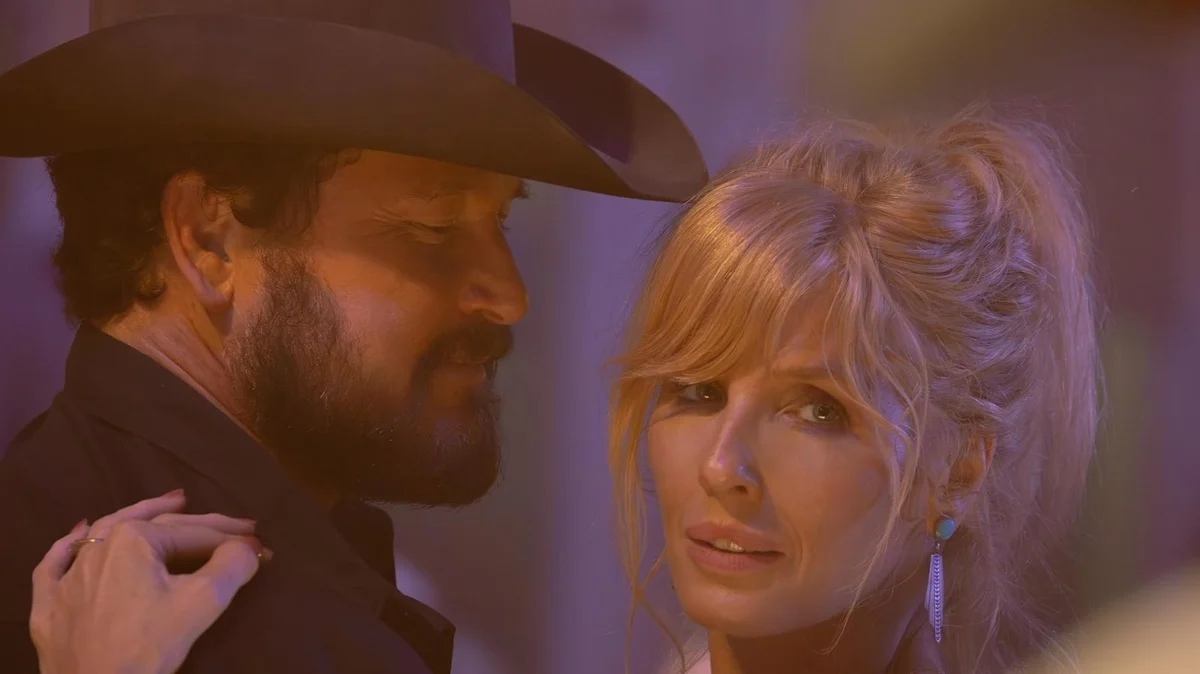
The Yellowstone universe has long been defined by its stark, uncompromising portrayal of life on the American frontier. While audiences are often captivated by the high-stakes drama, political maneuvering, and visceral violence that characterize Taylor Sheridan’s expansive television empire, there is a hidden antagonist lurking behind every frame: the environment itself. With the premiere of the latest installment, Dutton Ranch, fans have been treated to the familiar chaos of ranch fires, mysterious deaths, and the grit of the Montana-turned-Texas landscape. However, behind the polished, cinematic exterior lies a production reality that is as unforgiving as the plotlines themselves.
In a recent exclusive, director Christina Alexandra Voros and franchise stalwart Cole Hauser peeled back the curtain on the grueling production process of Dutton Ranch. Their accounts reveal that for the cast and crew, the series is not just a job—it is a test of physical and mental endurance against the volatility of the natural world.
The Crucible of Texas: A Production Chronology
The production of Dutton Ranch was a logistical marathon that spanned seven months, from late summer 2025 through the end of winter in early 2026. This extended window was essential to capturing the expansive, shifting beauty of the Texas landscape, but it also forced the production to endure the full spectrum of the state’s extreme weather patterns.
The filming schedule began in August, a month synonymous with blistering heat in Texas. During these initial weeks, the production team faced temperatures consistently exceeding 106 degrees Fahrenheit. As the calendar turned, the environment offered no reprieve. By the time production concluded in March, the cast and crew had weathered everything from torrential rainstorms and sudden, violent snowstorms to the constant threat of tornadoes.
This chronological progression of climate extremes wasn’t just a hurdle; it was a defining factor in the show’s visual language. While soundstages offer controlled environments, the production team behind Dutton Ranch prioritized authenticity, choosing to film almost exclusively on location to ground the series in the harsh reality of ranch life.
The Director’s Perspective: Christina Alexandra Voros
Christina Alexandra Voros, the visionary director tasked with translating the Yellowstone aesthetic to this new chapter, described the experience as “not for the faint of heart.” During a virtual press event, Voros emphasized that her assessment was not merely a figure of speech but a literal reflection of the production’s intensity.
"We had every kind of weather that exists in Texas over the run of this show," Voros stated. Beyond the temperature fluctuations, the production contended with the biological realities of the region. Rattlesnakes, swarms of insects, and the sheer unpredictability of working in wide-open, unshielded terrain meant that the cast and crew were constantly on high alert.
![Dutton Ranch Director Details The Biggest Challenge Of Making The Yellowstone Spin-Off [Exclusive]](https://www.slashfilm.com/img/gallery/dutton-ranch-director-details-the-biggest-challenge-of-making-the-yellowstone-spin-off-exclusive/l-intro-1778777015.jpg)
For a director, the challenge is twofold: capturing the emotional weight of a scene while ensuring the safety of a hundred-person crew operating in 100-plus degree heat. Voros noted that despite these obstacles, the team remained remarkably resilient. The collaborative spirit required to move cameras, lights, and livestock through a changing climate became a defining characteristic of the Dutton Ranch production culture.
Cole Hauser’s Testimony: The Actor’s Endurance
For Cole Hauser, who continues his iconic portrayal of Rip Wheeler, the transition from the familiar Montana settings of the original Yellowstone to the Texas-based Dutton Ranch brought a new level of difficulty. In an interview with USA Today, Hauser shed light on the physical tax that location shooting takes on the performers.
"We’re not on soundstages, except for interior house shots," Hauser explained. "I don’t think a lot of people understand filming in that environment. The idea of the crew and the actors being outside, it’s 118 degrees out there. And then it will start snowing. It’s like the weather can’t make up its mind."
Hauser’s comments highlight a growing trend in the Taylor Sheridan universe: the commitment to "organic realism." By eschewing green screens and controlled indoor sets, the production forces actors to react to genuine discomfort. When Rip Wheeler is shown wiping sweat from his brow or struggling against a biting wind, the audience is witnessing a genuine physiological reaction to the environment. This dedication to the "long-form" method of filmmaking—where the environment is treated as a character—has become the hallmark of the Yellowstone brand, even as it pushes the human limits of those involved.
Supporting Data: The Logistics of Extreme Production
The logistical requirements of filming a series of this magnitude on location are immense. When production schedules are dictated by the thermometer rather than the clock, the financial and operational costs skyrocket.
Industry experts note that filming in Texas presents unique challenges compared to other filming hubs. Unlike the temperate climates of Los Angeles or the predictable seasons of the Pacific Northwest, Texas possesses a climate that is notoriously difficult to forecast. The necessity for advanced weather monitoring, emergency medical standby units (to treat potential heatstroke or frostbite), and specialized equipment capable of functioning in extreme humidity and dry heat adds millions to the production budget.
Furthermore, the "Yellowstone" franchise has established a reputation for its authentic portrayal of ranching culture. This requires the use of real livestock, which adds another layer of complexity. Animals are sensitive to heat and storms; managing the welfare of horses and cattle during a 110-degree day requires constant vigilance and specialized care, often requiring the crew to work around the needs of the animals before the needs of the cameras.
![Dutton Ranch Director Details The Biggest Challenge Of Making The Yellowstone Spin-Off [Exclusive]](https://www.slashfilm.com/img/gallery/dutton-ranch-director-details-the-biggest-challenge-of-making-the-yellowstone-spin-off-exclusive/intro-1778777015.jpg)
Implications for the Future of the Franchise
The success of Dutton Ranch hinges on this commitment to reality. In an era of television where CGI is increasingly common, the visceral, tangible nature of the Yellowstone spin-offs stands out as a premium product. However, the question remains: is this model sustainable?
As climate volatility increases, production teams face a narrowing window of "ideal" filming days. If directors like Voros continue to demand the level of realism seen in Dutton Ranch, the production industry may need to develop new technologies to protect crews. This includes advancements in cooling vests, portable shelter technology, and perhaps even shifts in the standard production calendar to avoid the worst of the summer and winter months.
Furthermore, the "hardship" narrative has become a marketing asset. By sharing these behind-the-scenes stories, the network creates a deeper connection between the audience and the cast. Viewers aren’t just watching a story about the Duttons; they are watching a record of human perseverance. The audience’s appreciation for the "extra mile" taken by the crew transforms the viewing experience from simple entertainment into an acknowledgment of a collective accomplishment.
Conclusion: The Cost of Authenticity
The production of Dutton Ranch serves as a poignant reminder that the most compelling dramas are often born from the most difficult circumstances. By refusing to compromise on location, the production team has succeeded in creating a series that feels lived-in, dangerous, and profoundly authentic.
Whether it is the heat-haze shimmering over the Texas plains or the biting, bone-chilling wind of a sudden winter storm, these elements have become woven into the fabric of the show. As viewers continue to tune in to Paramount+ to follow the saga, they can do so with the knowledge that the struggle on screen is, in many ways, an echo of the struggle that took place behind the camera.
While the drama of the Dutton family will always be the draw, the silent, relentless performance of Mother Nature remains the true co-star of the series. For Christina Alexandra Voros, Cole Hauser, and the entire crew, the "Dutton Ranch" experience is one that will be remembered not just for the story it told, but for the resilience it demanded in the face of the elements.









No comments yet. Be the first to join the conversation!