


By Callum Mercer, Senior Editor
Updated: May 5, 2026
The LEC Spring 2026 season has proven to be a ruthless crucible. In a format where every match is a foundational pillar of a team’s postseason identity, Fnatic’s Week 5 victory over Shifters was more than just a 2-0 scoreline; it was a desperate, necessary act of preservation. By moving to a 2-3 record, Fnatic has successfully tethered themselves to the pack, staving off the looming threat of early elimination and keeping their playoff ambitions within reach. For Shifters, the outcome was disastrous: a 0-5 record that pushes them to the absolute brink of irrelevance in this compressed, unforgiving single round-robin format.
The High-Stakes Reality of the Spring 2026 Format
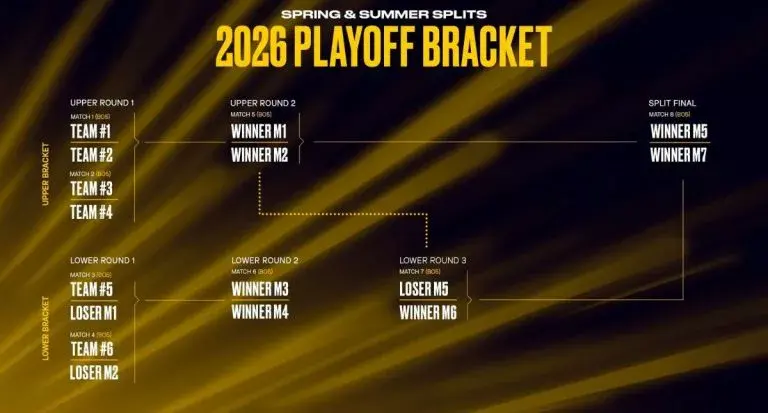
To understand the weight of this series, one must first look at the structural pressures of the 2026 Spring Split. Unlike previous years where teams could afford a slow start to recalibrate, the current nine-match regular season leaves virtually no margin for error. With only the top six teams progressing to the playoff bracket, the "must-win" label has become the standard for every weekend of competition.
Fnatic entered this series in a state of high anxiety, holding a 1-3 record that belied the individual pedigree of their lineup. Shifters, winless at 0-4, were playing for their very survival. As noted by data aggregators like eGamersWorld, the match served as a stark reminder that in a short-form league, momentum is not just a narrative trope—it is a competitive necessity. For Fnatic, a loss would have effectively signaled the end of their realistic hopes for a deep run, forcing them into a mathematically improbable chase for the remainder of the split.

Chronology of the Series: A Tale of Two Maps
The series against Shifters encapsulated the broader volatility that has defined Fnatic’s season thus far. It was a performance that highlighted both the team’s latent potential and the glaring macro inconsistencies that have plagued them throughout the early weeks.
Game 1: The Macro Struggle
The opener was a nervous affair for the Fnatic faithful. Early on, Shifters appeared to have the upper hand, securing a 3,000-gold lead that put Fnatic on the defensive. It was a sequence of play that mirrored the team’s struggles in previous weeks—hesitant rotations and objective prioritization issues allowed their opponents to dictate the pace. However, as the mid-game transitioned into the late-game, the disparity in experience became evident. Fnatic leveraged superior macro play, punishing Shifters for a series of positioning errors that proved fatal. By systematically dismantling Shifters’ team-fighting cohesion, Fnatic managed to claw their way back, eventually taking the nexus and securing a lead in the series that they desperately needed to stabilize their mental fortitude.
Game 2: The Controlled Closeout
If Game 1 was a display of resilience, Game 2 was an exercise in authority. Fnatic entered the second map with renewed composure, effectively neutralizing Shifters’ early-game aggression from the outset. With Óscar "Empyros" Muñoz Jiménez and Iván "Razork" Martín Díaz anchoring the map-side pressure, Fnatic exerted a level of control that had been largely absent in their previous outings. By keeping the map state under their thumb, they avoided the messy skirmishing that had cost them in the first game, closing out the series 2-0. It was the clinical performance that the coaching staff had been demanding, serving as a vital confidence boost for the roster of Vladi, Upset, and Lospa.
Data-Driven Analysis: The Playoff Landscape
According to official Lolesports standings, the transition from 1-3 to 2-3 is far from cosmetic. In a league as tight as the 2026 LEC, moving to 2-3 keeps Fnatic firmly attached to the mid-table pack, where four or five teams are currently jockeying for the final three playoff spots.

The Mathematics of Survival
Liquipedia’s overview of the LEC Spring 2026 format confirms that the road ahead remains treacherous. The compressed nature of the schedule means that teams cannot afford to dwell on past mistakes. Fnatic’s record, while still technically "flawed" at sub-.500, provides a realistic runway for a late-split surge. If the team can string together consecutive wins against higher-ranked opponents in their final four series, they remain in a strong position to secure a top-six finish.
However, the statistical reality is that Fnatic does not yet control its own destiny. They require consistent improvement and, in all likelihood, favorable outcomes in matches involving their direct rivals. The team is currently balancing on a razor’s edge where every kill, every dragon control, and every draft phase decision carries the weight of a season-ending outcome.
The Broader Organizational Context
Fnatic’s struggle in League of Legends does not exist in a vacuum. The organization, which carries significantly more scrutiny than its peers due to its historical dominance, has had a mixed week across its various esports divisions. While the League team battles for its life in the LEC, the organization has seen success elsewhere, with Fnatic and FUT recently securing spots in the VCT EMEA playoffs. This serves as a reminder that while League of Legends remains the "flagship" pressure point for the org, the broader infrastructure remains robust.
The "Sheo" Factor and Roster Stability
The anxiety surrounding the League roster is further compounded by the ongoing discourse regarding LEC contract sustainability. As highlighted in our recent reporting on the uncertainty surrounding players like Sheo, the financial and competitive pressures of the 2026 landscape have made every split a high-stakes audition for the summer. For Fnatic, the pressure is doubled: they are not only playing for a trophy but for the stability of their current project. The decision-makers in the front office are likely evaluating every map played this spring to determine whether this roster requires a fundamental overhaul or simply more time to gel.

Implications: Turning Point or Brief Respite?
The most pressing question following the win against Shifters is whether this victory represents the start of a genuine, long-term correction or merely a "brief stay of execution" against a bottom-tier side.
There is a distinct pattern in Fnatic’s play this season: periods of individual brilliance interrupted by bouts of structural instability. For the team to truly contend, they must move beyond the "comeback" narrative and begin to control games from the opening minute. The upcoming regular-season series against a stronger mid-table opponent will be the litmus test. If Fnatic can demonstrate the same clinical focus they showed in the second map of the Shifters series, there is every reason to believe they can break into the top half of the table.
Conversely, if they fall back into the patterns of inconsistency that allowed them to be down 3,000 gold against a 0-4 team, the writing will be on the wall. The LEC in 2026 is a league that rewards momentum and punishes hesitation. Fnatic has bought themselves time with this 2-0 victory, but the clock is ticking, and the rest of the league is showing no signs of slowing down.
As we look toward the final weeks of the split, the narrative for Fnatic is clear: consistency is the only currency that matters. They have stopped the damage, but they have yet to prove they can build a championship foundation. All eyes will be on their next performance to see if this win was the spark that ignited their playoff run, or just another chapter in a season defined by uncertainty.
For more on the developing LEC standings and expert analysis on roster shifts, subscribe to our newsletter and follow our dedicated coverage on Google News.












No comments yet. Be the first to join the conversation!