

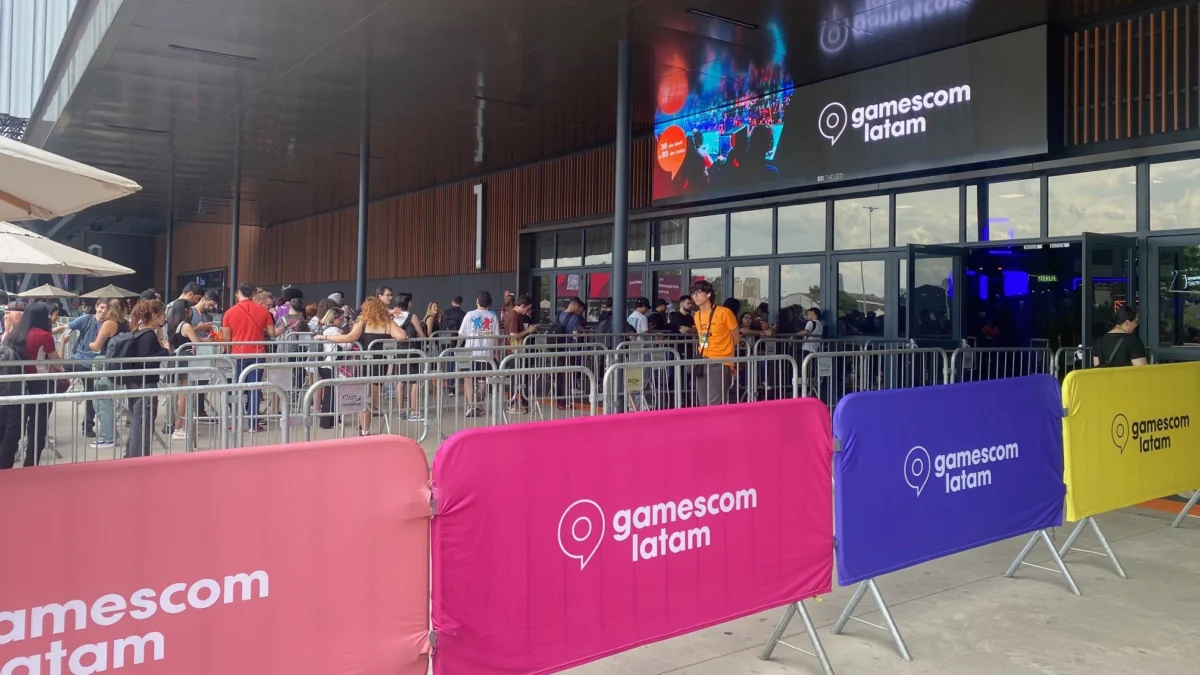
SÃO PAULO, BRAZIL – The third annual Gamescom Latam has concluded, marking an unprecedented milestone for the Latin American gaming industry, particularly in Brazil. The event, held from April 29 to May 3 at São Paulo’s sprawling Distrito Anhembi, attracted a record-breaking 154,000 visitors, demonstrating a robust 17.5% surge in attendance compared to the previous year. This remarkable growth not only solidifies Gamescom Latam’s position as a premier global gaming convention but also underscores Brazil’s escalating influence as a pivotal hub for game development and consumption in the Global South.
The five-day extravaganza was a vibrant showcase of innovation, talent, and strategic partnerships, featuring an impressive lineup of over 400 games, including more than 60 highly anticipated new releases such as "Lego Batman: Legacy of the Dark Knight," "Invincible VS," and "Phantom Blade Zero." With 175 exhibitors from 23 countries and a roster of more than 500 distinguished speakers – including industry luminaries like PUBG creator Brendan Greene, legendary former Rare composer David Wise, and Remedy’s creative director Mikael Kasurinen – Gamescom Latam 2026 transcended a mere convention, evolving into a dynamic ecosystem fostering creativity, commerce, and community.
Main Facts and Event Highlights
Gamescom Latam 2026 presented a multifaceted spectacle, catering to both fervent fans and industry professionals. The public exhibition floors buzzed with energy, as attendees eagerly explored demo stations, engaged with developers, and participated in interactive experiences. The presence of major international publishers and platform holders, including prominent booths from PlayStation, Xbox, and Nintendo, further amplified the event’s prestige, signaling their recognition of the burgeoning Latin American market.
Beyond the sheer numbers, the quality and diversity of content on display were notable. The 400+ games showcased a broad spectrum of genres and development styles, from ambitious independent projects to high-profile international titles. The 60+ new releases offered attendees an exclusive first look at the future of gaming, generating considerable excitement and media buzz. Titles like "Lego Batman: Legacy of the Dark Knight" tapped into established franchises, promising broad appeal, while original IPs such as "Invincible VS" and "Phantom Blade Zero" demonstrated the industry’s continuous drive for fresh narratives and gameplay mechanics.
The speaker program was equally compelling, offering invaluable insights into game design, development, and the business landscape. The participation of figures like Brendan Greene, a pioneer in the battle royale genre, provided a glimpse into the creative processes behind global phenomena. David Wise, revered for his iconic soundtracks, offered a unique perspective on the artistry of game audio. Mikael Kasurinen, known for his work on critically acclaimed titles like "Control," shared expertise on crafting immersive and innovative gameplay experiences. These sessions not only educated but also inspired a new generation of developers and enthusiasts, reinforcing Gamescom Latam’s role as an intellectual nexus for the industry.
.jpeg?width=570&quality=85&format=jpg&dpr=3)
A Chronology of Unprecedented Growth
The trajectory of Gamescom Latam since its inception in 2024 paints a vivid picture of rapid expansion and increasing influence. The inaugural event in 2024 laid the groundwork, attracting a significant but foundational audience. The following year, Gamescom Latam 2025 witnessed a remarkable 30% year-on-year increase in attendance, drawing over 130,000 visitors and signaling strong momentum. This consistent upward trend culminated in the 17.5% growth seen at the 2026 edition, pushing visitor numbers to an all-time high of 154,000.
This sustained growth is more than just a statistical achievement; it reflects a deeper phenomenon: the maturation and accelerating global recognition of the Latin American, and specifically Brazilian, games market. Each successive edition has built upon the last, expanding its reach, diversifying its offerings, and solidifying its reputation as a crucial event on the international gaming calendar. The consistent increase in attendees, exhibitors, and business activity points to a robust and engaged community, hungry for content and opportunities. The event’s ability to attract top-tier international talent and companies, year after year, underscores the region’s burgeoning importance and its potential to shape the future of the global games industry.
Supporting Data and Economic Impact
Beyond the public spectacle, Gamescom Latam 2026 served as a powerful economic engine, facilitating unparalleled business opportunities and generating substantial financial impact. The B2B area was a hive of activity, hosting 1,100 companies from 59 countries. This international congregation led to over 13,000 business meetings – a staggering 46% increase compared to the previous year. These interactions were not merely networking sessions; they translated into tangible outcomes, with an estimated $180 million in new business generated at the event. This figure represents a critical injection of capital and partnerships into the Latin American game development ecosystem, fostering growth, innovation, and job creation.
A significant component of Gamescom Latam’s appeal is the BIG Festival Awards, which continued to elevate independent game development. This year, the awards received an impressive 960 game submissions from 75 countries, highlighting the global reach and competitive nature of the competition. Brazil, as the host nation, demonstrated its immense creative prowess, accounting for 451 of these submissions – nearly half of the total. Eighty-one titles were meticulously selected as finalists across 18 diverse categories, showcasing a wide array of talent and innovation. Ultimately, "Clair Obscur: Expedition 33" took home the coveted "Best Game" award, recognizing its outstanding quality and potential. The BIG Festival Awards not only provide a platform for recognition but also connect promising indie titles with potential publishers, investors, and a global audience, further fueling the industry’s growth.
Eliana Russi, Gamescom Latam partner and head of B2B, articulated the profound significance of these figures. "Brazil is already the leading hub for the games industry in the Global South and an extremely strong consumer market," she stated. "At Gamescom Latam, our role is to strengthen and expand this ecosystem – connecting investors, buyers, publishers, accelerators, and studios from around the world." Her comments emphasize Brazil’s dual strength: a massive and enthusiastic consumer base, coupled with a rapidly maturing development scene. The country’s strong internet penetration, widespread adoption of mobile gaming, and a youthful, tech-savvy population contribute to its vibrant consumer market.
.jpeg)
Russi further highlighted the unique geographical distribution of Brazil’s talent: "With more than 1,000 game development studios distributed across Brazil, the country demonstrates a unique reach, with creative hubs spread throughout all regions." This decentralized development landscape fosters diverse creative perspectives and resilience, contributing to the industry’s dynamic growth. The comparison of Brazil’s industry size, with over 13,000 individuals, to that of France, underscores its considerable scale and potential on the global stage.
Official Responses and Expert Insights
The insights from key industry figures during Gamescom Latam painted a comprehensive picture of Brazil’s current standing and future aspirations. Rodrigo Terra, head of the Brazilian game developers’ association Abragames, and Patricia Sato, executive manager for Brasil Games – an export program dedicated to fostering international business opportunities for Brazilian companies – provided invaluable perspectives on the challenges and triumphs of the local industry.
Terra underscored the sheer scale of the Brazilian games industry, noting its workforce of more than 13,000 individuals, a figure comparable to the well-established French games industry. This metric alone positions Brazil as a significant global player. He delved into the common entry point for many Brazilian studios: external development or outsourcing. "When you start small here, you can’t [exactly choose] if you’re going to develop your own IP," Terra explained. He attributed this necessity to a relative lack of public funding and support mechanisms for original intellectual property (IP) development, a situation that many European countries do not face to the same extent. "Compared to European countries or other regions in the world, we [don’t have too many] opportunities for public funds or support. We are working on it. So you need to do things that give you revenue in the short term and then plan your long term. So IP development is the long term that every studio here wants to do." This highlights a strategic balancing act for Brazilian developers, prioritizing immediate revenue through contract work to fund their long-term creative ambitions.
Patricia Sato reinforced Brazil’s growing reputation in the realm of contract work. "We are always cited as one of these main territories to invest for external development," she affirmed. Sato pointed to the period following the global pandemic as a pivotal moment. "Especially after the pandemic, because Brazil was very much ready to take on the demand of several larger companies that found themselves in the situation of not being able or not having enough people to complete their projects. Brazil was ready to embrace this." This adaptability and readiness to scale cemented Brazil’s position as a reliable and capable partner for international studios seeking high-quality external development services, ranging from art asset creation and animation to programming and quality assurance.
Terra acknowledged that while development costs in Brazil might not be as low as in countries like India or China, they remain "considerably cheaper than in countries like the United States, United Kingdom, or France. So it puts us in a very good position." This sweet spot in cost-effectiveness, combined with a highly skilled and creative workforce, makes Brazil an attractive proposition for international companies looking to optimize their development budgets without compromising quality. Crucially, Terra observed a significant shift in the nature of these contracts: "Now, [contract after contract], we’re seeing that whole jobs are being given to the studios here." This indicates a growing trust and confidence in Brazilian studios, moving beyond piecemeal tasks to entrusting them with entire components or even full game development projects.
.jpeg)
Beyond outsourcing, Terra highlighted an exciting evolution: Brazilian companies are gaining increasing recognition for their original IPs. "If you talk with all these international players that are here [at Gamescom Latam], like PlayStation, Xbox, and Nintendo, [they’re] not just buying services anymore," he revealed. "When you talk with them, they say, ‘No, I want to check not just services, but now I want new games.’" This shift in demand from major platforms signifies a crucial turning point, validating the creative potential and unique voice of Brazilian game developers. It suggests that the industry is moving past its foundational phase of primarily providing services to now actively contributing original content to the global market.
Implications and Future Outlook
The success of Gamescom Latam 2026 and the insights shared by industry leaders paint a compelling picture of both the immense potential and the critical next steps for the Brazilian games industry. The primary challenge, as articulated by Rodrigo Terra, remains the need for increased public funding and more robust support mechanisms for original IP development. While external development provides crucial revenue, sustained growth and global recognition will increasingly depend on the ability of Brazilian studios to develop and publish their own titles.
To address this, Abragames is actively lobbying for strategic policy changes, including a proposed 12% rebate on employees’ taxes, which would significantly reduce operational costs for studios and free up capital for investment in creative projects. Terra also pointed to existing frameworks like the Rouanet Law, which already provides tax incentives for arts and culture projects, suggesting that similar provisions could be adapted or expanded to better encompass the games industry. Such governmental support is vital for nurturing a sustainable ecosystem where creative risks can be taken, and long-term projects can flourish.
Eliana Russi’s candid call to action, "Show me the money," perfectly encapsulates the prevailing sentiment. In an earlier interview with GamesIndustry.biz, she passionately argued, "All we need is money. We have everything: a strong association, public policy is already in a framework, we have a strong event where you can market your game or you can meet… And so show me the money. We have everything. I guarantee." Her statement underscores the industry’s readiness, highlighting the foundational elements already in place: a robust industry association in Abragames, nascent but promising public policy frameworks, and a world-class platform like Gamescom Latam to connect talent with opportunities. What is now required is a concerted influx of investment – both domestic and international – to unlock the full potential of this vibrant sector.
The implications of Gamescom Latam 2026 extend beyond Brazil’s borders, solidifying its role as a beacon for the entire Latin American region. The event serves as a critical bridge, connecting Latin American talent with global publishers, investors, and audiences. Its continued growth and increasing international participation indicate a clear path towards making Latin America a truly global force in game development.
.jpeg)
In the future, the Brazilian games industry aims to solidify its position as a global player, not just as a cost-effective outsourcing destination or a robust consumer market, but as a source of innovative, culturally rich, and commercially successful original intellectual property. Achieving this will require continued advocacy for supportive public policies, a sustained focus on talent development, and aggressive pursuit of both local and foreign investment. Gamescom Latam, by consistently breaking attendance and business records, proves that the spark is already there, ready to ignite a new era for Brazilian and Latin American gaming on the world stage. The stage is set, the talent is abundant, and the ambition is palpable; all that remains is for the global industry to fully embrace and invest in this dynamic frontier.












No comments yet. Be the first to join the conversation!