

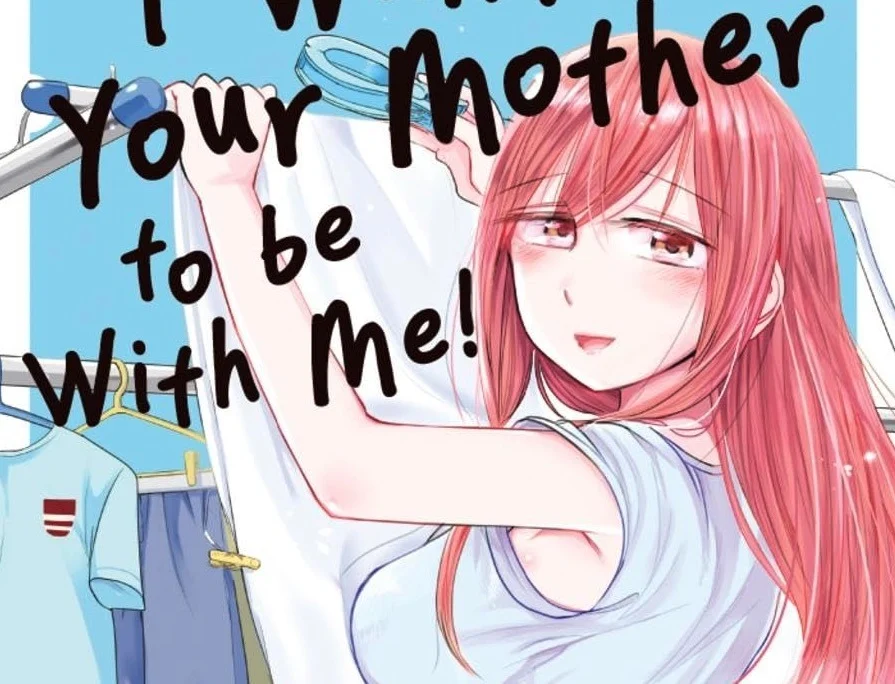
The landscape of contemporary manga is frequently defined by its ability to subvert expectations. While many titles utilize provocative "hook" titles to garner initial attention, the substance beneath often reveals a profound exploration of human connection, societal pressures, and the complexities of unconventional family structures. I Want Your Mother to Be with Me! (Japanese Kimi no Okaasan o Boku ni Kudasai!), written and illustrated by Yutaka Tazawa and published in English by One Peace Books, is a quintessential example of this phenomenon.
Despite a title that might suggest a ribald comedy or a transgressive fantasy, the work is a grounded, "super-pure" slice-of-life narrative that tackles the intersection of youthful ambition and the pragmatic realities of single parenthood. As the series gains traction among North American readers, it offers a refreshing departure from high-school-centric romances, focusing instead on the "iyashikei" (healing) aspects of adult responsibility and mutual respect.
Main Facts: A Story of Unconventional Courtship
At its core, I Want Your Mother to Be with Me! follows Ryo, a young man currently caught in the precarious "freeter" lifestyle—working part-time jobs while diligently studying to pass his accounting exams. His life takes a transformative turn when he falls for his coworker, Yuzuki. Yuzuki is not the typical manga heroine; she is a widow and a single mother to a five-year-old son, navigating the challenges of raising a child alone after the untimely death of her husband shortly after their son’s birth.
The narrative engine is ignited when Ryo, driven by an earnest but perhaps impulsive adoration, bypasses traditional dating rituals and proposes marriage. His rejection is swift and grounded in reality. Yuzuki’s refusal is not based on a lack of affection, but on the structural instability of Ryo’s life. She makes it clear that as a mother, her priority is the security of her child—a security that a part-time worker cannot yet provide.
The manga is published by One Peace Books, a publisher known for its eclectic and often sophisticated selections, including The Rising of the Shield Hero and Hinamatsuri. In bringing Yutaka Tazawa’s work to the West, the publisher highlights a growing trend in the manga industry: the "seinen" (young men’s) slice-of-life genre that prioritizes emotional maturity over high-octane action.
Chronology: From Impulsive Confession to Familial Integration
The narrative progression of I Want Your Mother to Be with Me! avoids the "will-they-won’t-they" tropes common in shonen romance, opting instead for a steady, chronological evolution of character dynamics.
The Initial Catalyst
The story begins with the establishment of Ryo’s routine. His life is a balance of professional mediocrity and academic aspiration. His infatuation with Yuzuki serves as his primary motivation, though he initially views her through a somewhat idealized lens. The "inciting incident"—his blunt marriage proposal—serves as a reality check for both the character and the reader. It sets the stakes: this is not a story about a boy getting the girl, but about a man becoming worthy of a family.
The Pivot to Friendship
Following the rejection, the story could have easily descended into melodrama. Instead, Tazawa moves the timeline toward a more constructive path. Ryo accepts his current limitations but refuses to exit Yuzuki’s life. He shifts his focus from being a "suitor" to being a "presence." This leads to the introduction of Yuzuki’s five-year-old son, a hyperactive child with a singular obsession with insects.
The Bridge of Childhood
The middle chapters of the first volume focus on the developing bond between Ryo and the son. By engaging with the child’s hobbies—specifically bug hunting—Ryo earns a place in the family’s orbit that is not predicated on romantic success. This chronological shift is vital; it allows Yuzuki to see Ryo not as a suitor to be feared or a child to be managed, but as a reliable companion. The volume concludes on a cliffhanger that suggests the "super-pure" status of their relationship is about to face its first significant external or internal challenge.
Supporting Data: Thematic Depth and Artistic Execution
To understand why I Want Your Mother to Be with Me! resonates, one must look at the specific data points of its construction: its art style, its thematic treatment of "baggage," and its use of fan service.
Artistic Clarity and Emotional Resonance
Yutaka Tazawa’s artwork is characterized by its smoothness and clarity. Unlike the hyper-detailed or chaotic layouts of action manga, Tazawa utilizes clean lines and open panels that mirror the "laid-back" tone of the story. The character designs are expressive; Ryo’s earnestness is conveyed through wide-eyed sincerity, while Yuzuki’s design balances motherly warmth with the weariness of a working parent. The humor is often visual, utilizing exaggerated expressions that punctuate the otherwise grounded dialogue.
The "Super-Pure" Paradox
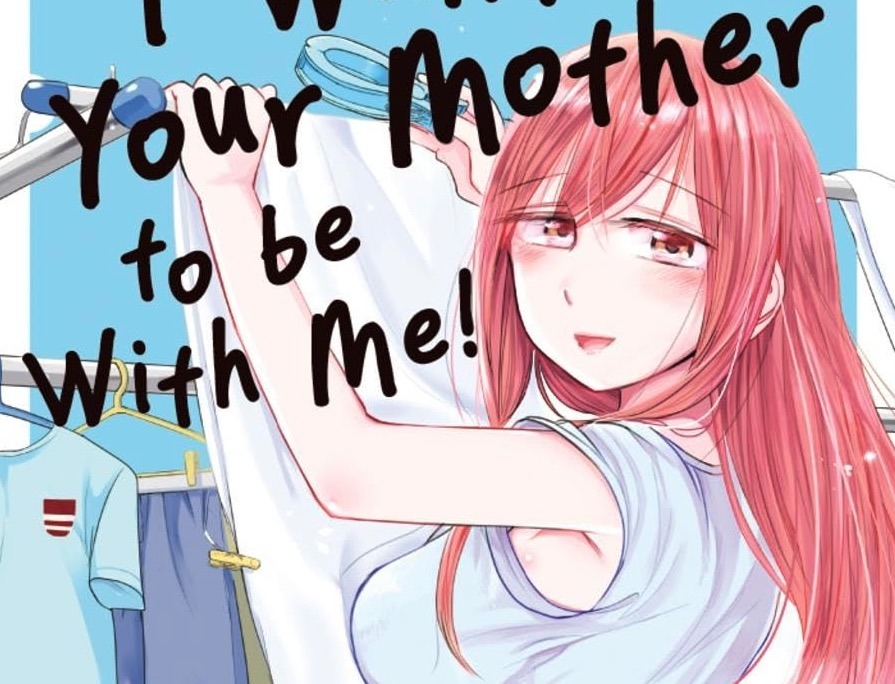
The marketing for the manga describes it as "super-pure." This is supported by the plot, which emphasizes care, friendship, and the slow build of trust. However, the manga does not shy away from the "seinen" roots of its publication. There are instances of fan service, particularly focusing on Yuzuki’s physical attributes. Critics and readers have noted that while the cover and certain panels emphasize her cleavage, the narrative never treats her as a mere object. The "carnal" is secondary to the "communal." This duality is a common feature in modern seinen, where adult themes and visual appeal coexist with genuinely wholesome storytelling.
Economic Realism
Supporting the narrative is a subtle but persistent commentary on the Japanese economy. Ryo’s status as a part-timer trying to break into the professional world via accounting exams reflects the "lost decades" of Japan, where stable employment is no longer a guarantee. Yuzuki’s struggle as a widow likewise touches on the difficulties faced by single-parent households in a society that still heavily favors the nuclear family model.
Official Responses and Critical Reception
While official sales figures for the English release remain proprietary, the critical reception within the manga community has been notably positive. Reviewers have praised Tazawa for his "endearing" portrayal of Ryo. Unlike many "nice guy" protagonists who feel entitled to a woman’s affection, Ryo’s response to rejection—investing time in her child and improving his own life—has been highlighted as a positive model of masculine persistence.
Danica Davidson, a noted author and critic in the manga space, points out that the manga succeeds because it treats Yuzuki as a complete person rather than a trophy. "Yuzuki is a sweet, caring character, who acts motherly toward Ryo more than romantically," Davidson notes, suggesting that the "slow burn" of their relationship is what gives the story its weight.
Publishing insiders at One Peace Books have positioned the title as a "heartwarming comedy," leaning into the "iyashikei" market. The decision to keep the provocative title while delivering a wholesome story is seen as a strategic move to capture the attention of older readers who are looking for more than just a standard school-life romance.

Implications: Challenging Genre Tropes and Social Stigma
The release and success of I Want Your Mother to Be with Me! have several broader implications for the manga industry and its audience.
1. Redefining the "Love Interest"
Traditionally, romance manga focuses on the "untainted" or the "first love." By centering a story on a widow with a child, Tazawa challenges the stigma surrounding "baggage." The story implies that a person’s past—including their previous marriages and their children—is not a hurdle to be overcome, but a part of the person to be embraced. This represents a significant shift toward more inclusive and mature romantic storytelling.
2. The Rise of the "Found Family" Narrative
The manga joins a growing sub-genre of stories (such as Spy x Family or Sweetness and Lightning) that focus on "found families" or unconventional household units. In a global climate where traditional family structures are evolving, readers are increasingly drawn to stories that show how love and support can be found in non-traditional places.
3. Addressing the Single Parent Experience
By depicting the pragmatic reasons for Yuzuki’s rejection of Ryo, the manga brings visibility to the financial and emotional pressures of single motherhood. It moves the conversation away from "romance for romance’s sake" and toward "romance as a partnership." This has implications for how gender roles are portrayed in media, suggesting that a woman’s agency and her responsibilities as a parent are paramount.
4. Market Evolution
The success of such titles suggests that the North American manga market is maturing. Readers who grew up on Naruto and Fruits Basket are now in their 20s and 30s, seeking stories that reflect their current life stages—careers, exams, and the complexities of adult dating. I Want Your Mother to Be with Me! fills this niche perfectly, offering a blend of escapist humor and relatable life struggles.
In conclusion, I Want Your Mother to Be with Me! is far more than its provocative title suggests. It is a meticulously crafted, emotionally resonant exploration of what it means to love someone in the real world. Through the lens of Ryo’s growth and Yuzuki’s steadfastness, Yutaka Tazawa provides a narrative that is as much about the importance of bug-catching and accounting exams as it is about the heart. As the series continues, it stands as a testament to the power of the "super-pure" slice-of-life genre to provide both entertainment and profound social insight.










No comments yet. Be the first to join the conversation!