

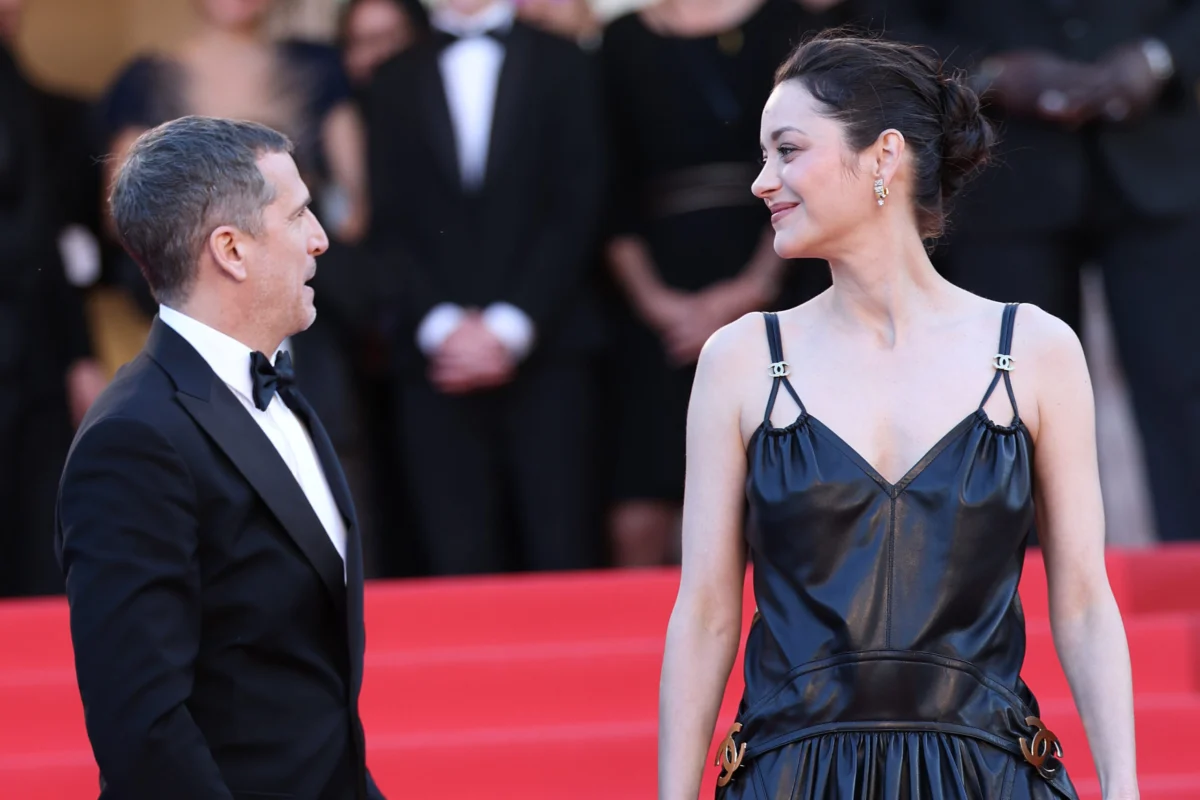
Main Facts: The Intersection of Art and Intimacy
At this year’s Cannes Film Festival, few projects have generated as much industry buzz and personal intrigue as Karma. Directed by Guillaume Canet and starring Academy Award-winning actress Marion Cotillard, the film stands as a testament to one of French cinema’s most enduring creative partnerships. The project, which officially premiered to critical attention during the festival’s prestigious competition slate, explores the harrowing psychological landscape of a woman grappling with the sudden, inexplicable disappearance of a child—a trauma that threatens to unravel the carefully constructed facade of her new life.
Beyond the narrative stakes, Karma represents a significant milestone in the collaborative history of its leads. Produced by Paris-based powerhouse Iconoclast in co-production with Canet’s own Caneo France, the film is poised for a significant commercial run, with Pathé Films managing both domestic distribution and international sales. As the festival unfolds under the Mediterranean sun, Karma has cemented itself as a focal point for discussions surrounding auteur-driven drama and the evolution of the French film industry on the global stage.
Chronology: From Theoretical Exercise to the Palais des Festivals
The genesis of Karma was not a sudden burst of inspiration, but rather a methodical, deeply personal journey for Guillaume Canet. During a press conference held this afternoon at the Palais des Festivals, Canet revealed that the project began as a "theoretical task." After years of working alongside Cotillard—both as a co-star and, occasionally, as a director—Canet found himself harboring a specific professional frustration. Despite their extensive history, he felt he had yet to craft a role that truly pushed the boundaries of Cotillard’s formidable range.
"I know Marion very well," Canet remarked to the assembled press. "We’ve worked together often, and I’d had this frustration as a director that I hadn’t really written a character commensurate with her talent."
The development phase was iterative. Canet approached Cotillard not with a finished screenplay, but with a series of conceptual sparks—vignettes and character studies meant to test the waters. According to Cotillard, the dialogue between them was constant. She noted that while many of his initial concepts were promising, one specific narrative thread stood out as "vibrant" and undeniable.
Following this selection, the creative process became a shared endeavor. Cotillard was involved from the earliest drafts, offering feedback as the script evolved from a rough, emotional sketch into the polished, tension-filled thriller that now headlines the Cannes competition. This period of development, spanning several months of writing, revision, and refinement, culminated in the final screenplay that arrived on set—a script that, according to both leads, felt like the culmination of their combined professional experiences.
Supporting Data: A Legacy of Collaboration
Karma marks the sixth time Canet and Cotillard have joined forces on a feature film, a partnership that has become a staple of modern French cinema. Their history spans a diverse array of genres, showcasing a versatility that has allowed them to navigate the complexities of both intimate dramas and large-scale studio productions.
The list of their previous collaborations provides a roadmap of their artistic synergy:
- Little White Lies (2010): A seminal ensemble drama that solidified their status as a powerhouse duo.
- Blood Ties (2013): A gritty, American-set crime thriller that challenged their traditional casting.
- Rock’n Roll (2017): A meta-comedy that satirized their own lives and the public perception of celebrity.
- Little White Lies 2 (2019): A return to the characters that resonated deeply with French audiences.
- Asterix & Obelix: The Middle Kingdom (2023): A pivot toward high-budget, mass-market spectacle.
This history informs the unique dynamic on the set of Karma. Unlike traditional director-actor relationships, the shorthand developed over more than a decade allowed for a level of trust and experimentation that is rare in high-stakes filmmaking. As Cotillard noted, she followed the creative process from the very beginning, engaging in the "times of doubt and questioning" that are inherent to the writing of a dense, psychological drama.
Official Responses: The Intimacy of the Set
The press conference provided a rare glimpse into the internal dynamics of the production. For Canet, the primary goal was to maximize the time he could spend observing and guiding Cotillard’s process.
"She’s always extraordinary, but I wanted to be on a set with her for a long time to really make the most of her absolutely amazing talent," Canet explained. "She’s exceptional and incredibly generous. She never does the same takes. It was a wonderful pleasure to have this experience as a director."
Cotillard, in turn, spoke to the emotional resonance of the script. For an actress of her caliber, the selection of a role is often dictated by an immediate, visceral reaction to the material. When she read the early versions of the Karma script, that reaction was immediate.
"I reacted to everything," she said. "But it was this particular idea that took shape and seemed very vibrant to me. We naturally realized it was the right topic. There were times of doubt and questioning, but when I read the first script, which wasn’t the final script, I had a strong emotional reaction, and he knows when I have that reaction, I know we’re going in the right direction."
This mutual trust appears to be the engine driving the film. By removing the traditional barriers between the creator and the muse, Canet and Cotillard have created an environment where the vulnerability required for a role like the one in Karma—a woman shattered by the loss of a child—could be explored without hesitation.
Implications: The Future of the "Author-Star" Dynamic
The reception of Karma at Cannes carries broader implications for the French film industry. As streaming giants and international conglomerates continue to exert influence on global cinema, the success of a film like Karma highlights the enduring power of the "author-star" model—a tradition where the director and the lead actor share a unified vision that transcends the technical requirements of the shoot.
Furthermore, the film serves as a case study in long-term artistic partnership. In an industry often defined by fleeting, one-off projects, the ability of Canet and Cotillard to continually reinvent their working relationship suggests a model for sustainability in filmmaking. By consistently challenging one another, they have managed to avoid the pitfalls of stagnation, moving from the lighthearted satire of Rock’n Roll to the heavy, atmospheric tension of Karma.
As the Cannes Film Festival progresses toward its conclusion on May 23, the focus remains on the jury’s final verdict. Yet, regardless of the awards haul, Karma has already succeeded in its primary objective: providing a stage for one of France’s most celebrated talents to delve into the deepest reaches of her craft. For Canet, the "theoretical task" has transformed into a concrete achievement, reinforcing his standing as both a screenwriter of nuance and a director capable of extracting the most delicate, haunting performances from his cast.
As the industry looks toward the next wave of European cinema, Karma stands as a reminder that at the heart of even the most complex, globalized productions, the most compelling stories are often those rooted in the intimate, collaborative chemistry between those behind and in front of the lens. The film is not merely a title in a catalog; it is a manifestation of a professional life shared, tested, and constantly refined.











No comments yet. Be the first to join the conversation!