
 Asro
Asro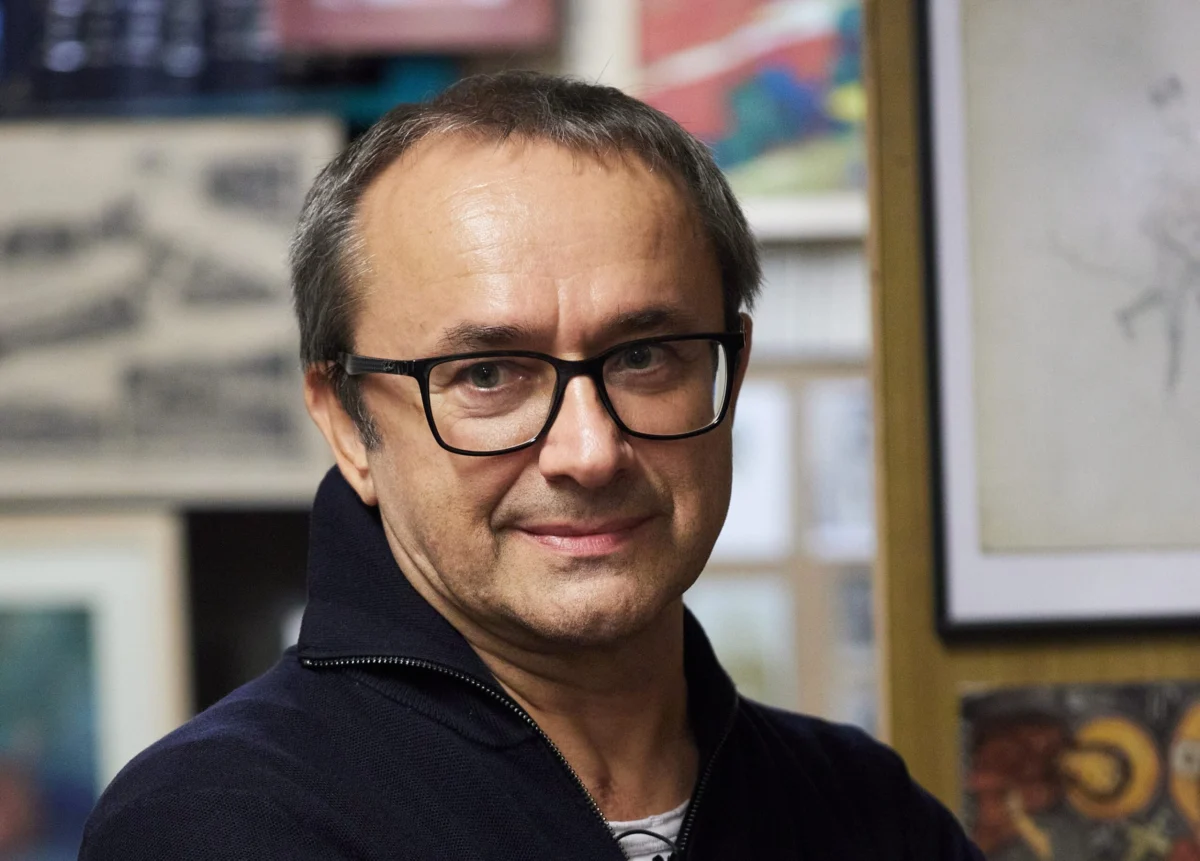
In the pantheon of contemporary global cinema, few voices resonate with the cold, crystalline clarity of Andrey Zvyagintsev. During the 2010s, the Russian auteur established himself as a titan of the medium, crafting a trifecta of films—Elena (2011), Leviathan (2014), and Loveless (2017)—that served as unsparing autopsies of the Russian soul. Each of these features earned acclaim at the Cannes Film Festival, with Leviathan and Loveless securing Academy Award nominations for Best International Feature. Known for his unflinching, brutal realism and his ability to render the intimate dynamics of family life against the backdrop of systemic decay, Zvyagintsev became the definitive chronicler of a nation caught between its imperial past and its fractured present.
Then, the momentum stopped. The silence that followed was not merely the result of the inevitable hurdles of independent production; it was a profound, life-altering chasm defined by a global pandemic and the near-total loss of the filmmaker’s own life. Nine years after the release of Loveless, Zvyagintsev has returned to the Croisette with Minotaur, a film that serves as both a creative rebirth and a stark mirror held up to a country irrevocably changed by war.
A Near-Death Experience: The Long Shadow of COVID-19
To understand the gestation of Minotaur, one must first acknowledge the harrowing ordeal that claimed nearly two years of the director’s life. In the wake of the pandemic, Zvyagintsev contracted a severe form of COVID-19 that left him incapacitated.
"It was a horrific illness, which took 18 months of my life," Zvyagintsev reflects. "For 12 months, I could not get up. I couldn’t move my hands. I couldn’t move my legs. With what actually happened, you can consider this to be a complete and utter miracle."
The director’s condition deteriorated to the point of a 40-day medically induced coma. In his own words, the experience was a brush with non-existence. "I was dead. Forty days of induced coma is almost the same as being dead. And after that, I resurrected."
The physical toll was immense, requiring a grueling course of rehabilitation that saw him transition from a bedridden state in Germany to arriving in Paris in a wheelchair by August 2022. This period of "resurrection," as he calls it, occurred in parallel with the most turbulent political shift in modern Russian history: the full-scale invasion of Ukraine. Emerging from his convalescence, Zvyagintsev found himself a survivor in a world—and a homeland—that he barely recognized.
From Stalled Ambition to Minotaur
Before his illness, Zvyagintsev had been tethered to a high-budget project titled The Opposite of Jupiter. Development on the film, which began around 2018, faced constant friction due to financial constraints and the logistical nightmare of the pandemic. However, the hiatus provided the director with a new perspective on his creative priorities.
"The lesson was that you can’t really leave something for tomorrow," he explains. "All the important decisions, all the projects, have to be realized ASAP. I’m not going to wait for procrastinating producers."
This renewed sense of urgency led him back to a project he had long admired: an adaptation of Claude Chabrol’s 1969 erotic thriller, The Unfaithful Wife. Zvyagintsev had attempted to secure the rights as early as 2018, but the timing was never quite right. By 2022, the convergence of his own personal rebirth and the geopolitical catastrophe of the Russia-Ukraine war provided the necessary catalyst. The resulting film, Minotaur, is a reimagining of the classic French narrative, transposed into the claustrophobic reality of 2022 Russia.
The Aesthetic of Silence: Why Chabrol?
Zvyagintsev’s choice of The Unfaithful Wife is rooted in his obsession with the pure, non-verbal language of cinema. "In this screenplay, there is a scene with not a single word being said," the director notes. "This is exactly what cinegenesis is all about. If you have a 20-minute scene with all the details, all the essence, all the understanding, but not a single word said—this is really great filmmaking."

In Minotaur, the narrative pivot point remains the same: a husband who stands as a passive observer to his wife’s infidelity. However, under Zvyagintsev’s lens, this domestic collision becomes a microcosm of a society in crisis. By centering the story on the moral inertia of his protagonist, Zvyagintsev mirrors the broader apathy he sees within the Russian populace—the "bystanders" who witness the unfolding destruction of a nation without intervening.
Implications: Filming in Exile
The production of Minotaur presented a unique challenge. With the political climate in Russia making it impossible to work on a film that seeks to address the truth of the current regime, Zvyagintsev and his team relocated to Latvia.
The choice of location was both pragmatic and poetic. Latvia, a former Soviet republic, offered a landscape that could convincingly mimic the desolate, run-down outskirts of Moscow. "Filming in Russia now would be impossible," Zvyagintsev states firmly. "Latvia is a country which used to be part of the Soviet Union, and there are still pockets of it which are highly recognizable."
Working with a diverse, international crew—many of whom had collaborated with him on Leviathan and Loveless—the production utilized a Russian-speaking team to maintain the authenticity of the dialogue. Despite the displacement, the director notes that the creative process remained remarkably fluid. The geography of the shoot, however, serves as a permanent testament to the director’s current status as an artist in exile, unable to return to the locations that once defined his cinematic identity.
A Mirror to a Nation in Crisis
When asked how the war in Ukraine informed his adaptation, Zvyagintsev is pointedly direct. He notes that the film begins in September 2022, a month that will be remembered as a dark turning point for the country due to the onset of mass mobilization.
"What is happening between Russia and Ukraine, living in a world free from censorship—of course one can resort to making fairy tales about superheroes, one can refer to the language of war, but not say what is happening behind your window," Zvyagintsev says. "For me, it would have been simply, absolutely impossible."
Minotaur is not a war film in the traditional sense; it is a film about the effects of a war that is being ignored by those closest to the center of the fire. By focusing on the intimate betrayal of a marriage, Zvyagintsev explores the corrosive nature of silence and the moral cost of looking away.
Conclusion: The Persistence of the Artist
The journey from the brink of death to the premiere at the Cannes Film Festival is a trajectory that few artists survive, let alone translate into meaningful art. For Andrey Zvyagintsev, Minotaur is more than just a comeback; it is a defiant declaration of existence.
Having stared into the void of a 40-day coma and returned to find his country embroiled in a conflict that stands against his own humanistic values, Zvyagintsev has emerged as an artist who no longer has the luxury of time or the patience for compromise. His return to Cannes is a reminder that while regimes may rise and fall, and while illness may threaten to silence the body, the singular, uncompromising vision of a master filmmaker remains a vital, stubborn force.
As Minotaur makes its debut, it stands as a testament to the idea that the most important stories are the ones we tell when we have nothing left to lose. Zvyagintsev has survived the silence; now, he ensures that his audience is forced to listen.


 Pevita Pearce
 Asep Darmawan




