

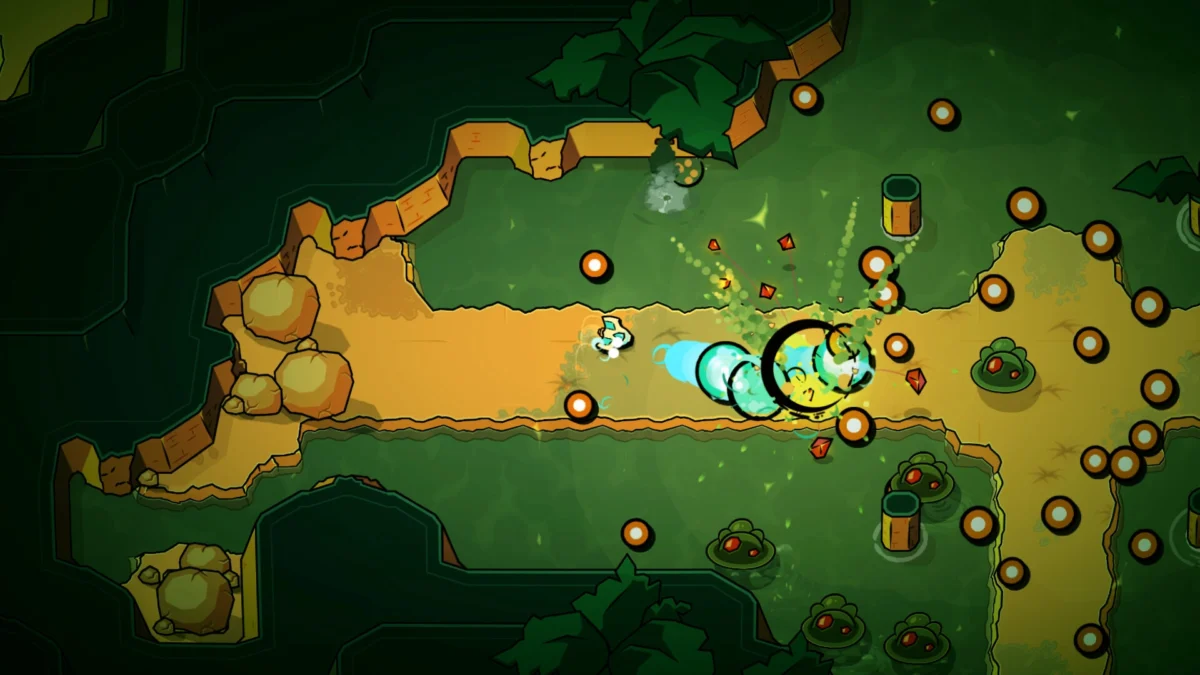
In the crowded landscape of independent gaming, where the "Metroidvania" and "roguelike" labels are often worn as badges of honor, it is rare to find a title that feels genuinely transformative. Minishoot’ Adventures—a title that, on paper, sounds like a discordant experiment—has managed to achieve what few games ever do: the seamless fusion of two distinct, time-honored genres. By marrying the structural DNA of classic top-down Zelda adventures with the frantic, high-octane precision of twin-stick shooters, developer SoulGame Studio has crafted an experience that is as charming as it is mechanically tight.
The Core Concept: A Genre-Bending Synthesis
At its heart, Minishoot’ Adventures asks a deceptively simple question: What happens when the methodical exploration of an action-adventure title meets the twitch-reflex demands of a bullet-hell shooter? The answer is a world that feels expansive, mysterious, and deeply rewarding.
Players pilot a diminutive, sentient ship through a vibrant, interconnected world populated by fellow vessels. The premise is light on exposition—a refreshing departure from the industry’s current obsession with dense lore and heavy-handed dialogue. The world has been besieged, and your companions have been crystallized; your goal is to traverse this colorful landscape, rescue your friends, and reclaim the peace of your civilization. The narrative is communicated not through text boxes, but through environmental storytelling, character animation, and a pervasive sense of warmth that permeates the screen.
Chronology of Gameplay: From Humble Beginnings to Bullet-Hell Mastery
The brilliance of Minishoot’ Adventures lies in its progression curve. The game begins with a deceptively gentle pace, allowing the player to acclimate to the controls. The movement is silky smooth, offering a tactile satisfaction that feels responsive from the very first frame. With one stick dedicated to movement and the other to firing in 360 degrees, the control scheme feels second nature within minutes.
As the player navigates the early biomes, the game introduces the fundamental rhythm of the experience: clear a screen of enemies, explore the hidden nooks of the environment, and unlock a new ability that grants access to previously unreachable terrain. This is the classic "Zelda-vania" loop. Whether it’s a dash mechanic to cross gaps or a specialized weapon to bypass hardened barriers, the sense of growth is constant.
By the mid-game, the complexity shifts. The player transitions from a novice pilot with a basic peashooter to a formidable combatant capable of turning the tide against screen-filling bullet patterns. The progression system allows for deep customization: players can dump resources into damage output, projectile speed, fire rate, and maneuverability. By the final act, the player is no longer avoiding the bullet hell—they are creating it.

Supporting Data: Examining the Mechanics of Success
The success of Minishoot’ Adventures can be attributed to its rigorous attention to mechanical balance. In a genre where "hard but fair" is a common promise, few games deliver on that balance as consistently as this.
Boss Design and Difficulty Curves
The boss encounters serve as the crucible of the game. These battles are masterclasses in telegraphing information. Despite the screen often being flooded with projectiles, the patterns remain readable. The game respects the player’s time; death is rarely a source of frustration, as respawn times are near-instantaneous. This design choice encourages the "just one more try" mentality that is the hallmark of the best arcade-style shooters.
Exploration and Environmental Density
The world design is equally robust. Unlike many open-world titles that rely on map markers and objective lists, Minishoot’ Adventures encourages organic discovery. Hidden caves, heart containers, and map fragments are tucked away in ways that reward curiosity rather than rote adherence to a waypoint. The map is interconnected in a way that makes backtracking feel less like a chore and more like a victory lap as you use new abilities to uncover long-forgotten secrets.
Official Perspectives and Development Philosophy
While official interviews from the developers at SoulGame Studio have been sparse, the game itself serves as a manifest of their philosophy: minimalism in narrative, maximalism in playability. The decision to forgo heavy dialogue trees and convoluted quest logs was clearly intentional. By stripping away the bloat that plagues many modern adventure games, the developers allowed the core gameplay loop—the act of flying, shooting, and exploring—to take center stage.
The aesthetic choices also reflect this philosophy. The art style is clean and high-contrast, ensuring that in the middle of a chaotic boss fight, the player never loses track of their ship or incoming projectiles. The electronic, atmospheric soundtrack complements this visual clarity, providing a driving beat that sustains the player’s momentum without demanding center stage.
Implications: A Blueprint for Future Indie Titles
The emergence of Minishoot’ Adventures as a critical darling carries significant implications for the indie scene. It serves as a reminder that the most exciting innovations in gaming often come from taking two established, seemingly disparate formulas and polishing their intersection until they shine.

The "Zelda-vania" Evolution
We are seeing a trend in indie development where developers are moving away from pure genre replication and toward "hybridization." Minishoot’ Adventures sits alongside titles that have successfully blended RPG elements with rhythm games or deck-building mechanics with roguelites. By successfully integrating the twin-stick shooter into an exploration-heavy adventure format, SoulGame Studio has provided a blueprint for how to evolve the action-adventure genre without losing the nostalgic appeal that makes it so popular.
Addressing the Minor Flaws
The game is not without its minor imperfections. Some players have noted that the initial upgrades feel somewhat incremental, lacking the "wow factor" of more significant ability unlocks. Additionally, the sheer size of the world and the density of its hidden areas can occasionally leave a player feeling disoriented, particularly those who prefer a more guided experience. However, these are minor quibbles in an otherwise stellar package. These "flaws" are, in many ways, a byproduct of the game’s commitment to rewarding player initiative over hand-holding.
Conclusion: Who Should Embark on This Adventure?
Minishoot’ Adventures is a rare example of a game that never overstays its welcome. It respects the player’s intelligence, rewards their curiosity, and provides a level of mechanical polish that is frequently absent in larger, higher-budget titles.
For the veteran of classic top-down adventure games, this offers a refreshing, faster-paced alternative to the slow-burn puzzle solving of the past. For the twin-stick shooter aficionado, it provides a meaningful context for their skills, turning high-score chasing into a journey of discovery. Whether you are a completionist who loves hunting for every secret, or a player who simply wants to master tight controls and overcome challenging boss patterns, this game demands a spot on your hard drive.
It is a quiet, confident, and utterly delightful accomplishment—a reminder that in the vast ocean of indie gaming, sometimes the smallest ships take you on the most memorable journeys. With a score that reflects its status as a must-play, Minishoot’ Adventures is not just a game; it is a masterclass in how to build a world that is as fun to exist in as it is to fight through.











No comments yet. Be the first to join the conversation!