

The Japanese convenience store—or konbini—is a landscape defined by an almost overwhelming variety of bottled beverages. From complex tea blends and fruit-infused waters to an endless array of functional sports drinks, the plastic bottle has reigned supreme as the industry standard for decades. However, a seismic shift in packaging philosophy has arrived on the shelves of 7-Eleven Japan. Lotte, a titan of the confectionery industry, has officially brought its "The Day" brand of canned water to the masses, challenging the dominance of the plastic bottle and forcing consumers to reconsider how they hydrate.
Main Facts: A Bold Departure from Tradition
On May 5, 2026, Lotte’s "The Day" made its official debut in 7-Eleven convenience stores across Japan, following a limited release in discount retailers and online marketplaces that began in September of the previous year. At first glance, the product is striking; it arrives in a sleek, minimalist aluminum can that mirrors the aesthetic of premium craft beer or high-end energy drinks. This represents a significant departure from the transparent, nature-focused motifs typically seen in the bottled water aisle.
![7-Eleven Japan now sells canned water, but does funky packaging mean funky flavor?[Taste test]](https://soranews24.com/wp-content/uploads/sites/3/2026/05/cw-2.jpg?w=1000&h=525&crop=1)
The line is available in two distinct varieties: a black-labeled can containing sparkling water and a red-labeled can containing still mineral water. Sourced from the town of Yaizu in Shizuoka Prefecture, the water is marketed as a "pure" product—free from the energy-boosting additives or synthetic supplements often found in canned beverages. Despite the non-traditional packaging, Lotte maintains that the product is intended for everyday hydration, aiming to "lift the spirits" of the consumer with every sip.
Chronology of the "The Day" Launch
The path to the refrigerator aisle of Japan’s most prominent convenience store chain was a deliberate, staged rollout.
![7-Eleven Japan now sells canned water, but does funky packaging mean funky flavor?[Taste test]](https://soranews24.com/wp-content/uploads/sites/3/2026/05/cw-1.jpg?w=640)
- September 2025: Lotte first introduces "The Day" to the Japanese market. Initial distribution is restricted to specialized online platforms and select discount retailers, serving as a soft launch to gauge consumer interest in canned water—a segment that has remained niche compared to the saturated plastic-bottle market.
- Early 2026: Positive reception from early adopters and a growing environmental consciousness regarding plastic waste encourage Lotte to pursue a broader distribution strategy.
- May 5, 2026: "The Day" officially hits 7-Eleven shelves nationwide. The move signals a major strategic push, placing the product directly in the path of the average urban commuter.
- Mid-May 2026: Independent testing begins as consumers and media outlets begin to evaluate whether the metallic container impacts the taste or experience of the water.
Supporting Data: The Sensory and Economic Experience
To understand the viability of this product, one must look at both the sensory experience and the economic positioning. Retailing at 158 yen (approximately $1.00 USD) for a 480-milliliter can, "The Day" occupies a premium price point. In comparison, most standard 500-milliliter bottled waters in Japanese konbini retail for 140 yen or less.
The Taste Test
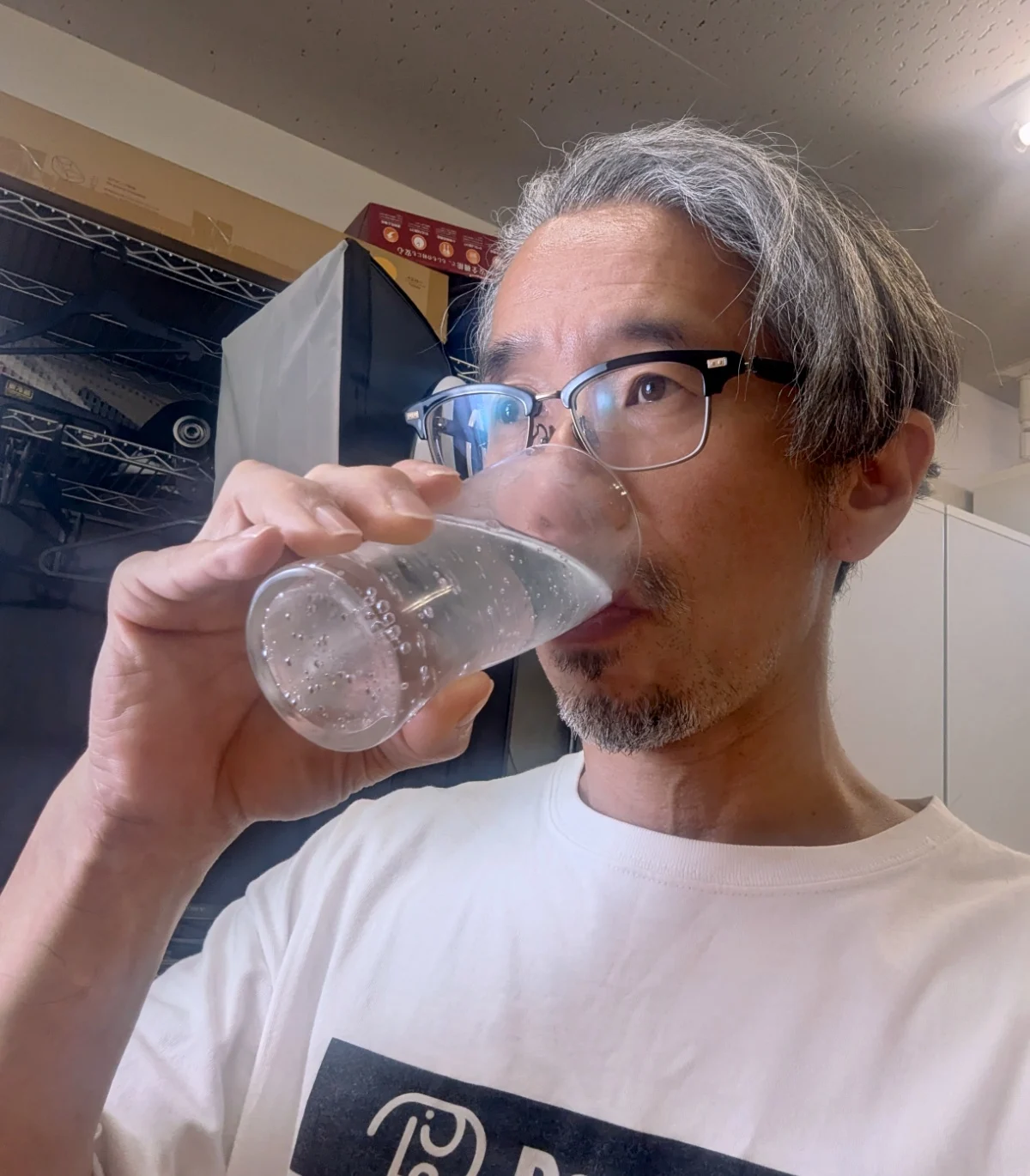
In a recent comprehensive evaluation, researchers focused on the mouthfeel and flavor profile of the still (red-can) water. While there were minor reports of residual air bubbles—likely a byproduct of the canning process rather than an intentional carbonation choice—the consensus was positive. The water was noted for being exceptionally smooth with no discernible metallic aftertaste, a common concern for consumers skeptical of aluminum packaging. The "cool-to-the-touch" property of the aluminum can provided a refreshing sensory experience, particularly when compared to the room-temperature feel of a plastic bottle.
![7-Eleven Japan now sells canned water, but does funky packaging mean funky flavor?[Taste test]](https://soranews24.com/wp-content/uploads/sites/3/2026/05/cw-3.jpg?w=640)
The Design Philosophy
The aesthetic choice is no accident. By adopting a design language more common in the alcohol or energy drink sector, Lotte is clearly attempting to pivot away from the "commodity" image of bottled water. The heavier, more substantial feel of the aluminum container gives the consumer a sense of value, which helps justify the higher price point.
Official Responses and Corporate Strategy
In its official press release, Lotte framed the launch of "The Day" as "one answer to the needs of a new age of wellness." This phrasing is intentionally broad, encompassing not just physical health, but the psychological desire for sustainable, high-quality consumer choices.
![7-Eleven Japan now sells canned water, but does funky packaging mean funky flavor?[Taste test]](https://soranews24.com/wp-content/uploads/sites/3/2026/05/cw-4.jpg?w=640)
Lotte has emphasized that the switch to aluminum is a core component of their environmental roadmap. Unlike many plastics, which can be difficult to recycle efficiently in all municipalities, aluminum is infinitely recyclable, making it a cornerstone of circular economy initiatives in Japan.
Regarding the "energy-boosting" branding, Lotte clarified that the product contains no chemical additives. The "energy" associated with the brand is intended to be purely conceptual—a mental refreshment rather than a physiological stimulant. By choosing to market water as a "spirit-lifting" tool rather than a mere survival necessity, Lotte is attempting to elevate the act of drinking water into a mindful ritual.
![7-Eleven Japan now sells canned water, but does funky packaging mean funky flavor?[Taste test]](https://soranews24.com/wp-content/uploads/sites/3/2026/05/cw-5.jpg?w=640)
Implications: The Convenience Paradox
While "The Day" represents a significant step toward sustainability, it introduces a "convenience paradox." The primary advantage of the plastic bottle is its portability; the cap allows a consumer to drink half, seal it, and stow it in a bag for later.
Because "The Day" is a traditional "pop-top" aluminum can, it lacks this re-sealable functionality. Once the seal is broken, the consumer is committed to finishing the 480 milliliters of water.
![7-Eleven Japan now sells canned water, but does funky packaging mean funky flavor?[Taste test]](https://soranews24.com/wp-content/uploads/sites/3/2026/05/cw-6.jpg?w=640)
A New Culture of Mindful Hydration
Critics might argue that this makes the product less convenient for the commuter on the go. However, supporters suggest that this "all-at-once" consumption model is actually a benefit in the context of Japan’s increasingly extreme summer weather. With temperatures rising to dangerous levels—often referred to as kokushobi (cruelly hot days)—the tendency for commuters to leave half-full bottles of water in a hot bag for hours is a health risk.
By necessitating that the water be consumed in one sitting, Lotte is subtly encouraging more rigorous and timely hydration. This creates a cultural shift where the act of drinking water becomes an intentional break from the day’s tasks, rather than a mindless secondary activity.
![7-Eleven Japan now sells canned water, but does funky packaging mean funky flavor?[Taste test]](https://soranews24.com/wp-content/uploads/sites/3/2026/05/cw-7.jpg?w=640)
The Future of Packaging
The success of "The Day" will likely serve as a litmus test for the Japanese beverage industry. If consumers embrace the aluminum format, we can expect a wave of competitors to follow suit, potentially leading to a significant reduction in single-use plastic consumption across the country’s thousands of convenience stores.
Moreover, the premium positioning suggests that Japanese consumers are increasingly willing to pay a "sustainability premium" for products that align with their personal values regarding the environment. As Lotte continues to refine the distribution and availability of "The Day," the industry will be watching closely to see if this is merely a trend or a permanent transformation in how one of the world’s most sophisticated retail markets views the humble bottle of water.
![7-Eleven Japan now sells canned water, but does funky packaging mean funky flavor?[Taste test]](https://soranews24.com/wp-content/uploads/sites/3/2026/05/cw-8.jpg?w=640)
In conclusion, "The Day" is more than just a drink; it is a design-forward, environmentally conscious experiment that challenges the long-standing status quo. While it may not replace the plastic bottle entirely, it offers a sophisticated alternative for the conscious consumer, proving that even the most basic necessity of life can be reimagined for a more sustainable, and perhaps more mindful, future.












No comments yet. Be the first to join the conversation!