

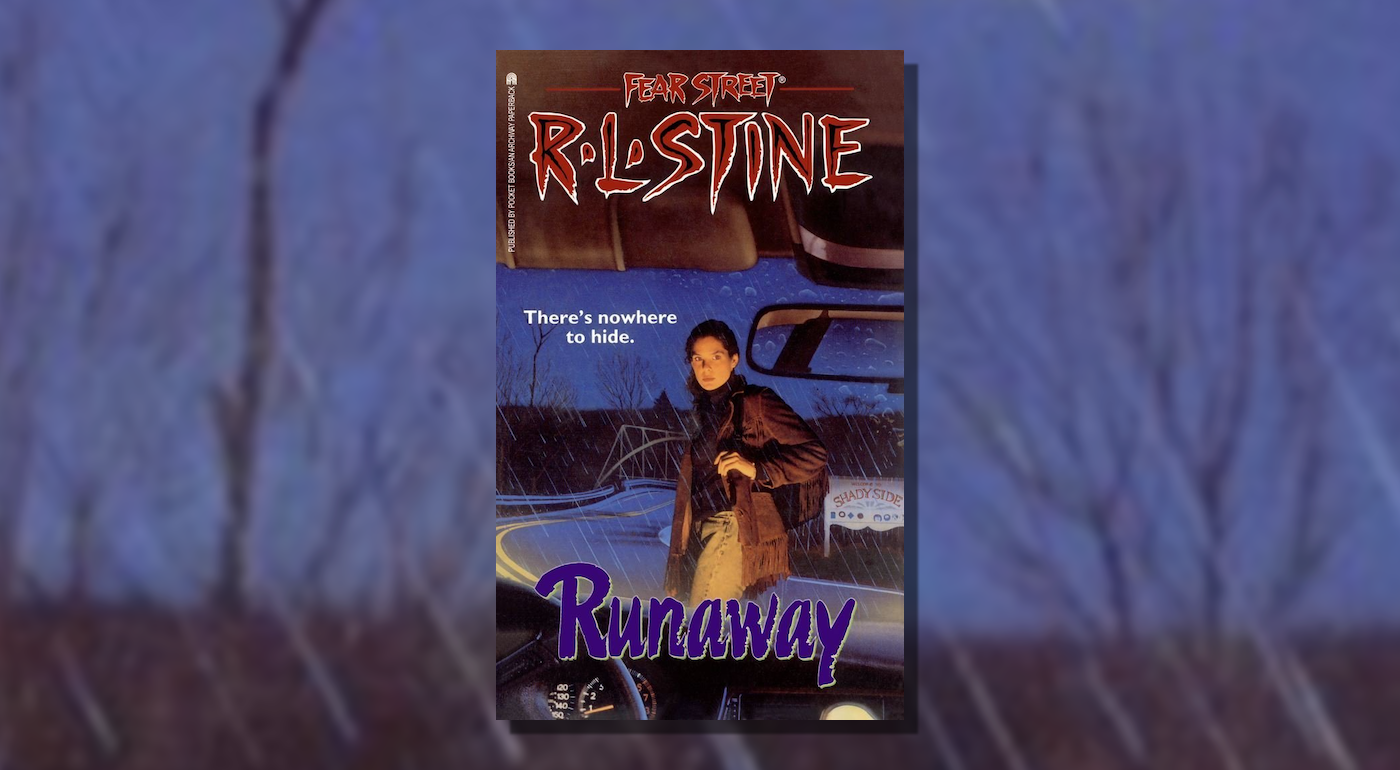
In the landscape of 1990s young adult literature, few tropes proved as enduring—or as chilling—as the "fresh start." Whether it was the promise of a college campus or the anonymity of a new town, the concept of shedding one’s past identity served as a potent narrative engine for authors like Diane Hoh and R.L. Stine. By examining Hoh’s The Roommate (Nightmare Hall) and Stine’s Runaway (Fear Street), we gain insight into a specific subgenre of psychological thriller that posits a terrifying reality: you can change your address, but you cannot always outrun the consequences of your own secrets.
The Allure of the Blank Slate
For the adolescent protagonist, the transition to a new environment—be it the dorms of Salem University or the eerie streets of Shadyside—is often framed as a liberation. It is an opportunity to excise the trauma, societal expectations, and destructive habits of a previous life. This "reinvention" is the central catalyst in The Roommate and Runaway. However, as both narratives demonstrate, the blank slate is rarely clean. Instead, it becomes a canvas for the repressed, the dangerous, and the inevitable return of the past.
The Illusion of Camaraderie: The Roommate
In Diane Hoh’s The Roommate, the setting of Salem University provides a foundational backdrop for the Nightmare Hall series. The narrative follows four suitemates—Lacey Sakurada, Danni Spelling, Maureen Ross, and Margot Hanes—as they grapple with the disorientation of freshman year.
At first, the bonds of friendship appear to offer a sense of belonging. Danni, a character who initially seems to embody the joy of independence, notes early on that she "never felt she belonged in a place so much as she belonged at Salem." Yet, the author masterfully undercuts this comfort. The proximity of dorm life creates an intimacy that is both superficial and deceptive. As the roommates navigate their classes and romantic interests, they guard their pre-college identities with ferocity. This mutual concealment of the past creates a palpable tension that slowly curdles into dread as the dormitory begins to feel like a trap.
Chronology of Escalation: When Secrets Turn Violent
The transition from social anxiety to survival horror is marked by a clear escalation in both novels.
The Unraveling of Danni Spelling
The unsettling events in The Roommate are explicitly tied to the protagonist, Danni. The narrative shifts from the mundane—slashed sweaters and nail polish—to the existential, represented by a lipstick-scrawled message on a mirror: YOU MUST DIE.
As the suitemates begin to suspect one another, the reader is introduced to a series of psychological discrepancies. Danni experiences severe cognitive dissonance: she is confronted with memories of conversations she does not recall and preferences (such as a love for horror films) that she flatly denies. These are not merely plot holes; they are symptoms of a fractured psyche. It is eventually revealed that Danni’s "fresh start" is a violent delusion. Her history is not one of a typical student, but that of a "psychotic child" who spent her formative years in a posh, window-barred prison after committing a homicide. Her arrival at Salem was the result of a brutal escape, and her presence on campus was a desperate attempt to exist in a world she was not equipped to navigate.
The Telekinetic Fugitive: Runaway
Conversely, R.L. Stine’s Runaway introduces Felicia Fletcher, a girl whose secret is not a history of murder, but a history of being a weapon. Felicia is on the run from a research facility where Dr. Shanks exploited her burgeoning telekinetic powers.
Unlike the ensemble-driven tension of The Roommate, Runaway focuses on the paranoia of being an outsider in a town where "everybody knows everybody." Felicia’s journey is punctuated by memories of a destroyed beach house and the accidental (or so she believes) deaths of her classmates. Her attempt to build a normal life in Shadyside—complete with a burger-joint job and new friends—is shattered by the arrival of a stalker who knows her true identity.
Supporting Data: Psychological Undercurrents and Trauma
The narratives rely on the psychological concept of "repressed trauma." In both texts, the protagonists are not merely hiding facts; they are hiding parts of their own identities.
- Danni Spelling’s Disconnection: The evidence of Danni’s fractured reality—the conflicting reports about her personality and the "posh prison" of her upbringing—serves as a cautionary tale about the dangers of extreme isolation. Her violence is portrayed as a byproduct of environmental neglect and mental instability.
- Felicia Fletcher’s Telekinetic Guilt: Felicia represents a more supernatural take on the "runaway" archetype. Her struggle is rooted in the fear of her own capacity for destruction. Stine utilizes the telekinetic power as a metaphor for the volatility of adolescent anger. When she finally confronts the truth—that her friend Debbie was the true architect of the beach house tragedy—the revelation serves to legitimize Felicia’s need for self-actualization.
Official Responses and Resolution
The resolution of these stories offers a stark contrast between the two protagonists.
In The Roommate, the "official" conclusion is one of containment. Danni is taken into custody after her attempt on Margot’s life. The suitemates are left to piece together the truth, realizing that they may never fully understand the extent of Danni’s psychosis. There is no neat, happy ending; there is only the lingering trauma of what it means to share a space with someone who is a stranger to themselves.
In Runaway, the resolution leans into the empowerment of the survivor. Felicia successfully defends herself against both the jealous Zan and the manipulative Debbie. By the novel’s end, Felicia’s arc moves toward reconciliation rather than evasion. She chooses to return to Dr. Shanks, not as a victim, but as a "tougher" individual prepared to advocate for herself. It is a controversial choice—returning to an abusive environment—but within the context of the genre, it signifies a transition from "runaway" to "agent of her own destiny."
Broader Implications for the YA Thriller Genre
The literary success of The Roommate and Runaway highlights a fundamental truth about the adolescent experience: the desire to reinvent oneself is often a response to a world that feels confining or abusive.
The Danger of the "Secret Life"
The most significant implication in these texts is that a "fresh start" is only as healthy as the person initiating it. When the past is buried rather than processed, it inevitably resurfaces, often with catastrophic results. The "roommate" or "friend" is rarely the villain one expects; the true villain is often the history that one refuses to confront.
Trust in the Era of Modern Suspense
Both authors challenge the reader’s perception of intimacy. By placing their protagonists in situations where they must rely on others—roommates, neighbors, and coworkers—Hoh and Stine force the reader to evaluate the fragility of trust. In the world of the YA thriller, the person sitting across from you in the cafeteria or lying in the bed next to yours may be the most dangerous person in your life.
Conclusion: The Persistence of the Past
Ultimately, The Roommate and Runaway serve as foundational texts for the psychological thriller subgenre. They strip away the veneer of the American college experience and the small-town suburban dream to reveal the darkness lurking beneath. While running away may be an easy physical action, these stories remind us that identity is a stubborn construct. Whether it is a result of psychosis, as with Danni, or the result of systemic exploitation, as with Felicia, the past is not a destination you leave behind—it is a weight you carry into your future.
These narratives continue to resonate because they speak to a universal fear: that despite our best efforts to rewrite our stories, the ink of our past experiences is often indelible. For the young protagonists of the Nightmare Hall and Fear Street series, the only way out is not through escape, but through the difficult, often terrifying, work of facing the truth.











No comments yet. Be the first to join the conversation!