

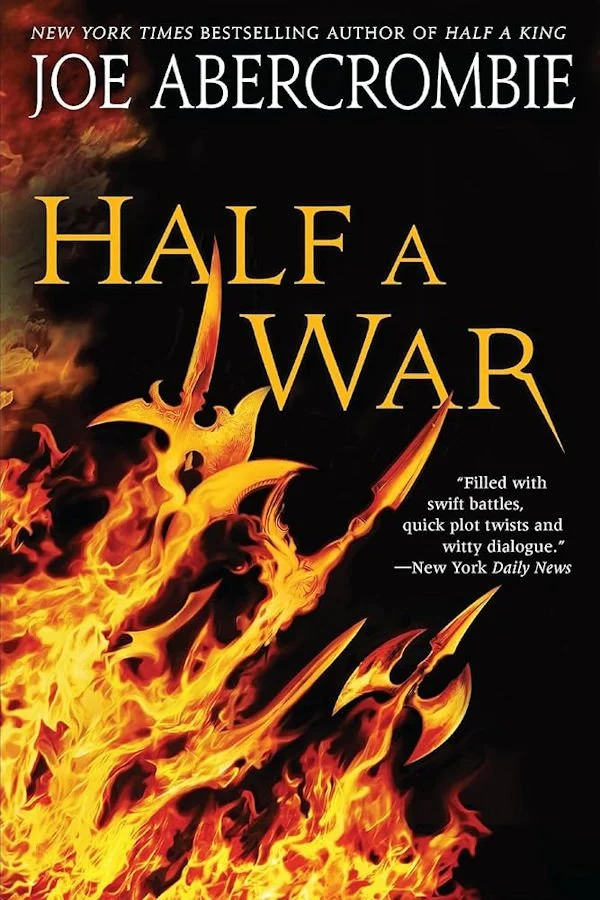
When Joe Abercrombie, the undisputed architect of modern "grimdark" fantasy, released Half a King in 2014, the literary world reacted with a mixture of curiosity and apprehension. For a decade, Abercrombie had cultivated a reputation as the man who turned high fantasy on its head—dismantling the tropes of the chosen one and replacing them with morally bankrupt inquisitors, cynical barbarians, and a world where "heroism" was usually just a synonym for "bad decision-making."
When the cover of Half a King appeared, the letters "YA" (Young Adult) were not just a marketing designation; for many of his hardcore devotees, they functioned as a warning sign. The assumption was simple: Abercrombie had gone soft. But a decade later, the Shattered Sea trilogy stands as a testament to the fallacy of genre labeling. It is time to ask: did the "YA" tag obscure a masterclass in narrative efficiency, or did it simply act as a barrier between the author and the audience that would have appreciated his most concentrated work?
The Anatomy of a Controversy: A Chronology of Perception
To understand the friction surrounding the Shattered Sea, one must look at the trajectory of Abercrombie’s career leading up to 2014.
- 2006–2011: The First Law era. Abercrombie establishes himself as the "Lord of Grimdark" with The Blade Itself, Before They Are Hanged, and Last Argument of Kings. These books are defined by their sprawling casts, nihilistic humor, and a refusal to provide the reader with a clear moral compass.
- 2014: The release of Half a King. The book is marketed as Young Adult. Fans of The First Law express concern that the visceral, uncompromising nature of his prose will be sanitized for a younger demographic.
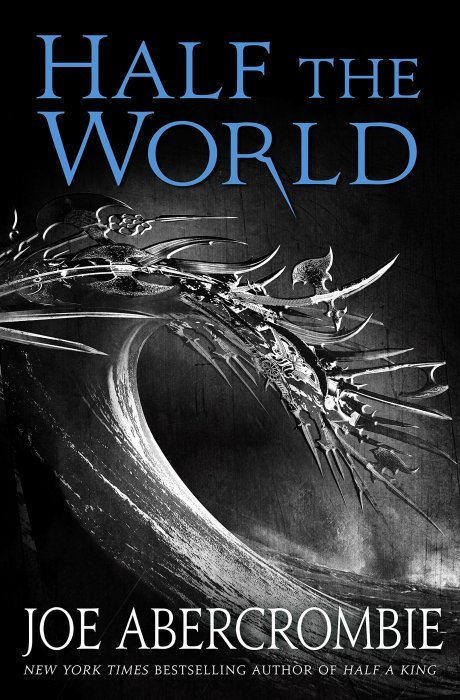
- 2015: The release of Half the World. Critics begin to notice that while the scale is smaller, the body count remains high and the psychological trauma remains unflinching.
- 2016: The conclusion of the trilogy with Half a War. The series is complete, yet it remains sequestered in the "YA" section of bookstores, effectively walling it off from many adult readers who view the genre as "lesser."
- 2019–2023: The Age of Madness trilogy. Abercrombie returns to adult-marketed epic fantasy. The massive scale of these books highlights the stark, purposeful difference in design between his adult epics and his Shattered Sea experiments.
The "Grimdark" vs. "YA" Dichotomy: Challenging the Trope
The primary grievance from the adult fantasy community in 2014 was that "YA" implied a specific set of constraints: binary morality, sanitized violence, and the inevitable "coming-of-age" triumph.
However, Half a King defies these expectations by utilizing the YA framework to sharpen, rather than dull, Abercrombie’s blades. In adult fantasy, authors often use hundreds of pages to build political intrigue across vast continents. In the Shattered Sea, Abercrombie is forced to condense his trademark cynicism into a tighter, more lethal package.
The Protagonist as a Philosophical Vehicle
Prince Yarvi is perhaps one of Abercrombie’s most fascinating creations. Born with a "withered" hand, he is physically ill-suited for the Viking-esque, brutal society of the Shattered Sea. Where his predecessors might have relied on a sword, Yarvi relies on his mind. His journey is not a hero’s quest in the traditional sense; it is a brutal education in the fact that, in Abercrombie’s world, the cleverest person in the room is often the most dangerous.
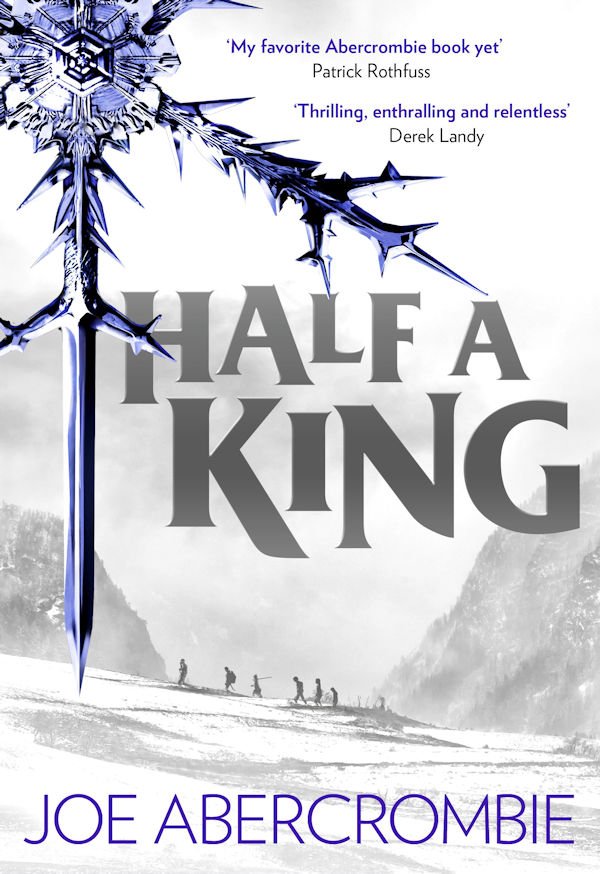
By focusing on a younger character, Abercrombie is able to strip away the calcified, jaded worldview of his older protagonists, allowing the reader to witness the development of cynicism. We see exactly how a person becomes a monster—or a survivor—in real-time.
Supporting Data: Why Structure Matters
If we strip away the marketing labels, we can observe that Half a King follows a structural template that Abercrombie has used throughout his entire career. He is a master of the "unlikely companions" trope. Whether it is Logen Ninefingers and his band of misfits in The Blade Itself or the ragtag crew surrounding Yarvi, the narrative engine remains identical:
- The Inciting Injustice: An outcast is wronged by the powers that be.
- The Forced Alliance: A group of disparate individuals with conflicting interests is shoved together by a shared, desperate necessity.
- The Journey: A physical trek across a dangerous landscape that acts as a crucible for their character development.
- The Uncomfortable Resolution: A finale where the "good" outcome is achieved only through deep compromise, betrayal, or the sacrifice of one’s own innocence.
When viewed through this lens, Half a King is not a "YA version" of Abercrombie; it is an economical version of Abercrombie. It is a refinement of his style, much like a short story is a refinement of a novel.
Official Responses and Industry Shifts
While the author himself has remained diplomatic regarding the labels, his output speaks for itself. In interviews, Abercrombie has frequently noted that he doesn’t write for an age group, but for a "sensibility." He writes for people who enjoy dark humor, unreliable narrators, and the crushing weight of reality.
The publishing industry, however, has always been rigid. The 2010s saw a massive boom in the "YA Crossover" market—books like The Hunger Games proved that teenagers were willing to read stories of extreme violence and political oppression. Consequently, publishers were eager to attach the "YA" sticker to any established author who pivoted to a slightly more focused narrative.
This, however, created an "implication gap." For the reader who expects The Blade Itself, the YA label serves as a warning of "limitation." For the reader who expects a standard YA "chosen one" narrative, Abercrombie’s cynicism serves as a shock to the system.
The Implications: Is Genre Dead?
The ongoing legacy of the Shattered Sea trilogy forces us to confront the limitations of our current bookstore organization. When a book is placed in the YA section, it is implicitly barred from being discussed in the same breath as "serious" adult literature. This is a disservice to the craft of writing.
- For the Reader: The implication is that we are losing out on quality stories because we allow a two-letter acronym to dictate our reading choices. If you enjoy the political maneuvering of The First Law, you are objectively missing out on some of the best-written sequences of Abercrombie’s career simply because they exist within the Shattered Sea.
- For the Author: The marketing of the Shattered Sea suggests that authors must choose between "sprawling complexity" and "narrative focus." The success of this trilogy proves that an author can maintain their voice across different formats, provided the audience is willing to look past the cover art.
Conclusion: A Re-evaluation
If we were to re-release Half a King today, stripped of its YA branding, how would it be received? It would likely be lauded as a "fast-paced, high-intensity grimdark thriller." It would be praised for its character study of Yarvi, its masterful dialogue, and its refreshing lack of bloat.
The distance between YA fantasy and adult fantasy is not, as many suggest, a canyon of intellectual depth. It is often a matter of scope. Abercrombie’s Shattered Sea proves that you do not need 800 pages to explore the corruption of power or the necessity of ruthlessness. You only need a sharp pen, a clear vision, and the courage to ignore the labels that publishers try to force upon you.
The next time you walk into a bookstore, do not let the section dividers tell you what you are allowed to read. Whether it is marketed for the young or the old, great fantasy is defined by the same thing: a world that feels real, a character that feels human, and a story that refuses to look away from the darkness. On all three counts, Half a King succeeds, regardless of where it sits on the shelf.











No comments yet. Be the first to join the conversation!