

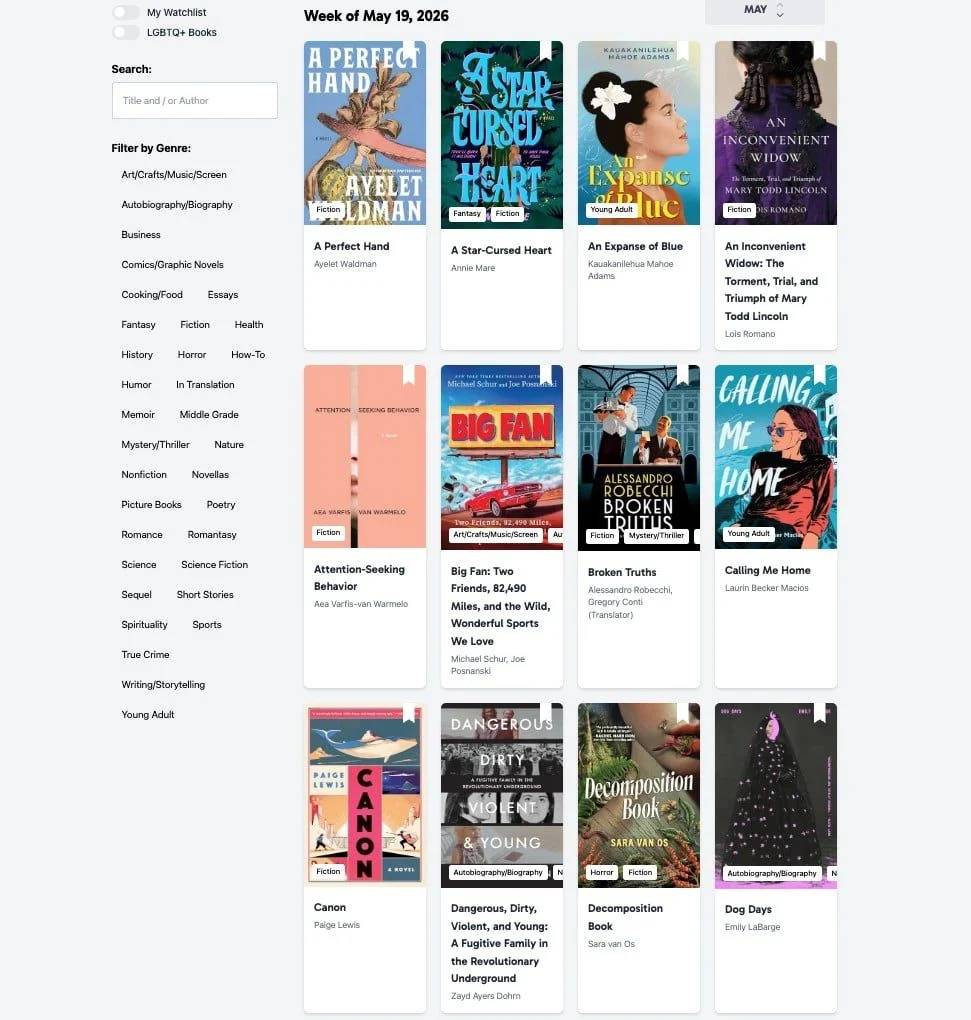
In the digital age, the publishing industry has reached a state of unprecedented velocity. Every month, thousands of new titles hit the shelves, each vying for a sliver of the reader’s increasingly fragmented attention. For the avid bibliophile, the "To-Be-Read" (TBR) pile has evolved from a simple stack of paperbacks into a psychological burden—a sprawling, unmanageable list of "must-reads" that often results in "decision paralysis."
Too often, the books that rise to the top of our awareness are not necessarily the ones that best align with our personal tastes, but rather the ones backed by the most aggressive marketing budgets. This noise makes discovering hidden gems or niche titles an arduous, often frustrating process. Enter the New Release Index, a digital tool designed to transform the chaotic stream of publishing data into a curated, user-centric experience.
The Anatomy of the Publishing Paradox
To understand why the New Release Index is gaining traction, one must first look at the modern landscape of book discovery. Historically, readers relied on local bookstore staff recommendations, newspaper literary supplements, or word-of-mouth. Today, while those avenues still exist, they are dwarfed by the algorithmic roar of social media, the sheer volume of self-published content, and the complex metadata of online retailers.
The "Publishing Paradox" is simple: the more books that are published, the harder it is for the average reader to find the ones they actually enjoy. Without a dedicated system to filter this deluge, readers often resort to browsing bestseller lists, which are frequently skewed by mass-market appeal rather than literary merit or personal preference. This is where the industry-wide reliance on spreadsheets and manual catalog tracking has historically failed the consumer.
Chronology: From Manual Tracking to Automated Curation
The evolution of the New Release Index did not happen overnight. It is the culmination of years of feedback from the reading community.
- Pre-2020 Era: Readers relied heavily on manual spreadsheets, notes apps, and physical journals to track upcoming releases. This was a "part-time job" approach that deterred all but the most dedicated hobbyists.
- 2020–2024: The rise of "BookTok" and "Bookstagram" shifted the discovery paradigm toward visual, influencer-led marketing. While this boosted engagement, it also deepened the reliance on high-budget promotional campaigns, further obscuring smaller, mid-list, or debut titles.
- 2025: Development began on a centralized, filterable database designed to democratize book discovery.
- May 2026: The official launch of the New Release Index by Book Riot, providing a streamlined, visual interface for tracking new arrivals.
This timeline illustrates a shift from passive consumption of marketing materials to an active, database-driven approach to literary exploration.
Supporting Data: The Burden of Choice
The necessity for a tool like the New Release Index is backed by significant trends in consumer behavior. According to industry surveys regarding reading habits:
- The Overload Factor: 72% of frequent readers report feeling "overwhelmed" by their current TBR lists.
- Marketing Bias: Studies show that nearly 60% of readers choose their next book based on "visibility"—essentially, which cover they see most often on social media or bookstore front-tables.
- The "Lost" Audience: Small-to-medium presses have reported a 15% decline in organic discovery over the last three years, as digital algorithms prioritize titles with high initial sales volume.
The New Release Index directly counters these statistics by providing a neutral, genre-filtered view that gives equal visual weight to titles, regardless of the publisher’s marketing spend.
The Mechanics: How the Index Functions
The New Release Index operates on a philosophy of "Visual Curation." Unlike a static list or a dense spreadsheet, the Index presents books as a visual gallery.
1. The Filterable Database
Users are not forced to scroll through every title released in a given month. Instead, the Index allows for granular filtering by genre, release date, and sub-genre. Whether a reader is looking for the latest high-fantasy epic, a gripping historical thriller, or a niche academic nonfiction work, the Index narrows the field to what matters.
2. The "Watchlist" Integration
The core utility lies in its interactive nature. As a reader scrolls through the gallery, they can simply click on a book cover. This action triggers a pop-up containing the official synopsis, author biography, and essential metadata. If the title piques interest, it is added to a personalized "Watchlist." This feature effectively turns the disorganized mental clutter of "I think I heard about this book" into a structured, actionable plan.

3. Real-Time Updates
By syncing with industry databases, the Index ensures that release dates are accurate and that pre-order links are readily available. This eliminates the need for readers to hunt down information across multiple retail sites or publisher newsletters.
Official Perspectives: A Shift in Reader Agency
Industry experts and literary critics have lauded the move toward more user-controlled discovery tools.
"We are moving away from the era where the publisher dictates what the reader sees," says a representative from a leading literary consultancy. "The New Release Index represents a transfer of power back to the reader. It’s not just about selling a book; it’s about ensuring the right book finds the right hands."
Furthermore, the focus on visual discovery taps into the "cover-first" mentality of modern digital consumers. By treating book covers with the same aesthetic importance as high-end e-commerce products, the Index bridges the gap between the tactile pleasure of browsing a bookstore and the efficiency of digital shopping.
Implications for the Future of Publishing
The implications of such a tool are profound for the entire literary ecosystem:
For the Reader
The most immediate benefit is the reduction of "TBR Anxiety." By reclaiming control over their reading schedule, readers are more likely to explore diverse voices and genres that they might have previously missed due to algorithm-driven silos.
For Authors and Publishers
For debut authors or those with smaller marketing budgets, the New Release Index acts as a leveler. Because the tool focuses on the content and the cover rather than a pay-to-play placement, high-quality, lesser-known books have a statistically higher chance of being "discovered" by a browsing reader. This could lead to a healthier, more diverse market where sales are driven by genuine reader interest rather than the sheer volume of ad spend.
For the Digital Landscape
The success of the Index suggests that the future of book discovery lies in curation over quantity. As AI-generated content continues to saturate the market, the role of human-curated, filterable, and organized databases will become the primary defense against information overload.
Conclusion: Reclaiming the Joy of Reading
The act of reading should be an escape, not a chore. When the process of selecting a book feels like a data-entry project, the joy of discovery is lost. The New Release Index serves as a vital bridge between the vast, chaotic sea of modern publishing and the individual reader’s personal taste.
By leveraging technology to provide a clean, visual, and highly functional interface, the Index does more than just organize books; it restores the serendipity of the bookstore browsing experience in a digital format. As we look toward the remainder of 2026 and beyond, tools that prioritize user agency and quality curation will undoubtedly define the next chapter of the publishing industry. Whether you are a casual reader looking for your next beach read or a dedicated bibliophile hunting for the season’s best literary fiction, the Index offers a path through the noise—one cover at a time.












No comments yet. Be the first to join the conversation!