Published July 3, 2026, 2:00 AM EDT
For many, the 1995 film Jumanji, starring the incomparable Robin Williams, holds a sacred place in cinematic history, a nostalgic touchstone of 90s family adventure. It introduced audiences to a magical board game that unleashed jungle chaos upon the unsuspecting world. However, a provocative re-evaluation suggests a different truth: the original Jumanji might, in fact, be the least compelling entry in the beloved franchise, overshadowed by the unexpected brilliance and comedic prowess of its modern reboots, Jumanji: Welcome to the Jungle (2017) and Jumanji: The Next Level (2019).
This isn’t merely a contrarian take; it’s a critical assessment born from experiencing the franchise’s evolution. What initially seemed like a cynical cash-grab, leveraging established IP with contemporary stars, has revealed itself to be a masterclass in revitalizing a concept, delivering both genuine laughs and thrilling adventure in a way the original, despite its groundbreaking premise, struggled to fully achieve. The reboots have not only captured new audiences but have also, upon closer inspection, exposed some significant shortcomings in the film that started it all.
A Chronology of Chaos: From Board Game to Video Game
To truly understand this re-evaluation, it’s essential to trace the journey of Jumanji through its various iterations, observing how the core concept has been reinterpreted and executed over time.
The Genesis: Jumanji (1995)
The story of Jumanji began long before its cinematic debut. The 1995 film draws its inspiration from Chris Van Allsburg’s acclaimed 1981 children’s picture book, which captivated readers with its eerie illustrations and imaginative premise of a board game that brings its jungle hazards to life. The film adaptation, directed by Joe Johnston, brought this fantastical concept to the big screen with a blend of live-action and then-cutting-edge computer-generated imagery.
The narrative centers on young Alan Parrish (Adam Hann-Byrd), who, in 1969, discovers a mysterious board game called Jumanji. Upon playing it with his friend Sarah Whittle (Laura Bell Bundy), Alan is inexplicably sucked into the game’s jungle world, while Sarah is chased away by bats. Twenty-six years later, in 1995, orphaned siblings Judy (Kirsten Dunst) and Peter Shepherd (Bradley Pierce) move into the old Parrish mansion and stumble upon the same game. Their innocent roll of the dice releases a now-adult Alan Parrish (Robin Williams) from the game, along with a host of terrifying jungle creatures and phenomena that wreak havoc on their quiet suburban town. To reverse the chaos, they must finish the game, a perilous journey fraught with danger and personal growth.
At the time of its release, Jumanji was a commercial success, grossing over $262 million worldwide and praised for its imaginative story and visual effects, which pushed the boundaries of CGI. Robin Williams’ performance, though more restrained than some of his other comedic roles, was lauded for bringing heart and gravitas to the character of Alan Parrish, a man scarred by decades of isolation within the game.
The Reinvention: Jumanji: Welcome to the Jungle (2017)
More than two decades later, the Jumanji franchise received an unexpected contemporary facelift with Jumanji: Welcome to the Jungle. Directed by Jake Kasdan, this film took a bold leap, transforming the enchanted board game into a haunted video game cartridge discovered in an old Atari 2600-like console. This innovative shift was met with initial skepticism, particularly from those who cherished the original’s analog, mysterious charm. How could a video game possibly capture the ancient, almost cursed aura of the original board game?
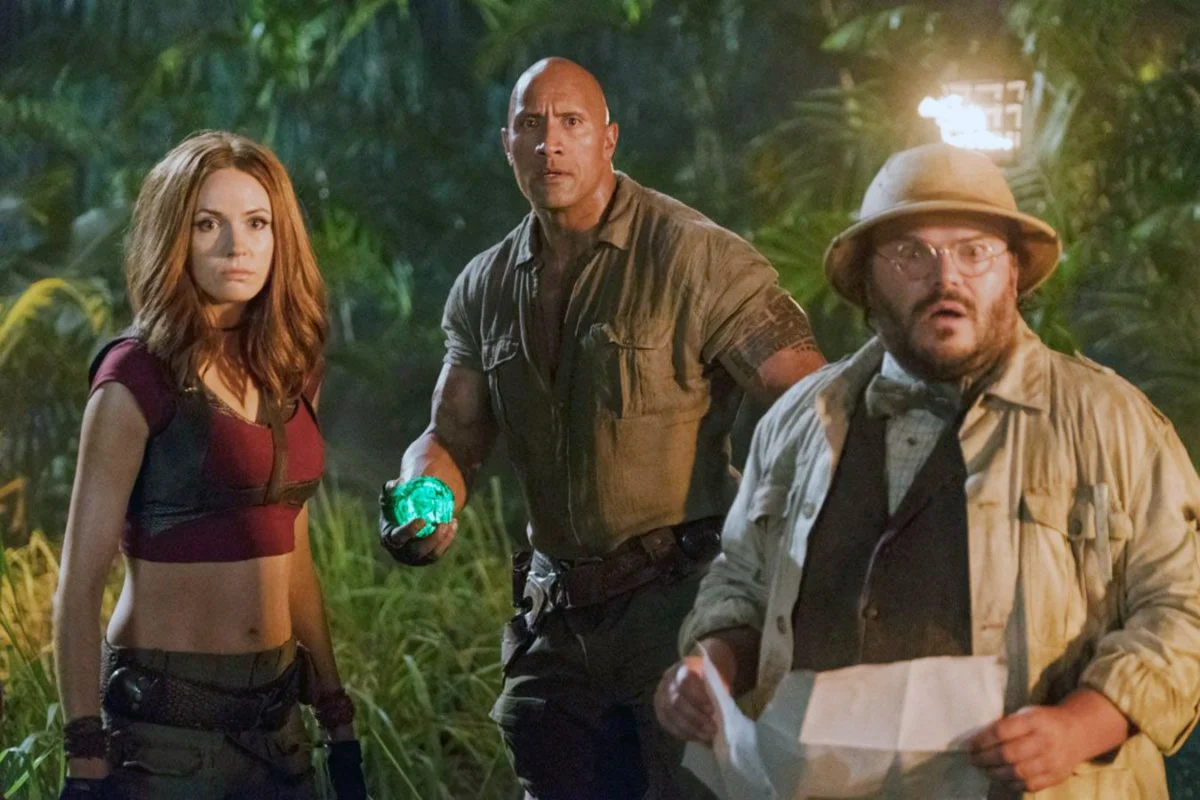
The plot introduces four stereotypical teenagers – Spencer, the nerdy gamer; Bethany, the self-absorbed popular girl; Fridge, the jock; and Martha, the introverted intellectual – who are forced into detention. There, they discover the dusty Jumanji console and, upon selecting their avatars, are magically sucked into the game world. They reappear in a dangerous jungle environment, inhabiting the bodies of their chosen, often comically mismatched, adult avatars: Dr. Smolder Bravestone (Dwayne "The Rock" Johnson), Professor Sheldon "Shelly" Oberon (Jack Black), Franklin "Mouse" Finbar (Kevin Hart), and Ruby Roundhouse (Karen Gillan). To escape the game and return to their real lives, they must complete a dangerous quest, confronting their deepest fears and learning to work together.
Despite initial reservations, Welcome to the Jungle became a runaway hit, both critically and commercially, grossing nearly $962 million globally. Critics praised its clever premise, hilarious performances, and engaging action sequences, which felt fresh and relevant for a new generation while still honoring the spirit of the original.
The Evolution: Jumanji: The Next Level (2019)
Building on the success of its predecessor, Jumanji: The Next Level further explored the creative possibilities of the video game premise. Also directed by Jake Kasdan, the sequel saw the original group of teenagers, now college students, reluctantly drawn back into Jumanji to rescue Spencer, who had re-entered the game. This time, however, the game malfunctions, and not everyone lands in their familiar avatars. Adding to the chaos, Spencer’s grandfather, Eddie (Danny DeVito), and Eddie’s estranged friend, Milo (Danny Glover), are also accidentally sucked into the game.
The result is a comedic goldmine, as the curmudgeonly Eddie finds himself in the formidable body of Dr. Bravestone (Johnson), and the slow-talking Milo inhabits Mouse Finbar (Hart). This body-swapping dynamic allows for even more hilarious performances, with Johnson and Hart expertly mimicking the mannerisms of DeVito and Glover, respectively. The film cleverly expands on the game’s mechanics, introducing new environments, challenges, and avatars, ensuring that the adventure feels fresh and unpredictable.
The Next Level continued the franchise’s winning streak, grossing over $801 million worldwide and receiving positive reviews for its continued humor, improved action, and the expanded cast dynamic.
Supporting Data: Why the Reboots Reign Supreme
The chronological overview highlights the trajectory of the Jumanji films, but the true argument for the reboots’ superiority lies in a detailed comparison of their execution across several key areas.
The Glaring Issue: Outdated CGI in the Original
One of the most immediate and difficult-to-overlook shortcomings of the 1995 Jumanji is its dated computer-generated imagery. While revolutionary for its time, the visual effects have aged poorly, often pulling viewers out of the immersive fantasy rather than enhancing it. The concept of jungle animals rampaging through a suburban home is fantastic on paper, but its realization on screen frequently falls flat.
The CG lion, for instance, notoriously oscillates between a convincing animatronic puppet and a strikingly unconvincing digital creation. The disparity is jarring, making it hard to suspend disbelief. Even more problematic are the monkeys, which appear so artificial that their supposed menace is completely undermined. They look less like mischievous, destructive primates and more like poorly rendered cartoons, failing to evoke any real sense of threat or even genuine mischief.
While it might seem unfair to criticize a 1995 film for its CGI, it’s crucial to remember the context. At the time, films like Jurassic Park (1993) had already set a high bar for creature effects, seamlessly blending animatronics with CGI to create believable dinosaurs. Director Joe Johnston, while ambitious, pushed the technology beyond its then-current capabilities for certain elements. Many of the effects in Jumanji could have been achieved more effectively using practical effects, animatronics, or even trained animals, which were common and well-mastered techniques. The reliance on CGI where it wasn’t yet robust enough resulted in a visual inconsistency that detracts significantly from the film’s impact.

In stark contrast, the reboots, while not always pushing the absolute boundaries of modern CGI, utilize it effectively and consistently. The jungle environments, the various creatures, and the in-game hazards in Welcome to the Jungle and The Next Level are rendered with a polish that, crucially, never distracts from the narrative. The effects serve the story, rather than becoming a focal point of criticism themselves.
The Missed Opportunity: Robin Williams’ Underutilized Genius
Robin Williams was, without question, one of the most brilliant comedic and dramatic actors of his generation. His films, from the whirlwind humor of Mrs. Doubtfire and Aladdin to the profound emotional depth of Good Will Hunting and Good Morning, Vietnam, showcase an unparalleled range. Yet, in the original Jumanji, his immense talents feel somewhat restrained, a missed opportunity.
Williams’ portrayal of Alan Parrish is heartfelt and brings a necessary gravitas to the character’s tragic backstory. However, the script doesn’t fully leverage his signature improvisational comedic genius or his capacity for profound dramatic weight. Alan Parrish, as written, could arguably have been played by a number of competent actors, which, for an actor of Williams’ unique caliber, feels like an oversight. The film doesn’t provide enough opportunities for his spontaneous wit or the deeper, more nuanced emotional exploration that defined his best work. He’s good, but he’s not peak Robin Williams.
The reboots, on the other hand, craft their comedic performances around the specific strengths of their ensemble cast, and crucially, the ingenious body-swapping premise. This "Freaky Friday"-like dynamic is where Welcome to the Jungle truly shines. Jack Black, as Professor Shelly Oberon, delivering a spot-on impression of a self-absorbed teenage girl (played by Madison Iseman in the real world), is a comedic tour de force. His mannerisms, vocal inflections, and physical comedy are pitch-perfect, creating sustained laughter. Similarly, Kevin Hart’s portrayal of the timid, anxious Fridge is equally hilarious.
The Next Level elevates this concept further. The introduction of Danny DeVito and Danny Glover, and their subsequent transfer into the bodies of Dwayne Johnson and Kevin Hart, respectively, is a stroke of genius. Johnson’s imitation of DeVito’s gruff, elderly demeanor, and Hart’s slow, contemplative cadence mirroring Glover’s character, are not just imitations but fully embodied comedic performances. These moments not only generate huge laughs but also allow the actors to showcase their versatility and comedic timing in ways that are deeply integrated into the film’s core premise. Unlike the original, the reboots don’t just feature talented comedians; they actively build their humor around the specific comedic talents and personas of their stars, maximizing their impact.
Clever Reinvention vs. Faithful Adaptation
The original Jumanji‘s premise, derived from Van Allsburg’s book, carries an undeniable mystique. The idea of an ancient, enchanted board game unleashing primeval forces is inherently intriguing and possesses a timeless, magical quality. This concept earns the original film an edge in terms of initial imaginative appeal.
However, the reboots deserve immense credit for their clever and successful reinvention. Instead of merely rehashing the board game concept, they bravely modernized it into a video game. This wasn’t a superficial change; it opened up a wealth of narrative possibilities and comedic avenues. The video game format allows for clear rules (three lives, specific character strengths and weaknesses, NPCs, levels, boss fights), which provide both structure for the plot and endless opportunities for humor derived from the characters’ struggles to adapt to their avatars’ limitations and powers. This reinvention feels fresh, respectful of the source material’s spirit, yet unafraid to forge its own path. It demonstrates that a reboot can honor its predecessor not by imitation, but by thoughtful evolution.
Target Audience and Tonal Approach
The 1995 Jumanji carries a PG rating, clearly positioning it as a family-friendly film primarily aimed at children. This influences its comedic tone, its level of peril, and its emotional beats. While it has its intense moments, the overall sensibility is gentler, aligning with typical 90s family adventure fare.
The reboots, with their PG-13 ratings, target a slightly older audience, allowing for more mature humor, higher stakes, and more complex action sequences. This broader demographic appeal is significant. While both versions can be enjoyed by their respective audiences, the PG-13 rating of the reboots permits a comedic edge and character dynamics (especially the body-swapping humor) that resonate more strongly with adults. The jokes land with more punch, the character interactions have more depth, and the action sequences can be more thrilling without being overly gratuitous. For an adult audience not solely driven by childhood nostalgia, the reboots’ more sophisticated humor and adventurous spirit often prove more engaging.
Official Responses and Enduring Legacy
Beyond individual critical assessments, the broader "official response" from both critics and the box office further supports the argument for the reboots’ dominance.
Jumanji: Welcome to the Jungle garnered a critical approval rating of 76% on Rotten Tomatoes and a score of 58 on Metacritic, indicating generally favorable reviews, with many praising its fresh take and comedic cast. Its massive box office success (nearly a billion dollars worldwide) underscored its widespread popular appeal. Jumanji: The Next Level followed suit with a 71% Rotten Tomatoes score and a 58 on Metacritic, also enjoying strong commercial performance.
The original 1995 Jumanji, while beloved by many, holds a 52% approval rating on Rotten Tomatoes and a 39 on Metacritic, signaling a more mixed critical reception. While these aggregators don’t tell the whole story, they offer a snapshot of how critics, collectively, viewed these films. The reboots clearly resonated more strongly with contemporary critics, who lauded their entertainment value and clever updates.
The market’s response, through box office receipts, is perhaps the clearest "official response." The reboots weren’t just financially successful; they revived a dormant franchise and proved its enduring viability, suggesting a broader audience appreciation for their modernized approach.
Implications: The Power of Thoughtful Reinvention
The Jumanji franchise’s trajectory offers valuable lessons on the art of the reboot. It demonstrates that simply replicating a beloved original isn’t always the best path. Instead, a thoughtful reinvention that respects the core concept while daring to evolve it can lead to greater creative and commercial success.
The reboots understood that the "Jumanji" concept – a game that brings its world to life – was stronger than its initial execution. By changing the medium from a board game to a video game, they unlocked new narrative possibilities, allowing for a fresh comedic angle through the body-swapping mechanics and a more action-oriented adventure. They capitalized on the comedic strengths of their cast in a way the original, despite having Robin Williams, arguably did not.
This re-evaluation isn’t meant to diminish the nostalgic value or the groundbreaking ambition of the 1995 Jumanji. It remains an important film for many, a testament to 90s filmmaking, and a foundational piece of a beloved franchise. However, for any adult willing to look beyond the haze of sentimentality and the enduring adoration for Robin Williams, it becomes increasingly clear that Jumanji: Welcome to the Jungle and Jumanji: The Next Level are not just great reboots; they are, in their execution, comedic brilliance, and sustained entertainment value, simply superior films. They stand as powerful examples of how to enrich and elevate an existing property, proving that sometimes, the original isn’t always the best.