Nana Wu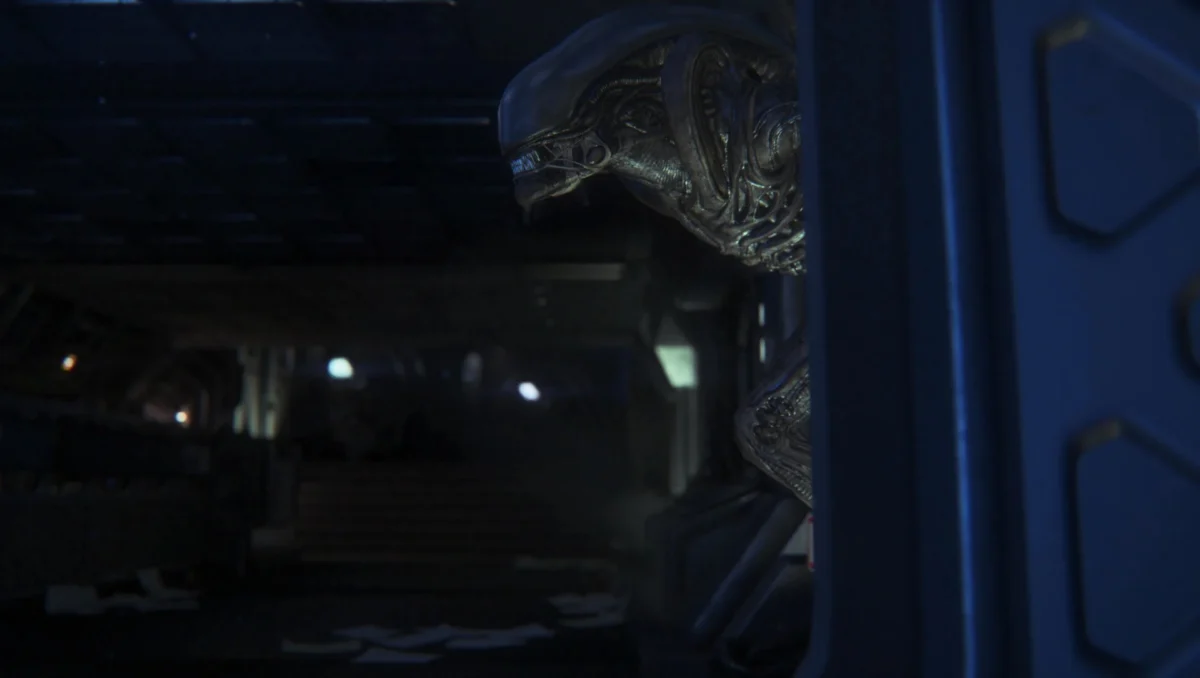
By [Your Name/Journalistic Staff]
May 15, 2026
The survival horror landscape is bracing for a return to the claustrophobic, terminal-lit corridors that defined a generation. Creative Assembly, the studio behind the 2014 cult classic Alien: Isolation, has finally pulled back the veil on the long-awaited sequel. However, as the initial excitement of the announcement settles, a wave of apprehension has replaced it. While the prospect of revisiting Amanda Ripley’s terrifying journey is a dream for many, the technical foundation of this new chapter—a shift from the proprietary Cathode Engine to Epic Games’ Unreal Engine 5—has sparked a fiery debate within the gaming community. Can a sequel maintain the "prey-like" intensity of the original if the very technology that powered its revolutionary AI is discarded?
The Evolution of Terror: Main Facts and Current Developments
The announcement of Alien: Isolation 2 was punctuated by a cryptic, 25-second teaser titled A False Sense of Security. Departing from the sterile, metallic confines of the Sevastopol space station, the footage suggests a radical departure in setting. The clip transitions from a familiar ship interior to a desolate, wind-swept planetary surface, ending on the haunting image of a payphone labeled "Emergency."
This shift suggests that Creative Assembly is moving beyond the "ship-in-a-bottle" dynamic of the first game. While the prospect of an open-world or planet-bound Alien experience is enticing, it raises immediate questions regarding the core gameplay loop. In the original 2014 title, the primary antagonist—the Xenomorph—was not merely a scripted enemy; it was a participant in a sophisticated, emergent simulation. The game’s success was rooted in the player’s inability to predict the monster’s behavior, a feat made possible by the bespoke Cathode Engine. By transitioning to Unreal Engine 5 (UE5), the studio is fundamentally altering the "under-the-hood" architecture that made the first game a masterpiece of tension.
A Chronology of Dread: From Sevastopol to the Surface
To understand the stakes of this transition, one must look back at the trajectory of the franchise.
- 2014: Alien: Isolation is released to critical acclaim. It redefined the survival horror genre by focusing on stealth and vulnerability. Amanda Ripley’s search for her mother, Ellen, became a lens through which players experienced the raw terror of being hunted.
- 2015–2025: Throughout the following decade, the game maintained a "gold standard" status. Despite the release of various other Alien titles, none managed to capture the same sense of dread, largely due to the unique AI "director" system embedded within the Cathode Engine.
- May 2026: Creative Assembly confirms the development of the sequel. The reveal trailer signals a shift from ship-based survival to planetary exploration, while simultaneously confirming the move to Unreal Engine 5.
- Present Day: The community reaction is sharply divided. While fans are eager for more content, technical analysts and long-time players are voicing concerns over the performance track record of UE5 in high-fidelity titles.
The AI Dilemma: Why Cathode Was the "Secret Sauce"
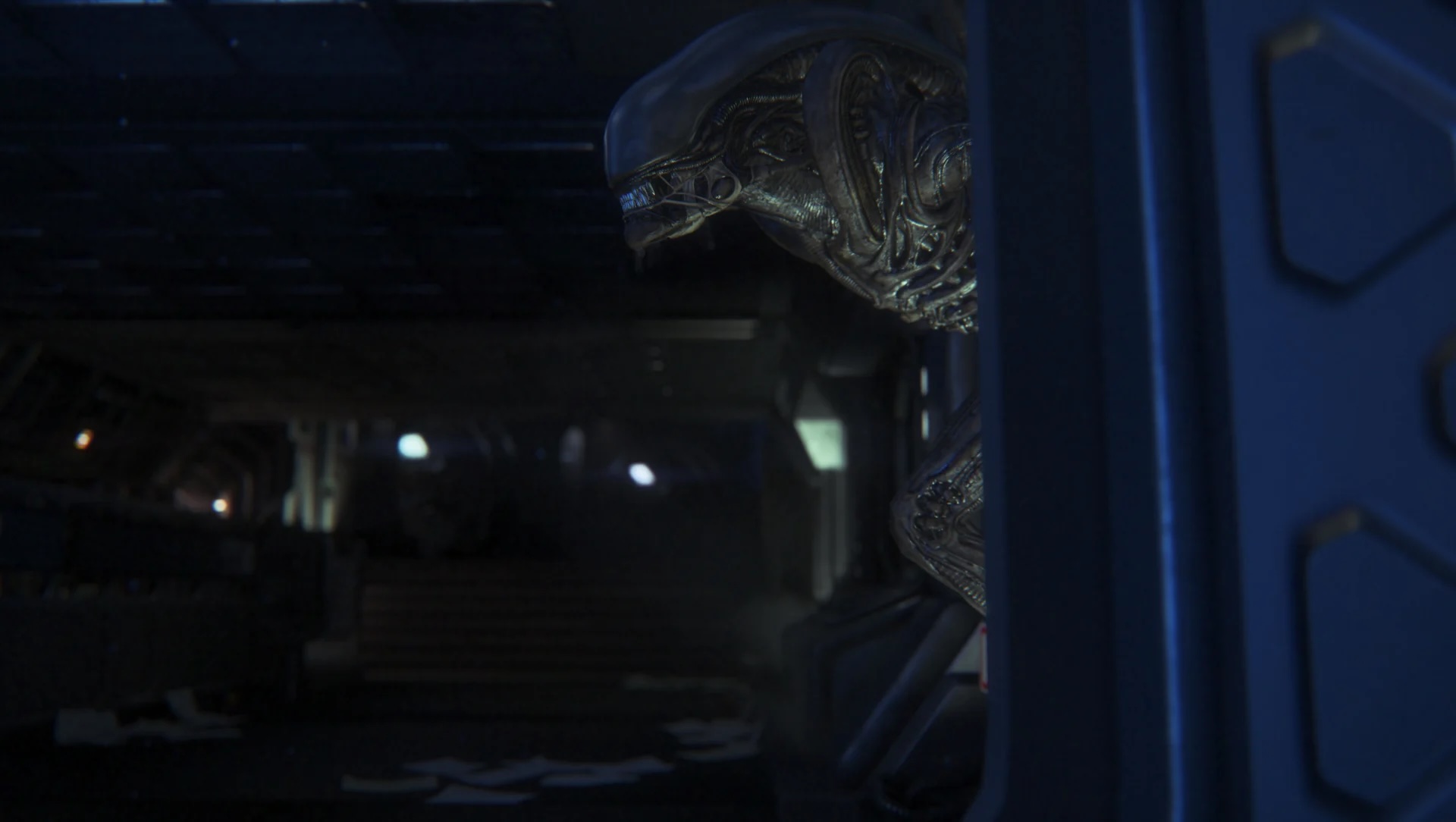
The brilliance of the original Alien: Isolation lay in its "Director AI." The Xenomorph possessed two layers of logic: a "hidden" brain that knew the player’s general location to ensure the monster was always nearby, and a "visible" brain that controlled its sensory input and reactions to the player’s actions.
The Cathode Engine was specifically optimized to handle these complex logic trees without sacrificing performance. Because the engine was proprietary, the developers could strip away unnecessary overhead, ensuring the Xenomorph felt "alive" and responsive. The fear in the original game was organic; it was not triggered by proximity mines or scripted jumpscares, but by a creature that learned the player’s tendencies.
The move to Unreal Engine 5 introduces a generic middleware framework. While UE5 is visually stunning, it is notoriously resource-heavy. Critics argue that in order to maintain the high-fidelity visual standards expected of a 2026 title on UE5, Creative Assembly may be forced to simplify the Xenomorph’s AI to save on processing power. If the monster becomes a predictable, scripted entity, the core "prey" experience of Alien: Isolation will be fundamentally compromised.
Supporting Data: The "Unreal" Performance Crisis
The apprehension surrounding Alien: Isolation 2 is not baseless; it is rooted in recent industry trends. Epic Games’ Unreal Engine 5 has promised a revolution in lighting and geometry, but its implementation has often been hampered by significant optimization hurdles.
Case Studies in Optimization Woes:
- Remnant 2: Hailed as a showcase for UE5, the game was plagued by stuttering, frame drops, and erratic frame pacing at launch. Many players found that despite having high-end hardware, the game struggled to maintain a consistent 60 FPS.
- Borderlands 4: Tech analysts have repeatedly highlighted that the title suffers from "compilation stutter" and visual pop-in issues, where environmental assets fail to stream in correctly, breaking immersion—a death sentence for a game that relies on atmospheric tension.
- Community Sentiment: Steam community forums are rife with threads titled "Unreal Engine 5 Sucks," where users frequently cite "lag," "unfinished states," and "poor optimization" as the primary barriers to enjoyment. When a game relies on silence, shadows, and subtle audio cues, the "hitch" caused by a background engine process can shatter the illusion of terror instantly.
Official Responses and Studio Strategy
As of mid-May 2026, Creative Assembly has remained relatively tight-lipped regarding the technical specifics of their AI implementation. In a brief statement provided to the press, a spokesperson for the studio noted, "We are committed to delivering the most terrifying Alien experience to date. Unreal Engine 5 provides us with tools for lighting and environmental detail that were previously impossible, allowing us to build a more expansive, immersive world than ever before."
However, the studio has yet to address the "AI vs. Fidelity" trade-off. There has been no mention of whether they plan to implement a custom AI sub-system within UE5, or if they are relying on standard navigation meshes and behavior trees provided by the engine. For purists, the lack of an explicit confirmation that the original "Director AI" logic has been ported over is a red flag.
Implications: The Death of Individualism?
Perhaps the most philosophical concern is the loss of the "Alien" aesthetic. The Cathode Engine possessed a gritty, low-fidelity, analog-future texture that felt perfectly aligned with the 1979 Ridley Scott film. It felt "used," heavy, and tactile.
Unreal Engine 5, by contrast, has a very distinct "look." Many modern titles built on the engine suffer from a visual homogeneity—a sheen that makes them look remarkably similar despite different art directions. There is a palpable fear that Alien: Isolation 2 will lose the distinct, claustrophobic personality of its predecessor, becoming just another "pretty" game in a market saturated with high-fidelity, low-substance experiences.
The Path Forward
The implications for the sequel are clear: if Creative Assembly prioritizes visual spectacle over the sophisticated, emergent AI that defined the 2014 title, they risk alienating the very audience that kept the game relevant for over a decade. The gaming industry is at a crossroads where graphical fidelity is often used as a marketing crutch to mask deeper, structural issues.
If Alien: Isolation 2 is to succeed, it must prove that it is not merely a "UE5 showcase." It must demonstrate that the Xenomorph remains an unpredictable, living threat. Players are not asking for more polygons; they are asking for the same, cold, relentless dread that defined the corridors of Sevastopol.
As the release date remains a mystery, the pressure on Creative Assembly continues to mount. They are tasked with the impossible: updating a masterpiece without breaking the gears that made it tick. Whether this transition leads to a new pinnacle of horror or a cautionary tale of "engine-creep" remains to be seen. For now, we wait in the dark—much like Amanda Ripley—hoping that what we hear in the vents is still the creature we once feared, and not just the stuttering of a modern game engine struggling to keep pace.


 Laily UPN
 Nana
Nana