

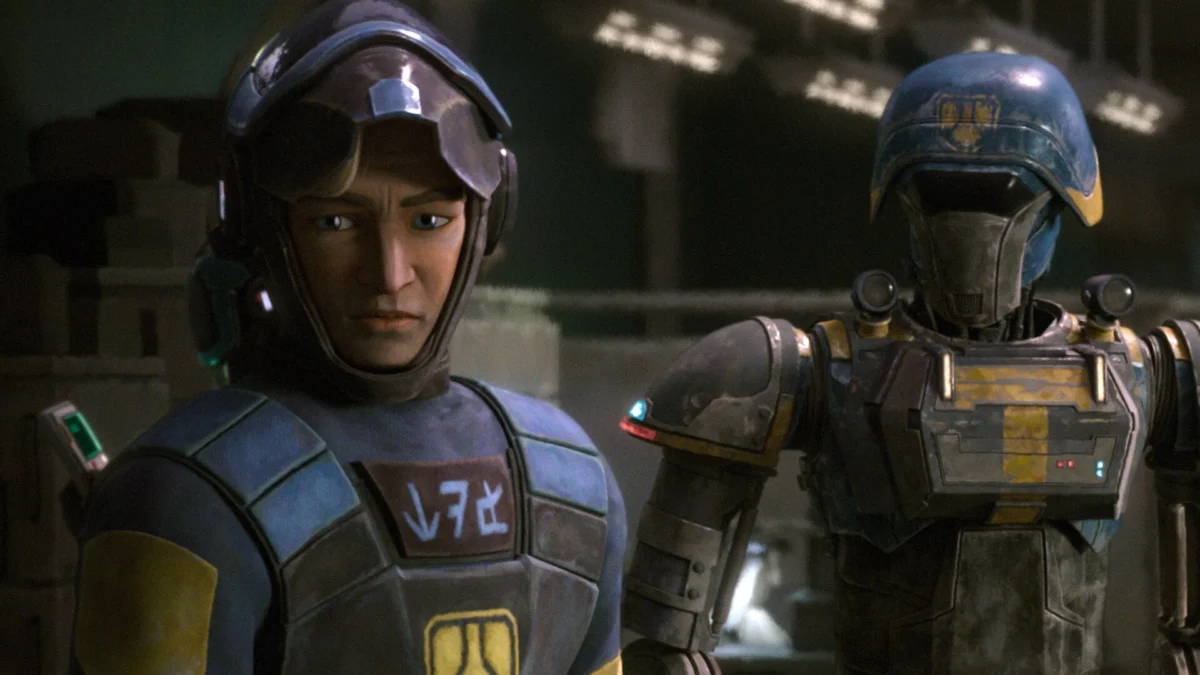
The Star Wars galaxy has long been defined by the epic struggle between the Jedi and the Sith, but the latest animated venture on Disney+, Star Wars: Maul — Shadow Lord, pivots toward a darker, more intimate corner of the universe. Eschewing the grand galactic scale of the Clone Wars or the Rebellion, the series adopts the gritty, atmospheric lens of noir, focusing on the titular former Sith Lord’s quest for vengeance.
Head Writer Matthew Michnovetz describes the core thesis of the show with refreshing simplicity: "All you really need to understand is that this is a story about a guy who has been wronged by a bunch of people and he wants payback." Yet, beneath this straightforward motivation lies a complex web of lore, meticulous character studies, and a technical production process that bridges the gap between classic animation and modern cinematic storytelling.
The Genesis of a Noir-Inspired Galaxy
To craft a series that feels distinct from previous animated entries like The Clone Wars or The Bad Batch, the creative team at Lucasfilm turned to the tropes of hard-boiled detective fiction. The setting of the series, the planet Janix, is a primary character in its own right. A Mid Rim world largely ignored by the Empire, its geography—a sprawling metropolis housed within an ancient crater, ringed by a dense, overgrown jungle—serves as a visual metaphor for the show’s themes.
"What’s under the crater? What’s at the edge of the crater? What’s beyond the crater?" asks Michnovetz. "Despite the Metropolis/Gotham/noir DNA of it, there’s also this weird kind of subtle threat of the frontier beyond what is on the outside of this city."
The production design team, led by Supervising Director Brad Rau, drew heavy inspiration from the noir canon. They envisioned the city of Janix as a place of dark underbellies, neon-lit alleys, and high-stakes criminal dealings. This aesthetic choice extended to the supporting cast; for instance, the crime lord Rheena Sul was initially developed as a classic femme fatale, and her office—complete with a sophisticated aquarium—serves as a visual shorthand for power, control, and moral ambiguity.
A Chronological Breakdown of the Shadow’s Path
The narrative of Shadow Lord is structured to peel back layers of Maul’s psyche, utilizing both current events on Janix and haunting visions of his past.
Episodes 101–102: Establishing the Underworld
The series opens by introducing the audience to Janix and the logistical realities of Maul’s current operation. Viewers are treated to the return of Rook Kast, a character with deep ties to Maul’s Mandalorian history, and the introduction of a new species, the Mosyk. One standout detail is the "droid’s eye view" of the Spybot, a technical feat that provides a unique, voyeuristic perspective on the criminal activities in the city. The production team also prioritized "realistic" touches, such as Captain Brander Lawson’s constant consumption of caf, which serves as both a character quirk and a visual commentary on the weariness of law enforcement.
Episodes 103–104: The Syndicate’s Reach
As the plot thickens, the Pyke Syndicate emerges as a primary antagonist. The design of the Pykes in this series is a fascinating hybrid, blending their live-action appearance from The Book of Boba Fett with the more stylized, angular look of their Clone Wars origins. It is here that Maul’s history—specifically the loss of his brother, Savage Opress, and Mother Talzin—is brought to the forefront, grounding his current violence in the deep-seated trauma of his past.
Episodes 105–106: The Inquisitorius Arrives
The stakes are raised with the introduction of the Inquisitors. The arrival of the First Brother, Marrok, signals a shift in the tone from crime drama to psychological horror. The production team leaned into the "wraithlike" nature of these hunters, using sound design and movement to create a sense of dread. Notably, the stormtroopers depicted here are heavily inspired by Ralph McQuarrie’s original concept art, maintaining a visual consistency with the Imperial aesthetic seen in The Bad Batch.
Episodes 107–108: Visions and Bone Leather
The arrival of the Eleventh Brother, or "The Crow," allows for an exploration of the series’ horror influences. Sound Designer David W. Collins introduced a "bone leather" creaking effect for the character, a subtle auditory cue that reinforces the unnatural quality of the Inquisitors. Simultaneously, Maul’s visions—projected onto a smoke machine by Director of Lighting Joel Aron—offer a dreamlike, impressionistic look at his formative years under Sidious.
Episodes 109–110: The Dark Lord’s Shadow
The finale centers on a confrontation that fans have long speculated about: Maul versus Darth Vader. Rather than relying on familiar templates, the team returned to the muscular, imposing physical presence of David Prowse’s original portrayal of Vader. The "Sludge Lake Battle" was a masterclass in choreography, designed by Steward Lee, where the lack of vocalization from Vader serves as a terrifying reminder of his overwhelming superiority.
Supporting Data: Technical and Creative Trivia
The production of Maul — Shadow Lord is rich with intertextual references and technical ingenuity.
- Acting Performance: Sam Witwer, who voices Maul, provided live-action reference footage for the animators. He went as far as drawing the character’s facial markings on himself during sessions at Lucasfilm headquarters to ensure the animation team captured the nuance of his performance.
- Sporting Lore: The inclusion of "botekin," a team sport featured in the series, marks a rare expansion into Star Wars recreational culture. The rules were fully conceptualized by the writers, drawing influences from lacrosse and jai alai.
- Prop Continuity: The Lawson apartment serves as a "where’s Waldo" for fans of Lucasfilm animation. Eagle-eyed viewers can spot a chocolate bar from The Bad Batch, a ball from Tales of the Jedi, and utensils from the planet Pabu.
- The "E Chu Ta" Connection: The series continues a long tradition of deep-cut Easter eggs, including the use of the iconic, rude Huttese phrase "e chu ta," first uttered in The Empire Strikes Back.
Official Responses and Creative Philosophy
The team behind Shadow Lord emphasizes that the series is intended to stand on its own while honoring the vast Star Wars tapestry. Supervising Director Brad Rau notes that the goal was never to over-explain the universe, but to let the environment and the character’s internal journey tell the story.
"When you hear a little turn of Crow’s head, Collins put in this creaking, weird sound," Rau says of the sound design. "It’s great. We call it ‘bone leather.’" This commitment to detail—from the way cheese pulls when a character slices a dish at a diner to the specific cadence of an alien bully’s ad-libbed dialogue—highlights a studio culture that values the "lived-in" feeling that has defined the franchise for nearly half a century.
Regarding the controversial clash between Maul and Vader, Head Writer Matthew Michnovetz explains that the ambiguity of Maul’s knowledge was intentional. "Ultimately it was decided that at this moment, Maul is almost entirely unaware of who he is, initially assuming he’s just another Inquisitor." This choice keeps the focus on the immediate, visceral survival horror of the scene rather than getting bogged down in galactic politics.
Implications for the Future of Star Wars Animation
Star Wars: Maul — Shadow Lord proves that the franchise is capable of successfully pivoting into new genres. By applying the "noir" filter to an established character like Maul, Lucasfilm has demonstrated that the Star Wars sandbox is large enough to accommodate stories that aren’t concerned with the fate of the galaxy, but rather the fate of a single, vengeful soul.
The series also signals a continued refinement in the integration of practical and digital effects. The use of physical matte paintings alongside high-end CGI, and the projection-based lighting techniques used for Maul’s visions, represent an evolution in the visual language of the studio. As the franchise looks to the future, Shadow Lord serves as a benchmark for how to balance legacy lore with experimental storytelling.
The age of Maul has begun, and if this series is any indication, the shadows of the Star Wars universe have never been more inviting. All episodes are now streaming exclusively on Disney+.










No comments yet. Be the first to join the conversation!