Jia Lissa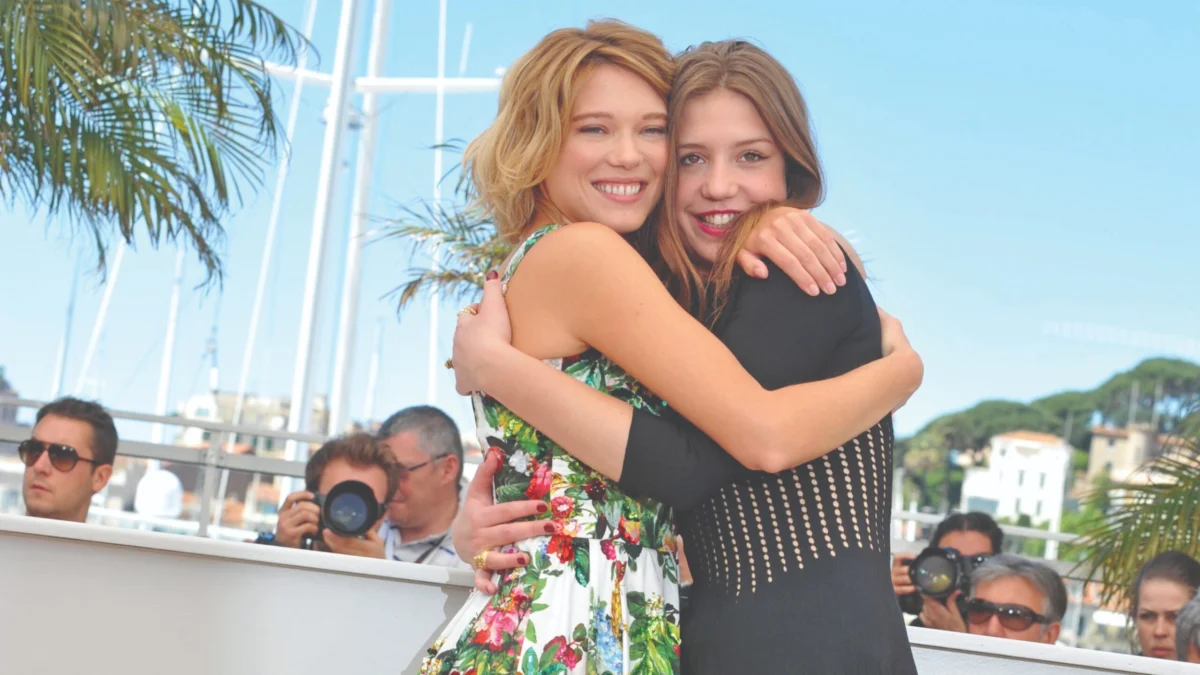
The French Riviera is once again bracing for the glitz and gravity of the Cannes Film Festival, but for two of France’s most luminous stars, the red carpet carries a weight of history. Léa Seydoux and Adèle Exarchopoulos, whose careers were irrevocably altered—and inextricably linked—by the 2013 Palme d’Or winner Blue Is the Warmest Color, are both returning to the Croisette this year. Their parallel paths serve as a poignant reminder of the transformative power of cinema and the unique cultural footprint left by Abdellatif Kechiche’s seminal work.
A Watershed Moment in Film History: The 2013 Sensation
In the annals of the Cannes Film Festival, few films have sparked as much discourse, adoration, and controversy as Blue Is the Warmest Color (La Vie d’Adèle – Chapitres 1 & 2). When the film premiered in 2013, it was an immediate lightning rod. Adapted from Julie Maroh’s graphic novel, the film chronicles the intense, sprawling, and ultimately heartbreaking evolution of a relationship between a young student and an aspiring artist.
At the time, the film’s explicit nature drew headlines globally. As The Hollywood Reporter’s critic Jordan Mintzer noted in his review, the film was "sure to raise eyebrows with its showstopping scenes of unsimulated female copulation." However, Mintzer was quick to contextualize the artistry beneath the headlines: "The film is actually much more than that: It’s a passionate, poignantly handled love story."
The chemistry between Seydoux and Exarchopoulos was not merely a feat of acting; it was a visceral, high-stakes commitment to the craft that demanded an unprecedented level of vulnerability. Their performances captured the messy, all-consuming reality of first love, moving beyond the sensationalism of their physical scenes to expose the raw nerve endings of human connection.
Chronology of a Landmark Achievement
The journey to the top of the podium in 2013 was fraught with speculation. Handicappers and critics alike questioned whether the film’s raw, unflinching exploration of queer intimacy would alienate the jury, then led by Academy Award-winning director Steven Spielberg.
The outcome, however, remains one of the most storied nights in festival history. In a stunning display of critical consensus, the jury awarded the Palme d’Or to the film. More importantly, they took what they officially described as "the exceptional step" of awarding the prize not just to the director, but explicitly to the two leads as well. This was a rare, monumental acknowledgement of the collaborative nature of the film—a recognition that without the soul-baring performances of Seydoux and Exarchopoulos, the film’s vision would not have held its profound weight.
The Aftermath: Voices from the Podium
Following the ceremony, the gravity of the award began to settle in during the press conference. Adèle Exarchopoulos, then a rising star thrust into the global spotlight, spoke with a maturity that belied her age. "It’s universal," she said of the film. "It’s a love story. If it’s also a hymn to tolerance, then that’s all the more gratifying."
Léa Seydoux, who was already establishing herself as a formidable force in both French and international cinema, echoed the sentiment of deep personal connection. "What brought us together was the love that existed between us, and perhaps our sense of humor," she reflected. Their comments underscored a reality often missed by critics: the film was a labor of intense emotional proximity.
Supporting Data: The Trajectory of Two Stars
Since 2013, the careers of both actresses have expanded in divergent yet equally impressive directions. The "Blue" effect provided a global platform, allowing both women to transcend the boundaries of the French film industry.
Adèle Exarchopoulos: A Master of Emotional Range
Exarchopoulos has spent the last decade curating a filmography defined by gritty realism and emotional complexity. Her ability to inhabit characters who are perpetually on the edge of transformation has made her a favorite of European auteurs. Her return to the competition this year in Jeanne Herry’s Another Day highlights her continued commitment to the French dramatic tradition, signaling a career that prioritizes narrative depth over the safety of commercial blockbusters.
Léa Seydoux: The Transatlantic Icon
Seydoux’s career trajectory is perhaps one of the most successful of any contemporary French actress. She has seamlessly transitioned from the intimacy of Cannes competition films to the spectacle of global franchises, including her recurring role as Madeleine Swann in the Daniel Craig-era James Bond films. Yet, she remains tethered to the avant-garde. Her presence in two competition titles this year—Marie Kreutzer’s Gentle Monster (co-starring the legendary Catherine Deneuve) and Arthur Harari’s The Unknown—proves that despite her Hollywood cachet, she remains a pillar of high-brow, challenging cinema.
Implications for the Modern Festival Circuit
The convergence of these two actresses at this year’s festival invites a reflection on how the "Cannes Effect" functions. For many, a Palme d’Or win is a career capstone; for Seydoux and Exarchopoulos, it was a springboard. Their continued relevance and their status as frequent competition contenders underscore a shift in the festival’s landscape: the rise of a new generation of European stars who demand artistic autonomy and complex, non-traditional roles.
Furthermore, the discourse surrounding their return highlights the evolving conversation regarding intimacy on screen. In the decade since Blue Is the Warmest Color, the industry has adopted more rigorous standards for the filming of sex scenes, including the use of intimacy coordinators. When viewed through the lens of modern standards, the 2013 film acts as a historical marker—a piece of art that challenged the status quo, pushed the boundaries of the medium, and paved the way for more protected and empowered performances.
Looking Ahead: The 2024 Red Carpet
As the festival approaches, the anticipation of a potential "Blue" reunion on the red carpet is palpable. While their individual projects are distinct—ranging from the drama of Another Day to the surreal, body-swapping premise of The Unknown—the shared history remains the subtext of their presence.
The industry will be watching to see how these two women, now established veterans of the craft, navigate the festival that launched them. Their return is not merely a nostalgic nod to 2013, but a testament to their longevity. They have survived the pressures of early fame, the scrutiny of the global press, and the intense, often grueling nature of the industry, all while maintaining the artistic integrity that first caught the eye of the Cannes jury over a decade ago.
In the end, Seydoux and Exarchopoulos are more than just the faces of a controversial, celebrated masterpiece. They are representatives of a cinematic era that dared to be uncomfortable, and in doing so, created a piece of history that remains as vibrant and relevant today as it was on that closing night in 2013. Their return to Cannes is not just a homecoming—it is a reminder that the most enduring films are those that fundamentally change the people who make them, and the audiences who bear witness to them.

 Siti Muinah
 Nana Wu