

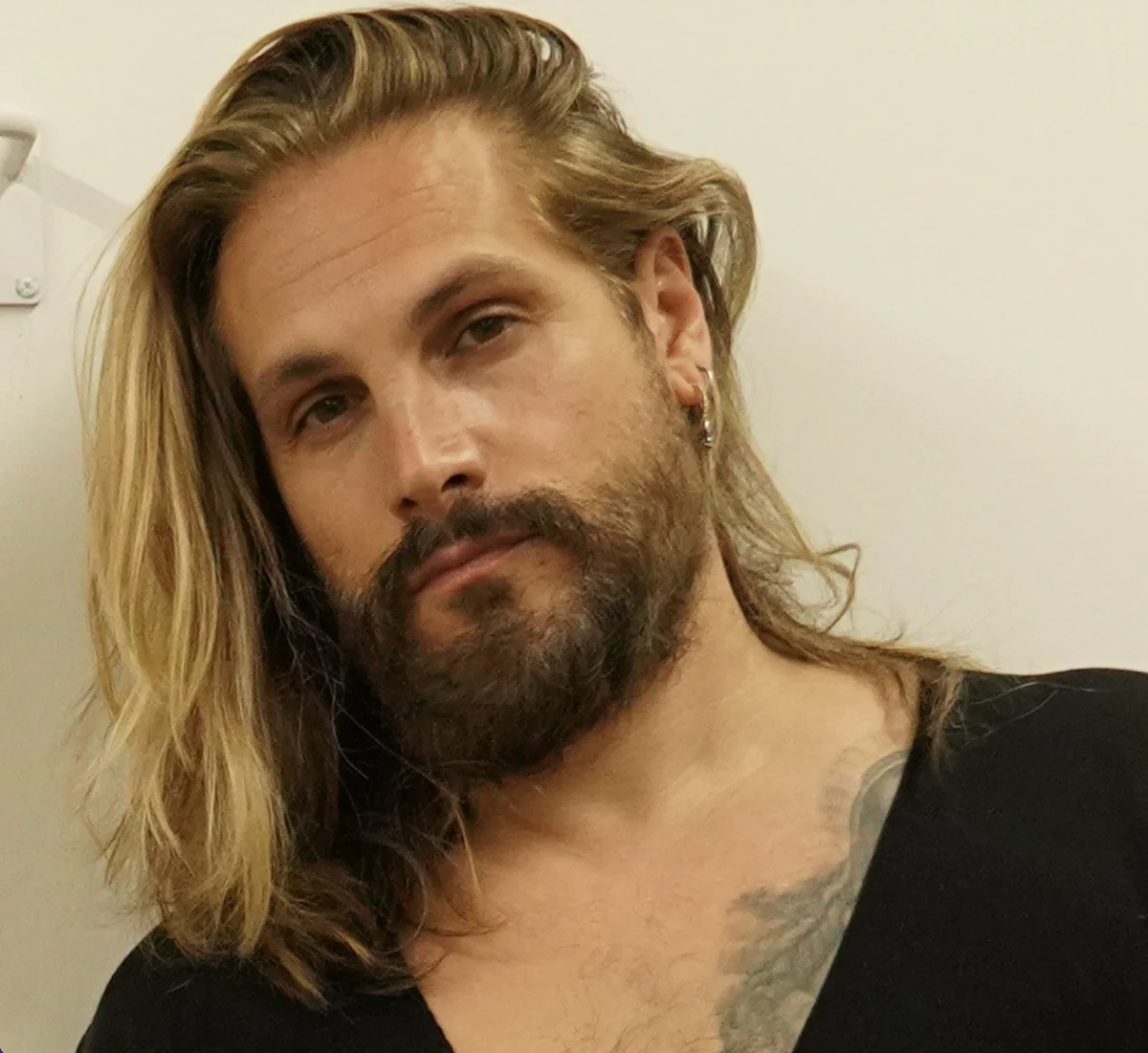
While the Croisette was still buzzing from the late-night revelry following the Cannes Film Festival premiere of James Gray’s Paper Tiger—a project that drew a star-studded crowd including Adam Driver and Miles Teller—one man was notably absent from the festivities. Marco Perego, the film’s producer, was not nursing a champagne-induced hangover. Instead, he was found early the next morning at the Majestic Hotel, coffee in hand, meticulously refining notes for his most ambitious endeavor yet: the Artists’ Haven Pictures collective.
For many, the Cannes Film Festival is a marathon of glamour, deal-making, and high-stakes networking. For Perego, this year’s festival represents a historic milestone and a unique platform. He has cemented his status as a formidable force in global cinema, becoming the first producer to see three films he shepherded into the prestigious Competition lineup: James Gray’s Paper Tiger, Andrey Zvyagintsev’s Minotaur, and Cristian Mungiu’s Fjord. Furthermore, Kantemir Balagov’s Butterfly Jam, also produced under the Leaf Entertainment banner with partner Michael Cerenzie, opened the festival’s Director’s Fortnight.
Yet, as he sits overlooking the Mediterranean, Perego is quick to deflect the spotlight. To him, these accolades are not personal victories; they are proof-of-concept for a burgeoning movement designed to reclaim the soul of independent filmmaking.
The Genesis of Artists’ Haven: A Return to the Roots
The mission of Artists’ Haven is rooted in a fundamental belief: the film industry has drifted too far toward corporate commodity, losing the sense of collective purpose that once defined the golden age of American cinema. Founded just months ago, the collective is not a traditional production house, but a curated, intimate community of world-renowned filmmakers.
The goal is to gather these visionaries twice a year at key festivals—not for the sake of marketing or obligation, but to cultivate "kinship." Perego envisions a space where directors, writers, and producers can co-invest in the future of independent cinema, effectively acting as a modern-day revival of the United Artists model.
"In 1919, Charlie Chaplin, D.W. Griffith, Mary Pickford, and Douglas Fairbanks refused to be mere employees of a system that limited their voices," Perego notes, citing his own manifesto. "They built a revolutionary company designed by artists for artists. It wasn’t just about business; it was about taking back control, protecting creative vision, and building a new model where freedom came first. We are looking to replicate that spirit of sovereignty."
A Life Built on the Power of the Collective
Perego’s philosophy is not theoretical; it is biographical. Before his transition into film production and conceptual art, Perego was a professional soccer player. That experience, he argues, provided the blueprint for his current professional life.
"If you look at my background from sports, I learned the discipline of the team group," he explains. "Football taught me that success is never an individual achievement. It is built through trust, sacrifice, and a shared goal. When you are on the pitch, you don’t play for your own highlight reel; you play for the team. That is the mentality I am trying to bring to the film industry."
This collaborative spirit is currently being tested and validated through his latest directorial feature, Petrichor. The film, which explores themes of rebirth and human resilience, was heavily shaped by the feedback of co-writer Alexander Dinelaris, the Oscar-winning scribe behind Birdman.
"Alex is my mentor. He destroys everything I do!" Perego says with a laugh. "Collaborating with him is one of the most incredible things I’ve experienced. I write the first part, he rewrites it perfectly, and I learn. When I sit down with him, I am in a state of constant growth. That is what Artists’ Haven is meant to be—a place where you are challenged by people you trust."
Financial Reform: The "Waterfall" Model
A critical pillar of the Artists’ Haven initiative is a radical departure from traditional studio financing. The collective operates with a $10 million investment fund, underpinned by a financial structure that prioritizes parity between those who provide the capital and those who create the art.

The model utilizes a "waterfall split," allocating 50% of returns to the financiers and 50% to the creative team. By creating a direct, transparent pipeline, Perego aims to dismantle the "product placement" mindset that he believes has turned cinema into a stagnant commodity.
"We tend to treat films as objects," Perego observes. "We treat a painting like a commodity. My approach to my own conceptual art—which currently involves projects with living mold—is to push the boundaries of what is considered ‘valuable.’ I want to bring that same radicalism to film. By focusing on community, we can protect the cultural expression that is currently being suffocated by the system."
Implications: A New Social Contract for Filmmakers
The implications of the Artists’ Haven model extend beyond simple financing; it is a proposed social contract. A core tenet of the collective is long-term commitment. In an industry defined by the "what have you done for me lately?" culture, where filmmakers are often discarded after a single box-office failure, Perego’s collective pledges to stay the course.
"If one project does not succeed, we don’t walk away," he says. "We move forward together and make the next one. We are in the same boat, sharing the same risks, the same hopes, and the same commitment to creating something meaningful."
This philosophy of shared burden is echoed in his personal life. Alongside his wife, the actor and producer Zoe Saldaña, Perego views the construction of community as a primary life goal. "My partner is an incredible human being and a constant source of inspiration," he says. "She is always building a community zone for women in the industry. I look at what Zoe and I do, and it is all about building a foundation that allows others to thrive."
The Road Ahead: Beyond Cannes
As the Cannes Film Festival concludes, Perego’s work is only just beginning. The success of his four films at the festival has provided the necessary leverage to begin serious, high-level conversations about the expansion of Artists’ Haven.
The film Petrichor, starring Isabella Rossellini, Valeria Golino, and Victor Almanzar, serves as an emotional centerpiece for this vision. Inspired by his mother’s struggle with aphasia following a stroke—a harrowing period where she lost the ability to speak for three years—the film acts as a metaphor for the "rebirth" of the industry. The title itself, the Greek term for the scent of the earth after rain, signifies a cleansing, a new beginning.
For the industry observers in Cannes, the question remains: Can a small, artist-led collective truly challenge the entrenched studio system? Perego seems unbothered by the skepticism of the establishment. Having spent his career moving from the soccer pitch to the art gallery, and now to the center of the cinematic world, he sees himself as an outsider by choice.
"You can say I’m not part of the system," he concludes. "I’m just a community person. I have a very strong, family-like community of artists, and I am ready to start the real conversation now that Cannes is behind us. We are moving from the dream to the architecture."
As the industry looks toward a future of shifting distribution models and changing audience habits, Marco Perego is betting on the most ancient, durable technology of all: the power of a small, committed group of people working together toward a single, artistic truth. Whether Artists’ Haven becomes the next United Artists or a unique, boutique experiment in creative solidarity, it is clear that the "we" has finally arrived to challenge the "I."











No comments yet. Be the first to join the conversation!