Basiran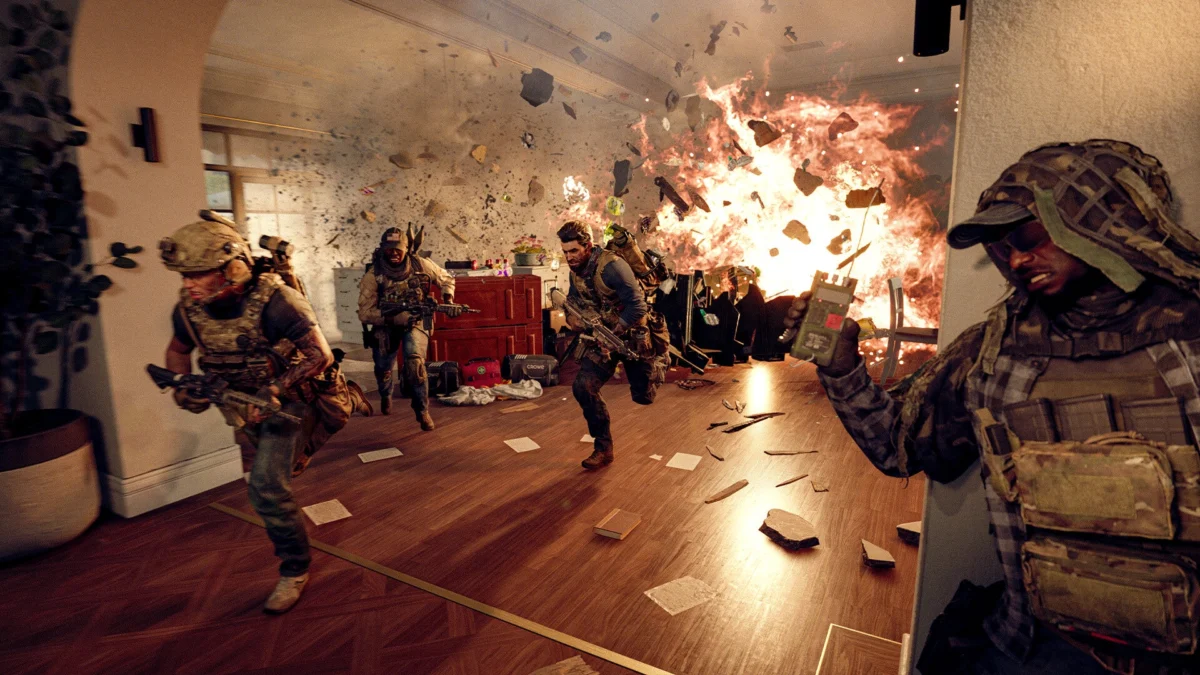
In a fiscal landscape defined by both consolidation and high-stakes content delivery, Electronic Arts (EA) has officially reported its preliminary financial results for the fourth quarter and the full 2026 fiscal year. The report paints a picture of a company in transition—balancing explosive growth in its core franchises with significant structural changes and the shadow of a monumental corporate acquisition.
Despite a 20.9% decline in net income across the full year, the company finished the final quarter with a staggering 81.5% surge in net income, bolstered by the commercial triumph of Battlefield 6. As EA navigates these complex financial waters, the gaming industry remains focused on the company’s impending $55 billion acquisition by the Saudi Arabian Public Investment Fund (PIF), a deal that promises to reshape the ownership structure of one of the world’s largest publishers.
Main Facts: A Tale of Two Timelines
The fiscal year ending March 31, 2026, was one of the most transformative in Electronic Arts’ history. The primary driver of this year’s narrative is undoubtedly the Battlefield franchise. After years of criticism and inconsistent performance, Battlefield 6 has been branded by EA management as the "best-performing Battlefield in a fiscal year," shattering previous franchise records.
However, this financial success has been tempered by internal volatility. In March 2026, EA implemented a series of layoffs across four studios dedicated to the Battlefield franchise. The publisher described these cuts as a strategic realignment intended to focus resources on the features most vital to the player community. This juxtaposition—firing staff while celebrating record-breaking revenue—has fueled ongoing industry debates regarding the sustainability of live-service development models.
Simultaneously, the "Global Football" segment—anchored by the EA Sports FC brand—continues to serve as the company’s bedrock. With steady growth across FC 26, FC Online, and FC Mobile, EA has successfully navigated the transition away from the FIFA branding, proving that the underlying utility of the product remains largely unaffected by licensing changes.
Chronology: The Road to the Fiscal Year-End
The journey to the end of FY26 was marked by a series of calculated maneuvers and market pressures.
- Early Fiscal Year (Q1–Q2): EA focused heavily on the pre-launch marketing and technical infrastructure for Battlefield 6, aiming to avoid the technical pitfalls that plagued previous entries.
- Mid-Fiscal Year (Q3): The EA Sports FC ecosystem began to show its resilience, with FC 26 performing in line with internal expectations, providing the liquidity needed for the company to manage its debt-servicing requirements.
- March 2026: EA announced significant organizational restructuring, including layoffs at four of its Battlefield studios. This period was also marked by the finalization of the company’s debt-financing process, a crucial step in preparing for the pending $55 billion acquisition.
- End of Q4 (March 31, 2026): The company finalized its fiscal year, reporting an 81.5% jump in net income for the quarter, largely attributed to the sustained monetization of Battlefield 6 and Apex Legends.
Supporting Data: The Financial Breakdown
While the full year saw a dip in net income, the quarter-over-quarter data suggests that EA’s pivot toward high-retention live services is paying dividends.
The Live Service Engine
Apex Legends remains a critical component of EA’s bottom line. After a turbulent period, the title delivered its strongest net bookings quarter of the year during Q4. EA reports that engagement and monetization metrics have shown consistent improvement, with total FY26 net bookings for the title finishing in the double-digit percentage range compared to the previous year.
The Football Dominance
The Global Football segment saw mid-single-digit growth for the fiscal year. By diversifying across FC 26 (premium console/PC), FC Online (regional markets), and FC Mobile (global accessible play), EA has effectively created a three-tiered revenue stream that protects the company from regional economic downturns.
Net Income Volatility
The 20.9% decrease in full-year net income is largely attributed to the high costs associated with studio restructuring, acquisition-related administrative expenses, and the massive R&D budget required to launch Battlefield 6. The 81.5% increase in Q4 net income, however, highlights the company’s ability to "turn on the taps" when major titles hit the market and live-service events are fully operational.
Official Responses: The CEO’s Perspective
Andrew Wilson, CEO of Electronic Arts, was quick to attribute the year’s success to the company’s internal culture and operational discipline.
"Driven by our talented teams and disciplined execution, we delivered a record FY26," Wilson stated in the earnings release. "The success of our iconic Battlefield franchise demonstrates our ability to capture market share through high-quality, long-term support for our biggest IPs."
Regarding the looming acquisition, Wilson’s tone remained focused on the future. "With the recent completion of a debt process that was met with strong investor demand and our ongoing constructive engagement with regulators, we look ahead to closing the transaction and the opportunities it will unlock," he added. Wilson’s comments underscore a company that is confident in its valuation, despite the regulatory scrutiny that usually accompanies a $55 billion deal.
Implications: The Future of EA and the PIF Era
The implications of these results extend far beyond simple revenue figures. The most significant development is the impending ownership shift. With shareholders having already backed the $55 billion acquisition, the path toward a new era for EA is nearly clear.
The PIF Influence
If the deal concludes as expected in the first quarter of FY2027, Saudi Arabia’s Public Investment Fund is slated to own over 93.4% of the company. This will arguably make EA the most significant asset in the PIF’s burgeoning gaming portfolio. Investors and analysts are currently speculating on what this means for EA’s creative autonomy. Will the publisher pivot toward more aggressive regional expansion in the Middle East? Will there be further consolidation of its development studios?
The Studio Realignment
The layoffs in March serve as a harbinger of how EA intends to operate under its new potential ownership. By "aligning teams around what matters most," EA is signaling a shift toward a leaner, more focused development cycle. While this is music to the ears of cost-conscious investors, it raises concerns among the developer community regarding burnout and the long-term health of creative output.
Market Positioning
EA’s success in FY26 proves that the "Games-as-a-Service" model, when executed with high-tier production values, remains the most profitable strategy in the industry. By successfully revitalizing Battlefield and maintaining a dominant grip on the sports genre, EA has positioned itself as an attractive target for sovereign wealth.
As we look toward FY2027, the central question for Electronic Arts is no longer about its ability to generate hits—the success of Battlefield 6 has proven they can still do that. Instead, the question is how the company will balance its massive scale, the demands of its future owners, and the evolving expectations of a global player base that is increasingly wary of corporate consolidation.
For now, EA sits at the peak of its current fiscal journey, having secured a massive financial victory even as it prepares to hand over the keys to its corporate future. Whether this growth is sustainable under the proposed ownership structure will remain the defining story of the next twelve months.


 Lina Hope
 Pevita Pearce