Layla Zulfa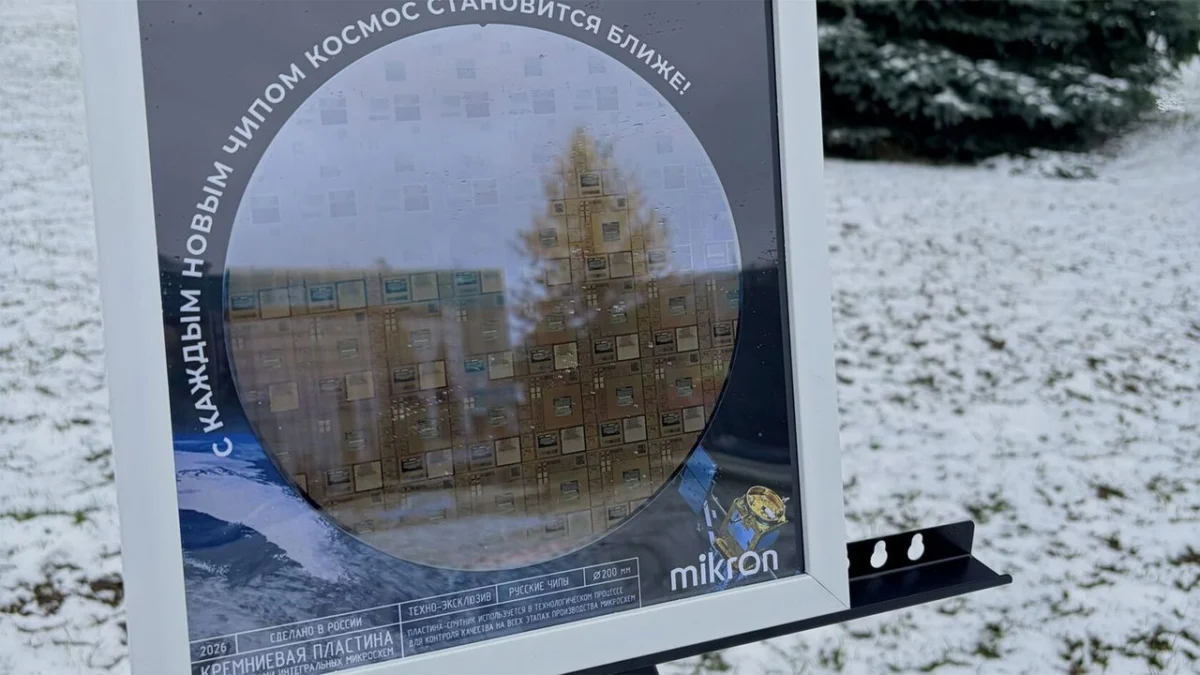
In a move that blends industrial utility with interior design, Russia’s leading semiconductor manufacturer, Mikron, has unveiled a unique line of merchandise. The Zelenograd-based company is now offering framed silicon test wafers as premium souvenirs, allowing technology enthusiasts to own a tangible piece of the fabrication process. Priced at 12,500 rubles—approximately $170 USD—these items represent a rare intersection of high-stakes manufacturing and corporate gift culture.
For those deep within the semiconductor industry, silicon wafers are the "canvas" upon which the digital world is built. To see them transformed into wall art is a novelty that captures the imagination of engineers, historians, and tech collectors alike. However, behind the aesthetic appeal lies a complex narrative regarding Russia’s current trajectory in microelectronics, domestic self-sufficiency, and the symbolic value of its semiconductor infrastructure.
Main Facts: A Glimpse into the Clean Room
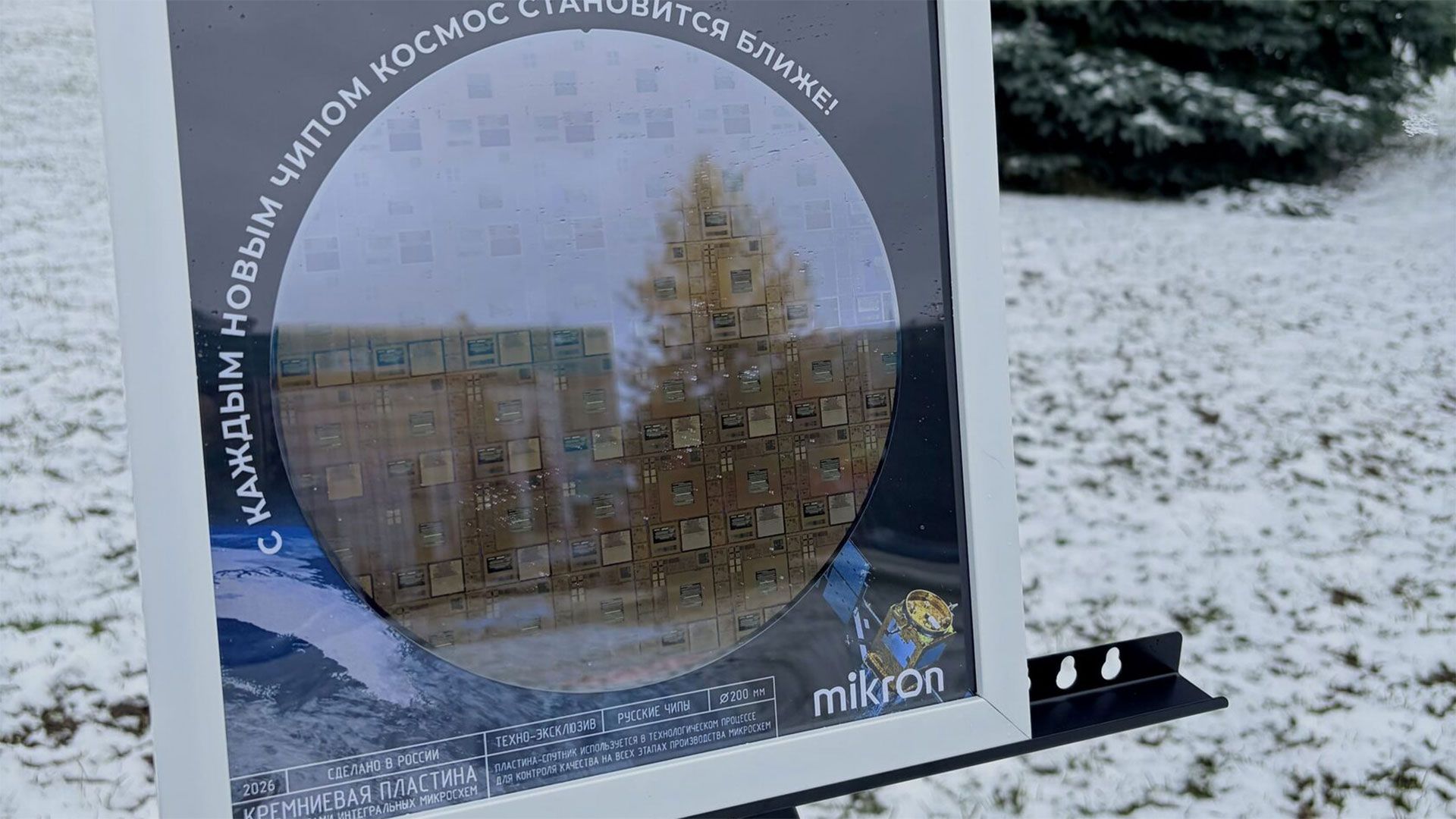
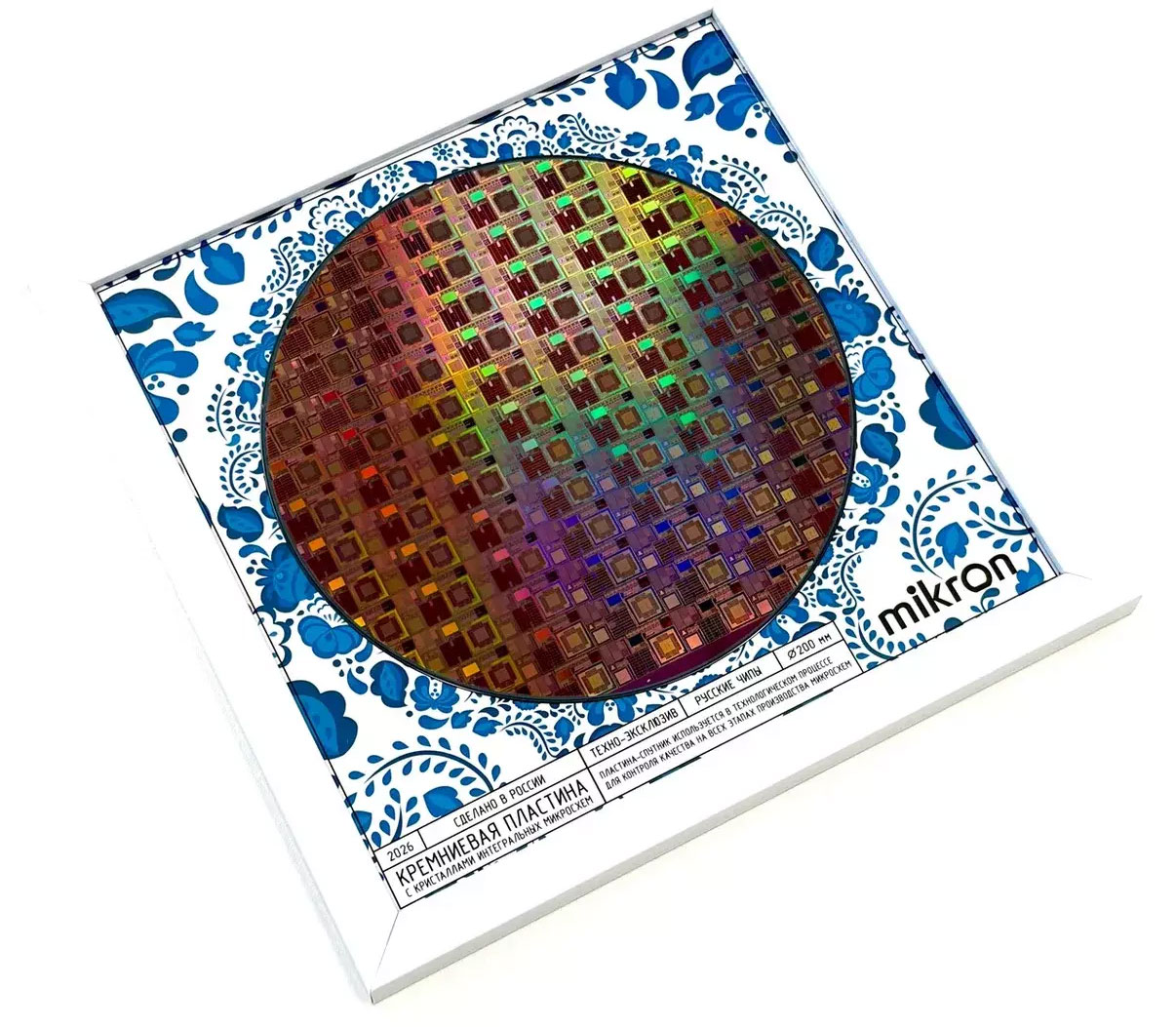
Mikron’s souvenir collection currently features 12 distinct design variations. Each piece is centered around a 200mm silicon wafer, traditionally used in the fabrication of integrated circuits. The wafers are mounted in professional, gallery-style frames measuring 270 x 270 x 15mm (roughly 10.6 x 10.6 x 0.6 inches) and weighing 365 grams.
The diversity of the collection is striking, ranging from minimalist black and white frames to more eclectic themes featuring lace, paisley patterns, and even space-themed aesthetics. According to the company’s product descriptions, the wafers themselves are "satellite plates" utilized in the technological process for quality control and process monitoring across various stages of microcircuit fabrication.
Depending on the specific wafer, a single display could hold anywhere from 30 to 120,000 individual chips. Some of these chips are identified as components used in public infrastructure, such as the contact-less chips found in Moscow Metro transport cards. This adds a layer of "utilitarian provenance" to the items; for a collector, owning a wafer that powered the daily commute of millions in Russia’s capital is a unique selling point.
A Chronology of Russian Semiconductor Ambitions
To understand why a major chip manufacturer is selling souvenirs, one must look at the timeline of Russia’s recent push for technological independence.
- 2022: As geopolitical tensions led to widespread sanctions and the exodus of major global chip foundries from the Russian market, Mikron accelerated its efforts to bolster domestic production. During this period, the company ramped up the manufacturing of the AMUR MIK32, a RISC-V-based microcontroller designed to serve as a cornerstone for local industrial and consumer electronics.
- 2023: Mikron continued to refine its fabrication processes, focusing on legacy nodes that remain critical for infrastructure, power management, and transport systems. The visibility of these chips grew, and with it, a public awareness of the company’s role in the Russian economy.
- 2024: The company expanded its public-facing initiatives, including the opening of a specialized souvenir shop. This move coincided with a broader effort to demystify the semiconductor industry, which is often shrouded in the secrecy of high-tech clean rooms.
- 2025/2026: Reports have emerged suggesting that Mikron is currently in the development phase for the "MIK32-2," the successor to its RISC-V chip. The commemorative "2026 edition" souvenir wafers serve as a branding bridge between the current generation of hardware and these upcoming technological milestones.
Supporting Data: The Anatomy of the Wafer
The technical specifications provided by Mikron offer a peek into their fabrication environment. The 200mm (8-inch) silicon wafer is the industry standard for many mature node processes. While the global industry is transitioning toward 300mm wafers and increasingly complex, sub-7nm processes, 200mm lines remain the "workhorses" of the semiconductor world. They are essential for power electronics, microcontrollers, and IoT sensors.
The information panel attached to the 2026 edition souvenir, translated from Russian, provides a formal description: "Silicon wafer with integrated circuits | The satellite plate is used in the technological process for quality control at all stages of microcircuit production."
This confirms that the items sold are not mere props but functional artifacts from the manufacturing floor. When thousands of chips are etched onto a single silicon disc, not every chip is perfect. The wafers sold as souvenirs are likely test wafers—used to calibrate lithography machines, etch depths, and chemical vapor deposition (CVD) processes. Their presence on a wall is a testament to the thousands of hours of testing required to yield a single functional batch of chips.
Official Perspectives and Market Context
The emergence of this merchandise was brought to international attention by tech observer Dmitrii Kuznetsov (@torgeek on X), whose documentation of the shop highlighted the mix of high-end industrial art and quirkier offerings.
While the $170 price tag may seem steep for a piece of silicon, it sits in a niche market of "tech artifacts." In the West, retired wafers or silicon-on-insulator (SOI) discs are often given as internal awards or retirement gifts for semiconductor engineers. By making these available to the public, Mikron is adopting a "prestige marketing" strategy, positioning its brand as a pillar of Russian industrial pride.
Beyond the framed wafers, the souvenir store offers an even more eccentric product: small, sealed tubes of air collected from the company’s Zelenograd clean room, priced at roughly $2. While clearly intended as a novelty, it underscores the company’s desire to engage with the public. It serves as a symbolic gesture, suggesting that the "purity" of the production environment is a product worth selling in its own right.
Implications for the Semiconductor Industry
The sale of these souvenirs carries significant implications for how we perceive domestic chip production:
- Normalization of Industrial Tech: By commercializing the artifacts of chipmaking, Mikron is shifting the perception of the semiconductor industry from an invisible, technical back-end operation to a tangible, consumer-facing brand.
- The RISC-V Narrative: The focus on the AMUR MIK32 RISC-V chip is intentional. By featuring this specific architecture on its souvenirs, Mikron is telegraphing its commitment to open-source instruction set architectures (ISA). This is a strategic move to signal that Russia is not merely waiting for external technology but is actively building a sovereign ecosystem based on RISC-V.
- Economic Symbolism: For a country facing severe limitations in importing state-of-the-art lithography tools (like those from ASML), the focus on "quality control" and "domestic production" is a rallying cry. The souvenir, therefore, acts as an object of national industrial identity.
- Legacy of the 200mm Node: While the global tech discourse is fixated on the race to 2nm and 3nm, Mikron’s souvenir highlights the continued viability of the 200mm node. It serves as a reminder that a significant portion of the global economy—from transport cards to automotive sensors—does not require leading-edge fabrication but rather the reliable, mass-produced output that 200mm wafers provide.
Conclusion: More Than Just a Souvenir
At first glance, a framed wafer from a Russian chipmaker might seem like a mere curiosity. However, in the context of the current global semiconductor climate, it represents something much more substantial. These objects are artifacts of a country attempting to bridge the gap between legacy manufacturing and a future defined by sovereign tech autonomy.
For the collector, the piece is a curiosity of silicon-based art. For the analyst, it is a marker of where Russia’s semiconductor capabilities currently stand—firmly grounded in the practical, iterative, and essential world of 200mm fabrication. As Mikron continues to push toward the next generation of its MIK32 line, these souvenirs will likely remain the most accessible way for an outsider to touch the glass and silicon heart of Russia’s digital aspirations.
Whether the product is a piece of wall art or a literal breath of clean-room air, the message is clear: Mikron is open for business, and it is eager to share the aesthetics of its industrial struggle with the world. For now, those looking to adorn their offices with the physical manifestation of microelectronics have a new, albeit niche, destination in the Zelenograd souvenir shop.

 Asep Darmawan
 Iffa Jayyana