

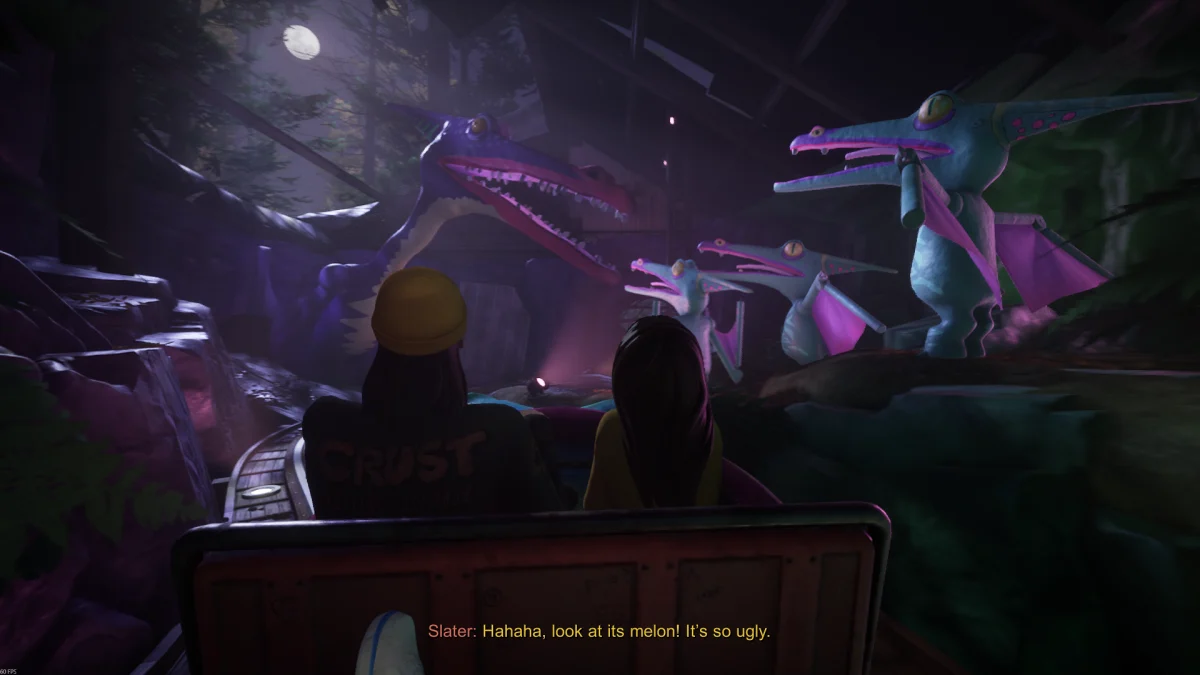
By all rights, Mixtape is a title that should struggle to find its footing in an oversaturated market of indie coming-of-age narratives. It is a work drenched in the sepia-toned hues of nostalgia, a teen drama that pines for a version of adolescence that perhaps never existed, interspersed with aimless mini-games and a soundtrack that—while undeniably catchy—often feels blunt in its application. Yet, for everything it does that feels predictable, kitschy, or overly familiar, Mixtape possesses a rare, genuine heart. It operates like a favorite song from your youth: even when the lyrics are cheesy and the production is dated, you cannot help but tap your foot.
If one can look past the occasional pretension in its presentation, Mixtape offers a simple, poignant joy. It is a story-focused experience that prioritizes mood over mechanics, and in doing so, it invites players to stop and reflect on the fleeting, chaotic nature of the transition from high school to the "real world."
Main Facts: The Anatomy of a Coming-of-Age Odyssey
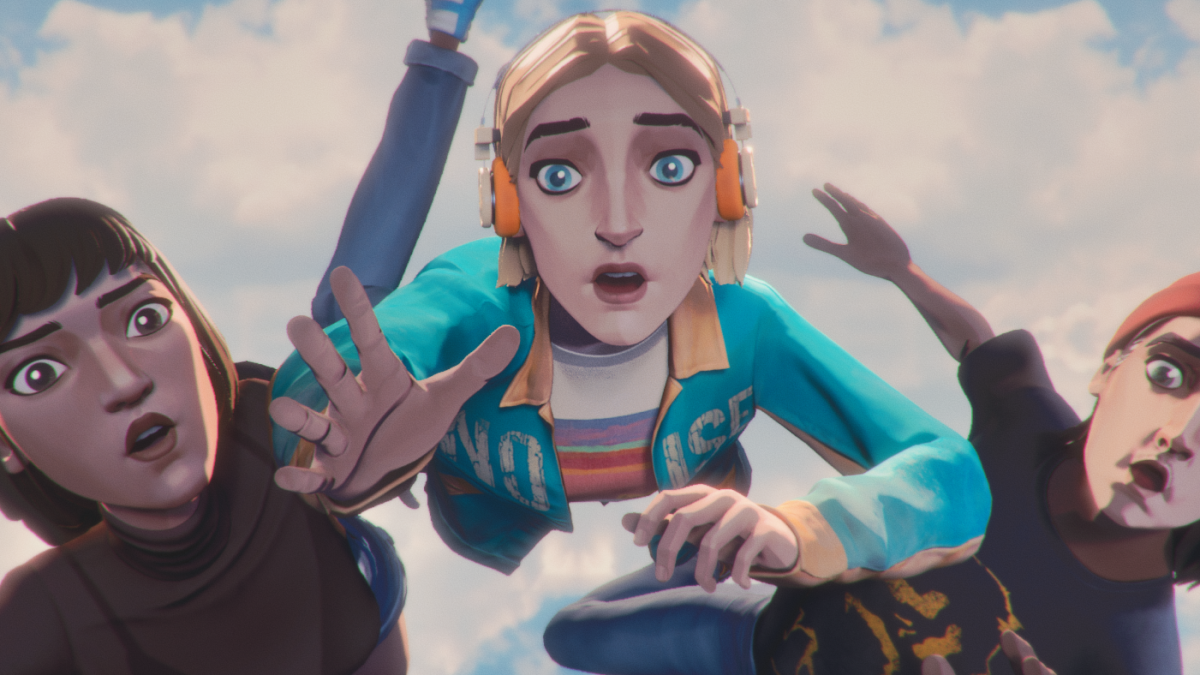
Mixtape is a compact, narrative-driven game that strips away the complex progression systems typical of modern titles, opting instead for a laser-focused character study. At the center of the story is Stacey Rockford, a music-obsessed teenager and self-proclaimed "playlist sommelier." As she prepares for the looming transition of post-high school life, she navigates the complexities of friendship with her two companions, Slater and Cassandra.
The game is structured as a series of flashbacks, triggered by interacting with mundane objects in familiar settings—primarily the bedrooms of our trio. These moments of memory are brought to life through a variety of mini-games, ranging from the absurd (throwing toilet paper at a principal’s house) to the mundane (constructing the perfect, sugar-laden slushie). There is no "win state" or "game over" screen in the traditional sense; failure simply triggers a rewind, allowing the player to try again. This design philosophy emphasizes that the goal is not mastery, but rather the act of experiencing the moment.
The title is currently available on PlayStation 5, Xbox Series X/S, the Nintendo Switch 2, and PC via Steam and the Epic Games Store, positioning it as an accessible, multi-platform experience for those looking for a shorter, more intimate gaming session.
Chronology: A Snapshot of Youthful Uncertainty
The narrative of Mixtape unfolds across the final, hazy days of high school. It is a period defined by the liminal space between childhood and adulthood—that specific, terrifying, and exhilarating window where the world feels both massive and suffocatingly small.
- The Inciting Incident: The game opens with Stacey, an impulsive and cocky protagonist, organizing the final days of her high school tenure. Her personality is defined by an infectious, if sometimes overbearing, passion for music.
- The Flashback Sequence: Players are guided through a series of "mixtapes," each representing a collection of memories. These range from the reckless joy of teenage pranks to the quiet, sensitive moments of vulnerability that occur behind closed doors.
- The Climax of Connection: As the trio faces the inevitable reality of graduation, the narrative tensions—Stacey’s self-absorption, Cassandra’s struggle for independence, and Slater’s hidden empathy—converge.
- The Resolution: The game concludes not with a grand life-altering event, but with the quiet acceptance that the mixtape of youth must eventually come to an end, even if the melody lingers.
Supporting Data: The Power and Limitations of the Soundtrack
Music is the lifeblood of Mixtape. The soundtrack is curated to mirror the emotional arc of the day’s events and the memories surfacing in the flashbacks. It is an ambitious collection, spanning several decades of alt-rock and adjacent genres.
However, this is where the game’s "anglocentric" focus becomes apparent. The selection feels remarkably narrow, rooted firmly in a specific, generalized vision of "the 90s." While this choice effectively reinforces the atmosphere, it creates a lack of historical or cultural depth. For a game that positions music as a "cosmic talent" capable of influencing the people around us, the lack of musical diversity is a missed opportunity.
Stacey, as a character, acts as the gatekeeper of this audio landscape. The narrative acknowledges her self-absorption—her friends know that when she asks a question about music, she is simply setting the stage for her own lecture—yet the game rarely pushes back against this dynamic. By failing to interrogate Stacey’s need for control, the game misses a chance to explore how musical taste, or the lack of it, creates power imbalances in adolescent friendships.
Character Dynamics: The Heart of the Trio
While Stacey is the lens through which we view the world, the emotional weight of Mixtape rests on her companions, Slater and Cassandra.
- Stacey Rockford: The protagonist is a complex, often frustrating figure. Her neurodivergent traits are handled with a refreshing level of realism, but her cocky, reckless demeanor can be taxing. She represents the "main character syndrome" that many teenagers adopt to shield themselves from the fear of the unknown.
- Slater: Initially presented as a stereotypical "stoner-bro," Slater offers surprising flashes of sensitivity. There is an unspoken depth to him that often feels sidelined by Stacey’s dominance. One wishes the narrative had allowed more space for his perspective to breathe.
- Cassandra: The true emotional anchor of the group. Raised in a strict, high-pressure household, her arc is one of quiet rebellion. Her decision to align herself with the school’s "delinquents" is a desperate, relatable grab for identity. Her struggle against familial expectations provides the game with its most grounded and poignant moments.
Implications: The "Weapons-Grade" Nostalgia Dilemma
Mixtape presents a compelling argument for the role of nostalgia in interactive media. By choosing a low-key, slice-of-life gameplay loop, the developers successfully force the player to "slow down." In an era where games are increasingly obsessed with infinite loops, sprawling open worlds, and engagement metrics, Mixtape is an act of defiance.
However, the game’s refusal to fully explore its own themes is its primary weakness. The narrative often skirts the edge of deep, uncomfortable truths—such as the toxicity of Stacey’s personality or the limitations of their narrow cultural bubble—only to pull back into the comfort of a nostalgic, guitar-driven track.
This leads to the central question: Is nostalgia enough to carry a game? For Mixtape, the answer is a qualified "yes." It succeeds as a "vibes-based" experience. It is a love letter to a specific era, and for those who share that fondness for the alt-rock aesthetic and the universal pains of high school, the game provides a deeply satisfying, if slightly shallow, experience.
A Final Note on Narrative Agency
The game’s structure is inherently passive. Because the "mini-games" are essentially low-stakes exercises in scene-setting, the player is never challenged to change the outcome of these memories. While this reinforces the theme of "looking back" at events that are already set in stone, it also limits the player’s agency. One wonders if a slightly more interactive approach to these character dynamics might have allowed the player to break through the "Stacey-centric" barrier and truly see the world through the eyes of Slater or Cassandra.
Conclusion
Mixtape is a flawed, beautiful, and ultimately endearing project. It does not reinvent the wheel of the narrative adventure genre, nor does it provide the deep thematic interrogation one might hope for in a more ambitious title. Instead, it offers a space to breathe, to listen to some great music, and to mourn the loss of a youth that was never as perfect as we remember it. If you can handle the intensity of its nostalgia, you will find a game that, much like a well-crafted mixtape, is exactly what you need when you are in the right mood.











No comments yet. Be the first to join the conversation!