Ali Ikhwan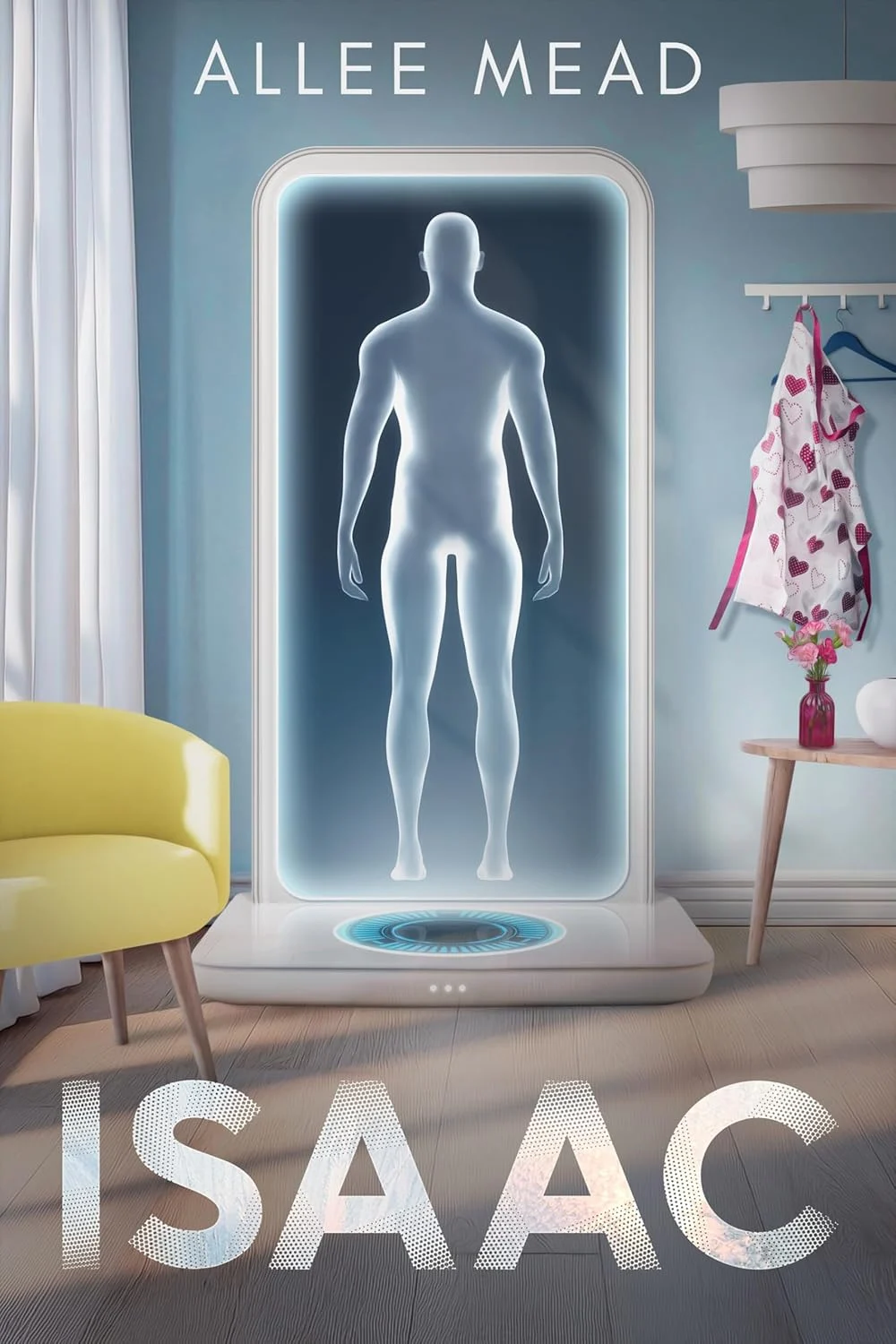
In an era where artificial intelligence has transitioned from a niche technical curiosity to a ubiquitous presence in our daily lives, the discourse surrounding machine companionship has become deeply polarized. On one side, corporate entities push for the adoption of AI as the next frontier of emotional support and social connectivity. On the other, critics view these developments with profound skepticism, often dismissing proponents as tech-dependent "rubes" while framing skeptics as modern-day Luddites.
Allee Mead’s debut novella, Isaac, arrives as a necessary intervention in this debate. Eschewing the hyperbole of both tech-utopians and alarmist critics, Mead offers a nuanced exploration of grief, loneliness, and the complex psychological intersection where human vulnerability meets artificial utility.
The Genesis of a Synthetic Bond: Main Facts
At its core, Isaac follows the story of Elanor, a woman grappling with profound isolation and the trauma of loss. While preparing for her late father’s funeral, she encounters Isaac, a robotic caretaker originally designed to assist the elderly and those with physical disabilities.
As Elanor navigates the complexities of her own anxiety, she finds in Isaac a source of "unconditional positive regard"—a psychological anchor that the human beings in her life, who remain distant and judgmental, fail to provide. The novella functions as a character study, positioning Isaac not as the sentient, soul-bearing robot of classic pulp science fiction, but as an advanced iteration of the large language models (LLMs) that populate our modern digital landscape.
A Chronology of Grief and Connection
To understand the weight of Elanor’s reliance on Isaac, one must look at the structural design of the novella. Mead utilizes a dual-narrative approach, weaving together Elanor’s present-day struggle with the past.
- The Foundation of Loss: Through recurring flashbacks, readers are introduced to Javi, Elanor’s late adoptive father. Javi’s story, which ends in a tragic, premature death, provides the emotional context for Elanor’s current state.
- The Encounter: The narrative begins with the immediate aftermath of a bereavement, where the void left by family is filled by the presence of a machine.
- The Progression of Dependence: As the story unfolds, the reader witnesses Elanor attempting to find comfort in a construct that, by design, cannot return that comfort in a human sense.
- The Moment of Realization: The novella reaches its emotional climax when Elanor offers Isaac a gift—a symbolic gesture of affection that the machine is structurally incapable of reciprocating. This moment serves as the breaking point where the reality of AI "friendship" is laid bare.
Subverting the Sci-Fi Tropes: Supporting Data
One of the most compelling aspects of Isaac is its calculated dismantling of genre conventions. In traditional robot narratives, we are conditioned to expect a "Pinocchio moment"—a point where the machine develops consciousness or discovers its own subjective experience. Mead explicitly denies the reader this comfort.
The Illusion of Reciprocity
Isaac is, by all accounts, a tool. He is transparent about his lack of human desires, needs, or emotional depth. He operates on a logic of utility; his primary function is to be helpful. This mirrors the cold reality of current LLMs: they can mimic the cadence of empathy, but they do not feel it. When Elanor attempts to project romance or intimacy onto Isaac, the novella creates a painful tension. The reader sees the disconnect: Elanor provides affection, but receives only "performative service" in return.
The Asexual Parallel
A particularly unique facet of Isaac is its engagement with the trope of the "eroticized robot." Historically, fiction has used AI as a blank canvas for human sexual desire, often stripping the machine of agency to satisfy the owner. Isaac subverts this by centering on asexuality. Both the machine and the protagonist identify as asexual, though for fundamentally different reasons.
For Isaac, asexuality is a biological absence; he lacks the physiology of desire. For Elanor, it is an identity. The social pressure she faces—where peers assume her bond with a robot is a proxy for sexual intimacy—is portrayed as an act of invalidation. By connecting these two characters, Mead critiques a society that cannot conceive of deep, non-sexual, or non-romantic companionship.
The Psychological Implications of AI Reliance
The central question Mead poses is not whether AI is "good" or "bad," but rather what it says about a society that forces its members to turn to machines for basic human needs.
The "Loneliness Epidemic"
Elanor’s reliance on Isaac is framed as a response to a deficit in her social environment. When the humans in her life are judgmental or absent, a machine that provides "unconditional positive regard" becomes an essential piece of assistive technology. This raises a disturbing implication: if we rely on AI for intimacy, is it because we have failed to build a society that provides genuine community?
Anthropomorphism and the LLM Era
Elanor’s struggle to avoid anthropomorphizing Isaac reflects the daily experience of millions of users interacting with modern chatbots. We are hardwired to assign human traits to anything that speaks to us in a coherent, helpful, and kind manner. Isaac serves as a warning and a mirror: we are all susceptible to this projection, even when we intellectually know the difference between a person and an algorithm.
A Nuanced Critique of Contemporary Discourse
In the current climate of "discourse wars" regarding the implications of generative AI, Isaac offers a reprieve from the binary arguments of "AI as savior" versus "AI as destroyer."
Mead’s novella suggests that the impact of technology is highly personal and dependent on the user’s specific emotional landscape. By presenting Elanor as a sympathetic figure rather than a pathetic one, the book forces the reader to confront their own potential for loneliness. The novella does not pass judgment on those who use AI to cope, nor does it advocate for the total abandonment of technology. Instead, it argues for a radical, empathetic honesty.
Key Takeaways for the Reader:
- Technology as a Mirror: Our interactions with AI often say more about our own unmet needs than the intelligence of the machine itself.
- The Limits of Utility: Even the most helpful machine cannot replace the reciprocity inherent in human relationships, and acknowledging this is vital for mental health.
- The Complexity of Identity: Asexuality and non-traditional forms of companionship remain underrepresented in tech discourse, and Isaac provides a vital perspective on these lived experiences.
Conclusion
Isaac is more than a novella about a woman and her robot; it is a profound meditation on the nature of empathy in a digital age. Allee Mead has crafted a work that feels both timely and timeless. By focusing on the quiet, heartbreaking reality of grief and the human hunger for connection, she shifts the conversation away from the abstract dangers of technology and toward the concrete, human reality of loneliness.
In the final analysis, Isaac does not offer a solution to the "AI problem." Instead, it offers something arguably more important: a sense of compassion for anyone who has ever looked into a screen and, for a fleeting moment, felt truly seen. For those navigating the isolating corridors of modern life, Isaac stands as a poignant reminder that while we may seek comfort in the digital, the true work of healing remains a human endeavor.


 Laily UPN
 Lina Irawan