

As the dust settles on this year’s “Upfronts Week,” the media landscape finds itself at a defining crossroads. The annual spring ritual, once a predictable dance of traditional networks pitching fall schedules to Madison Avenue, has transformed into a high-stakes arena where streaming giants, tech conglomerates, and legacy media empires clash for advertising dominance.
On today’s episode of the Daily Variety podcast, executive editor of TV Michael Schneider provides a comprehensive breakdown of the final, frantic days of upfronts week, highlighting how titans like Warner Bros. Discovery, Netflix, and YouTube have seized the megaphone to dictate the industry’s trajectory. Alongside this deep dive into the business of television, Variety music chief Jem Aswad takes listeners behind the scenes of the buzzworthy project Heated Rivalry, offering a masterclass in how modern scores are shaping the emotional architecture of contemporary streaming hits.
The New Reality of Upfronts: Sports, Streaming, and Silicon Valley
The post-COVID era has fundamentally altered the DNA of the upfronts. What was once a local affair in Manhattan has evolved into a global showcase for platforms that view themselves not merely as broadcasters, but as essential tech infrastructure. As Variety has documented extensively, the dominant themes this year were clear: live sports, the maturation of ad-supported streaming tiers, and an intense focus on data-driven tech solutions.
For the modern media conglomerate, the objective is twofold. First, they must prove that their platforms are the primary destination for the “new TV” consumer—one who toggles seamlessly between live sports, prestige dramas, and short-form digital content. Second, they must convince advertisers that their proprietary tech stacks provide better targeting and attribution than the legacy methods of the past.
The Sobering Reality of Consolidation
This year’s presentations were not without their darker undertones. Industry consolidation—the merger of giants and the subsequent streamlining of operations—cast a long shadow. Perhaps nowhere was this more apparent than at the Warner Bros. Discovery event on May 13 at the Theater at Madison Square Garden.
The presentation opened with a solemn tribute to Ted Turner, the visionary who founded CNN and fundamentally changed the news cycle. While the tribute was a necessary acknowledgment of the industry’s roots, it set a somber tone that permeated the rest of the event. It served as a reminder that the industry is in a period of intense contraction and introspection. As media landscapes merge, the focus is shifting from "content at any cost" to "profitability through efficiency."
Star Power as the Great Equalizer
Despite the somber themes of consolidation, the major players understood that to secure the interest of Madison Avenue, they needed to deploy their most potent weapon: Hollywood royalty. In an era of infinite choice, celebrity remains the most effective shorthand for quality and cultural relevance.
"Amazon had a presentation that was filled with A-listers, including Oprah Winfrey," says Michael Schneider. "They also spent some money to open the show with a performance by Kacey Musgraves. And Arnold Schwarzenegger showed up. Shaboozey performed at their after-party. So Amazon spent some money, but then so did Disney."
The "arms race" of star power reached its peak at the Disney event, which concluded with a high-octane performance by pop sensation Olivia Rodrigo. "The fact is, they ended their show with Olivia Rodrigo, who performed three songs," Schneider notes.
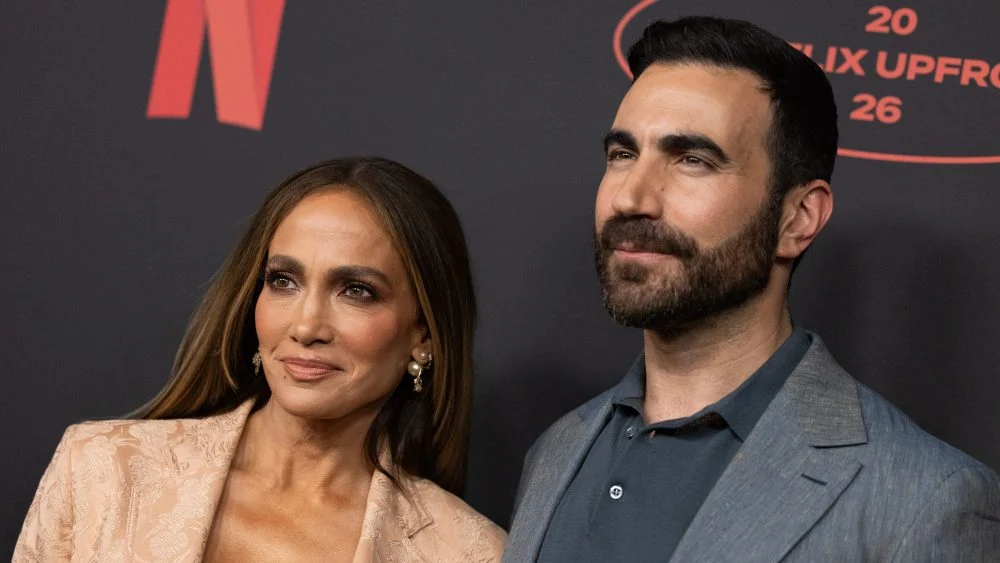
Netflix, not to be outdone, leveraged its massive library of talent to anchor its pitch. By opening their presentation with powerhouses like Jennifer Lopez and Brett Goldstein, Netflix emphasized that it is no longer just a disruptor—it is the establishment. By positioning these stars at the forefront, the platforms are signaling to advertisers that they are the primary venues where cultural conversations begin and end.
Sonic Storytelling: The Music of Heated Rivalry
While the boardrooms of New York buzzed with talk of ad-tech and reach, a different kind of innovation was being discussed in Toronto. In a special session recorded on May 7 at the Departure Festival, Variety music chief Jem Aswad sat down with the team behind the hit project Heated Rivalry: showrunner Jacob Tierney, composer Peter Peter, and music supervisor Scotty Taylor.
The conversation highlighted a critical, often overlooked element of modern television: the intentionality behind the score. For composer Peter Peter, a Montreal-based singer-songwriter, the music of Heated Rivalry was not merely background noise; it was an extension of the narrative arc between the characters Shane and Ilya.
From Handel to Techno: The Architecture of Emotion
Peter Peter’s approach to the score was eclectic, drawing from a vast sonic palette that ranged from the structured elegance of baroque composer Handel to the driving, synthetic pulse of modern techno. This juxtaposition was deliberate, intended to mirror the tension and romance inherent in the show’s core relationship.
"I knew that I wanted to create something noble for them," Peter explains. "When I read the script, I thought it was just a whole quest of love. So I just wanted something noble. And the whole world of Heated Rivalry is really connected to the Renaissance and everything. So I just wanted something very elegant for the theme of two souls."
This commitment to "nobility" and "elegance" represents a shift in how streaming platforms are approaching audio. As viewers engage with content across varied devices—from high-end home theaters to mobile phones—the clarity and emotional resonance of a score have become vital tools for maintaining audience retention and immersion.
Implications: The Road Ahead
What do these trends mean for the future of the media business?
- The Tech-Ad Convergence: The line between a media company and a tech company is effectively gone. The upfronts are now "tech-fronts," where the conversation is as much about data privacy, AI-driven ad insertion, and cross-platform measurement as it is about the slate of new shows.
- The "Prestige" Premium: As platforms look to justify their subscription costs, the "prestige" factor—achieved through high-caliber talent, cinematic scores, and auteur-led production—remains the gold standard for branding.
- The Fragmentation of Consumption: The mix of live performances, corporate tributes, and tech demos during upfronts reflects the reality of the viewer: someone who watches a live sporting event on a Sunday, a prestige drama on a Wednesday, and short-form video on a Friday. Platforms that can curate this variety while maintaining a premium identity will survive the ongoing consolidation.
Conclusion: A New Era
The 2024 upfronts served as a mirror for a changing industry. We are witnessing a transition from the "Wild West" of the streaming wars to a more measured, consolidated, and tech-heavy environment. Yet, at its heart, the industry remains driven by the same human desires that have always fueled entertainment: the need for compelling stories, the magnetism of celebrity, and the transformative power of a perfectly placed musical score.
As Michael Schneider and Jem Aswad have illustrated, the industry is not just changing its business model; it is redefining its soul. For stakeholders and fans alike, the coming year promises to be a masterclass in how these traditional pillars of entertainment adapt to a digital-first, data-driven world.
Listen to the full episode of Daily Variety here:
You can find Daily Variety on iHeartPodcasts, Apple Podcasts, Variety’s YouTube Podcast channel, Amazon Music, Spotify, and all major podcast platforms.











No comments yet. Be the first to join the conversation!