Azzam Bilal Chamdy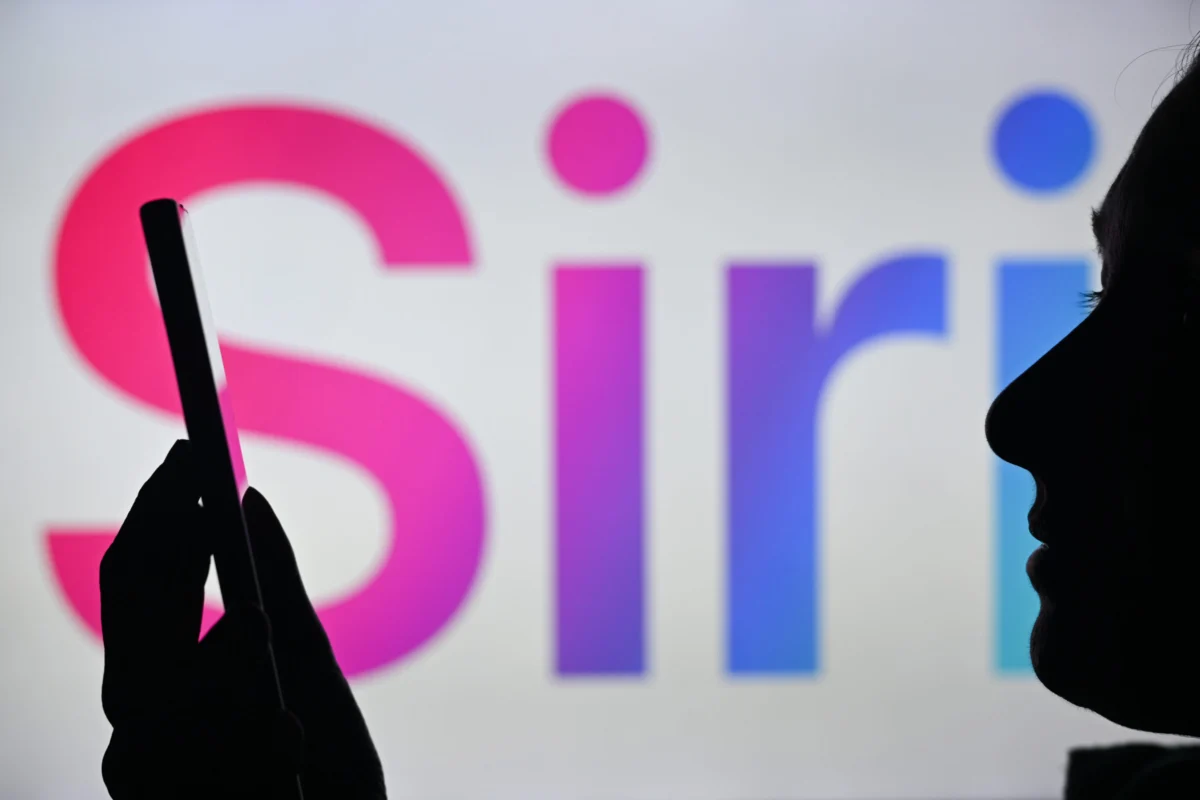
By Tech Insights Bureau
May 17, 2026
As the global technology landscape pivots toward a future dominated by generative artificial intelligence, Apple is preparing to make its most significant software play in over a decade. According to reports from Bloomberg’s Mark Gurman, the upcoming Worldwide Developers Conference (WWDC) in June 2026 will serve as the stage for a comprehensive relaunch of Siri. This initiative is widely viewed as a "make-or-break" moment for the Cupertino giant to re-establish its relevance in an industry currently dominated by OpenAI, Google, and Microsoft.
The centerpiece of this announcement is expected to be a fundamental philosophical shift: Apple intends to position its AI suite not just as the most powerful, but as the most secure. By weaving strict, user-controlled privacy protocols into the heart of its new chatbot architecture, Apple hopes to differentiate itself from competitors whose business models often rely on the ingestion of massive datasets.
Main Facts: The New Siri Experience
The cornerstone of the revamped Siri is a standalone application that promises to transform the digital assistant from a simple command-line interface into a sophisticated, context-aware chatbot. Early reports suggest that this new interface will offer a user experience strikingly similar to ChatGPT, capable of complex reasoning, creative writing, and nuanced conversational fluidity.
However, the technology underpinning this interface is perhaps the most surprising development. Apple is reportedly leveraging Google’s Gemini model to power its new AI features. This collaboration between the two tech titans—traditionally fierce rivals—signals a pragmatic shift in Apple’s strategy: rather than building a foundational model from scratch that might lag behind industry leaders, Apple is opting to integrate proven, high-performance engines into its own, highly secure ecosystem.
Key Features of the Relaunch:
- Standalone App: A dedicated interface for Siri that moves beyond simple voice commands, allowing for text-based interaction and long-form conversational history.
- Privacy-First Retention: Much like the ephemeral messaging features found in iOS, the new Siri will allow users to set automatic deletion schedules for their chat logs. Users will be able to purge their history after 30 days, one year, or opt for permanent storage.
- The "Apple Wrapper": While the intelligence is powered by Google’s backend, Apple is wrapping the service in its proprietary privacy framework, aiming to ensure that the data processing remains isolated from the provider’s typical data-harvesting practices.
Chronology: The Road to the AI Pivot
Apple’s journey to this moment has been a gradual, often criticized, evolution.
- 2011: Apple debuts Siri on the iPhone 4S. It is initially hailed as a revolutionary breakthrough, but over the next decade, it stagnates as competitors like Google Assistant and later ChatGPT leapfrog it in natural language processing.
- 2023–2024: The "Generative AI Boom" catches Apple off-guard. As competitors integrate LLMs into everything from search engines to operating systems, Apple’s stock performance faces pressure regarding its lack of a clear AI strategy.
- January 2026: Reports surface that Apple has finalized a landmark partnership with Google to utilize Gemini to power its on-device and cloud-based AI features.
- May 2026: Leading up to WWDC, leaks confirm the focus on privacy, setting the stage for a keynote that will attempt to redefine "Personal AI" as a secure, private utility rather than a public data-mining engine.
Supporting Data and The Privacy Paradox
The core tension in Apple’s upcoming release lies in the "Privacy Paradox." While Apple is marketing its privacy-centric approach as the gold standard, industry analysts are beginning to look under the hood.
The reliance on Google’s Gemini for the actual processing power creates a unique challenge for Apple’s marketing department. If the intelligence—the actual "thinking" of the AI—is happening on Google’s servers, how much of the user’s data does Google see?
Apple is reportedly working to mitigate this by implementing "Private Cloud Compute," a system designed to ensure that data sent to the cloud for processing is never stored in a way that allows the provider to reconstruct the user’s identity. This is a critical marketing point. If Apple can prove that its "wrapper" effectively anonymizes the queries sent to Google, they may successfully deflect concerns about the partnership.
Furthermore, the introduction of auto-deleting chat histories is a direct response to the "memory" features of modern LLMs. While competitors like ChatGPT rely on long-term memory to personalize interactions, Apple is betting that users are becoming increasingly wary of "digital footprints" that grow larger every day. By offering the "delete after 30 days" feature, Apple is essentially giving users a "forget me" button for their AI-driven lives.

Official Responses and Industry Sentiment
While Apple has maintained its traditional silence leading up to the WWDC event, the atmosphere in the developer community is one of cautious optimism.
"Apple’s biggest weakness with Siri has always been the perception that it’s ‘dumb’ compared to the competition," says industry analyst Marcus Thorne. "If they can leverage the raw power of Gemini but maintain the ‘walled garden’ of Apple privacy, they win. They don’t have to be the smartest AI in the world; they just have to be the one you trust with your secrets."
Conversely, privacy advocates remain skeptical. The reliance on an external provider for the "brains" of the operation remains a point of contention. Some experts argue that Apple’s emphasis on privacy is a "strategic obfuscation"—a way to pivot the conversation away from the fact that Apple was forced to outsource its AI development because its own internal efforts failed to keep pace.
Implications: The Future of the Apple Ecosystem
The implications of this move extend far beyond a new chatbot. If successful, this strategy could change how we define "AI-Ready" hardware.
1. The Death of the "Stupid" Assistant
The update is expected to roll out across the entire Apple ecosystem, including macOS, iPadOS, and watchOS. By standardizing the new, smarter Siri across all devices, Apple is attempting to create a seamless "AI layer" that acts as a gatekeeper for all user data.
2. The Competitive Landscape
This move puts immense pressure on Google and OpenAI. If Apple demonstrates that a privacy-hardened version of an LLM is commercially viable and widely used, it may force Google to offer similar privacy tiers for its own consumer products, potentially threatening the ad-supported revenue models that currently fund those services.
3. The Trust Premium
Apple has long marketed itself as the "privacy company." By doubling down on this, they are betting that the next wave of AI adoption will be driven not by those who have the best features, but by those who can provide the most security. This "Trust Premium" could allow Apple to charge for premium AI services (likely under the Apple One subscription bundle) where users are willing to pay for peace of mind.
4. A New Era for Developers
For the developer community, the new Siri SDK (Software Development Kit) will be the most important part of the announcement. If Apple allows third-party developers to integrate with this privacy-first, Gemini-powered Siri, it could lead to an explosion of "agentic" apps that can perform tasks across apps while maintaining strict data isolation.
Conclusion
As June approaches, the tech world waits to see if Apple can successfully navigate the tightrope between cutting-edge AI utility and its long-standing commitment to user privacy. The relaunch of Siri is not merely a software update; it is a declaration that in the age of generative AI, the most valuable commodity is not the intelligence itself, but the trust that the entity wielding that intelligence has earned from its users.
Whether Apple can convince its massive, global user base that they have achieved the perfect balance of "smart" and "safe" remains to be seen. But one thing is clear: after years of trailing behind, Apple is ready to make its voice heard—and this time, it intends to be both loud and private.

 Nana Wu
 Reynand Wu