Sagoh
Sagoh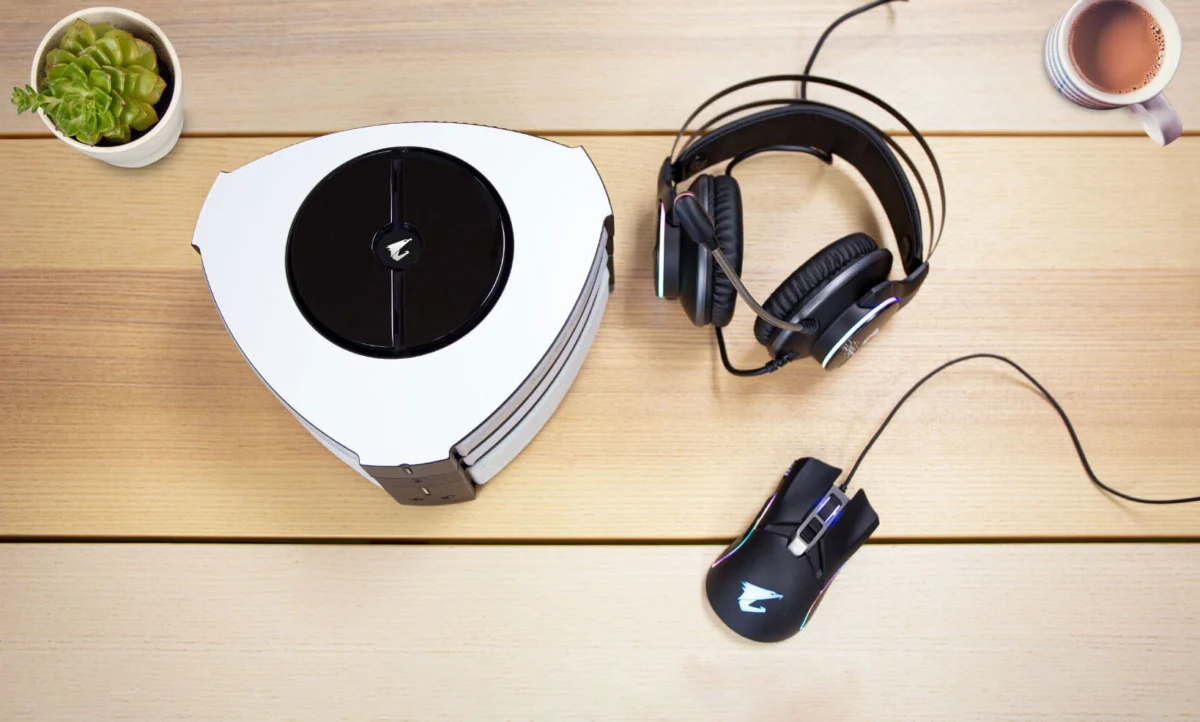
In a surprising, albeit polarizing, announcement, Gigabyte’s premium gaming brand, Aorus, has unveiled a concept that challenges the traditional definition of the gaming desktop. Dubbed "Project Cielo," this triangular, modular system is being touted as a vision of the "future of gaming." However, as the industry dissects the design, the question remains: is Project Cielo a genuine innovation in hardware versatility, or is it a solution in search of a problem?
Main Facts: A Tripartite Vision of Modular Computing
Project Cielo is a concept PC that abandons the standard monolithic tower chassis in favor of a stacked, modular triangular design. At first glance, seasoned enthusiasts might expect a breakdown of components—a dedicated CPU module, a GPU housing, and a power/storage block. However, Aorus has taken a radically different approach to modularity.
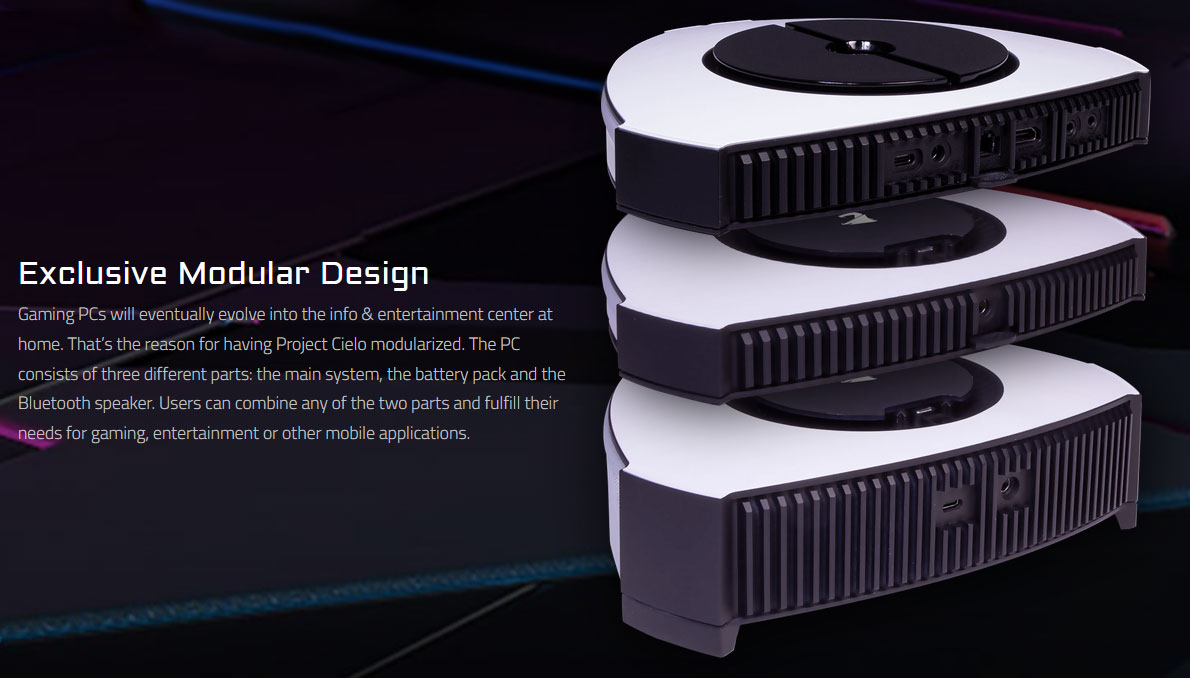
The system is comprised of three distinct segments:
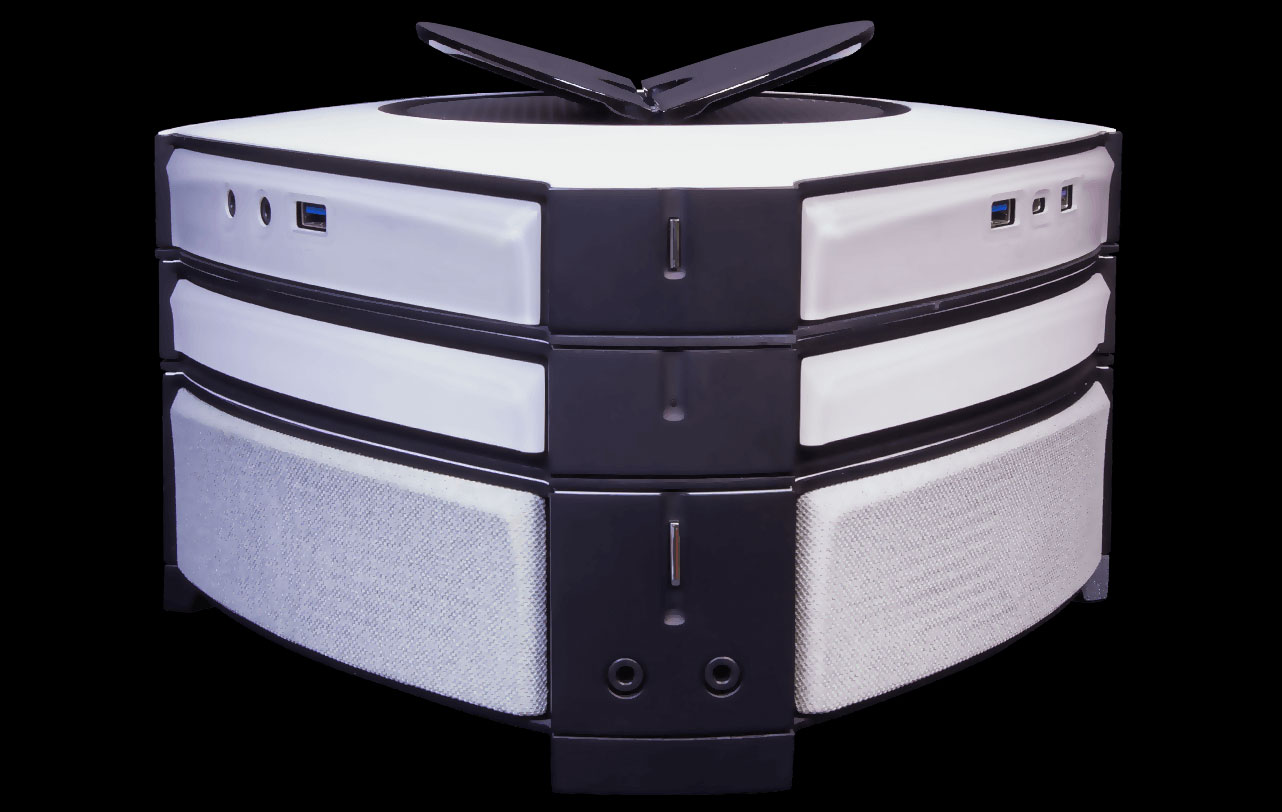
- The Main System: The top module, which serves as the core computing unit. This segment features "angel cake-like" wing-like structures, which are, in fact, retractable 5G antennas.
- The Battery Pack: A middle module designed to provide untethered power, effectively turning a traditionally stationary device into a portable, albeit heavy, workstation.
- The Bluetooth Speaker: The base module, which integrates audio capabilities into the stack, aiming to simplify the desk setup by removing the need for external peripherals.
Aorus describes the system as highly flexible, noting that "users can combine any of the two parts to fulfill their needs for gaming, entertainment, or other mobile applications." This implies that the device is designed to be disassembled and reconfigured, though it leaves significant questions regarding how the "main system" functions without the battery or speaker modules, and whether these modules are hot-swappable or require a full system power cycle.
Chronology of the Reveal
The reveal of Project Cielo took place in mid-October 2021, catching the enthusiast community off guard. Unlike traditional hardware launches, which are preceded by leaks, regulatory filings, or roadmap teasers, Project Cielo appeared as a fully realized design concept.
- October 2021: Aorus issues a press release via PR Newswire outlining the vision for Project Cielo. The focus is placed squarely on 5G integration and the shift toward cloud-based gaming infrastructure.
- Post-Announcement Phase: Tech enthusiasts and industry analysts began an immediate critique of the hardware’s specifications, which were conspicuously absent from the initial announcement.
- The "Pre-CES" Window: As the industry looks toward CES 2022, the conversation has shifted toward whether this modular stack will be relegated to a museum piece or if Gigabyte intends to bring a prototype to the show floor.
Supporting Data: The 5G Paradigm Shift
The core pillar of Project Cielo’s marketing is its reliance on 5G connectivity. Aorus argues that the future of PC gaming is not necessarily tied to local silicon horsepower, but rather to the quality of the connection to cloud gaming services.
The Connectivity Argument
In their official communication, Aorus states: "Compared to the traditional wired or 4G wireless networks, 5G makes PC gaming on the go possible by offering greater bandwidth, ultra-low latency, and near-instant access to cloud gaming."
This reflects a growing trend among hardware manufacturers to pivot toward the "Gaming-as-a-Service" (GaaS) model. By leveraging the ultra-low latency of 5G, Aorus suggests that the physical machine becomes a gateway rather than a powerhouse. However, the data surrounding current 5G coverage and stability in various markets remains a significant hurdle. Even with ideal conditions, the "near-instant" latency of cloud gaming still faces the physical limitations of server distance—a factor no amount of 5G bandwidth can fully eliminate.
Hardware Constraints
The omission of technical specifications—such as CPU architecture, GPU memory, or even the capacity of the battery module—is standard for a "concept" device. However, this lack of transparency highlights the fundamental design conflict: if the device is meant to be portable (as evidenced by the battery module), it must compete with gaming laptops. If it is meant to be a desktop, the modular stacking approach adds unnecessary bulk and potential failure points for electrical connectors between modules.
Official Responses and Corporate Strategy
Gigabyte and Aorus have positioned Project Cielo as a "preview of the future." The official messaging emphasizes "lifestyle integration" over raw benchmarking. By decoupling the speaker and the battery, Aorus is clearly aiming for a demographic that values aesthetic minimalism and modularity over the "max-performance" metrics that typically drive the DIY PC market.
Industry insiders suggest that this strategy is a test balloon. By gauging public interest in modular components, Gigabyte is attempting to see if the market is ready for a departure from the ATX standard. If the reaction is sufficiently positive, we may see elements of Project Cielo—specifically the antenna design or the modular power delivery systems—trickle down into their flagship Aorus gaming laptops or compact pre-built systems.
Implications for the Gaming Industry
The implications of Project Cielo are profound, particularly regarding the future of the "gaming PC" as a category.
The "Desktop-Portable" Identity Crisis
The primary criticism of the concept is its identity crisis. By including a battery and a speaker, Aorus is essentially building a gaming laptop that refuses to include a screen. This begs the question: why not simply use a high-end 5G-enabled tablet or a gaming laptop?
A mobile device provides the user with an integrated display, a keyboard, and touch capabilities—all of which are missing from Project Cielo. For a user to enjoy this device on the go, they must carry the PC stack, a portable monitor, a keyboard, and a mouse. This effectively eliminates the portability advantage, leaving the user with a cumbersome, modular desktop that offers less utility than a standard ultra-portable laptop.
The Shift Toward Cloud Infrastructure
If Project Cielo represents the industry’s direction, it suggests that hardware manufacturers are preparing for a world where local compute power is secondary to network throughput. This is a risky bet. While cloud gaming services like NVIDIA GeForce Now and Xbox Cloud Gaming have matured significantly, the gaming community remains deeply invested in local hardware. The tactile feedback of a mechanical keyboard, the refresh rate of a high-end monitor, and the ability to play offline are pillars of the PC gaming experience that cloud-centric concepts often overlook.
Modular Innovation or Design Gimmick?
Modular PC concepts have historically struggled. From the Razer "Project Christine" to various failed attempts at modular smartphones, the history of consumer tech is littered with "stackable" hardware that failed to hit the market. The primary issue is always cost and reliability; creating proprietary connectors that can handle power and data while being repeatedly assembled and disassembled is an engineering nightmare that rarely results in a cost-effective product for the consumer.
Conclusion: A Future, or a Folly?
Project Cielo serves as a fascinating case study in corporate design ambition. It is a bold, visually striking departure from the boxy aesthetics that have dominated the PC market for decades. The incorporation of 5G antennas and modular battery packs demonstrates that Aorus is thinking about how to integrate gaming into a more mobile lifestyle.
However, the lack of a clear value proposition is impossible to ignore. As the industry moves toward sleeker, more powerful, and more integrated solutions, a three-piece stack that requires an external screen seems like a step backward in ergonomics and practicality.
Perhaps the true value of Project Cielo is not in its potential to reach retail, but in its ability to provoke debate. It challenges manufacturers to consider how to make high-performance gaming more accessible and more versatile. Whether this specific triangular stack finds its way to the shelves of retail stores or remains a digital rendering on a company website, it highlights a crucial turning point: the industry is searching for a successor to the standard tower. While Project Cielo may not be the definitive answer, it is a loud, unapologetic indicator that the "future of gaming" is currently under active, and often experimental, construction.
For now, the enthusiast community waits with bated breath—or perhaps a raised eyebrow—to see if this "angel-winged" concept will take flight or simply fall under the weight of its own modular ambition at the next major industry expo.

 Nila Kartika Wati
 Laily UPN