

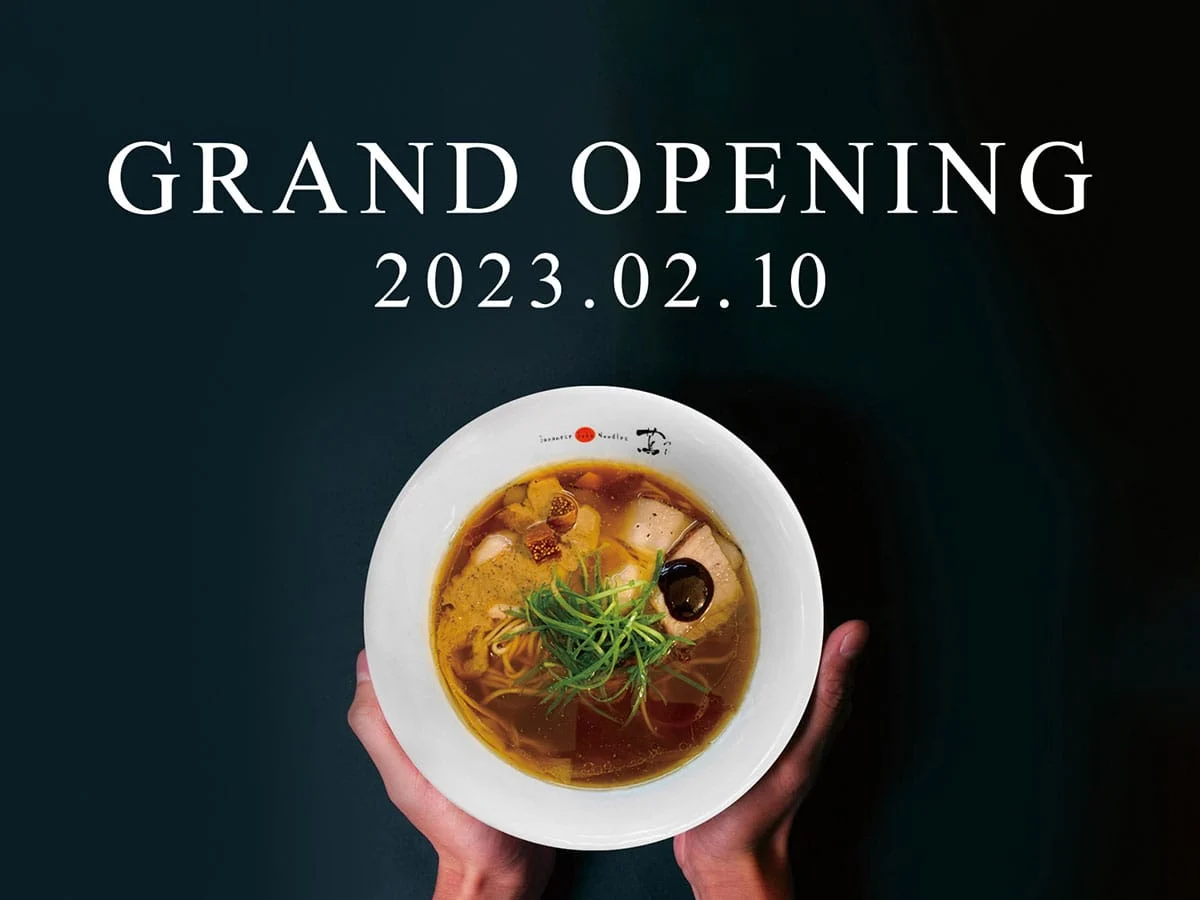
For the global culinary community, the name "Tsuta" is more than just a noodle shop—it is a symbol of innovation. When the establishment first earned a Michelin star in 2016, it sent a shockwave through the gastronomic world, shattering the long-held perception that ramen was merely a humble, working-class street food. It proved that, with enough precision and artistry, a bowl of noodles could stand shoulder-to-shoulder with the finest haute cuisine.
After a period of silence that left Tokyo’s ramen aficionados in a state of longing, Japanese Soba Noodles Tsuta is set to reclaim its throne. On February 10, 2023, the institution officially reopened its doors in the sophisticated Yoyogi-Uehara neighborhood of Tokyo’s Shibuya Ward, signaling a fresh chapter for a brand that has spent over a decade redefining the boundaries of flavor.
A Legacy of Culinary Evolution
The story of Tsuta is one of relentless pursuit. Founded on January 26, 2012, in the Sugamo district, the shop was the brainchild of Chef Yuki Onishi. From its inception, the restaurant sought to bridge the gap between traditional Japanese culinary heritage and the avant-garde techniques of modern gastronomy.
The name "Japanese Soba Noodles" was a deliberate, philosophical choice. In Japan, soba (buckwheat noodles) and udon (thick wheat noodles) are deeply rooted in a history spanning centuries. Ramen, by contrast, is a relatively recent arrival, with a history of only about 100 years. By adopting the moniker "Japanese Soba Noodles," Chef Onishi sought to elevate the status of ramen, positioning it as an integral, respected pillar of Japan’s broader noodle culture rather than an outlier.
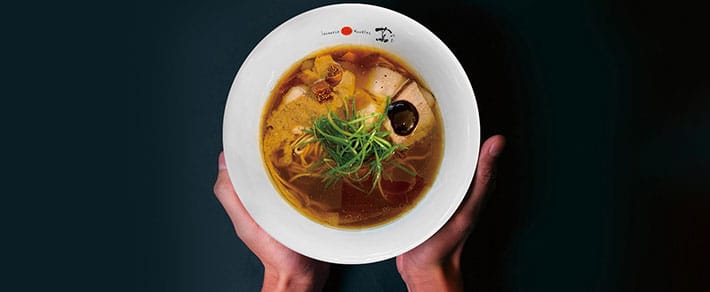
The Michelin Milestone
The year 2016 marked a watershed moment. When the Michelin Guide awarded Tsuta its first star, it became the first ramen shop in history to receive such an honor. This recognition was not merely about the taste of the broth; it was a validation of the meticulous craftsmanship involved in every step of the process. From the hand-crafted noodles to the complex, multi-layered soup bases, Tsuta demonstrated that the humble bowl could be transformed into a sophisticated culinary experience.
The Chronology of a Transition
The journey to the Yoyogi-Uehara location was not without its hurdles. In September 2022, Tsuta announced it would cease operations at its then-current location. The announcement came abruptly, citing "various reasons," leaving the international food community in a state of uncertainty.
- January 26, 2012: The original Japanese Soba Noodles Tsuta opens in Sugamo, Tokyo, setting a new benchmark for ramen quality.
- 2016: Tsuta makes history by becoming the world’s first Michelin-starred ramen shop.
- September 2022: The shop closes its doors, prompting widespread speculation regarding the brand’s future.
- February 10, 2023: The grand reopening in Yoyogi-Uehara, Shibuya, marks the beginning of a new era, focusing on global fusion and elevated service.
The transition period was used by the team at Tsutanote, Inc.—the entity behind the shop—to refine their vision. The move to Yoyogi-Uehara, a neighborhood known for its trendy yet refined atmosphere, perfectly complements the restaurant’s pivot toward a more holistic dining experience.
The Philosophy of Ingredients: A Chemical-Free Commitment
At the core of the Tsuta experience is an unwavering dedication to ingredient sourcing. In an era where processed foods and synthetic flavor enhancers have become the industry standard for efficiency, Tsuta stands in defiance.

The restaurant’s commitment to using only chemical-free ingredients is more than a marketing gimmick; it is a fundamental pillar of their culinary philosophy. By refusing to rely on artificial additives or MSG, Chef Onishi and his team are forced to extract flavor through time-intensive processes: long-simmering broths, the careful selection of high-quality shoyu (soy sauce), and the integration of unique elements like black truffle oil, which became a signature of the Tsuta brand.
The team works directly with artisanal producers across Japan to ensure that every vegetable, piece of poultry, and grain of wheat meets rigorous standards. This symbiotic relationship with farmers ensures that the kitchen has access to the highest-quality raw materials, allowing the natural essence of the food to shine through in every bowl.
Redefining the Menu: Global Fusion and UMAMI
The new iteration of Tsuta is not merely a revival; it is an evolution. The menu has been overhauled to better reflect the globalization of the culinary arts. While the core of the experience remains rooted in Japanese tradition, the new offerings incorporate global ingredients to broaden the flavor profile.
This "fusion of Japanese UMAMI" approach aims to surprise regular patrons while welcoming newcomers. By blending international influences—such as the infusion of globally sourced herbs and spices—into the traditional ramen framework, Tsuta is pushing the boundaries of what a noodle dish can be. The restaurant’s mantra, "creativity and unlimited possibilities," suggests that the menu will continue to be a fluid, evolving document, adapting to the seasons and the chef’s ongoing experiments.
An Unconventional Space and Service
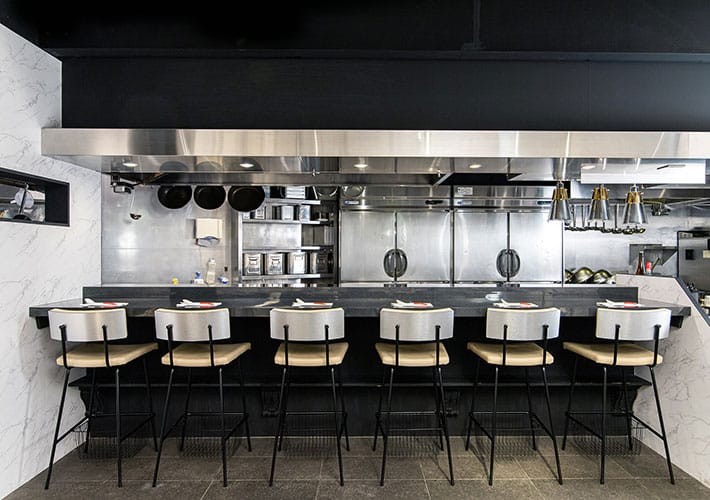
The dining experience at the new Yoyogi-Uehara location is designed to be as unconventional as the food itself. Unlike the traditional "standing-room-only" or "quick-slurp" ramen shops found across Tokyo, the new Tsuta aims to foster a more immersive atmosphere.
The interior design reflects a minimalist, modern aesthetic that prioritizes the comfort of the guest. By reconsidering the spatial layout, the restaurant ensures that the focus remains on the bowl. Service at Tsuta is intended to be a performance, where the staff acts as ambassadors of the dish, explaining the complex flavor profiles and the history behind the ingredients. This elevated level of hospitality is rarely seen in the ramen industry, bridging the gap between a high-end restaurant and a traditional noodle stall.
Implications for the Ramen Industry
The reopening of Tsuta is more than just a business development; it serves as a litmus test for the future of ramen on the world stage.
- Elevated Expectations: The success of Tsuta has forced the industry to reconsider the price point and prestige of ramen. As the brand pushes into higher-end, chef-driven territory, it encourages other shops to invest in quality, sustainability, and service.
- The Shift Toward Sustainability: Tsuta’s commitment to chemical-free ingredients provides a roadmap for other shops to follow. In a climate-conscious world, the demand for transparent, high-quality, and responsibly sourced ingredients is increasing.
- Global Integration: By incorporating global flavors into the quintessential Japanese dish, Tsuta is helping to cement ramen’s status as a global culinary language, one that can transcend borders and cultural biases.
Looking Ahead
As of February 2023, the excitement surrounding the reopening is palpable. For the residents of Shibuya and the countless tourists returning to Tokyo, the return of Tsuta is a welcome homecoming. However, the true test will be how the restaurant balances its newfound prestige with the inherent humility required to serve a great bowl of noodles.
Chef Onishi has built a career on the premise that there is no "finished" version of a dish. Every bowl is an opportunity to improve, to refine, and to delight. As Tsuta settles into its new home in Yoyogi-Uehara, the culinary world will be watching closely. If the past is any indicator, this Michelin-starred institution will not only meet expectations—it will redefine them once again.
The rebirth of Tsuta serves as a powerful reminder that even in a city as fast-paced as Tokyo, there is always room for a project that prioritizes quality over quantity, and art over convenience. Whether you are a lifelong fan or a curious traveler, a visit to the new Tsuta is an invitation to witness the intersection of tradition and innovation at its absolute peak.
Shop Information Summary
- Establishment: Japanese Soba Noodles Tsuta
- Location: Yoyogi-Uehara, Shibuya Ward, Tokyo, Japan
- Official Reopening Date: February 10, 2023
- Key Philosophy: Chemical-free ingredients, fusion of global flavors with Japanese UMAMI, elevated guest service.
- Management: Tsutanote, Inc.
By – grape Japan editorial staff.












No comments yet. Be the first to join the conversation!