Nana
Nana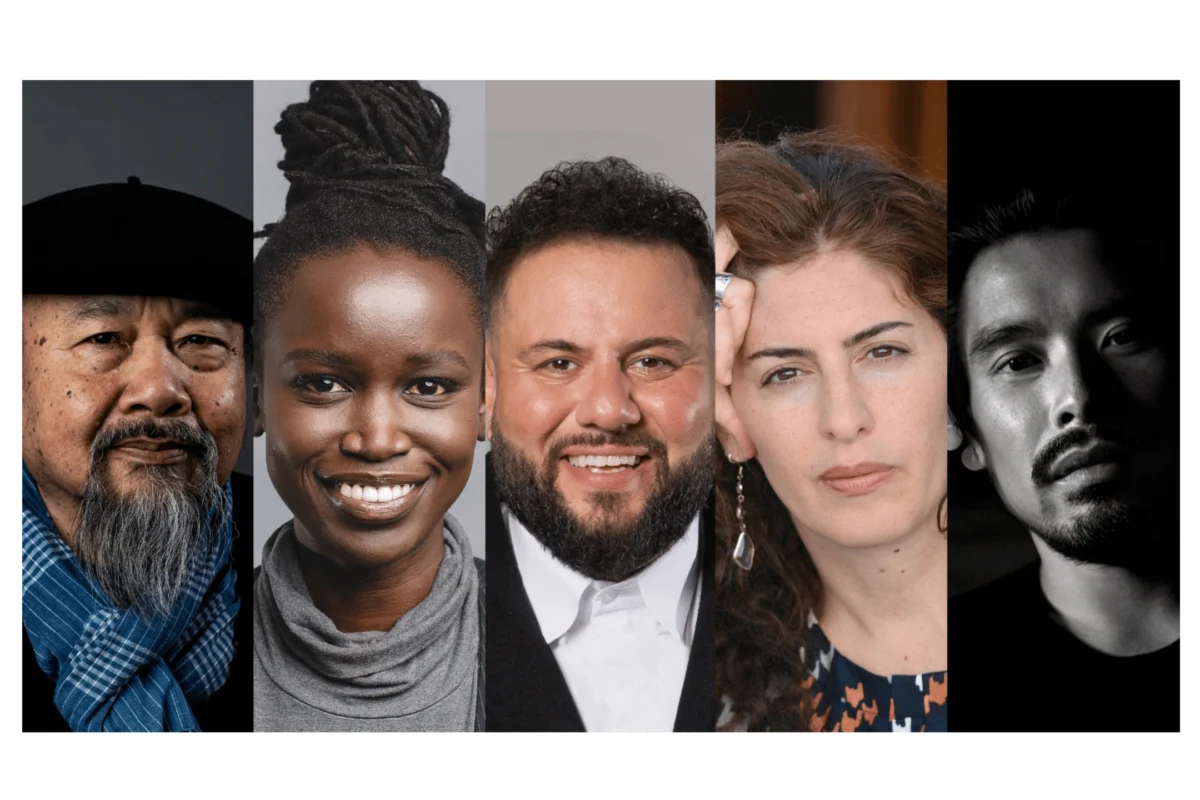
By [Your Name/Editorial Desk]
In a powerful demonstration of cinema’s capacity to illuminate the human condition, Academy Award-winning actor and UNHCR Global Goodwill Ambassador Cate Blanchett took to the stage at the Cannes Film Festival to announce the second cohort of recipients for the Displacement Film Fund (DFF).
The initiative, which bridges the gap between high-level philanthropy and grassroots artistic expression, is set to provide substantial financial support to five visionary filmmakers. Each recipient will receive a production grant of €100,000 ($116,000) to bring their unique narratives of migration, memory, and identity to the screen. These works are slated to hold their world premieres at the 2027 edition of the International Film Festival Rotterdam (IFFR).
The Selection: Five Voices, Five Perspectives on Displacement
The second round of the DFF focuses on diverse, deeply personal stories that transcend typical tropes of migration. The selected projects explore the complexities of life in limbo, the weight of inherited trauma, and the quiet resilience found in daily existence.
Mo Amer: Return to Sender
Renowned Palestinian-American comedian and writer Mo Amer, celebrated for his work on Netflix and the hit series Ramy, is developing Return to Sender. The film follows a Palestinian stand-up comedian navigating the labyrinthine complexities of global immigration regulations while attempting to embark on an international tour. By utilizing the lens of comedy, Amer seeks to unpack the absurdity and bureaucratic cruelty inherent in the modern migrant experience.
Annemarie Jacir: Deconstruction
Following the success of her Oscar-shortlisted feature Palestine 36, Palestinian director Annemarie Jacir turns her attention to the port city of Haifa. Deconstruction is a meditative exploration of a man living in the "in-between." As he navigates the city, he finds that the past is being physically and metaphorically rearranged, sold, and reinvented. Jacir’s work promises to be a haunting reflection on memory and the layers of absence that define a displaced existence.
Akuol de Mabior: Traces of a Broken Line
South Sudanese filmmaker Akuol de Mabior, whose 2022 documentary No Simple Way Home was widely lauded for its honest look at her family’s history, explores the impact of war on lineage in Traces of a Broken Line. The short follows a mother desperately attempting to preserve a cultural heritage that she can no longer pass down to her children, highlighting the generational erosion caused by conflict.
Bao Nguyen: How to Ride a Bike
Vietnamese-American filmmaker Bao Nguyen, known for his incisive documentary work in Be Water and The Return, shifts to a deeply intimate narrative. How to Ride a Bike depicts a Vietnamese refugee father who never learned to cycle as a child. After a failed attempt to teach his own son, he begins learning in secret, forced to confront a lifelong, quiet shame that has lingered since his youth.
Rithy Panh: Time… Speak
Legendary Cambodian filmmaker Rithy Panh—a titan of world cinema known for The Missing Picture and Everything Will Be OK—contributes Time… Speak. This biographical work tracks an exiled filmmaker returning to the fractured remnants of his past—shattered figurines, old archives, and the weight of silence—to reconstruct a life where those who have disappeared are finally given a voice through the medium of film.
A Strategic Partnership for Global Impact
The Displacement Film Fund is more than a simple grant scheme; it is a structural intervention in an industry that often struggles to provide space for marginalized voices. Launched by Blanchett at IFFR in 2025, the DFF operates through a strategic partnership with the Hubert Bals Fund (HBF) of the International Film Festival Rotterdam.
The project is supported by an impressive coalition of industry leaders, philanthropists, and advocacy groups. Founding partners include the Amahoro Coalition, Droom en Daad, Master Mind, the Tamer Family Foundation, and UNIQLO. The UN Refugee Agency (UNHCR) remains the fund’s strategic partner, while the SP Lohia Foundation has joined the second cycle as a new major partner.
Chronology and Evolution of the DFF
The creation of the DFF represents the culmination of Cate Blanchett’s years of advocacy as a UNHCR Goodwill Ambassador. Recognizing that the statistics of forced displacement—currently affecting one in every 70 people globally—are often sanitized by headlines, Blanchett sought to create a platform where displaced artists could "reclaim the narrative."
The Pilot Phase (2025-2026):
The pilot round proved the model’s efficacy, supporting five filmmakers: Maryna Er Gorbach, Mo Harawe, Hasan Kattan, Mohammad Rasoulof, and Shahrbanoo Sadat. These artists produced the shorts Rotation, Whispers of a Burning Scent, Allies in Exile, Sense of Water, and Super Afghan Gym. These films debuted at IFFR 2026, receiving critical acclaim for their stylistic diversity and thematic depth.
The Selection Process:
The selection of the current cohort was a rigorous two-step process. A Nominations Committee, comprising luminaries such as Waad Al Kateab, Agnieszka Holland, and Ke Huy Quan, curated a longlist of projects. A final Selection Committee, chaired by Blanchett and including heavyweights like producer Barbara Broccoli and festival director Vanja Kaludjercic, made the final determination.
Official Responses and the Power of Advocacy
During the press conference at Cannes, the atmosphere was one of quiet urgency. Blanchett emphasized that the success of the first cohort was not just a win for the individual filmmakers, but a victory for the medium of the short film.
"The short form is a fantastic medium for these narratives," Blanchett remarked. "The way audiences are connecting with the first five films is extraordinary. We are grateful to be hosted by Thierry Frémaux and the Cannes Film Festival, who continue to champion our cause and make space for us in this most celebrated annual gathering of cinema."
Clare Stewart, Managing Director of IFFR, and Tamara Tatishvili, Head of the Hubert Bals Fund, echoed these sentiments, noting that the fund is a necessity in an era of global instability. "At a time of ongoing global uncertainty, our commitment to maintaining this fund only deepens, alongside our belief in championing film as a powerful force for encouraging empathy and positive change," Stewart stated.
Implications for the Future of Independent Cinema
The Displacement Film Fund addresses a systemic failure in the film industry: the lack of access to capital for filmmakers living in exile. By providing €100,000 per short, the DFF allows these creators to produce work with high production values that can compete on the international festival circuit.
Why the Short Film Matters
While feature films often garner the most attention, the short film is frequently the laboratory of cinema. By focusing on the short form, the DFF encourages experimentation. It allows directors like Rithy Panh or Annemarie Jacir to condense complex, traumatic, or abstract memories into distilled, punchy, and highly emotional vignettes that are more accessible to global audiences and educational institutions.
Shifting the Narrative
The DFF represents a shift from "stories about refugees" to "stories by refugees." By empowering filmmakers who have lived experiences of displacement, the fund bypasses the "outsider gaze" that has historically dominated films about migration. These narratives do not merely document suffering; they document the fullness of life—the humor, the shame, the desire to preserve heritage, and the attempt to reconcile with one’s own history.
As the industry looks toward the 2027 premiere at IFFR, the DFF is positioning itself as a vital pillar of contemporary independent cinema. It provides a blueprint for how art, philanthropy, and advocacy can intersect to create a more inclusive, nuanced, and empathetic global culture. Through the lens of these five filmmakers, the world will soon witness a more intimate, honest, and profound exploration of what it means to be displaced in the 21st century.

 Nila Kartika Wati
 Nana Wu